
Blog
Humidity Control in Late Flower: Preventing Bud Rot and Mold
You’ve spent months nurturing your plants. You’ve dialed in the nutrients, trained the canopy, and now you’re looking at the finish line. The colas are stacking, the resin is frosting over, and the smell is incredible. But this is also the most dangerous time for your harvest. In the final weeks of flower, your biggest enemy isn't a nutrient deficiency or a lighting glitch, it’s moisture.
Humidity control in late flower is the difference between a top-shelf harvest and a total loss. When those buds get thick and dense, they become perfect little caves for Botrytis (bud rot) and Powdery Mildew. If you aren't managing your environment with precision, you’re basically inviting mold to the party.
Why Late Flower is a "Danger Zone"
During the vegetative stage and early flower, plants love a bit of humidity. It helps them breathe and grow rapidly. But as the plant matures and those colas become "thick," the internal structure of the flower traps moisture.
The fact of the matter is that plants continue to transpire (breathe out water vapor) throughout their entire life cycle. In a crowded grow tent, the air inside the middle of a massive bud can be significantly more humid than the air in the rest of the room. This microclimate is exactly where bud rot starts. By the time you see it on the outside of the bud, the inside is usually already ruined.
The Magic Numbers: Target Humidity for Late Flower
As you move into the final 2 to 3 weeks of flowering, you need to be aggressive with your humidity levels. While 50% relative humidity (RH) might be okay for mid-flower, you want to drop that down to 30-40% as you approach harvest.
Why so low?
- Pathogen Inhibition: Most fungal spores need a certain level of moisture to germinate. Keeping the air dry makes it nearly impossible for them to take hold.
- Resin Production: Some evidence suggests that lower humidity can actually stress the plant into producing more resin (trichomes) as a protective layer to prevent the flower from drying out too fast.
- Better Transpiration: Lower humidity creates a "pulling" effect, helping the plant move water and nutrients from the roots to the top of the canopy more efficiently.

Understanding VPD (Vapor Pressure Deficit)
If you want to grow like a pro, you have to look past simple humidity and start looking at VPD. Relative humidity tells you how much water is in the air, but it doesn't tell you how the plant feels.
VPD is the relationship between temperature and humidity. It measures the "drying power" of the air. In late flower, you want a higher VPD (around 1.2 to 1.5 kPa). This ensures the plant is transpiring enough to stay healthy but not so much that it wilts.
If your temperatures drop at night, which they often do, the relative humidity will naturally spike. This is why many growers find mold in the morning. When the air cools down, it can't hold as much water, and that water "drops out" onto your plants as dew. Managing this swing is critical. This is where high-quality controllers come into play, allowing you to sync your fans and dehumidifiers to react to these changes in real-time.
Airflow: Your First Line of Defense
You can have a dehumidifier running, but if the air is stagnant, you’re still at risk. Stagnant air allows "pockets" of high humidity to sit around your buds.
You need constant, oscillating airflow. The goal isn't to blast the plants with a windstorm (which can cause windburn), but to ensure that every leaf is gently dancing.
- Above the Canopy: Use oscillating fans to move air across the tops.
- Below the Canopy: Ensure air is moving around the stems and the top of the medium.
- Exhaust: Your extraction kit should be pulling old, humid air out of the room and bringing in fresh, drier air constantly.
Defoliation and "The Skirt"
In late flower, you need to be a bit of a barber. If your canopy is too thick, air can't move through it.
- Remove "Sucker" Branches: Anything at the bottom of the plant that isn't getting light is just a source of humidity. Cut it off.
- Thin the Leaves: Remove some of the larger fan leaves that are shading bud sites or touching other leaves. When leaves touch, they create moisture between them, a hotspot for powdery mildew.
- Open the Middle: Make sure you can see through the plant. If it’s a solid wall of green, the air is getting trapped in the middle.
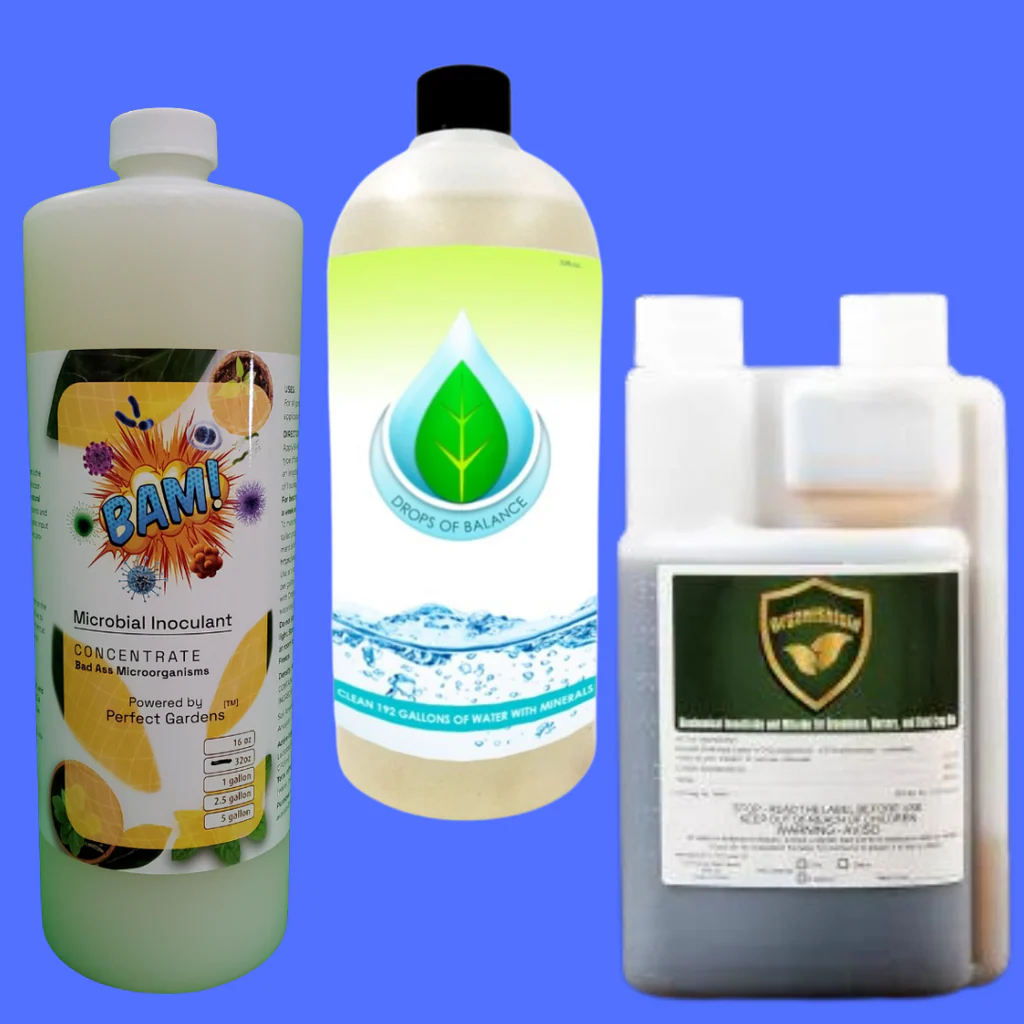
While we focus on the top of the plant, don't forget the roots. Healthy roots help the plant manage water better. Using something like BAM! Microbial Inoculant ensures that your root zone is efficient, which prevents the plant from "choking" on excess water that could lead to systemic stress.
Watering Habits to Reduce Humidity
A lot of growers don't realize that their watering schedule is a major factor in room humidity.
- Water Early: Water your plants shortly after the lights come on. This gives the medium time to evaporate some of that moisture while the room is at its warmest and the exhaust fans are running at full tilt.
- Avoid "Wet Feet": Don't let water sit in trays. Standing water is a giant humidifier that you don't want. If you are using hydroponic systems, ensure your reservoirs are covered and sealed to prevent evaporation into the grow space.
- Check the Pot: In late flower, plants actually start drinking less as they reach full maturity. Don't keep watering on the same heavy schedule you used in week 4 of flower. Overwatering in week 8 is a recipe for disaster.
Sanitation and Prevention
If you’ve had mold issues in the past, your room might be harboring spores. Spores are everywhere, but you can keep the population down.

Before you even start a run, and especially if you notice any issues, sanitation is key. Using a food-grade Hydrogen Peroxide solution to wipe down your tents and film between grows is non-negotiable. It kills spores on contact and breaks down into water and oxygen, leaving no toxic residue.
What to Do If You Find Mold
If you're inspecting your thickest cola and you see a small, gray, fuzzy patch, or a leaf that looks like it's dying from the inside out: don't panic, but act immediately.
- Cut it Out: Carefully remove the affected bud. Do not shake it, or you will spread spores everywhere. Some growers put a plastic bag over the infected branch before cutting to trap the spores.
- Lower Humidity Immediately: Drop your RH to 30% if you can.
- Increase Airflow: Turn the fans up.
- Early Harvest? If the infestation is spreading, it’s better to harvest a week early and save 90% of your crop than to wait and lose 100%.
Post-Harvest Humidity
The battle doesn't end when you chop the plant. Drying and curing are just as dangerous. If you put wet buds into a jar without proper control, they will mold in 48 hours.

Once your buds are dried and moved to jars, use Boveda 62% humidity packs. These are 2-way controllers, meaning they both add and remove moisture to keep the environment at exactly 62%. This is the "sweet spot" for curing where the terpenes develop and the risk of mold is minimized.
Summary Checklist for Late Flower
- RH Goal: 30-40%.
- VPD Goal: 1.2 - 1.5 kPa.
- Fans: Oscillating fans should be on 24/7.
- Defoliation: Remove excess fan leaves to improve "see-through" airflow.
- Dehumidifier: Essential. Do not rely on your AC alone.
- Monitoring: Use a hygrometer with a "min/max" memory to see what’s happening when the lights are off.
Managing humidity in late flower is about being proactive rather than reactive. Once mold starts, you're playing defense. By keeping your air dry, your fans moving, and your nutrients balanced, you can ensure those big, beautiful colas make it all the way to the jar.
If you need help dialing in your environment or choosing the right gear, check out our Grow Help section for more deep dives into professional cultivation tactics. Stay dry and happy growing!