
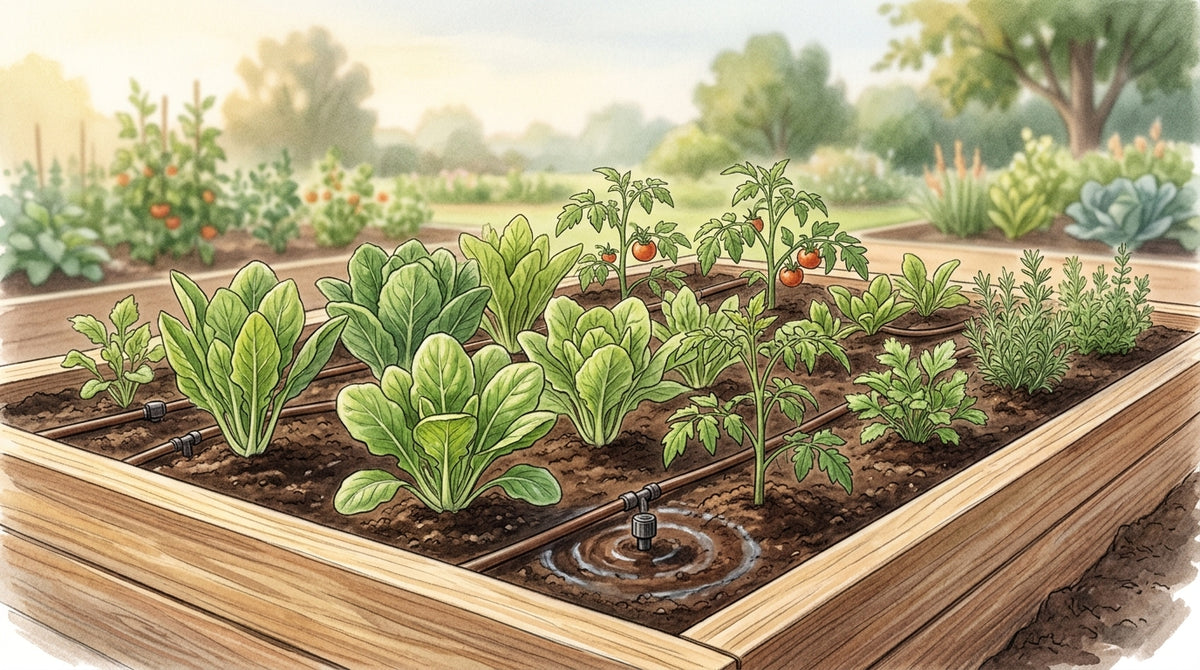
Choosing the correct drip emitter flow rate ensures your irrigation system delivers water efficiently without overwhelming your water supply or leaving plants thirsty. The selection process involves understanding manufacturer ratings, calculating your system's total demand, and observing how water behaves in your specific soil conditions.
Understanding Nominal GPH Ratings
Drip emitters are rated by their nominal flow rate, expressed in gallons per hour (GPH). This rating indicates how much water each emitter is designed to discharge under proper operating conditions. For example, the Netafim Woodpecker pressure-compensating dripper with a nominal 0.53 GPH rating is engineered to deliver approximately half a gallon per hour per emitter.
Pressure-compensating emitters maintain relatively consistent output across their designed pressure range, while pressure-sensitive emitters vary their output with pressure changes. Both types operate within specific model limits established by the manufacturer.
Calculating Total Zone Demand for Drip Emitter Flow Rate
Before selecting emitters, you must calculate your irrigation zone's total demand and verify it doesn't exceed your available system capacity. According to Colorado State University Extension, you should add individual emitter flow rates to estimate zone demand and compare this against what your system can supply.
Here's illustrative arithmetic to demonstrate the calculation method, not a watering prescription: If you install 20 emitters rated at 0.53 GPH each, multiply 20 × 0.53 GPH = 10.6 GPH nominal total for the entire zone. Running this zone for 30 minutes delivers 5.3 gallons total distributed among all 20 emitters, not 5.3 gallons to each individual plant. This distinction is critical for understanding system capacity requirements.
Your actual watering duration depends on plant needs, soil type, and seasonal conditions—factors that vary considerably between gardens and throughout the growing season.
Observing Soil Wetting Patterns
Emitter placement and output requirements depend significantly on your soil characteristics. Sandy soils allow water to move vertically with limited horizontal spread, potentially requiring more emitters per plant placed closer together. Clay soils spread water more horizontally, allowing fewer emitters spaced farther apart.
After installing your system, run it briefly and observe the wetted area around each emitter. Dig down several inches to check moisture depth and lateral spread. This observation helps you determine whether your emitter spacing and flow rate suit your soil conditions. Adjust emitter quantity or placement based on what you observe rather than relying solely on theoretical calculations.
Measuring Actual Output
Verifying actual emitter output ensures your system performs as expected. Place a container under several emitters and run the system for a measured time period. Collect the water and measure the volume, then calculate the hourly rate. Compare this measured output against the nominal rating.
Significant deviations may indicate pressure issues, clogged emitters, or system limitations. Regular measurement helps identify problems before they affect plant health.
Practical Decision Checklist
- Calculate total zone demand by multiplying emitter count by individual GPH ratings
- Verify total demand doesn't exceed available system capacity
- Consider your soil type's water movement characteristics
- Account for plant size, species, and spacing requirements
- Plan for seasonal adjustment as plants grow and weather changes
- Test actual output periodically to verify system performance
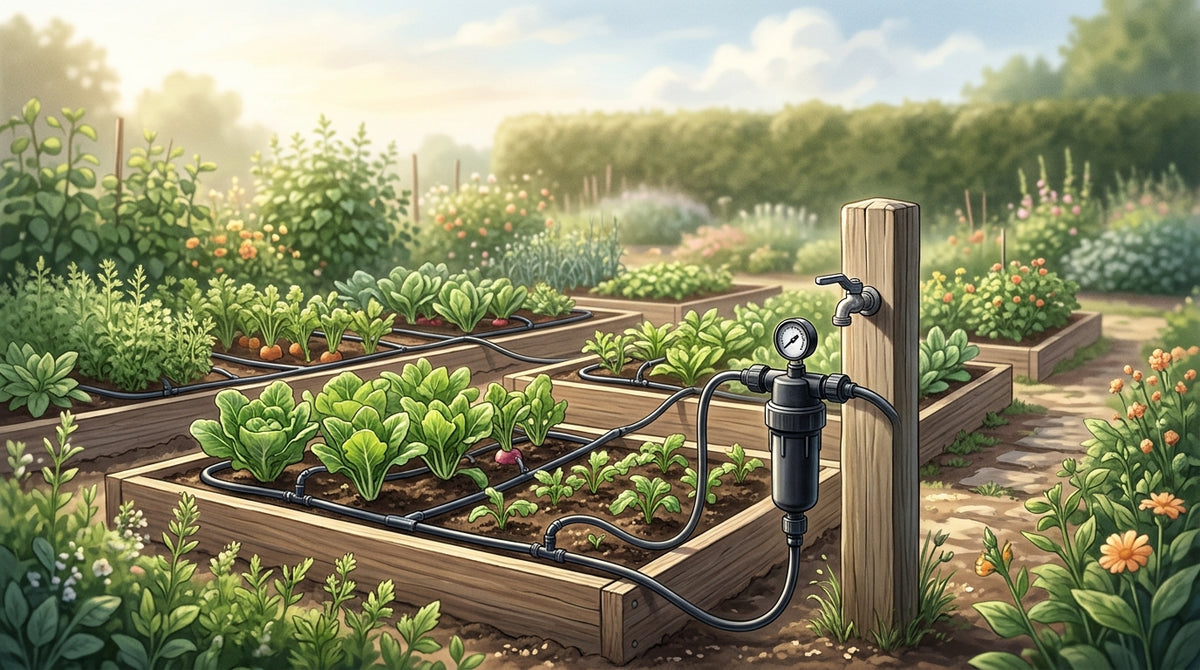
- Ensure proper filtration to maintain consistent emitter function
Important Limitations
Plant water requirements, soil drainage characteristics, and seasonal weather patterns all influence how much water your garden needs. No universal watering runtime applies to all situations. Observe soil moisture regularly and adjust your irrigation schedule based on actual conditions rather than fixed formulas.
Always shut off water supply and relieve system pressure before opening or disconnecting any irrigation components to prevent injury or water waste.
Emitter selection should follow careful assessment of your specific garden conditions. The 250-piece quantity suits larger installations or gardeners maintaining multiple zones, but purchase decisions should align with your diagnosed needs rather than assumed requirements.


Leave a comment
This site is protected by hCaptcha and the hCaptcha Privacy Policy and Terms of Service apply.