
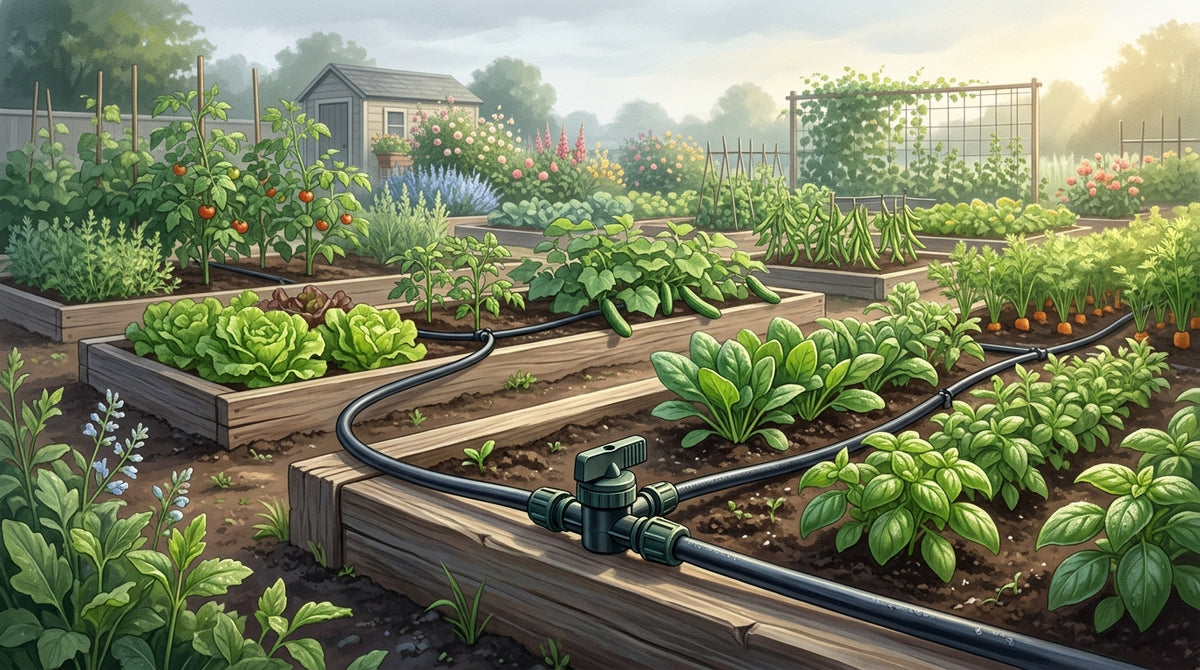
Managing a drip irrigation system effectively often requires the ability to isolate individual lateral lines for maintenance, seasonal adjustments, or troubleshooting. Manual shut-off valves provide this control by allowing you to close off specific lines while keeping the rest of your system operational. Understanding how these simple mechanical components fit into your overall irrigation strategy helps you maintain consistent water delivery to your plants.
Understanding Manual Lateral Control
A drip irrigation shut off valve serves one primary purpose: controlling water flow to a single lateral line. When installed at the point where a lateral branches from your main supply line, it gives you the ability to stop water flow to that specific section without affecting other parts of your system. This manual isolation differs fundamentally from automatic zoning systems that use electronic controllers and solenoid valves.
According to Colorado State University Extension, manual lateral shut-off controls only the line it serves. These valves do not regulate pressure, prevent backflow, filter water, or provide timing functions—each of those roles requires separate, dedicated components in a properly designed system.
Matching Valves to Your Actual Tubing
The most critical factor when selecting shut-off valves is matching them to your tubing's actual dimensions. Drip irrigation tubing comes in various sizes, and nominal measurements don't always reflect precise dimensions. A valve designed for 17mm tubing will not necessarily fit tubing marketed as half-inch, even though these measurements seem similar.
Before purchasing valves, measure your existing tubing with calipers or verify the exact specifications from your tubing manufacturer. For systems using 17mm tubing, products like the Netafim 17mm manual shut-off valve, available in 10-piece bags, provide compatibility when dimensions match precisely. Always follow the manufacturer's fitting instructions for proper installation.
Flow Management and System Capacity
As you open additional lateral lines in your drip system, the total flow demand increases. Your water source has a finite capacity, and system design must consider both plant water needs and total zone flow. Opening too many laterals simultaneously can reduce pressure throughout the system, affecting emitter performance and water distribution uniformity.
Manual shut-off valves help you manage this limitation by allowing you to close lines serving areas that don't currently need irrigation. During cooler months, you might shut off laterals in dormant garden beds while maintaining flow to active growing areas. This approach helps you work within your available water capacity without requiring complex automatic controls.
Installation and Safety Considerations
Before installing or removing any shut-off valve, always shut off the upstream water supply and relieve system pressure. Open downstream emitters or end caps to drain the line completely. Pressurized lines can spray water forcefully when disconnected, and fittings may separate unexpectedly under pressure.
Install valves in accessible locations where you can easily reach them for operation and maintenance. Mark each valve clearly to indicate which lateral it controls, especially in complex systems with multiple zones.
Decision Checklist for Manual Shut-Off Valves
Consider whether manual shut-off valves suit your situation:
- Do you need to isolate specific laterals for maintenance or repairs?
- Does your system serve areas with different seasonal watering needs?
- Have you measured your tubing's actual dimensions to ensure valve compatibility?
- Is your available flow capacity insufficient to run all laterals simultaneously?
- Are you comfortable with manual operation rather than automatic scheduling?
- Do you already have appropriate filtration, pressure regulation, and backflow prevention in place?
Recognizing Limitations
Manual shut-off valves require you to physically open and close them—they won't operate on schedules or respond to soil moisture conditions. They don't address water quality issues, regulate pressure fluctuations, or meet backflow prevention requirements that local water providers may mandate for irrigation systems connected to potable water supplies.
These valves control only the lateral where they're installed. Problems elsewhere in your system, such as clogged emitters or damaged mainlines, require separate diagnosis and solutions. Understanding these limitations helps you integrate shut-off valves appropriately within a complete irrigation system designed for your specific garden conditions and plant requirements.


Leave a comment
This site is protected by hCaptcha and the hCaptcha Privacy Policy and Terms of Service apply.