
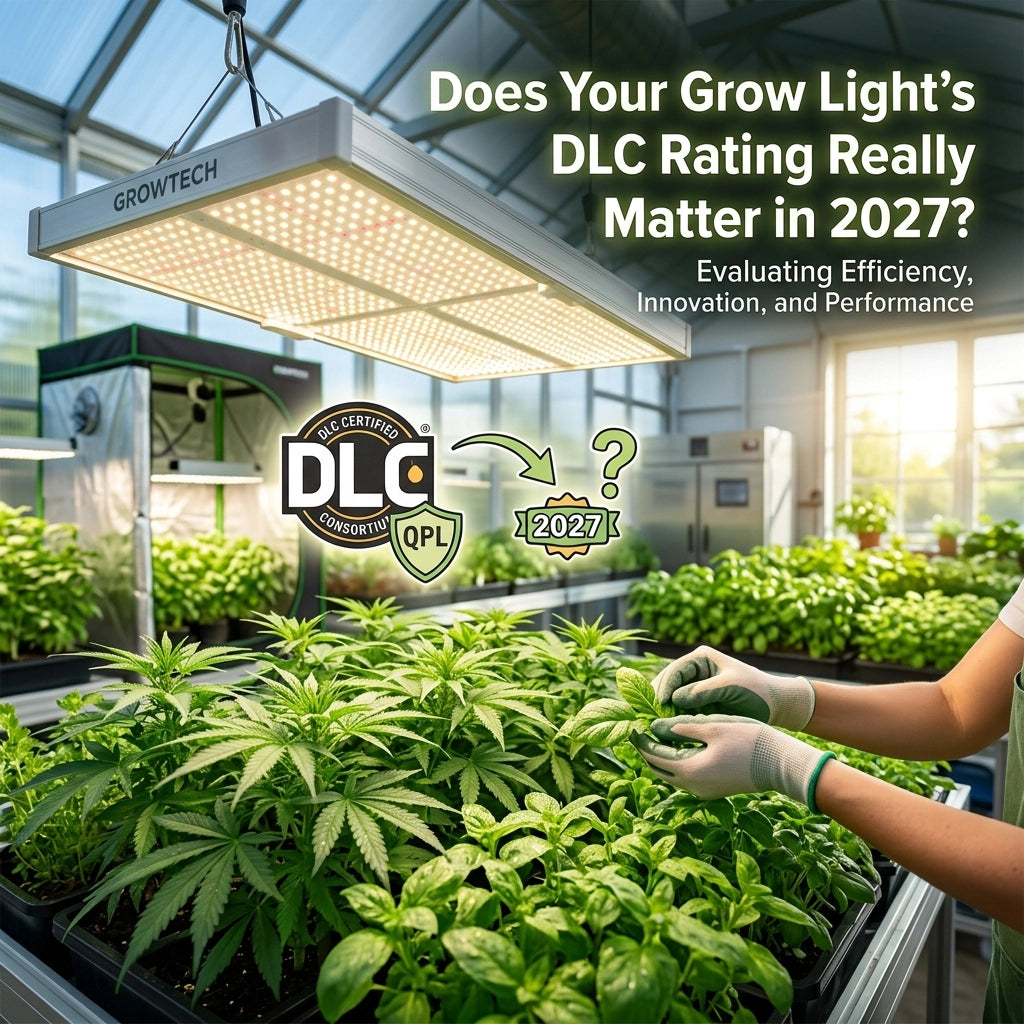
If you’ve been hanging around the indoor growing community for a while, you’ve probably seen three little letters popping up on spec sheets more often: DLC. As we move into 2027, the technology behind grow lights has reached a point where almost everything on the market looks "good" on paper. But as any experienced grower knows, what looks good on a flashy Instagram ad doesn't always translate to a successful harvest or a manageable electricity bill.
So, the big question we’re tackling today is: Does a DLC rating actually matter for your setup in 2027, or is it just another piece of industry jargon designed to inflate the price tag?
The short answer is: It matters more than ever, but maybe not for the reasons you think. Let’s break down what this rating actually is and why it should (or shouldn’t) influence your next purchase at Perfect Gardens.
What Exactly is a DLC Rating?
DLC stands for the DesignLights Consortium. They are a non-profit organization that defines high-performance standards for the lighting industry. Think of them as the "Energy Star" but for professional and industrial-grade lighting.
When a manufacturer like MEDIC GROW or KIND LED wants to prove their light is top-tier, they submit it to the DLC for rigorous third-party testing. If the light passes, it gets added to the Qualified Products List (QPL).
In 2027, the standards have evolved. We are no longer just looking at "is it bright?" We are looking at "how efficiently does it turn electrons into usable photons for your plants?" The DLC recently updated their standards to focus on things like SSL V6.0, which pushes for higher efficacy and better light quality than we saw even two or three years ago.
Why Commercial Growers Can't Ignore It
If you are running a commercial operation, the DLC rating isn't just a suggestion, it’s a financial lifeline. Here’s why:
1. Utility Rebates (The "Free Money" Factor)
The number one reason commercial facilities hunt for DLC-listed grow lights is for utility rebates. Most major power companies won't give you a dime in rebates unless the fixtures you install are DLC certified.
In many states, these rebates can cover up to 30-50% of the initial cost of your lighting. If you’re buying a hundred high-end fixtures, that is a massive amount of capital you get to keep in your pocket. By 2027, energy grids are under more pressure than ever, and utility companies are getting even stricter about only incentivizing the most efficient tech.
2. Operational Security and Longevity
The DLC doesn't just check for brightness; they check for how long that brightness lasts. For a light to be DLC-listed, it has to prove it can maintain its output over a long period (often measured in L90, or the time it takes for the light to drop to 90% of its original intensity).
In a commercial setting, you can't afford to have your light spectrum shifting or your intensity dropping off after 12 months. DLC-rated lights are built with superior heat sinks and higher-quality diodes, meaning less downtime and fewer replacements.
The Science: PPE and Spectrum Quality
In the "old days" (which feels like last week in the tech world), we just looked at Watts. Then we moved to PAR. In 2027, we’re looking at Photosynthetic Photon Efficacy (PPE).
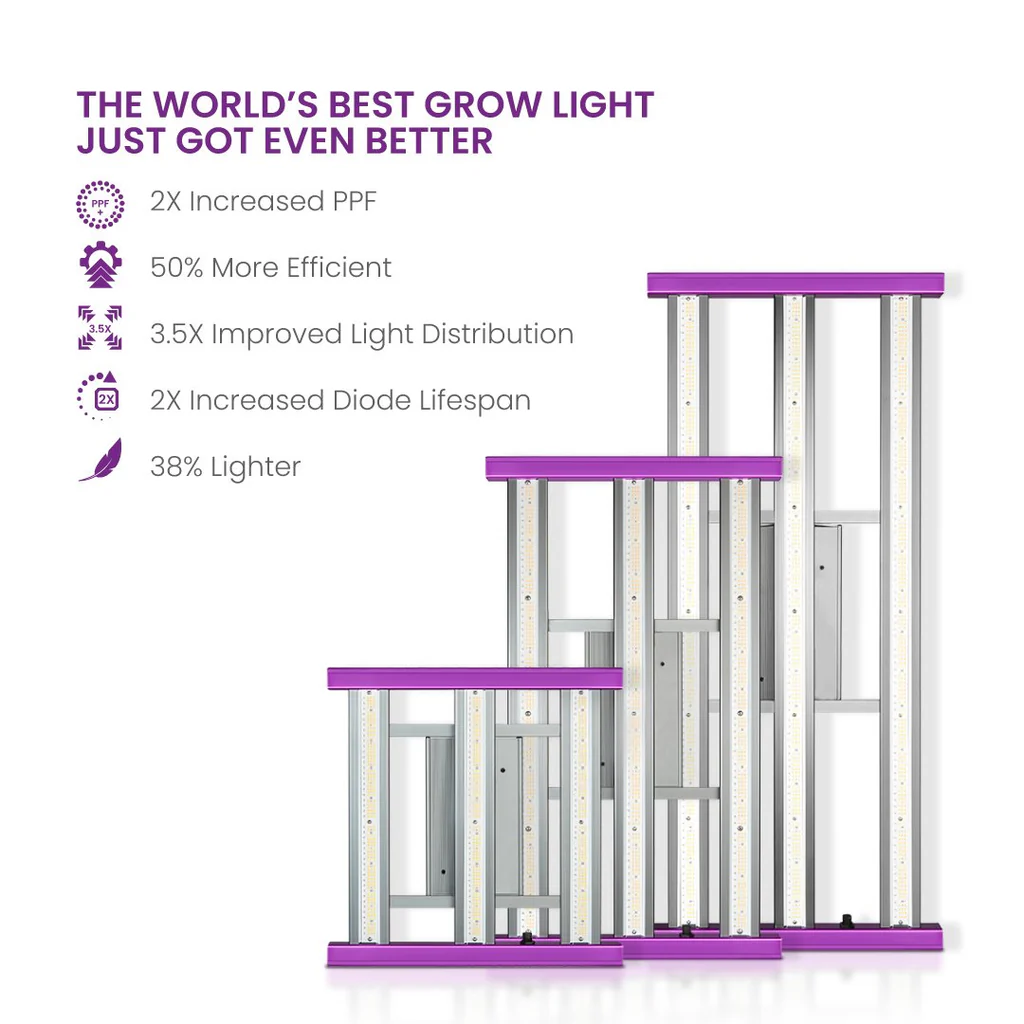
The DLC rating ensures that a light meets a minimum PPE threshold. This means you aren't just paying for heat; you’re paying for the specific light wavelengths that drive photosynthesis. Lights from brands like KIND LED are engineered to maximize this, often providing 50% higher efficiency than non-rated competitors.

Furthermore, the newer DLC standards require better Color Rendering Index (CRI) standards. Why does this matter for plants? Because "light quality" isn't just about the red and blue peaks anymore. We now understand the importance of a full, balanced spectrum for secondary metabolite production (the stuff that makes your plants smell and taste great).
Does the Home Grower Need to Care?
This is where the conversation shifts. If you’re a hobbyist with one AC Infinity Grow Tent in your spare bedroom, are you really going to see a utility rebate? Probably not. Most residential power programs don't offer the same DLC-based incentives that commercial accounts do.
However, you should still care for two main reasons:
- Quality Assurance: The DLC rating is a "no-BS" stamp of approval. The grow light market is flooded with cheap knock-offs claiming "2000W Output!" while only drawing 100W from the wall and using sub-par diodes. A DLC rating tells you exactly what you are getting. It’s a shield against bad marketing.
- Heat Management: Efficient lights produce less waste heat. In a small grow tent, heat is your biggest enemy. A DLC-rated light that converts more energy into light and less into heat makes it much easier to keep your environment stable without running your fans at 100% all day.
Comparing the Giants: KIND LED vs. MEDIC GROW
When looking at our catalog at Perfect Gardens, you’ll notice that brands like KIND LED and MEDIC GROW frequently highlight their specs.
- KIND LED: These guys have been leaders in the space for a long time. Their latest fixtures are designed with a focus on light distribution. One of the common issues with non-DLC lights is "hot spots", where the center of the tent is burning your plants while the corners are starving. KIND’s engineering ensures a 3.5X improvement in light distribution, which is the kind of detail DLC testing looks for.
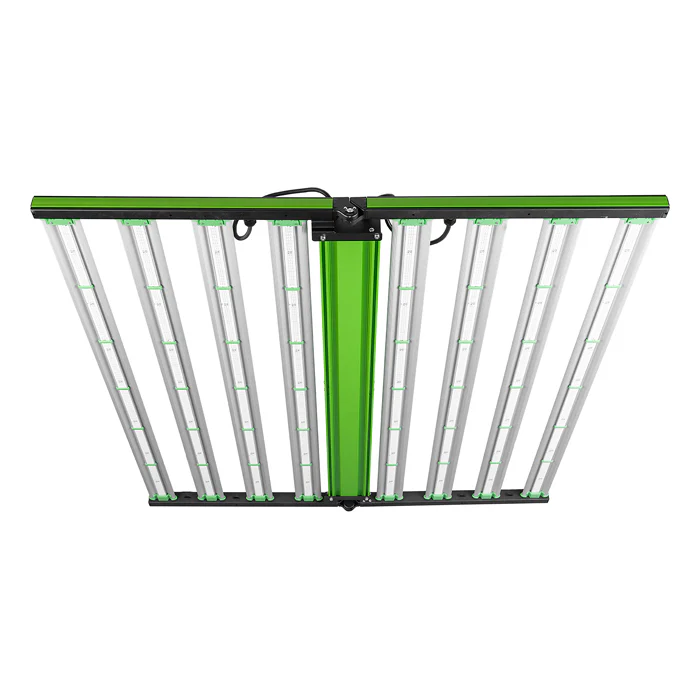
- MEDIC GROW: If you’re looking for high-wattage power, like the Spectrum-Y Wireless, these lights are built for the heavy hitters. They offer wireless control and tunable spectrums. The fact that they aim for these high efficiency standards while offering features like UV/IR output shows how far the industry has come.
The "Hidden" Benefits of DLC Lighting in 2027
Beyond just the plants and the power bill, there are a few other reasons the DLC rating has become the standard:
- Fire Safety: Part of the DLC testing involves looking at the build quality and electrical safety of the drivers. A cheap, non-rated light is a much higher fire risk than a certified fixture.
- Insurance: Believe it or not, some commercial insurance providers are starting to ask about the UL and DLC listings of equipment. Using certified gear can actually lower your liability.
- Resale Value: If you ever decide to upgrade your grow and sell your old gear, a light with a recognized DLC rating is going to hold its value much better than a generic "no-name" light.

Common Misconceptions
Let’s clear up a few things that people often get wrong:
"If it’s not DLC-listed, it’s a bad light."
Not necessarily. Some boutique lighting companies make incredible lights but simply don't want to pay the high fees associated with DLC testing. However, without that rating, you are basically taking the manufacturer's word for it. In 2027, with so many options available, why take the risk?
"DLC lights are too expensive."
While the upfront cost might be slightly higher, the "total cost of ownership" is almost always lower. When you factor in the energy savings, the lack of bulb replacements, and the increased yield from a better spectrum, the light pays for itself within a few cycles.
How to Check a Rating
Don’t just take a website's word for it. You can actually go to the DesignLights Consortium website and search their Qualified Products List. You can search by brand or model number. If you’re shopping on our site and have questions about a specific fixture’s certification, you can always reach out to us. We’re big on transparency here.
Summary: Is it Worth it?
As we look at the landscape of indoor gardening in 2027, the answer is a resounding yes.
If you are a commercial grower, it is a non-negotiable. The rebates and operational efficiency are the difference between a profitable year and a struggling one.
If you are a home grower, it is your best insurance policy against buying "junk" tech. It guarantees that the grow lights you are hanging over your precious plants are safe, efficient, and actually capable of doing what the box says they can do.
Whether you're looking at a high-end KIND LED setup or a robust MEDIC GROW system, checking for that DLC rating is the smartest first step you can take in the New Year.
Ready to upgrade your spectrum? Check out our full collection of LED Grow Lights and let’s get your 2027 harvest off to a bright start!



Leave a comment
This site is protected by hCaptcha and the hCaptcha Privacy Policy and Terms of Service apply.