
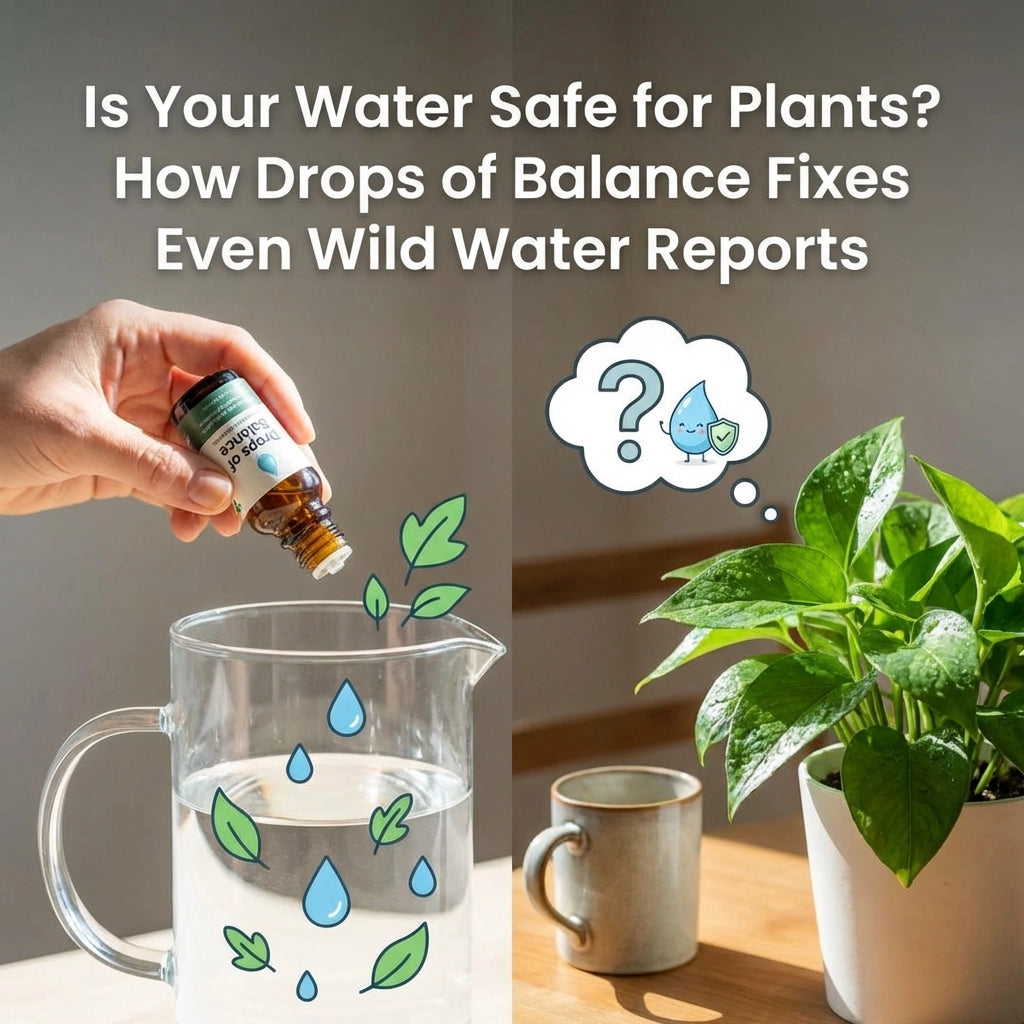
Most growers assume their tap water is "good enough" for plants. The reality? Even municipal water systems that meet drinking standards can contain dozens of contaminants that slowly poison your growing medium and block nutrient uptake. We're talking about everything from chlorine and fluoride to heavy metals, pharmaceutical residues, and industrial chemicals that accumulate over time.
The problem gets worse when you're dealing with well water or municipal supplies in agricultural areas. High copper levels, uranium deposits, excessive alkalinity, and agricultural runoff create a cocktail of plant-damaging compounds that standard filtration can't handle.
Here's what you need to know about protecting your plants from contaminated water, and how Drops of Balance addresses even the most challenging water reports.
The Hidden Dangers in Your Water Supply
Chlorine and Chloramine: The Stealth Plant Killers
Municipal water treatment facilities pump chlorine and chloramine into the supply to kill pathogens. While this keeps humans safe, it creates major problems for plant health. Chlorine stress disrupts cellular processes in plants, while chloramine, a more stable compound, persists longer in your growing medium.
These chemicals don't just harm plants directly. They also wipe out beneficial soil microorganisms that plants depend on for nutrient processing. Every watering with chlorinated water is essentially sterilizing your root zone, forcing plants to work harder for basic nutrition.
Heavy Metal Contamination: More Common Than You Think
Lead pipes in older municipalities, copper from industrial processes, and naturally occurring uranium in groundwater sources create heavy metal loads that accumulate in plant tissues. These metals interfere with enzyme function and can block the uptake of essential nutrients like iron and zinc.
High copper levels are particularly problematic because copper is both a necessary micronutrient and a toxin. Too little copper causes deficiency symptoms, but excess copper from contaminated water sources creates a lockout situation where plants can't access other minerals properly.

Agricultural and Industrial Chemical Residues
Pharmaceutical compounds, pesticide residues, and industrial solvents make their way into water supplies through agricultural runoff and waste treatment discharge. These chemicals weren't designed to break down quickly, so they persist in irrigation water and build up in growing media over multiple growing cycles.
The cumulative effect is subtle but devastating. Plants may appear healthy initially, but nutrient uptake efficiency drops, root development suffers, and overall plant vitality declines over time.
How Drops of Balance Neutralizes Over 250 Contaminants
The Science Behind Precipitation and Restructuring
Drops of Balance doesn't work like traditional water filters that physically remove contaminants. Instead, it uses a concentrated blend of ionic mineral salts to bind with harmful substances and precipitate them out of solution. This process fundamentally changes the molecular structure of contaminants, rendering them harmless to plants.
The key mechanism involves electrical charge attraction. Heavy metals, chlorine compounds, and other contaminants carry specific electrical charges. The ionic minerals in Drops of Balance carry opposite charges, creating binding reactions that neutralize harmful substances.
Adding Essential Minerals While Removing Toxins
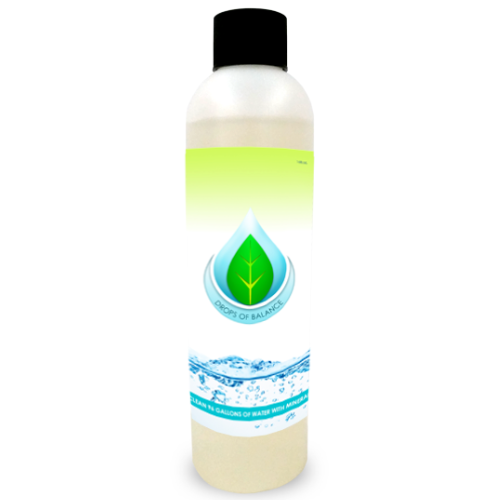
While neutralizing contaminants, Drops of Balance simultaneously adds beneficial minerals like calcium, phosphorus, potassium, and magnesium to your water. This dual action means you're not just removing the bad stuff, you're enhancing the nutritional profile of your irrigation water.
These minerals don't just feed plants directly. They also create an environment where beneficial fungi and bacteria can establish themselves more readily. Healthy soil microbiology is essential for nutrient cycling and plant immune system support.
Usage Rates and Application Guidelines
Standard Dosing for Different Water Sources
For typical tap water, use 1 ml of Drops of Balance per gallon of water. This rate handles standard municipal water treatment chemicals and moderate contamination levels.
For well water or heavily contaminated municipal supplies, you may need to increase the dosage. Start with the standard 1 ml per gallon rate and observe plant response over 2-3 weeks. If you're still seeing signs of water-related stress, gradually increase to 1.5 ml per gallon.
The Critical pH Requirement
Here's something most growers miss: Drops of Balance only works effectively in water with pH below 7.0. If your water source is alkaline (pH above 7), the product gets neutralized before it can bind with contaminants.
Test your water pH first. If it's above 7.0, you'll need to acidify it before adding Drops of Balance. Use pH Down or a similar acid to bring the pH to 6.5-6.8, then add your Drops of Balance dosage.

Proper Application Technique
- Measure your water pH and adjust to 6.5-6.8 if needed
- Add Drops of Balance at 1 ml per gallon
- Stir gently and let the water settle for 15 minutes
- Observe precipitation - you may see small particles or cloudiness as contaminants bind and drop out
- Proceed with your regular feeding schedule - the water is now ready for plant use
The 15-minute settling period is crucial. This gives the binding reactions time to complete and allows precipitated contaminants to settle out of solution.
Understanding Water Chemistry and "Living" Water
What Makes Water Truly Plant-Friendly
"Living" water isn't just about removing harmful substances, it's about creating a balanced mineral profile that supports biological activity. Sterile, distilled water might be pure, but it lacks the mineral complexity that plants and soil organisms need to thrive.
Drops of Balance creates this mineral complexity while removing toxins. The result is water that carries electrical conductivity from beneficial minerals rather than harmful salts. This improved conductivity helps with nutrient transport both in the water itself and within plant tissues.
Surface Tension and Water Penetration
Another often-overlooked benefit: Drops of Balance breaks down water surface tension, improving penetration into growing media. This is especially important in container growing or hydroponic systems where water needs to reach all parts of the root zone efficiently.
Poor water penetration creates dry pockets in growing media, leading to uneven nutrient distribution and root development problems. By improving water mobility, Drops of Balance ensures more consistent moisture and nutrient availability throughout the root zone.
Real-World Applications and Results
Municipal Water Success Stories
Commercial growers dealing with high-chlorine municipal water have reported dramatic improvements in plant health within 1-2 weeks of switching to Drops of Balance-treated water. The most common observations include improved root development, better nutrient uptake efficiency, and reduced signs of nutrient lockout.
In hydroponic systems, the improvements are often visible within days. Reservoir water stays cleaner longer, and plants show more vigorous growth patterns when fed with properly treated water.

Well Water Challenges and Solutions
Well water presents unique challenges because contamination patterns vary widely by location. Agricultural areas may have high nitrate levels from fertilizer runoff. Mining regions often show elevated heavy metal concentrations. Industrial areas can have complex chemical contamination profiles.
Drops of Balance handles this variability because it works on electrical charge principles rather than targeting specific contaminants. Whether you're dealing with copper, uranium, agricultural chemicals, or industrial residues, the binding and precipitation mechanism remains effective.
Best Practices for Home and Commercial Applications
Container Size and Storage Considerations
Drops of Balance comes in sizes from 2 oz to 5-gallon containers. For home growers, the 8 oz or 16 oz bottles provide good value and treat 240-480 gallons respectively. Commercial operations often benefit from the gallon or 5-gallon sizes for cost efficiency.
Store the product in a cool, dark place. The concentrated mineral salts remain stable for years when properly stored, making it a reliable long-term solution for water treatment.
Integration with Existing Nutrient Programs
Drops of Balance is compatible with all nutrient lines and growing methods. It's not a replacement for your regular feeding program: it's a water conditioning step that makes your existing nutrients more effective.
Add Drops of Balance to your water first, let it settle for 15 minutes, then proceed with your regular nutrient mixing routine. The improved water quality enhances nutrient uptake efficiency, often allowing you to reduce nutrient concentrations while maintaining the same growth rates.
Monitoring and Adjustment
Track plant response over the first month after switching to treated water. Most growers notice improved vigor within 2-3 weeks. If you're not seeing improvements, check your application technique: particularly pH adjustment and settling time.
Some extremely contaminated water sources may require higher dosing rates or additional treatment steps. Start conservative and increase gradually rather than overdosing from the beginning.
The investment in proper water treatment pays dividends in plant health, nutrient efficiency, and overall growing success. When you eliminate the hidden stressors in your water supply, plants can focus their energy on growth rather than dealing with toxins: and that difference shows up clearly in your final results.

Leave a comment
This site is protected by hCaptcha and the hCaptcha Privacy Policy and Terms of Service apply.