
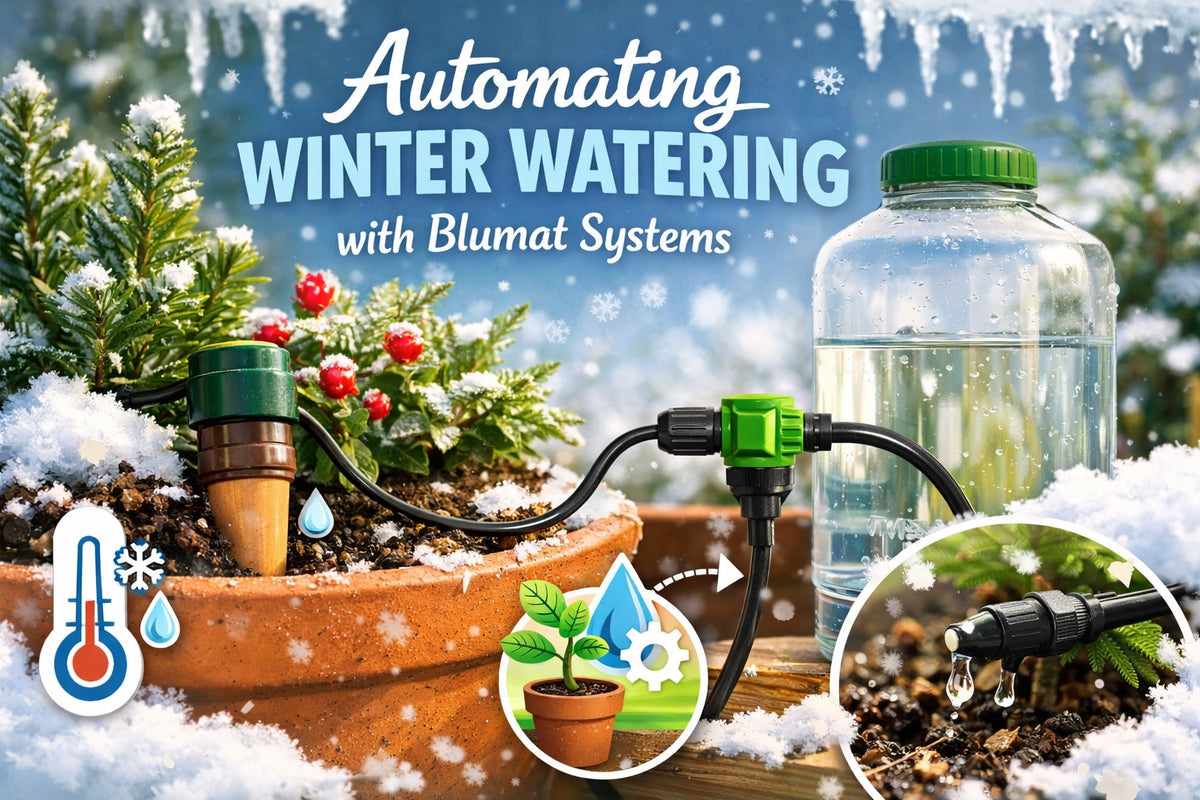
As the temperature drops outside, many of us shift our focus to the indoor grow room. Winter brings a unique set of challenges: the air is drier because of our heaters, yet the plants often grow slower due to reduced metabolic rates and cooler ambient temperatures. This creates a tricky balancing act for watering. If you stick to your summer watering schedule, you’ll likely end up with root rot. If you neglect them, the low humidity will crisp up your fan leaves faster than you can say "harvest."
The solution? Stop guessing and let the plants decide when they are thirsty. At Perfect Gardens, we’ve seen plenty of gadgets come and go, but the Blumat system remains one of the most reliable ways to automate your irrigation without the need for complex computers or even electricity.
The Science of "Plant-Driven" Irrigation
Most automated watering systems work on a timer. You tell the pump to turn on for two minutes every six hours. This is "proactive" watering, and it’s inherently flawed during the winter. Why? Because your plants' needs change daily. On a sunny, warmer day, they might drink a gallon; on a cold, overcast day where the grow room stays at 65°F, they might only need a quart.
Blumat systems operate on a "reactive" principle using ceramic sensors, often called "carrots." These are tensiometers that measure the moisture tension in the soil.
- How it works: The ceramic cone is porous. When the soil dries out, it exerts a suction force that pulls a tiny amount of water out of the sensor.
- The Trigger: This suction creates a vacuum inside the sensor, which pulls down a rubber diaphragm.
- The Flow: When that diaphragm drops, it opens a piece of "thin-walled" tubing, allowing water to flow from your reservoir directly into the pot.
- The Shut-off: As the soil becomes moist again, the suction stops, the diaphragm rises, and the tube is pinched shut.
This means during the winter months, when growth naturally slows down, the Blumat system automatically throttles back the water. You don't have to adjust a single setting.

Why Automation is Crucial in Winter
Winter gardening often means dealing with fluctuating VDP (Vapor Pressure Deficit). Your heaters kick on, the humidity drops to 20%, and the plants start transpiring like crazy to keep up. Then the lights go out, the heater turns off, and the humidity spikes.
Consistency is the name of the game. When you hand-water, you are often putting the plant through a cycle of "drought and deluge." This stresses the root system and can lead to salt buildup in the medium. A Blumat system keeps the moisture levels within a very narrow "sweet spot." This consistency is especially important if you are using beneficial microbes or mycorrhizae, which require a stable, moist environment to thrive and protect your roots from the cold.
If you’re looking for more tips on how to keep your environment stable, check out our grow-help-videos for deep dives into environmental controllers.
Setting Up Your Winter System: Step-by-Step
Setting up a Blumat system isn't hard, but it does require attention to detail. If you rush the setup, you’ll end up with a "runaway" where your reservoir empties onto your floor: something nobody wants to deal with in the middle of November.
1. Choose the Right Kit and Sensor Size
First, evaluate your pot sizes.
- Standard 5" Sensors: These are perfect for pots up to 10 gallons.
- 9" Maxi Sensors: If you are running large Grassroots fabric raised beds or 15-20 gallon containers, you need the extra depth to ensure the moisture is being read from the core of the root ball.
2. Prepare the "Carrots"
This is the most important step. You must soak your ceramic sensors in water for at least 15-20 minutes (some growers prefer 24 hours). While underwater, screw the tops on tight to ensure there is no air trapped inside. An air bubble inside the sensor is the #1 cause of system failure.
3. Establish Your Reservoir
For a winter setup, you want a reservoir that can hold enough water for at least a week of autonomy. The Grow1 collapsible water storage tank is an excellent choice because it’s easy to store when not in use and features a bottom spigot that integrates perfectly with 8mm Blumat tubing.
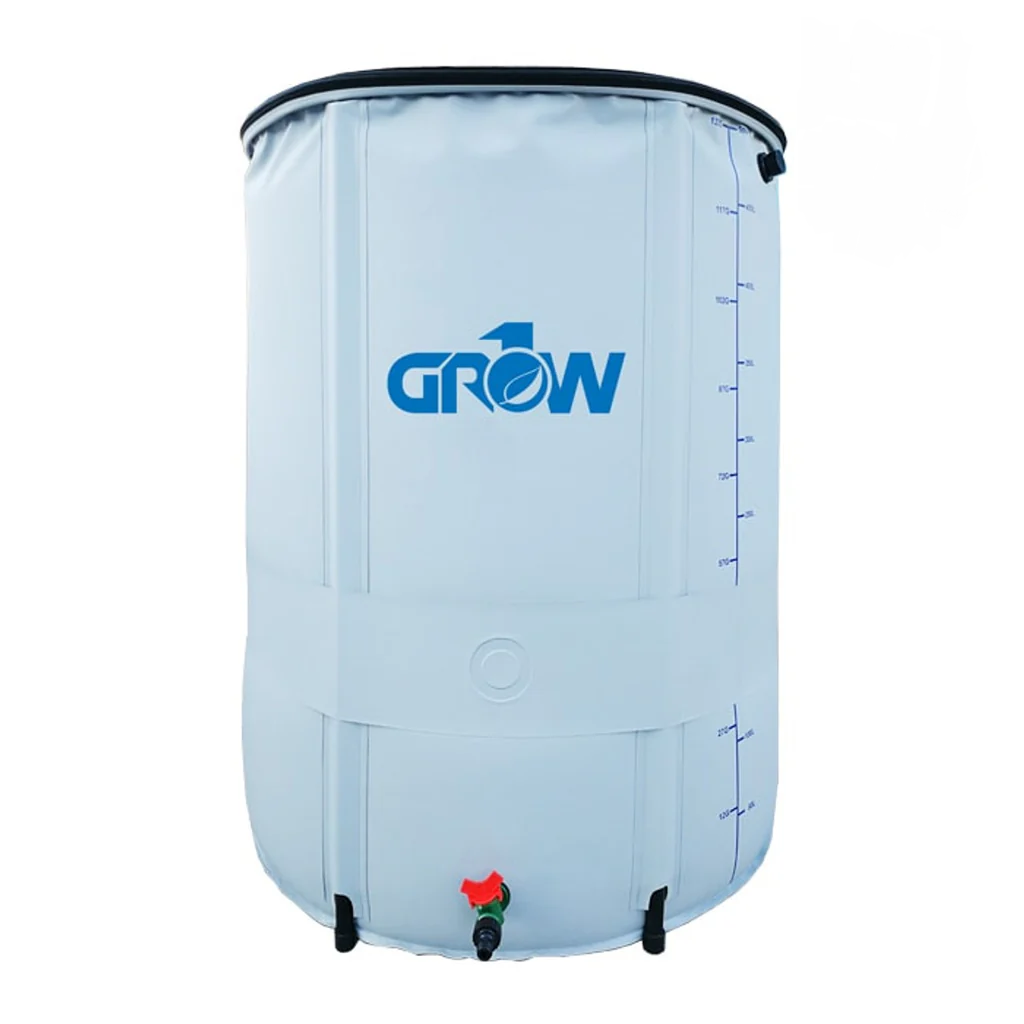
Pro Tip: Position your reservoir at least 3 feet above the height of your pots. Blumat systems are gravity-fed. For every foot of elevation, you gain about 0.43 PSI. You need that pressure to push the water through the lines consistently.
4. Installation and Calibration
Once your lines are run and your sensors are pushed into the medium (make sure the medium is already at your "ideal" moisture level before inserting), you need to calibrate the "brown knob" on top of the sensor.
- Open the valve until water starts to drip.
- Slowly close it until the drip stops.
- Turn it another "two marking arrows" (about 1/8th of a turn) to the closed position.
- This sets the "tension threshold."
Managing Nutrients and Water Quality
One of the common misconceptions is that you can't run nutrients through Blumats. You can, but you have to be careful. Heavy organic nutrients or thick teas will clog the thin 3mm drip lines.
In the winter, we recommend focusing on clean, mineral-based nutrition or using the Blumats for pure water while top-dressing your nutrients. Regardless of your choice, water quality is paramount. Cold water holds more oxygen, but it can also shock roots. Try to keep your reservoir in the same room as your plants so it stays at ambient temperature.
To prevent mineral buildup and ensure your plants are getting the trace elements they need during the slower winter growth phase, we highly recommend adding Drops of Balance to your reservoir. It helps purify the water and provides a balanced mineral profile that keeps the "lines" clean and the plants healthy.

Winter Maintenance and Troubleshooting
Even with an automated system, you can't just "set it and forget it" for three months. Winter brings its own set of maintenance needs:
- Check for Air Bubbles: Every few weeks, check the clear 3mm tubing. If you see large air bubbles, you may need to re-prime that specific sensor.
- Monitor Humidity: High humidity in winter can slow down evaporation from the soil. If you notice your pots are staying too wet, you might need to tighten the Blumat adjustment knob by another half-mark.
- Cleaning: If you are running nutrients, flush your lines with a mild acidic solution (like a commercial line cleaner or very diluted citric acid) between runs to prevent biofilm buildup.

Caution: The "Runaway" Risk
The biggest fear with Blumats is a "runaway," where the valve stays open and floods the tent. This usually happens for two reasons:
- The reservoir ran dry: Air got into the lines, and the sensors lost their prime.
- The sensor wasn't seated: If the soil pulls away from the ceramic cone (common in peat-based mixes that get too dry), the sensor thinks the soil is "infinite-dry" and keeps the valve open.
To prevent this, always keep your reservoir topped off and ensure your soil medium has good contact with the ceramic "carrot." Using fabric pots or raised beds helps maintain a consistent moisture gradient that Blumats love.
Final Thoughts
Automating your winter watering with a Blumat system is one of the best investments you can make for your indoor garden. It removes the human error of overwatering during the cold months and ensures your plants never face the stress of a dry pot. By letting the plant's own transpiration rate dictate the water flow, you’re mimicking a more natural, stable environment.
If you're ready to stop lugging watering cans and start growing more efficiently, check out our full range of irrigation supplies. If you run into any trouble during your setup, don't hesitate to reach out to us at our contact page: the Army of Growers is always here to help you dial in your garden.
Happy growing, and stay warm in that grow room!


Leave a comment
This site is protected by hCaptcha and the hCaptcha Privacy Policy and Terms of Service apply.