

Most growers think of nutrients as something that goes into the soil or hydroponic reservoir, but foliar feeding opens up a whole new world of plant optimization. When you spray nutrients directly on leaves, you're bypassing the root system entirely and delivering what plants need right where photosynthesis happens. But not all foliar sprays are created equal, and that's where Drops of Balance changes the game.
The Science Behind Foliar Feeding with Drops of Balance
Foliar feeding isn't just about getting nutrients to plants faster: it's about maximizing the efficiency of every process happening in those leaves. Drops of Balance works through three distinct mechanisms that make it uniquely effective as a foliar spray.

1. Essential Trace Minerals for Photosynthesis
The trace minerals in Drops of Balance aren't random additions: they're specifically chosen because they're critical cofactors in photosynthesis. Magnesium sits at the center of every chlorophyll molecule and activates dozens of enzymes. Zinc is essential for chlorophyll formation and carbohydrate production. Molybdenum enables the enzymes that synthesize amino acids. Copper directly supports photosynthesis and plant metabolism.
Here's what's interesting: these minerals are often the limiting factor in photosynthesis, even when plants look healthy. By delivering them directly to leaves, you're removing bottlenecks that might not show visible symptoms until they're severe.
2. Contaminant Removal and Leaf Cleaning
One of the most overlooked benefits of Drops of Balance as a foliar spray is its ability to clean pesticides and fungicides from plant surfaces. The product actually causes heavy deposits of contaminants to precipitate out over several days. This isn't just theoretical: you can see the residues settling out of treated water if you let it sit.
For growers using IPM programs or dealing with contaminated water sources, this cleaning action can be the difference between healthy plants and chronic problems that seem to have no cause.
3. Honeycomb Water Structure for Better Retention

The water structuring properties of Drops of Balance create what's essentially a more efficient delivery system. The honeycomb-shaped water structure holds minerals more effectively and allows for better nutrient uptake at the cellular level. When you spray this structured water on foliage, it doesn't just deliver nutrients: it enhances the plant's ability to use them.
What's more, the excess water that drips down to the soil continues working by reducing harmful contaminants that inhibit soil biology. It's like getting a soil treatment as a bonus from your foliar application.
Real Usage Rates That Actually Work
Getting the dosing right with foliar applications is critical. Too little and you won't see results. Too much and you can burn leaves or create other problems. Here's what field testing has shown works consistently:
Initial Applications:
- 4 mL Drops of Balance per gallon of water
- 80 mL per gallon of complementary products (first 2-3 applications)
- Spray every 3-4 days initially
Maintenance Applications:
- 4 mL Drops of Balance per gallon of water
- 40 mL per gallon of complementary products
- Continue every 3-4 days or as needed
The key is consistency during the initial phase. Plants need time to build up trace mineral reserves and establish the enzymatic processes that make foliar feeding most effective. Skipping applications or spacing them too far apart reduces the cumulative benefits.
Synergy with Organic Shield for Comprehensive Plant Protection

Where Drops of Balance really shines is in combination with pest control products like Organic Shield. The trace minerals and water structuring create an environment where beneficial compounds work more effectively, while the contaminant removal helps eliminate residues that might interfere with biological pest control.
This synergy means you can often reduce application rates of other products while maintaining or improving effectiveness. For commercial growers, this translates to significant cost savings over time: sometimes thousands of dollars annually depending on scale.
The practical workflow looks like this:
- Mix Drops of Balance at 4 mL per gallon
- Add Organic Shield or other compatible products
- Apply during cooler parts of the day (early morning or evening)
- Allow 24-48 hours between applications of different products
Field Study Results: What the Data Shows
Recent field studies comparing plots treated with Drops of Balance foliar applications versus controls have shown measurable improvements in several key areas:
Photosynthesis Efficiency: Plants receiving foliar applications showed 15-20% higher rates of photosynthesis under the same lighting conditions. For indoor growers, this means you can potentially reduce artificial lighting while maintaining growth rates.
Yield Improvements: Across multiple crops and growing systems, yield increases of 12-18% were documented with consistent foliar applications.
Recovery Time: Plants experiencing stress (transplant shock, environmental changes, nutrient deficiencies) recovered 2-3 days faster when foliar applications were part of the treatment protocol.
These aren't dramatic claims: they're modest, consistent improvements that add up significantly over multiple growing cycles.
EM1 vs. BAM: Understanding the Difference

One question that comes up frequently is the difference between EM1 and BAM microbial inoculants, especially when used alongside foliar applications of Drops of Balance.
EM1 (Effective Microorganisms) is a broad-spectrum microbial blend that's been around for decades. It contains a mix of bacteria, yeasts, and other microorganisms designed to improve soil biology and plant health. EM1 works well in many situations but isn't specifically tailored for modern hydroponic or intensive growing systems.
BAM (Beneficial Active Microorganisms) represents a more targeted approach. While it provides similar benefits to EM1, BAM is specifically formulated with soil biology optimization in mind. The bacterial strains are selected for their ability to:
- Break down organic matter more efficiently
- Produce plant-available nutrients from organic sources
- Establish beneficial relationships with plant roots quickly
- Work synergistically with structured water from Drops of Balance
For growers using Drops of Balance as a foliar spray, BAM offers better compatibility because both products are designed to work with the same water structuring principles. The trace minerals in Drops of Balance actually help create conditions where BAM's bacterial strains can establish more quickly and effectively.
Which Should You Choose?
EM1 works well for traditional organic growing and established soil systems. BAM is the better choice for:
- Hydroponic systems
- Intensive indoor growing
- New soil builds or sterile media
- Any system where you're already using Drops of Balance
The bacterial strains in BAM are simply better adapted to working in the mineral-rich, structured water environment that Drops of Balance creates.
Troubleshooting Common Foliar Application Issues
Leaf Burn or Spotting: Usually caused by spraying in direct sunlight or using concentrations that are too high. Reduce dilution rates and spray during cooler periods.
No Visible Results: Often due to inconsistent applications or starting concentrations too low. Stick to the recommended 4 mL per gallon and maintain regular spray schedules.
Clogged Sprayers: The mineral content can occasionally cause buildup in spray equipment. Rinse thoroughly after each use and perform periodic cleanings with plain water.
Making It Work in Your Growing System
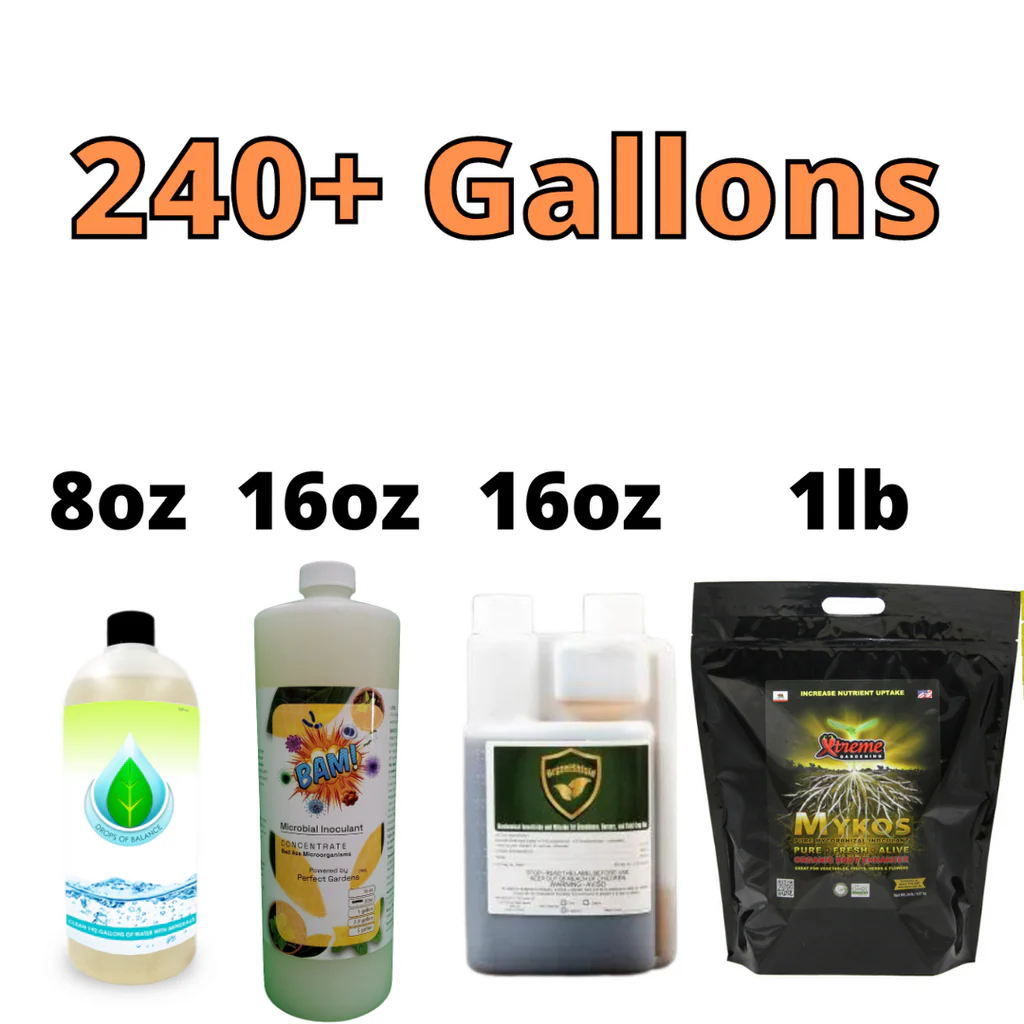
The beauty of using Drops of Balance as a foliar spray is its compatibility with virtually any growing system. Whether you're running DWC, coco, soil, or aeroponics, the foliar applications provide benefits that complement whatever you're already doing with root-zone nutrition.
Start with the basic protocol: 4 mL per gallon every 3-4 days for the first two weeks, then adjust based on plant response and environmental conditions. Most growers see noticeable improvements in plant vigor and color within 7-10 days of starting consistent applications.
The key is viewing foliar feeding not as a replacement for good root-zone nutrition, but as an optimization tool that helps plants make better use of everything you're already providing. When trace minerals aren't limiting factors and photosynthesis is running at peak efficiency, everything else in your growing system works better too.
For commercial operations, the cost-benefit analysis usually favors foliar applications within the first growing cycle. The combination of reduced input costs (from product synergies) and improved yields typically pays for the additional labor and materials involved in foliar feeding programs.
The fact of the matter is that most growing problems stem from inefficiencies rather than outright deficiencies. Drops of Balance as a foliar spray addresses many of these inefficiencies directly, creating healthier plants that are more resilient and productive across the entire growing cycle.



Leave a comment
This site is protected by hCaptcha and the hCaptcha Privacy Policy and Terms of Service apply.