
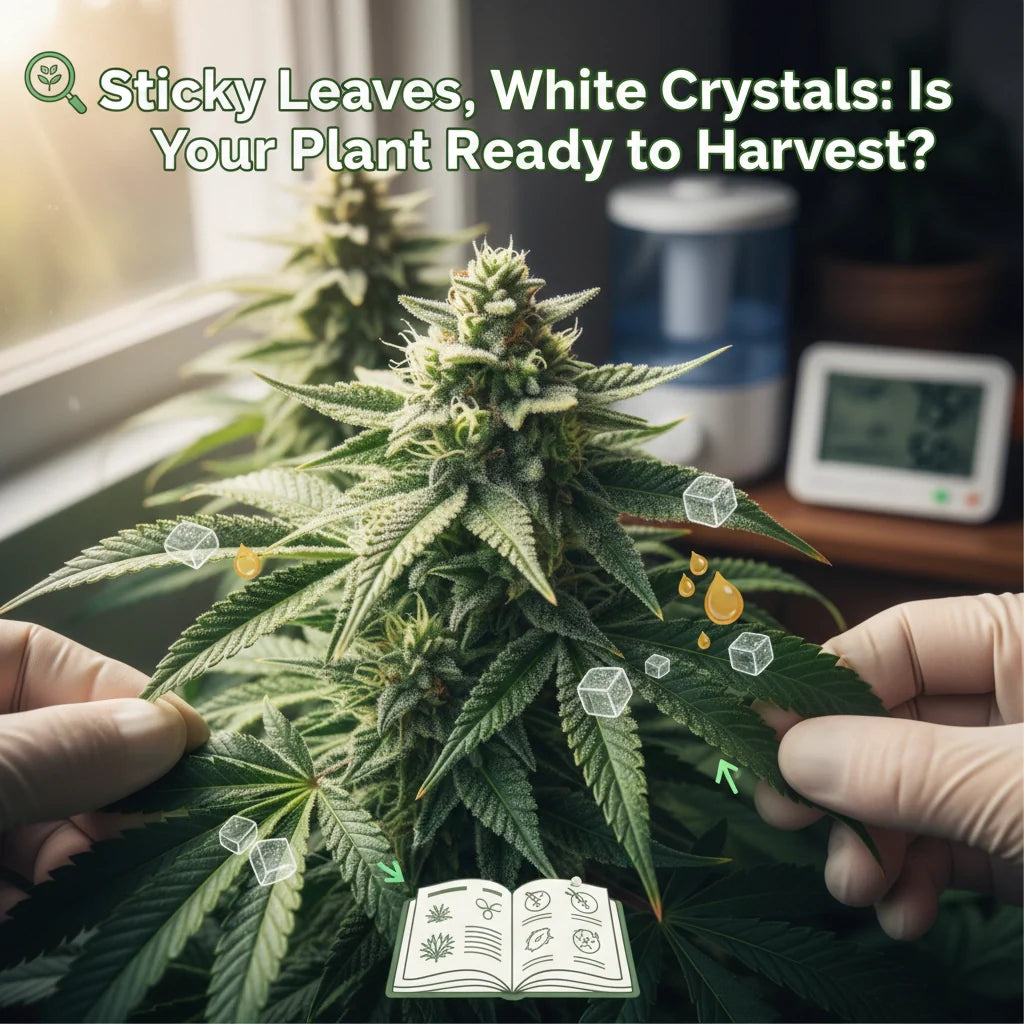
You've been watching your plants for weeks, and now you're seeing something exciting: sticky leaves covered in what looks like white crystals. Your heart starts racing because you know harvest time is approaching. But here's the million-dollar question: are you actually ready to cut, or should you wait a little longer?
The answer isn't as straightforward as you might think. Those white crystals and sticky leaves are definitely good signs, but there's a smarter way to approach harvest timing that could significantly boost your yield and potency.
Understanding Those White Crystals: Your Trichome Guide
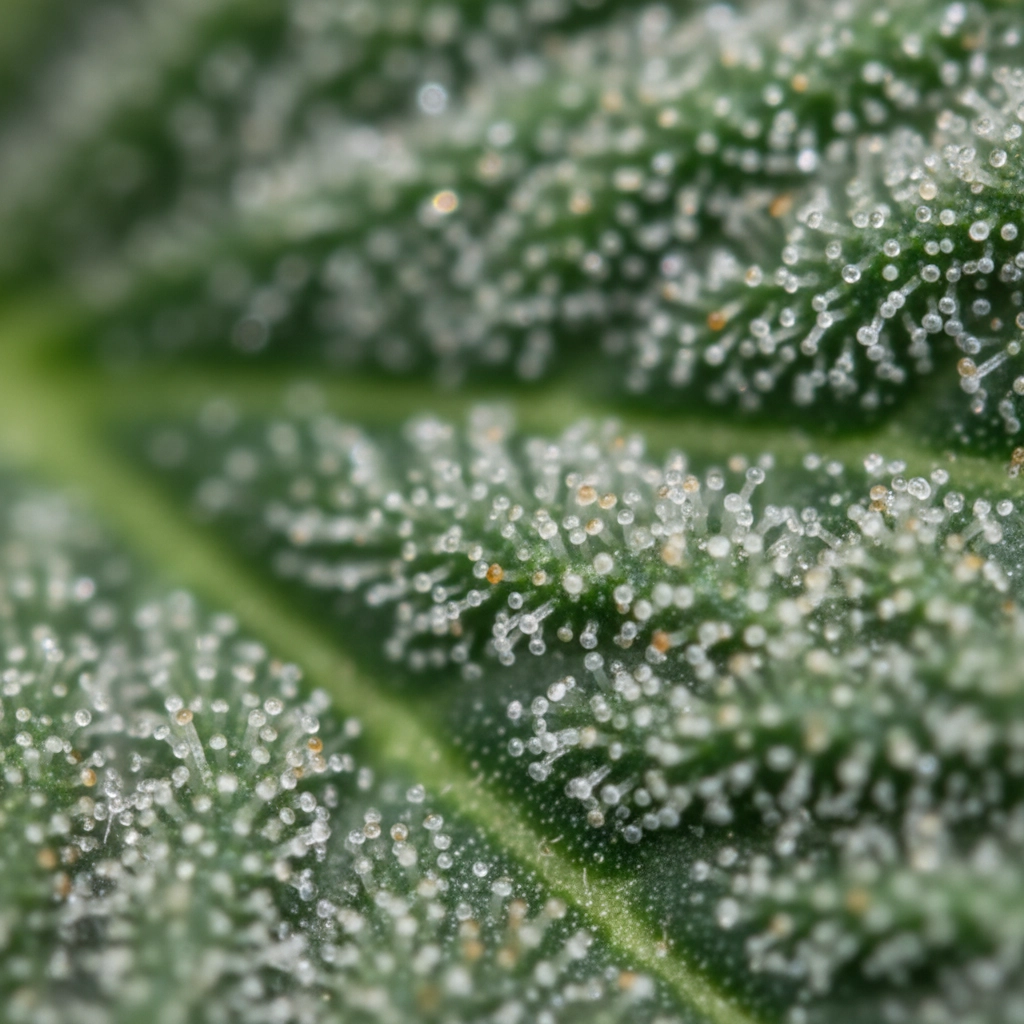
Those white crystals covering your buds and sugar leaves aren't just for show: they're trichomes, and they're the most reliable indicator of harvest readiness. Think of them as tiny factories producing the compounds that make your harvest worthwhile.
When trichomes first appear, they're completely clear and glassy. This means your plant is still building its chemical profile and isn't ready for harvest yet. But as your plant matures, these trichomes transform into a milky, cloudy white appearance. This is your green light, literally your white light: that tells you it's safe to harvest.
The key word here is "safe." When trichomes turn milky white, you've reached the minimum threshold for a quality harvest. But here's where most growers make a crucial mistake: they cut everything at once the moment they see those white trichomes.
The Sticky Factor: What Those Tacky Leaves Really Mean
Sticky leaves are actually an excellent sign that your plant is producing abundant resin. This stickiness comes from the trichomes secreting oils and resins that contain cannabinoids and terpenes. The stickier your leaves get, the more active resin production is happening.
But stickiness alone shouldn't determine your harvest timing. Instead, use it as a confirmation that your plant is in its peak production phase. Combine this observation with your trichome inspection for the most accurate assessment.
Here's a pro tip: when you touch your sugar leaves and they leave a slight residue on your fingers, that's a good indicator that trichome production is robust. However, the real magic happens when you start using the touch-and-feel method for individual buds.
The Touch and Feel Method: Boosting Density and Yield
This is where things get interesting. Instead of harvesting your entire plant based on an overall trichome assessment, you can use selective harvesting to maximize both density and yield. Here's how it works:
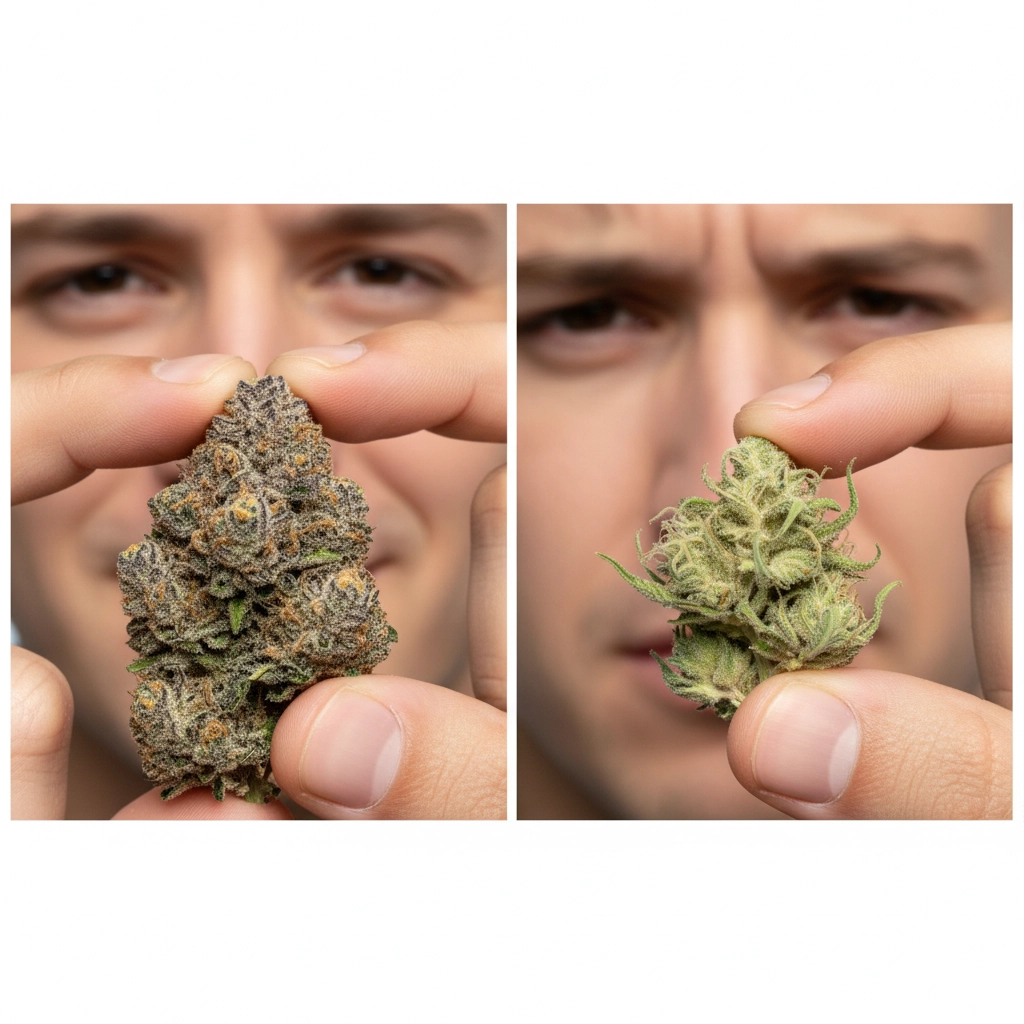
Gently touch individual flower clusters with your fingertips. You're feeling for density and firmness. Buds that feel solid and compact are ready for harvest. These are typically your main colas and larger secondary branches that have had optimal light exposure.
Buds that feel soft or fluffy aren't quite ready yet. Leave these on the plant for additional development time. This selective approach allows the less mature flowers to continue developing while you harvest the prime material at its peak.
The science behind this method is simple: different parts of your plant develop at different rates depending on light exposure, nutrient availability, and airflow. Your top colas mature first, while lower branches need extra time to reach their potential.
Implementing Selective Harvesting Strategy
Selective harvesting requires a shift in mindset from "harvest day" to "harvest period." This approach can extend your harvest window by 1-2 weeks, but the payoff in terms of overall quality and yield is substantial.
Week 1 of Harvest Period: Start with your main colas and any secondary branches that pass the touch test. Cut just below the point where flowers feel soft or underdeveloped. This typically represents about 60-70% of your total harvest.
Week 2 of Harvest Period: Return to your plant and reassess the remaining flowers. Many of the previously soft buds will have firmed up considerably. Harvest anything that now passes the density test.
Final Harvest: Take everything remaining, regardless of density. Even the fluffier material has value for extraction purposes.
This method works because you're allowing each flower cluster to reach its individual peak maturity rather than forcing everything to conform to a single harvest date.
Maximizing Your Biomass: Don't Waste the Extras
One of the biggest advantages of selective harvesting is the quality biomass you'll collect along the way. Those sugar leaves covered in trichomes and any secondary material that doesn't make the grade for top-shelf consumption have tremendous value for extraction.
Sugar leaves are particularly valuable because they contain a high concentration of trichomes while having less plant matter than traditional trim. This makes them ideal for:
Hash Production: The trichome-rich sugar leaves can be processed into bubble hash using ice water extraction methods. The Bubble Magic washing machines available through Perfect Gardens make this process accessible for home growers.
Rosin Pressing: Fresh-frozen sugar leaves and smaller buds can be pressed into rosin, providing a solventless concentrate option.
Water Extracts: Traditional water extraction methods can turn your biomass into useful tinctures and edibles.
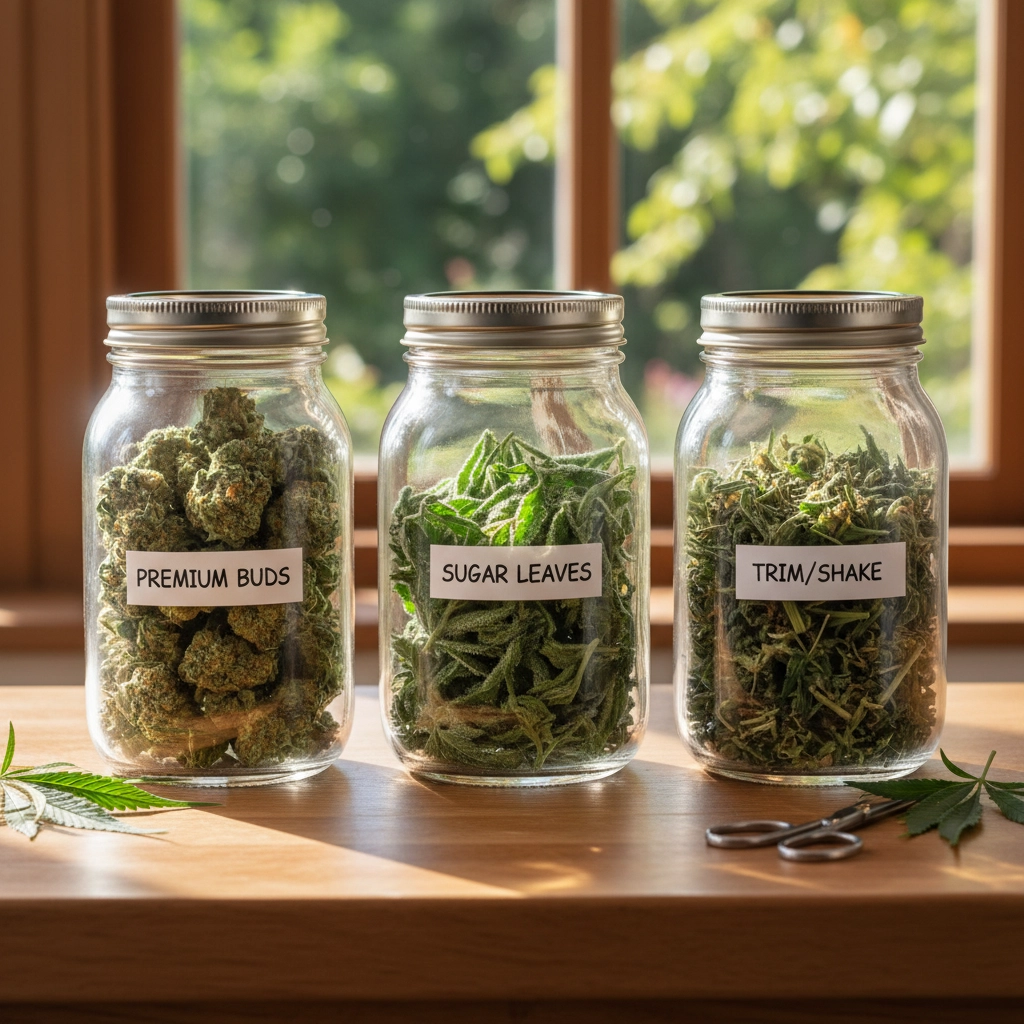
The key is treating this material with respect during harvest. Keep sugar leaves and secondary buds separate from your top-tier flowers, but don't consider them waste. Many growers discover that their "B-grade" material produces exceptional concentrates.
Storage and Curing Considerations
When implementing selective harvesting, proper storage becomes crucial since you'll have multiple harvest dates. Each batch should be dried and cured separately to maintain optimal quality.
Use humidity control packs to maintain consistent moisture levels during curing. The 62% humidity packs work well for most flower types and help prevent both over-drying and mold issues.
Label each harvest batch with the date and plant section. This allows you to track which parts of your plant produced the best results, informing your growing and harvesting strategy for future cycles.
Fine-Tuning Your Harvest Window
The white trichome indicator gives you permission to harvest, but it shouldn't be your only decision point. Environmental factors can influence the optimal harvest timing within that window.
Monitor your grow room conditions carefully during the final weeks. High humidity can accelerate degradation, while stable conditions allow you to extend the harvest window for maximum development.
Pay attention to your plant's overall health. Yellowing fan leaves are normal during late flowering, but if you notice rapid deterioration or signs of stress, prioritize harvesting over waiting for perfect trichome development.
Common Mistakes to Avoid
Harvesting Too Early: Clear trichomes mean you're not ready yet, regardless of how sticky your leaves are. Be patient and wait for that milky appearance.
All-or-Nothing Mentality: Don't feel obligated to harvest everything at once. Selective harvesting almost always produces better results.
Ignoring Environmental Factors: Late-stage flowering plants are vulnerable to environmental stress. Monitor conditions closely and adjust harvest timing if needed.
Undervaluing Secondary Material: Those sticky sugar leaves and smaller buds contain valuable compounds. Plan for extraction rather than disposal.
Your Next Steps
Start implementing the touch-and-feel method during your final two weeks of flowering. Document which plant sections mature first and how environmental conditions affect development timing. This information becomes invaluable for optimizing future harvests.
Remember that sticky leaves and white crystals are your invitation to start the harvest process, not necessarily a signal to finish everything immediately. Use selective harvesting to maximize the potential of every part of your plant, from premium flowers to extraction-grade biomass.
The goal isn't just to harvest when it's safe: it's to harvest when each section of your plant reaches its individual peak. This approach requires more time and attention, but the improvement in overall quality and yield makes it worth the extra effort.
For more detailed guidance on harvest techniques and post-harvest processing, check out our grow help videos where you'll find step-by-step demonstrations of these methods in action.


Leave a comment
This site is protected by hCaptcha and the hCaptcha Privacy Policy and Terms of Service apply.