
Blog
Refilling the Tank: Is Your Soil Chemistry Running on Empty?
Ever wonder why your plants seem to stall out mid-grow, even when you're doing everything right? You're feeding them, the lights are dialed in, and your indoor gardening setup looks picture-perfect. But something's off. The answer might be simpler than you think: your soil chemistry is running on empty because your pot isn't holding nearly as much water as you assume.
This is one of the most overlooked issues in both living soil grows and hydroponic systems. Dry pockets form, electrical conductivity gets thrown off, and your beneficial microbes can't do their job. The good news? There's a straightforward technique called "Refilling the Tank" that can reset everything and get your grow back on track.
The Hidden Problem: Dry Pockets and Stalled Chemistry
Here's the thing most growers don't realize: water doesn't always penetrate soil evenly. As your growing media dries out between waterings, it can become hydrophobic in certain spots. This means when you water, the liquid channels around these dry pockets instead of saturating them.
Why does this matter? Because no chemistry can happen without water.
Your soil is a living ecosystem. Bacteria and fungi are working 24 hours a day, breaking down nutrients and making them available to your plants. But when portions of your soil stay dry, several problems emerge:
- Electrical Conductivity (EC) gets thrown off – Salt buildup occurs in dry areas, creating hot spots that can burn roots
- Microbial activity stalls – Your beneficial bacteria and fungi need consistent moisture to survive and reproduce
- Nutrient availability drops – Without water, the cation exchange capacity of your soil decreases, meaning fewer nutrients stay in the root zone
- Root health suffers – Roots growing into dry pockets experience stress and can't uptake nutrients efficiently
The reality is that throughout your entire grow, you might be operating with significantly less water capacity than your pot can actually hold. And that means your chemistry has been off and inefficient the whole time.
The Solution: The 15-Minute Watering Cycle
The "Refilling the Tank" technique is designed to fully saturate your growing media and eliminate those problematic dry pockets. It's not complicated, but it does require some patience.
Here's how it works:
- Start with 16-32 ounces of water – Pour it evenly across the soil surface
- Walk away for 15 minutes – Give the water time to absorb and penetrate
- Come back and repeat – Add another 16-32 ounces
- Continue this process over the course of an hour – Usually 3-4 cycles total
The key here is allowing your media to absorb the water gradually. When you dump a large amount of water all at once, most of it channels through the easiest paths and runs out the bottom. By doing multiple smaller applications with breaks in between, you give the water time to wick into those stubborn dry spots.
When you complete this process, you'll likely be surprised by how much more water your pot can actually hold. This awareness is crucial: it shows you how much your chemistry has been compromised throughout your grow.
Why Drops of Balance Makes This Technique More Effective
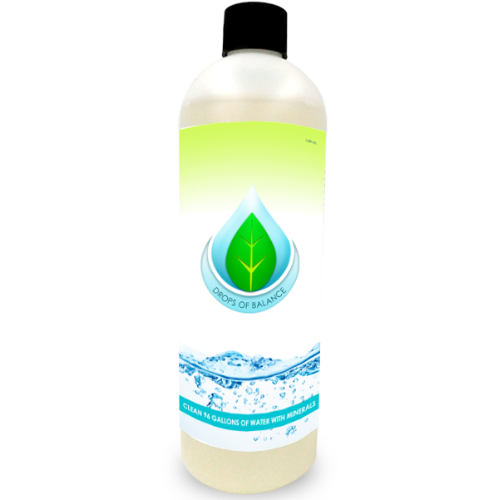
When doing this refilling technique, treating your first gallon of water with Drops of Balance makes a significant difference in how quickly and thoroughly the water penetrates your soil.
Drops of Balance acts very similar to a yucca extract. What does that mean practically? It helps break surface tension.
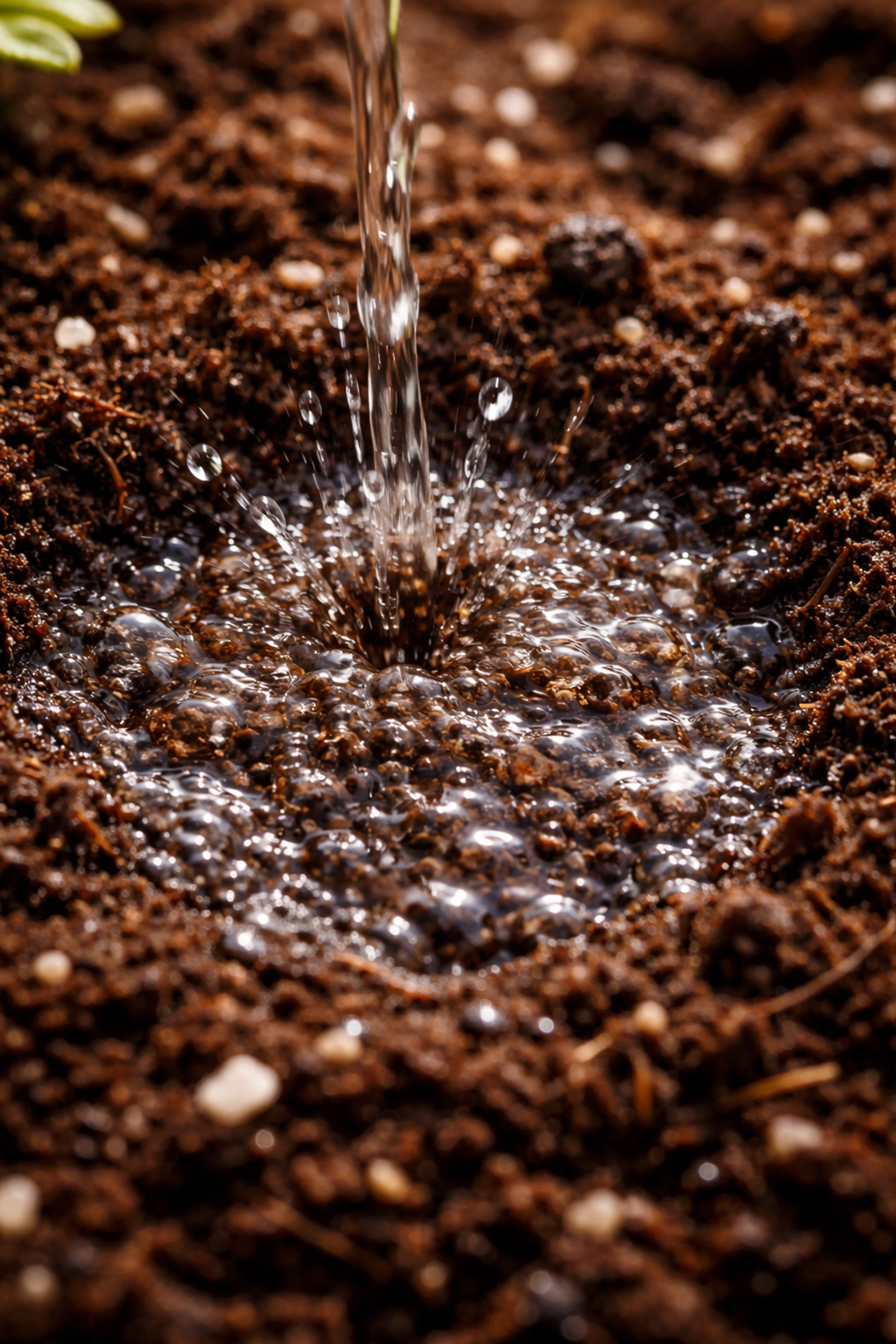
Regular tap water or even filtered water has a certain level of surface tension that causes it to bead up rather than spread out. This is part of why dry soil becomes hydrophobic: the water literally can't penetrate the surface easily. When you add Drops of Balance to your water, it takes on properties that allow it to be absorbed into your soil media much quicker than plain water.
Think of it like adding a drop of dish soap to a greasy pan. The soap breaks the tension and allows the water to actually make contact with the surface. Drops of Balance does the same thing for your soil, minus any harmful chemicals that would damage your microbial life.
The Gas Tank Analogy: Know When You're Actually Full
Here's a useful way to think about this whole concept. Your pot is like a gas tank in your car.
You fill up the tank of gas, and depending on how much you drive, you can go for a couple weeks before you need to refill. You know roughly how much your tank holds, and you know when it's getting low.
But what if your fuel gauge was broken and you never knew how much gas you actually had? You'd constantly be running inefficiently, maybe even running out at the worst times.
That's what's happening with most growers' pots. They think they're watering adequately, but they have no real sense of whether the pot is truly full or running on fumes. The "Refilling the Tank" technique lets you establish a baseline: you know the pot is completely saturated, and from there, you can figure out how much the plant actually needs on a daily basis.
Once you know your pot is truly full, maintaining that level through consistent daily watering becomes much easier. The tank stays full, and everything runs efficiently.
Root Growth Changes Everything
Here's something important to keep in mind: as your plant grows, the dynamics inside your pot change dramatically.
When you first transplant, there's plenty of space in the soil for water retention. But as the root system expands and becomes more compact, several things happen:
- Less space for water retention – Roots physically take up room that used to hold water
- Increased water demand – A larger plant drinks more
- Salt buildup accumulates – Nutrients not taken up by roots can form deposits
- Dry pockets become more likely – Dense root masses can create channels where water flows around rather than through
This is why the "Refilling the Tank" technique isn't a one-time thing. You need to do this reset every couple of weeks throughout your grow. As conditions in the pot change, you need to ensure you're still achieving true saturation.

Living Soil Needs Consistent Moisture
If you're running a living soil or no-till setup, this technique becomes even more critical. The entire premise of living soil is that bacteria and fungi do the heavy lifting of nutrient cycling. They break down organic matter, produce enzymes, and make minerals available to your plants in forms they can actually use.
But here's the catch: bacteria and fungi need moisture 24/7 to do their job.
When portions of your soil dry out, microbial activity in those areas slows down or stops entirely. The chemistry that should be happening around the clock gets interrupted. And because this process compounds over time, you end up with increasingly inefficient nutrient cycling as your grow progresses.
By ensuring your pot stays fully saturated (not waterlogged, but properly moist throughout), you're creating the optimal environment for microbial life to thrive. The bacteria stay active, the fungi keep spreading their networks, and your plants get fed consistently.
For growers using automatic watering stakes or drip systems, this technique serves as a periodic reset to address any dry pockets that automated systems might miss. Even the best nutrients for hydroponics won't help if they can't reach the roots due to uneven water distribution.
Putting It Into Practice
Here's a quick summary of how to implement this technique:
Every 2-3 weeks:
- Treat your first gallon of water with Drops of Balance
- Apply 16-32 oz of water to your pot
- Wait 15 minutes
- Repeat 3-4 times over the course of an hour
- Note how much total water your pot absorbed
Daily maintenance:
- Water consistently based on what you learned about your pot's true capacity
- Never allow complete drybacks: this creates the conditions for dry pockets to form
- Monitor for white salt residue on fabric pots, which indicates buildup
Signs you need to refill the tank:
- Plants showing deficiency symptoms despite proper feeding
- Uneven growth or stressed sections of plants
- Water running through quickly without much absorption
- Visible dry patches when you dig into the soil surface
The goal isn't to overwater: it's to ensure that when you do water, you're achieving true saturation rather than just wetting the easy-to-reach areas while dry pockets persist.
The Bottom Line
Your soil chemistry can only function properly when water is present throughout the entire root zone. Dry pockets throw off EC, stall microbial activity, and leave your plants running on empty even when you think you're doing everything right.
The "Refilling the Tank" technique is a simple reset that takes about an hour every couple of weeks. Combined with Drops of Balance to break surface tension, you'll achieve better saturation, more consistent chemistry, and healthier plants throughout your grow.
If you're experiencing mysterious deficiencies or stalled growth in your indoor gardening setup, this technique might be exactly what you need. Sometimes the solution isn't adding more nutrients: it's making sure the water and nutrients you're already providing can actually reach every part of the root zone.
For more growing tips and techniques, check out our Grow Help Videos or reach out through our Contact Page with specific questions about your setup.