
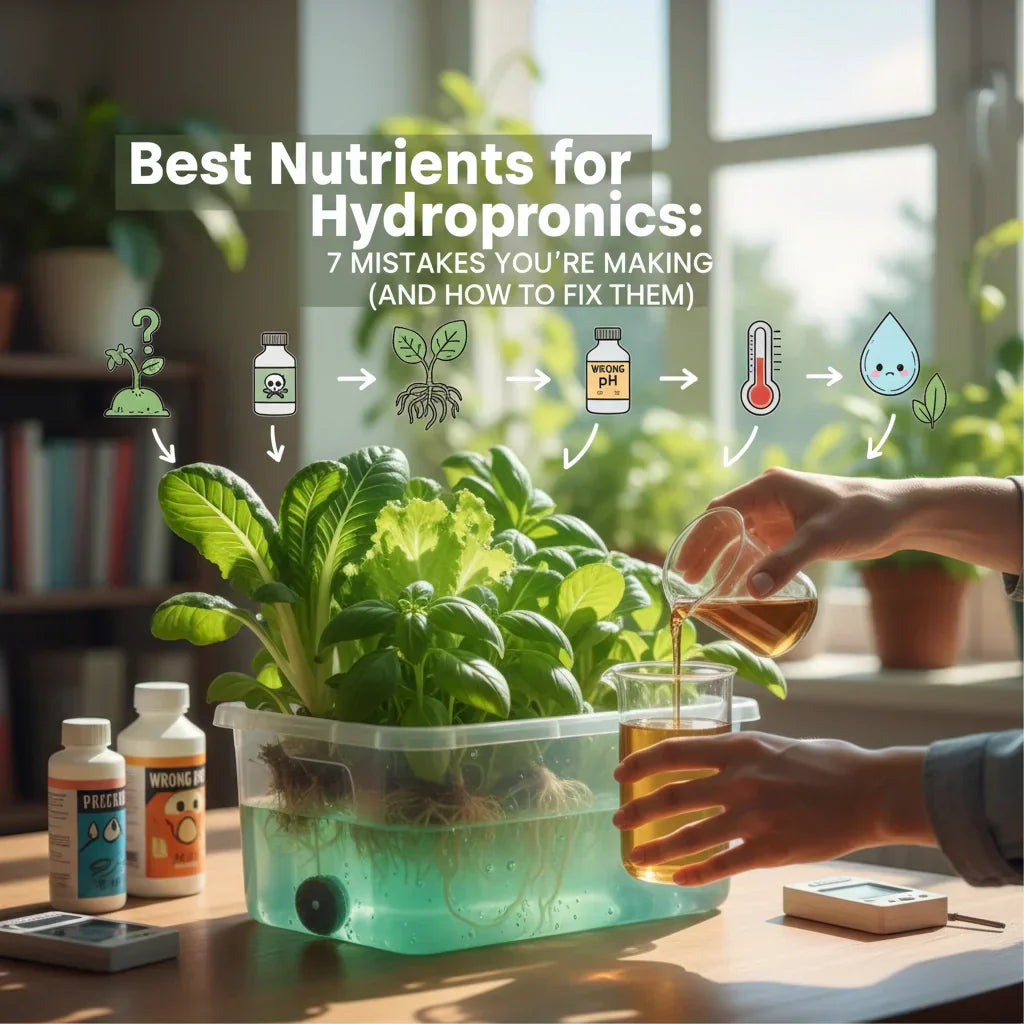
Hydroponic gardening puts you in complete control of your plants' nutrition: which is both a blessing and a curse. Get it right, and you'll see explosive growth and incredible yields. Get it wrong, and you'll wonder why your plants are struggling despite your best efforts.
The truth is, most hydroponic failures come down to nutrition mistakes that are completely avoidable once you know what to look for. Let's dive into the essential nutrients your plants actually need, then tackle the seven most common mistakes that could be sabotaging your garden.
The Foundation: Understanding Essential Nutrients
Your hydroponic plants depend on 17 essential nutrients to thrive. These fall into three categories based on how much your plants need: macronutrients (the heavy hitters), secondary macronutrients (the supporting cast), and micronutrients (small amounts, big impact).
Primary Macronutrients: The Big Three (NPK)
Nitrogen (N) drives vegetative growth and keeps your plants that vibrant green color you want to see. It's the engine behind protein synthesis and chlorophyll production. Without enough nitrogen, your plants will yellow and growth will crawl to a halt.
Phosphorus (P) powers root development early on, then shifts focus to flower and fruit production as plants mature. It's also crucial for energy transfer throughout the plant: think of it as the plant's internal power grid.
Potassium (K) strengthens your plants' immune systems and helps them resist diseases. It also improves fruit quality and plays a key role in water movement and photosynthesis. Plants with adequate potassium handle stress much better.
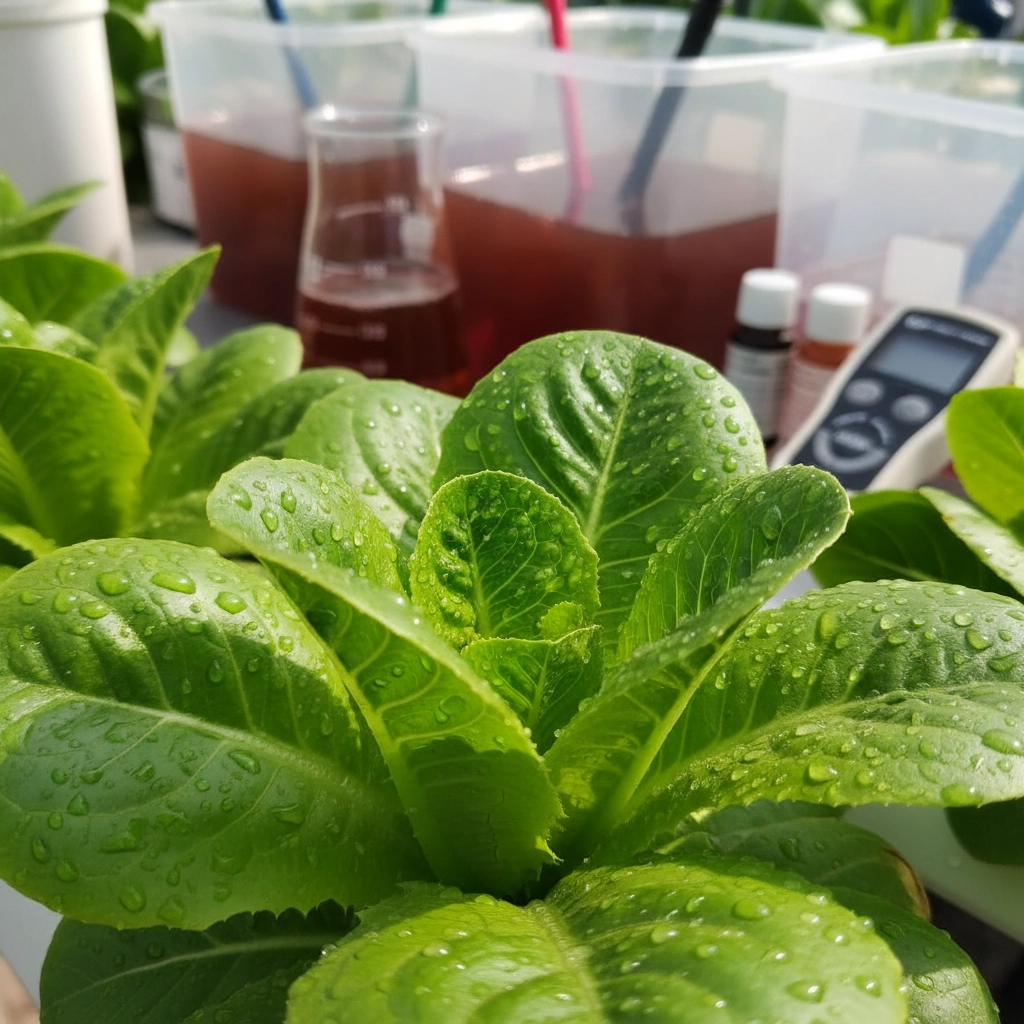
Secondary Macronutrients: The Unsung Heroes
Calcium builds strong cell walls and regulates water movement. It's especially critical during rapid growth phases and helps prevent common disorders like blossom end rot in tomatoes.
Magnesium sits at the center of every chlorophyll molecule, making it essential for photosynthesis. It also activates many enzyme systems that keep plants functioning properly.
Sulfur helps build proteins and amino acids. While plants don't need massive amounts, deficiency shows up as yellowing leaves that look similar to nitrogen deficiency.
The Supporting Elements
Carbon, Hydrogen, and Oxygen come from air and water, but they're still essential. Poor air circulation or low dissolved oxygen in your nutrient solution can limit these, even in a well-fed system.
Micronutrients like iron, manganese, zinc, and others are needed in tiny amounts but cause big problems when missing. Iron deficiency, for example, causes new growth to turn yellow while veins stay green: a dead giveaway that something's wrong.
The 7 Biggest Nutrition Mistakes (And How to Fix Them)
1. Ignoring pH Like It Doesn't Matter
Here's the thing: you can have the most perfectly balanced nutrient solution in the world, but if your pH is off, your plants can't access those nutrients. The ideal range for most hydroponic crops is 5.5 to 6.0, and even small deviations can lock out essential elements.
The Fix: Invest in a reliable pH meter: not test strips. Check your pH daily and adjust with pH up or down solutions as needed. Make this part of your morning routine, like checking your phone. Most nutrient lockout problems disappear once pH is dialed in.
2. Using the Same Nutrient Strength Throughout the Growing Cycle
This is a big one. Seedlings can't handle the same nutrient concentration as mature plants, but many growers set their system and forget it. Your plants' nutritional needs change dramatically as they grow, flower, and fruit.
The Fix: Start seedlings with quarter-strength nutrients, then gradually increase concentration as plants mature. Vegetative growth typically needs higher nitrogen, while flowering plants need more phosphorus and potassium. Follow your nutrient manufacturer's feeding schedule: they've done the testing so you don't have to.
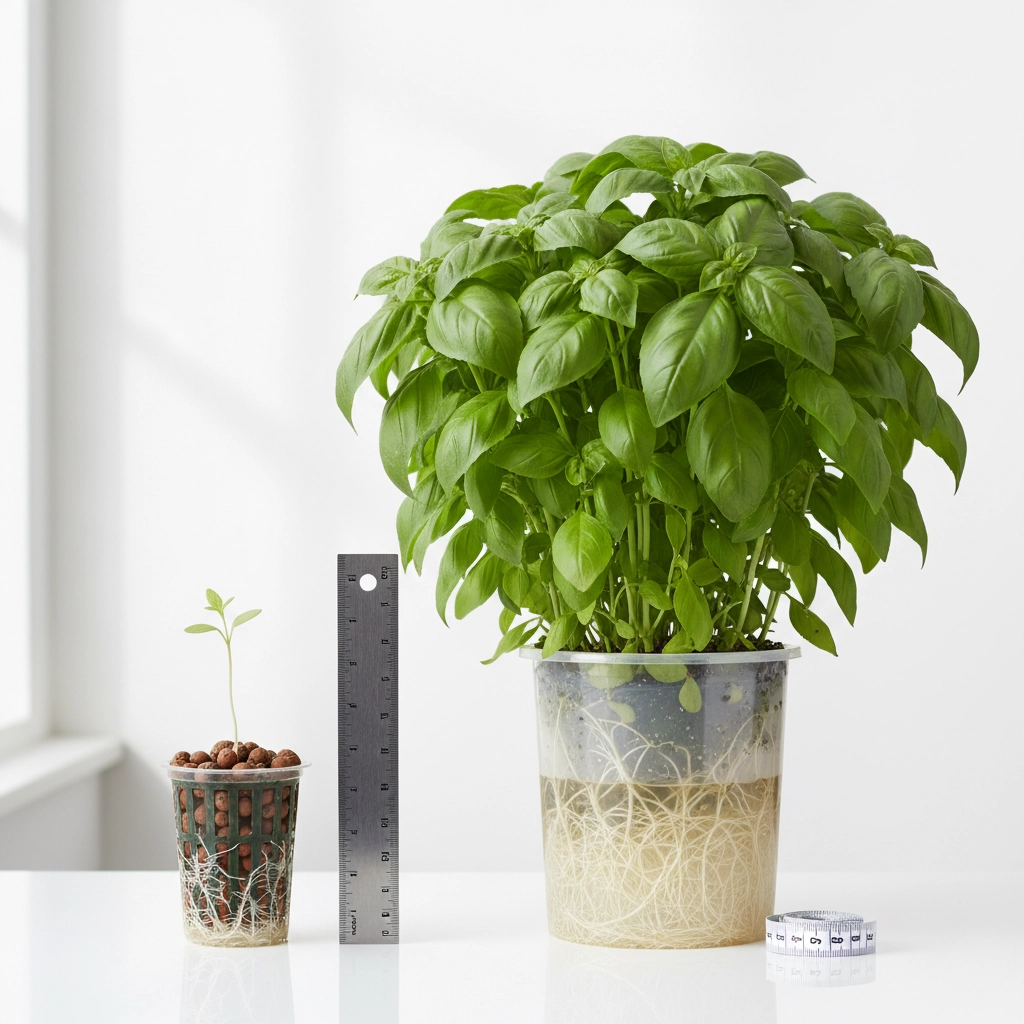
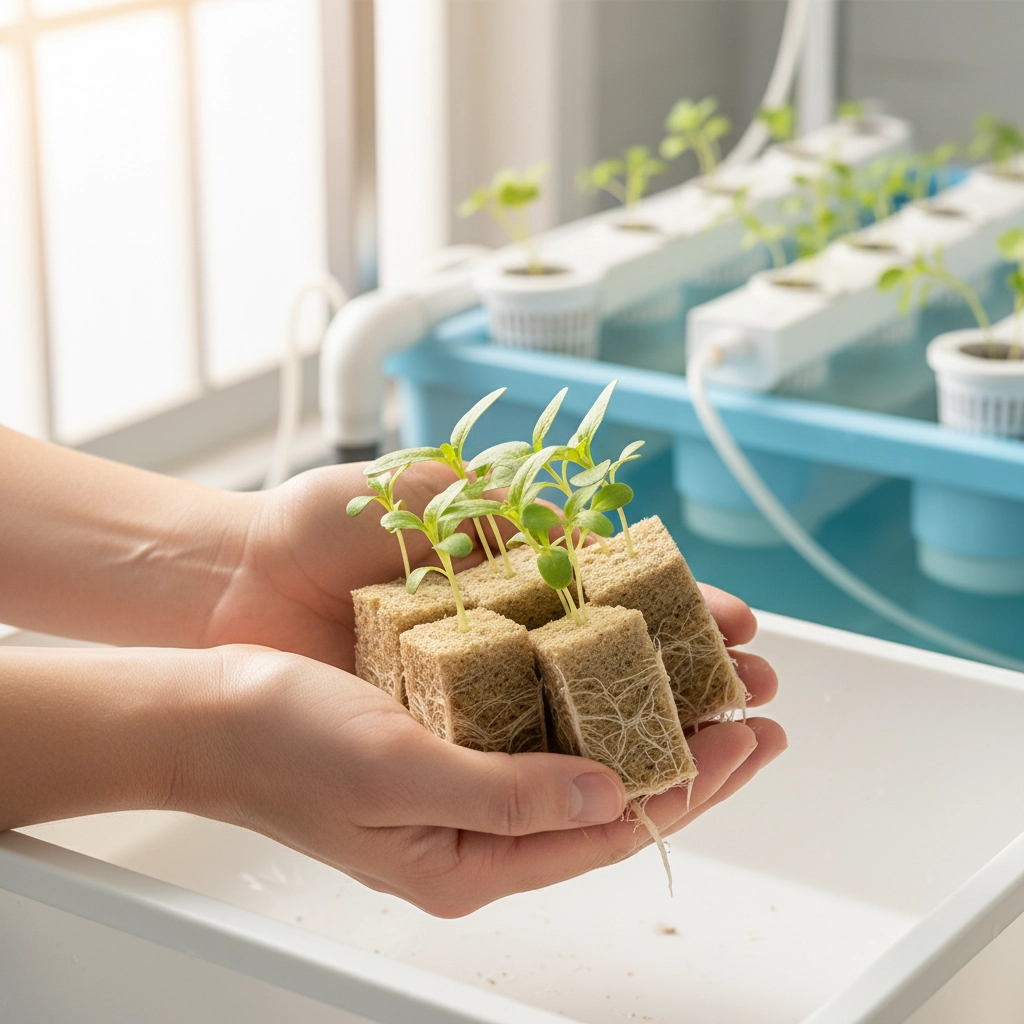
3. Starting Seeds the Wrong Way
Planting seeds directly in growing medium might seem logical, but it often leads to poor germination rates. Seeds fall through the medium, get buried too deep, or dry out before they can establish.
The Fix: Start seeds in rockwool cubes, rapid rooter plugs, or peat pellets first. Once seeds have sprouted and developed a few true leaves, transfer the entire plug to your hydroponic system. This dramatically improves germination success and gives you stronger, healthier seedlings.
4. Treating All Nutrients Like They're Equal
Here's where many beginners go wrong: they focus obsessively on NPK numbers while completely ignoring secondary macronutrients and micronutrients. A plant deficient in magnesium or iron will struggle just as much as one lacking nitrogen.
The Fix: Use complete hydroponic nutrient solutions designed for your specific crops. These are formulated to provide all 17 essential elements in proper ratios. Avoid the temptation to mix your own nutrients until you've mastered the basics with proven formulations.
5. Inconsistent Monitoring and Maintenance
Hydroponic systems change constantly. Nutrient levels drop as plants feed, pH drifts, and water evaporates, concentrating remaining nutrients. Many growers check their system when they remember, then wonder why their plants are stressed.
The Fix: Establish a consistent monitoring schedule. Check pH and nutrient levels daily, top off water regularly, and completely change nutrient solutions every 2-3 weeks. Keep a log of your observations: patterns will emerge that help you prevent problems before they start.
6. Overthinking Nutrient Mixing
Some growers dive deep into the rabbit hole of custom nutrient formulations before understanding plant basics. They'll spend hours researching calcium-to-magnesium ratios while their plants suffer from fundamental pH or lighting issues.
The Fix: Start simple. Choose a reputable two or three-part nutrient system and master proper dilution rates and application timing. Focus on environmental controls like temperature, humidity, and lighting before diving into advanced nutrition tweaks. The basics done well will outperform complex formulations done poorly.
7. Ignoring Your Plants' Visual Cues
Your plants are constantly communicating their nutritional status through their appearance, but many growers rely solely on meters and measurements while ignoring obvious visual symptoms of deficiency or excess.
The Fix: Learn to read your plants. Yellowing lower leaves often indicate nitrogen deficiency. Purple stems might signal phosphorus shortage. Brown leaf edges could mean potassium excess or salt buildup. Take photos of your plants weekly and learn to spot changes before they become serious problems.
Getting Your Nutrition Strategy Right
The most successful hydroponic growers understand that consistent, balanced nutrition trumps complex formulations every time. Your plants need steady access to all essential elements, not roller-coaster nutrition that swings between feast and famine.
Start with proven nutrient systems, maintain consistent monitoring routines, and pay attention to what your plants are telling you. Master these fundamentals, and you'll be amazed at how much better your hydroponic garden performs.
Remember: in hydroponics, you are your plants' sole source of nutrition. Unlike soil gardening, there's no buffer zone: every element must be provided in the right amount at the right time. But when you get it right, the results speak for themselves.

Leave a comment
This site is protected by hCaptcha and the hCaptcha Privacy Policy and Terms of Service apply.