
Let's get straight to it: watering is either the most neglected or most obsessed-over task in gardening. Miss a day and your tomatoes wilt. Overdo it and you're dealing with root rot. Somewhere between these extremes lies the solution: automation.
But "automatic watering" covers a lot of ground. You've got stakes, globes, drip systems, self-watering pots, and terracotta ollas all claiming to solve your irrigation problems. The truth? Each has its place, and choosing wrong means wasted money and stressed plants.
This guide breaks down the actual differences: cost, maintenance, plant health outcomes, and real-world usability: so you can match the right system to your garden setup.
Manual Watering: The Baseline (And Why You're Here)
Before we dive into automated options, let's acknowledge what you're trying to escape. Manual watering works perfectly... if you're home every day, have a consistent schedule, and enjoy the ritual. For many growers, that's just not realistic.
The problems stack up fast: vacations mean finding a plant-sitter, inconsistent watering creates stress cycles that stunt growth, and checking moisture levels daily gets old after the first month. If you've killed a plant from drought or drowning, you already know automation isn't lazy: it's practical plant care.
The goal isn't to eliminate all involvement. It's to create consistency your plants can rely on while giving you flexibility in your schedule.
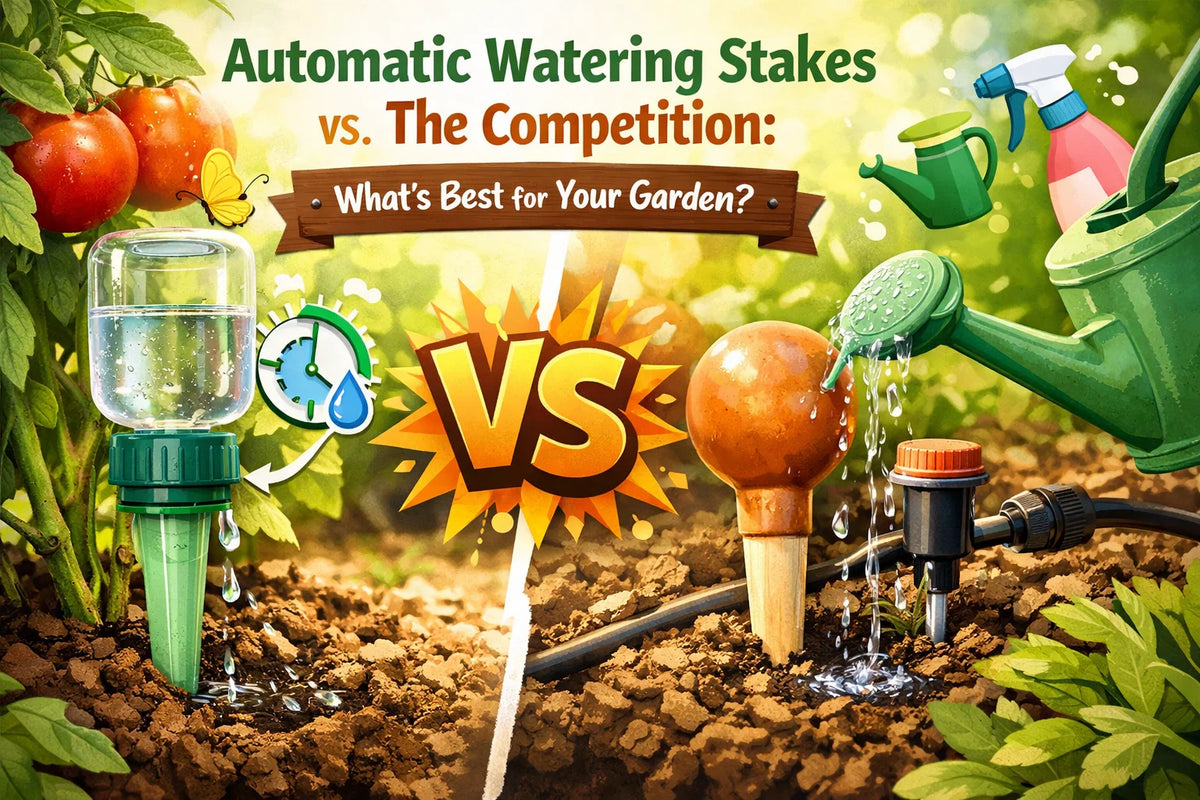
Automatic Watering Stakes: The Small-Garden Workhorse
Watering stakes insert directly into soil and deliver water through gravity-fed systems or slow-release mechanisms. The quality range is massive, and that matters more than you'd think.
Terracotta Stakes (The Good Ones)

Systems like Blumat use porous ceramic cones that respond to soil moisture levels. When the soil dries, water flows through tubing from a reservoir. When it's moist enough, flow stops. This self-regulation is the key advantage: no timers, no electronics, just physics.
Each stake typically delivers 50-150 milliliters daily, adjustable based on your setup. For houseplants and small indoor gardens (under 20 plants), this is genuinely the sweet spot. At under $5 per stake for basic models, the cost is manageable even for multiple plants.
Setup Reality Check
Installation takes about 10 minutes per stake once you understand the system. You'll need to prime each cone properly: any air bubble in the line disrupts flow. The reservoir needs refilling every 3-7 days depending on plant water demand and reservoir size. This is significantly less attention than daily manual watering, but it's not "set and forget forever."
The main maintenance issue is clogging from minerals in tap water. If you're using hard water, expect to clean or replace cones annually. Distilled or filtered water extends their lifespan considerably.
The Plastic Spike Problem
Here's where we need to save you from a common mistake. Cheap plastic watering spikes: the $3 ones you find in bins at big-box stores: are almost universally terrible. They clog constantly, tip over in loose soil, crack in sunlight, and deliver inconsistent water flow. You'll spend more time fixing problems than you would hand-watering.
If you're going with stakes, invest in ceramic/terracotta options from established brands. The extra $2-3 per unit eliminates 90% of the frustration.
Drip Irrigation Systems: Scaling Up
When your garden grows beyond a dozen plants, drip systems start making economic sense. These networks of tubing and emitters deliver precise amounts of water to each plant on a timer-controlled schedule.
When Drip Makes Sense
For outdoor gardens, raised beds, or greenhouse setups with 20+ plants, drip irrigation becomes the efficiency champion. A basic kit (like the Raindrip system mentioned in industry reviews) can water 10-20 plants simultaneously and includes everything needed: timer, tubing, fittings, pressure regulators, and emitters.
Installation is more involved than stakes: expect 2-3 hours for a complete garden setup. You're running mainlines, placing emitters at each plant, and programming a timer. But once it's dialed in, you're essentially done for the season except for winterizing in cold climates.
Cost Breakdown
Entry-level drip kits start around $40-60. That sounds expensive compared to individual stakes, but divide it across 20 plants and you're at $2-3 per plant: competitive with quality watering stakes. The real cost comes if you need to expand or customize beyond the kit components.
The Overengineering Trap
Drip systems can do too much for small setups. If you've got six houseplants, the complexity and cost don't justify themselves. You'll spend more time maintaining tubing runs and cleaning emitters than you'd save over simpler solutions. Match the system to your actual scale.
Self-Watering Pots and Ollas: The Long-Game Options
These passive systems work fundamentally differently: they rely on capillary action and soil moisture tension rather than active delivery.
Self-Watering Pots
These containers have a reservoir at the bottom and a wicking system that draws water up to the roots. Refill frequency varies by plant size and season, typically 5-14 days. They work well for herbs, vegetables, and larger potted plants.
The limitation is commitment: you can't easily convert existing pots, so this is a decision you make when potting or repotting. For new plantings or container gardens, they're worth considering. For an established collection, retrofitting isn't practical.
Ollas (Terracotta Pots)

Ollas are unglazed clay pots buried in soil with just the neck exposed for filling. Water seeps through the porous clay directly to plant roots based on soil moisture demand. This ancient technique is experiencing a revival for good reasons.
Refilling frequency runs 5-10 days compared to 1-2 days for cheap plastic alternatives. They last for years with minimal maintenance: no electronics to fail, no emitters to clog. For established gardens, raised beds, or in-ground plantings, ollas provide the most hands-off experience.
The tradeoffs: initial cost is higher ($15-30 per olla depending on size), and they're not portable. Once buried, they're committed to that location. They also take up root zone space, which matters in smaller containers.
Making the Decision: Match System to Garden Type
Here's the practical breakdown based on what you're actually growing:
For 1-10 Houseplants
Use individual watering stakes (terracotta only) or glass watering globes. Total cost: $30-50. This gives you vacation flexibility without overcomplicating your setup. The kind of system where you can leave for a week and your plants are actually better for it: consistent moisture beats sporadic watering every time.
For Small to Medium Gardens (10-30 Plants)
This is the decision point. If plants are containerized and grouped (balcony gardens, patio setups), watering stakes still work. If they're spread across raised beds or in-ground rows, transition to drip irrigation. The initial setup time pays off in the first month.
For Large Gardens (30+ Plants)
Drip irrigation becomes non-negotiable at this scale. Individual stakes aren't economical, and the time investment in setup becomes proportionally smaller as plant count increases. Add zone controllers if you're watering different plant types with different needs.
For Established Perennial Gardens
Consider ollas. The long-term reliability and zero-maintenance profile suits plantings that don't get disturbed annually. They're particularly effective in dry climates where water conservation matters.
The Bottom Line
The "best" system doesn't exist in isolation: it depends on your garden size, plant types, and how much initial setup versus ongoing maintenance you prefer to handle.
Quick summary:
- Terracotta watering stakes: Best value for small collections, houseplants, and anyone testing automation for the first time
- Drip irrigation: Required for large gardens, outdoor growing, and situations where individual attention per plant isn't practical
- Ollas: Superior long-term choice for established gardens with consistent plantings year over year
- Self-watering pots: Good for new container gardens but not practical for retrofitting existing setups
One final note: whatever system you choose, water quality matters. Hard tap water will clog any automatic system faster than filtered or collected rainwater. It's not a dealbreaker, but it's the difference between annual and monthly maintenance.
Need more help dialing in your growing setup? Check out our grow help videos or reach out through our contact page. We've helped thousands of growers automate their gardens successfully: including plenty who started by overcomplicating things and had to scale back to what actually worked.

Leave a comment
This site is protected by hCaptcha and the hCaptcha Privacy Policy and Terms of Service apply.