
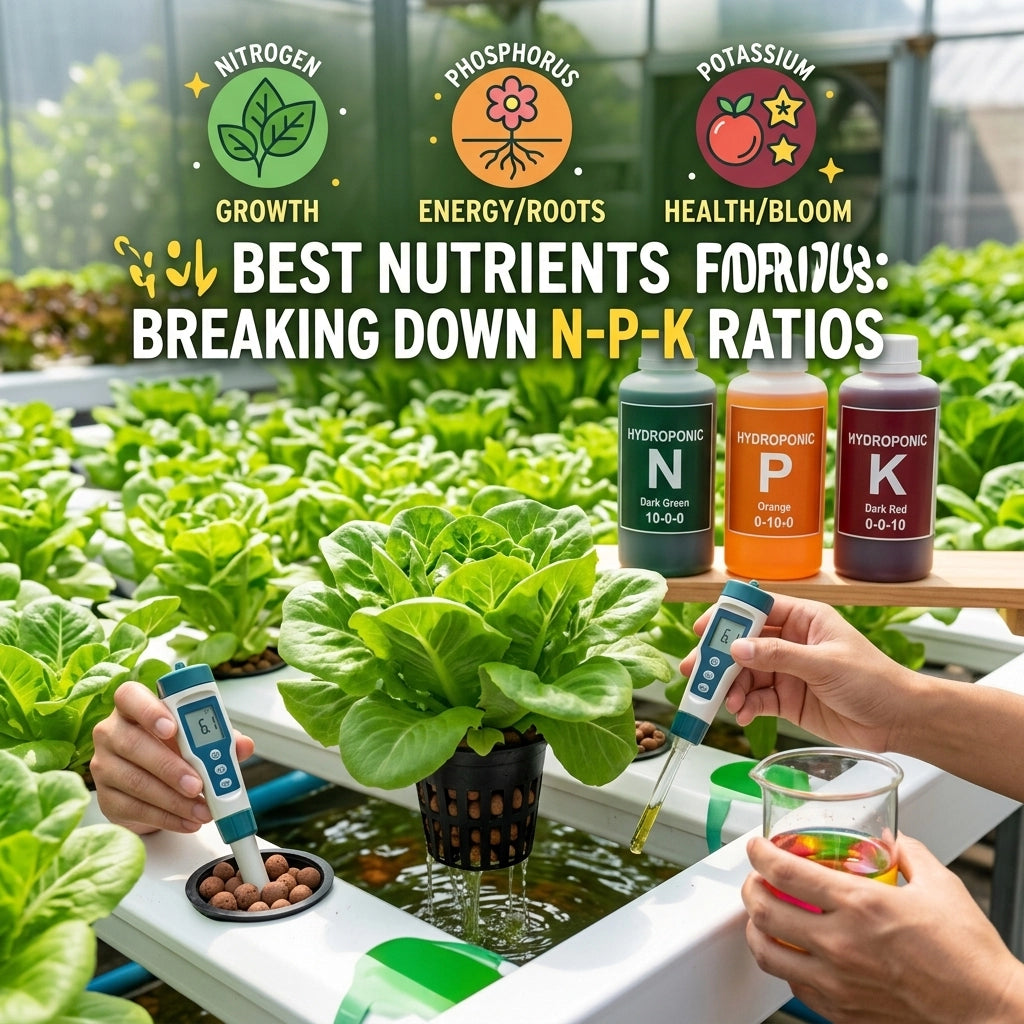
When you first dive into the world of hydroponics, it feels like you’re part chemist, part gardener. You walk into a grow shop or browse online, and you’re immediately met with shelves of colorful bottles, each sporting three prominent numbers on the front: like 10-10-10, 5-15-10, or 3-1-2.
Those numbers aren’t just marketing jargon; they are the N-P-K ratios, and they represent the lifeblood of your hydroponic system. If you want to move beyond just "keeping plants alive" and start seeing explosive growth and massive yields, you have to understand what these numbers mean and how to manipulate them.
The fact of the matter is that in a soil-less environment, your plants are 100% dependent on you for their diet. There is no "buffet" of minerals in the dirt for them to go looking for. You are the chef, and the N-P-K ratio is your recipe.
What Does N-P-K Actually Stand For?
N-P-K stands for Nitrogen (N), Phosphorus (P), and Potassium (K). These are the three primary macronutrients that plants consume in the largest quantities. The numbers on the bottle represent the percentage by weight of each nutrient in that specific solution. For example, a 10-5-5 bottle contains 10% Nitrogen, 5% Phosphorus, and 5% Potassium.
Understanding the role of each is the first step to mastering your hydroponic nutrients.
Nitrogen (N): The Growth Engine
Nitrogen is primarily responsible for vegetative growth. It’s a major component of chlorophyll, the compound plants use to turn sunlight into food. If you want big, lush, green leaves and strong stems, Nitrogen is your best friend. It also plays a vital role in the creation of amino acids, which are the building blocks of plant proteins.
Phosphorus (P): The Foundation and Reproduction
Phosphorus is all about energy transfer and reproduction. It is essential for root development early in the plant's life and becomes the "star of the show" when it’s time to produce flowers, fruits, and seeds. Without enough Phosphorus, your plants might look okay, but they will struggle to produce the harvest you’re looking for.
Potassium (K): The Quality Controller
Potassium is often called the "regulator." It helps the plant manage its internal processes, such as CO2 uptake and water movement (osmoregulation). It activates enzymes that are critical for photosynthesis and helps build overall plant resilience against pests and diseases. Think of it as the nutrient that strengthens the "immune system" and "circulatory system" of your plant.

Matching Ratios to Growth Stages
Your plants' nutritional needs are not static. Just like a human needs different nutrition as an infant versus an athlete, a plant requires different N-P-K ratios as it moves from a seedling to a full-blown flowering machine.
1. The Vegetative Stage (The "Green" Phase)
During the vegetative stage, your goal is to build the "solar panels" (leaves) and the "infrastructure" (stems) of the plant.
- Preferred Ratio: High Nitrogen, Moderate Phosphorus, Moderate Potassium (e.g., 3-1-2 or 7-9-5).
- Why: You want to push as much green growth as possible to ensure the plant can photosynthesize efficiently once it enters the bloom phase. If your Nitrogen is too low here, your plants will look stunted and yellow.
2. The Flowering and Fruiting Stage (The "Production" Phase)
When you flip your lights or the plant naturally reaches maturity, its internal chemistry shifts. It stops focusing on getting taller and starts focusing on reproduction.
- Preferred Ratio: Low Nitrogen, High Phosphorus, High Potassium (e.g., 5-15-10 or 2-10-10).
- Why: Excess Nitrogen during flowering can actually hurt you; it can lead to "leafy" buds or fruit that lacks flavor. High Phosphorus and Potassium levels are what trigger the plant to put its energy into heavy fruit and dense flowers.
Beyond N-P-K: The Importance of Micronutrients
While N-P-K gets all the glory, your plants can’t survive on those three alone. In hydroponics, because we aren't using soil that might naturally contain trace minerals, we have to ensure our nutrient solution includes micronutrients.
These include:
- Calcium and Magnesium (Cal-Mag): Crucial for cell wall structure and chlorophyll production.
- Iron, Manganese, and Zinc: Necessary for enzyme function.
- Boron, Copper, and Molybdenum: Used in very tiny amounts but essential for healthy reproduction and nitrogen metabolism.
If you notice weird spots on your leaves or twisting growth despite having the "correct" N-P-K ratio, you likely have a micronutrient deficiency or a pH lockout. Many growers use additives like mineral concentrates to ensure their water has a full spectrum of these trace elements.

Why Hydroponic Nutrients Are Different From Soil Nutrients
A common mistake beginners make is grabbing a bag of "standard" garden fertilizer and tossing it into a Bubbleflow Bucket system.
The fact of the matter is: Soil fertilizers are designed to break down slowly. They often contain organic matter that requires soil microbes to "unlock" the nutrients for the plant. In a hydroponic setup, you need nutrients that are water-soluble and immediately available to the roots.
Furthermore, hydroponic-specific nutrients are formulated to be "cleaner." If you use thick, organic soil fertilizers in a reservoir, you will likely end up with a clogged pump, a stinky reservoir, and a nasty case of root rot. Always stick to nutrients labeled specifically for hydroponic or "soilless" use.
The Role of Microbes in Hydroponics
You might think that because hydroponics is "sterile" compared to soil, you don't need biology. It seems more like a lab experiment than a garden. However, this is not the case.
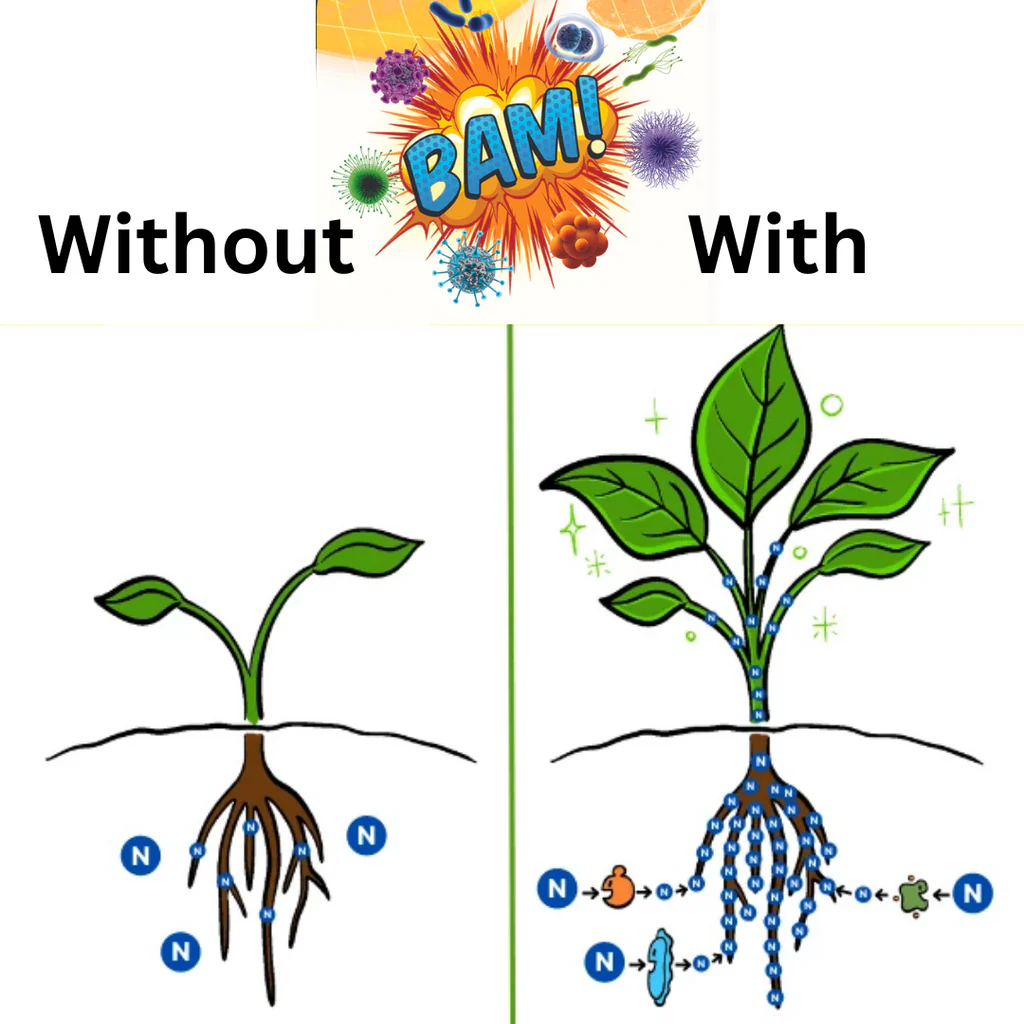
Adding beneficial microbes can significantly enhance how your plants "eat" the N-P-K you’re providing. Products like Azos (Nitrogen-fixing bacteria) can help the plant process nitrogen more efficiently, while mycorrhizae can expand the surface area of your root system, allowing for better nutrient uptake.
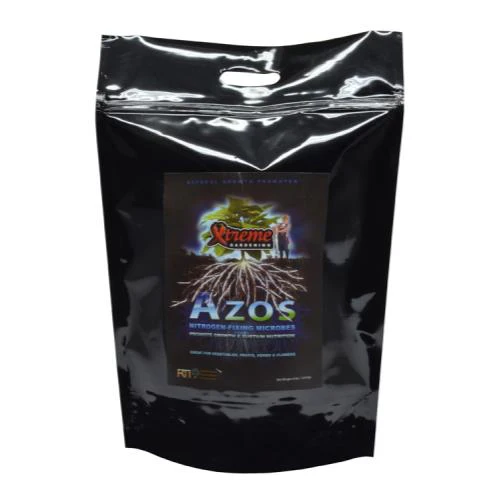
Using a microbial inoculant kit can act as a safety net, protecting your roots from pathogens while making your N-P-K ratios work harder for you.
Practical Tips for Managing Your Nutrients
- Don't Overdo It: Beginners often think "more is better." It isn't. High concentrations of nutrients cause "nutrient burn," where the tips of your leaves turn brown and crispy. Always start at half the strength recommended on the bottle and work your way up.
- Watch the pH: Your N-P-K ratio doesn't matter if the pH of your water is off. Most hydroponic plants prefer a pH between 5.5 and 6.5. If the pH is outside this range, the roots physically cannot "grab" certain nutrients (this is called nutrient lockout).
- Check your EC/PPM: Use an EC (Electrical Conductivity) meter to measure the concentration of salts in your water. This tells you exactly how "salty" or nutrient-dense your solution is, helping you avoid overfeeding.
- Change the Reservoir Regularly: Every 7-14 days, you should completely drain your reservoir and mix a fresh batch of nutrients. Plants don't eat nutrients in perfect proportions; they might drink all the Nitrogen and leave the Potassium behind. Over time, the ratio in your reservoir becomes unbalanced.
Summary: Finding Your Perfect Balance
Mastering N-P-K ratios is about observation. While the numbers on the bottle provide a roadmap, your plants will tell you if they are happy. Are the leaves a deep, vibrant green? Are the stems sturdy? Is the root system white and fuzzy?
If you are just starting out, we highly recommend looking into complete systems that take the guesswork out of the environment, such as our 6-site Bubbleflow system. Once you have the environment dialed in, you can focus on fine-tuning your "recipe."
Remember, there is no single "best" nutrient. The best nutrient is the one that fits your specific crop, your growth stage, and your water quality. If you're feeling overwhelmed, don't hesitate to reach out for a 30-minute grow consulting session to get your garden on the right track.
Happy growing! For more information on everything from LED lights to harvest tools, check out our full catalog or browse our sitemap.



Leave a comment
This site is protected by hCaptcha and the hCaptcha Privacy Policy and Terms of Service apply.