
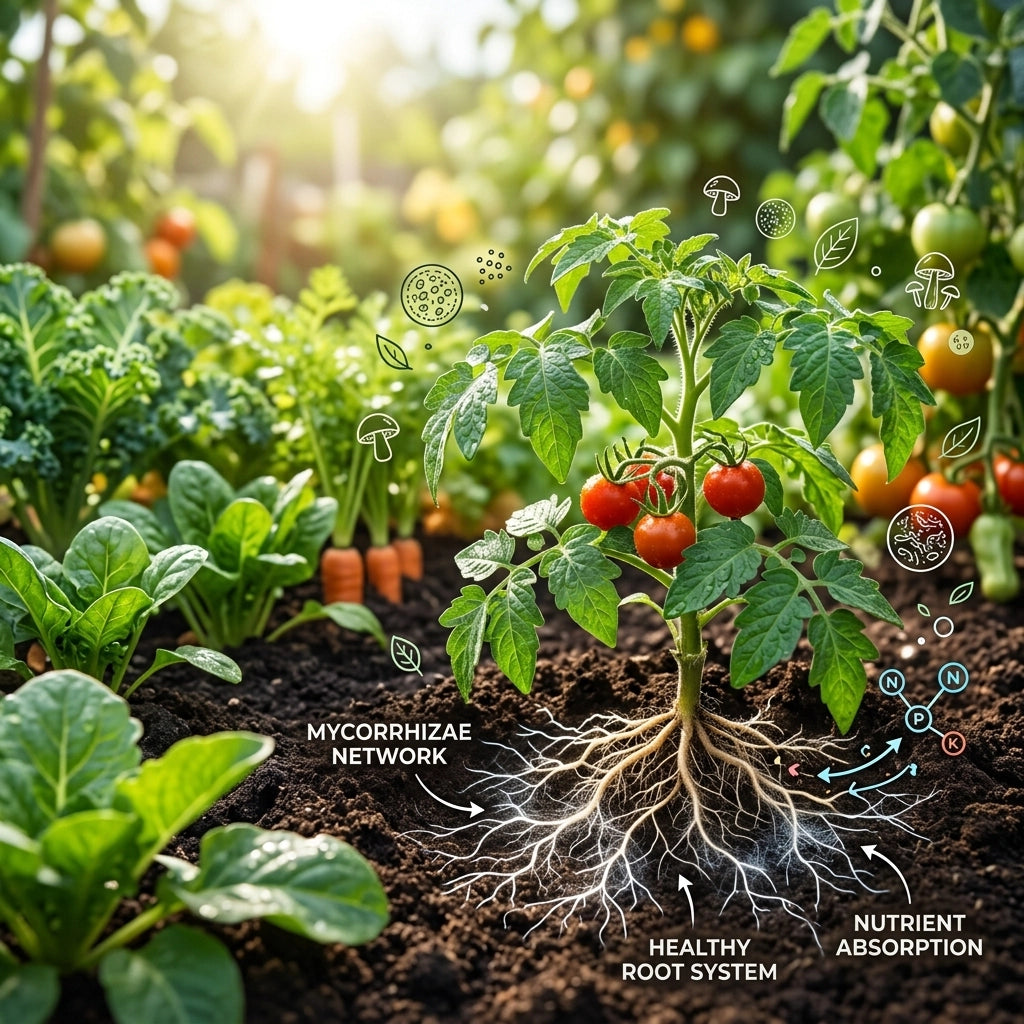
If you’ve been in the growing game for a while, you’ve likely heard about mycorrhizae. Usually, it’s talked about in hushed, reverent tones as this "magic dust" that makes roots explode. And while that’s true to an extent, most of the advice out there stops at "sprinkle it on your roots."
The fact of the matter is, if you’re growing high-value fruit and vegetable crops, just "sprinkling it" is barely scratching the surface. To really maximize your yields and reduce your dependence on expensive bottled nutrients, you need to understand how mycorrhizae for plants interacts with specific species, nutrient levels, and even your watering schedule.
At Perfect Gardens, we’re all about the science of the grow. Let’s dive into the advanced strategies for using these fungal allies in your food garden.
What Are Mycorrhizae? (The Fungal Bridge)
Before we get into the advanced stuff, let’s do a quick refresher. Mycorrhizae aren't a fertilizer. They are beneficial fungi that form a symbiotic relationship with plant roots. They essentially act as an extension of the root system, reaching into microscopic pores in the soil that the plant’s own roots are too thick to access.
This "fungal bridge" allows the plant to pull in phosphorus, nitrogen, and micronutrients from way beyond the "depletion zone" immediately surrounding the root. In exchange, the plant feeds the fungi sugars produced during photosynthesis. It’s a win-win, but as we’re about to see, not all plants play by the same rules.
The Heavy Hitters: Crops That Love Mycorrhizae
One of the biggest mistakes growers make is assuming every plant responds the same way to inoculation. If you are treating your broccoli the same way you treat your tomatoes, you’re wasting money.
1. Tomatoes: The Efficiency Kings
Research has shown that tomatoes are incredibly responsive to arbuscular mycorrhizal fungi (AMF). In soilless systems, tomatoes inoculated with mycorrhizae can maintain: and often exceed: their yields even when the nutrient solution is reduced to 60% of its normal strength. This means you can save 40% on your nutrients just by having a healthy fungal colony.
2. Peppers: Species Specificity Matters
Peppers are another high-responder, but they are picky. Studies have shown that Glomus clarum (a specific strain of fungi) can increase pepper yields by nearly 29%. If you’re just buying a generic "beneficial blend," you might not be getting the specific strains that peppers crave. When looking for mycorrhizae for plants, check the label for Glomus species to ensure your peppers get the boost they need.
3. Potatoes: Mineral Powerhouses
Potatoes treated with AMF show a significant increase in phosphorus, iron, and magnesium uptake. This doesn't just mean bigger tubers; it means more nutrient-dense food. Additionally, the fungi help the potato plant resist soil-borne diseases, which is a major win for anyone dealing with root rot or blight.
The "No-Go" Zone: When Mycorrhizae Won't Help
It seems more like these fungi should work on everything, right? This is not the case. Some of the most common garden vegetables are "non-mycorrhizal."
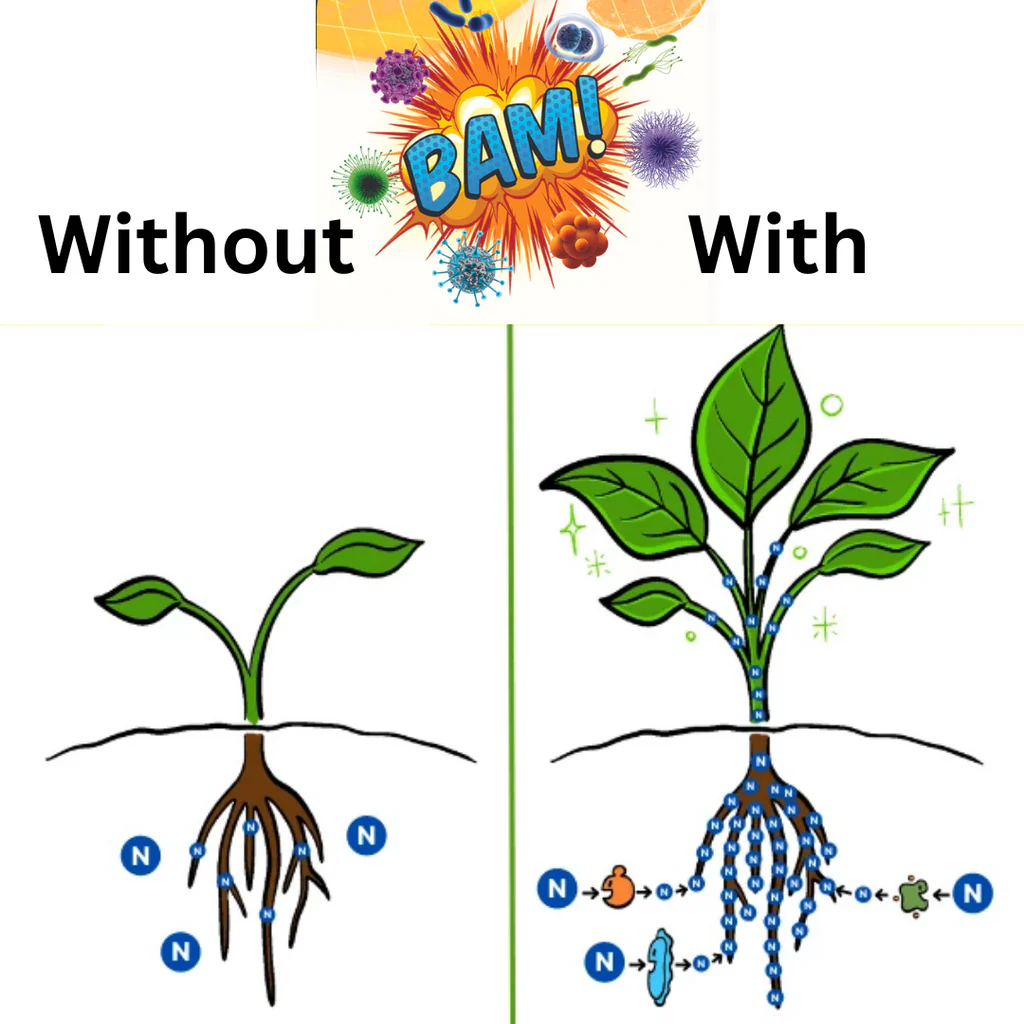
If you are growing Brassicas (broccoli, cabbage, cauliflower, kale) or Spinach, save your money. These plants have evolved different survival mechanisms and do not form symbiotic relationships with mycorrhizal fungi. Using inoculants on these crops is essentially pouring money down the drain. For these plants, you’re better off focusing on high-quality compost or microbial inoculants like BAM!.

Advanced Inoculation: Timing and Methods
Most people apply mycorrhizae once at transplant. While that’s better than nothing, professional-grade results often require a more nuanced approach.
The Double-Dip Strategy
Studies on hydroponically grown peppers have suggested that multiple inoculation events lead to better colonization. Instead of just hitting them once, try a two-stage approach:
- At Sowing: Use a powder or granular inoculant directly in your seed starting plugs. This ensures the very first root hair that emerges is immediately "infected" with the beneficial fungi.
- At Transplant: When moving the plant to its final home: whether that's a fabric raised bed or a hydroponic reservoir: dust the root ball again. This ensures that any new root growth is quickly colonized.
Application Methods
- Powder/Dusting: Best for transplants. Get it directly on the roots.
- Liquid Inoculants: Great for established systems or for use in a drip siphon system.
- Seed Coating: If you’re planting large-scale vegetable rows, coating the seeds in a mycorrhizal powder before planting is the most cost-effective way to ensure early colonization.
The Phosphorus Paradox
Here is a "Caution" note for the serious growers: High phosphorus levels can kill your mycorrhizae.
The plant only feeds the fungi because it needs the fungi to find phosphorus. If you are blasting your plants with a high-P "bloom booster" at 100% strength, the plant will sense that it has plenty of phosphorus and will stop sending sugars to the fungi. Effectively, the plant "starves" the mycorrhizae out.
To get the most out of your mycorrhizae for plants, you actually want to lower your phosphorus inputs. As mentioned earlier, many crops can thrive on 60% of the recommended nutrient dose if the fungi are present. This synergy not only saves you money but also prevents nutrient runoff, making your garden more sustainable.
Stress Mitigation: Drought and Disease
Beyond just yields, mycorrhizae act as a biological insurance policy.
Drought Resistance
In a world with increasingly unpredictable weather, drought tolerance is key. Research from Cornell University and Texas A&M has shown that inoculated plants can handle water stress much better than untreated ones. In one study, almond trees saw a 60% reduction in moisture stress after being treated with mycorrhizae. The fungi hold onto water in their hyphae (the "threads") and deliver it to the plant when the soil dries out.
Disease Biocontrol
Specific strains, like the T-22 strain, don't just help with food; they act as bodyguards. Tomato plants treated with these beneficials are significantly less susceptible to early blight. The fungi physically occupy the space on the root that harmful pathogens would otherwise take over. It’s a game of "musical chairs" where the good guys get the seats first.
Integrating Microbes for Maximum Effect
Mycorrhizae work best when they aren't the only team in the stadium. To truly optimize your root zone, you should be looking at a "Microbial Kit" approach.
For example, combining mycorrhizae with nitrogen-fixing microbes like Azos or a broad-spectrum inoculant like BAM! creates a robust ecosystem. While the mycorrhizae are busy hunting for phosphorus and water, the other microbes are breaking down organic matter and fixing nitrogen from the air.
Real-World Limitations
It’s important to be realistic. In many intensive, high-tillage agricultural systems, mycorrhizal colonization is naturally low: sometimes as low as 14%. This is because frequent tilling physically breaks the fungal networks, and heavy chemical use creates a "lazy" plant that doesn't want to bond with fungi.
If you are transitioning to using mycorrhizae, you need to:
- Reduce Tillage: If you’re growing in soil, stop turning it over every season. Use no-till methods to keep the fungal networks intact.
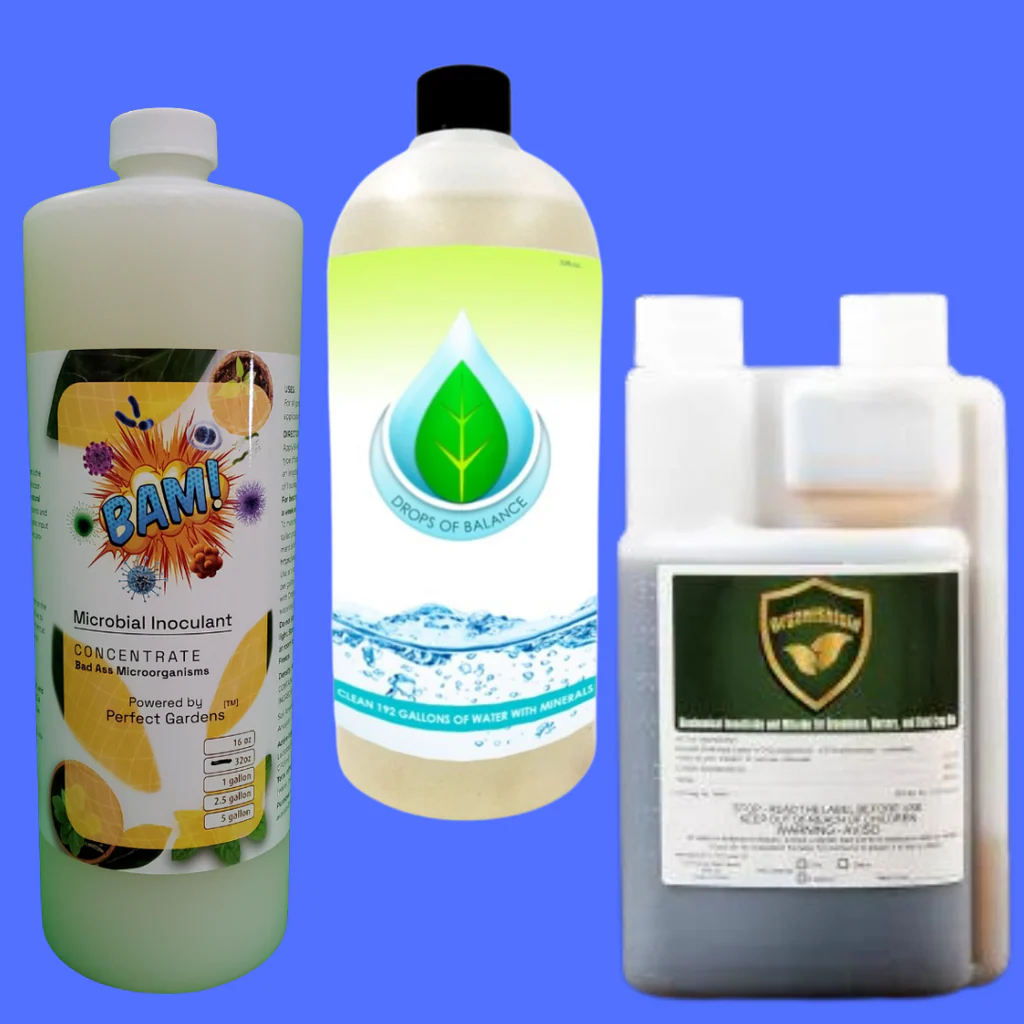
- Check Your Water: Chlorine and chloramine in tap water can be tough on microbes. Using something like Drops of Balance to clean your water can help ensure your "magic dust" actually stays alive.
- Feed the Fungi: Occasionally adding a source of complex sugars, like RAW Cane Molasses, can provide a quick energy boost to the microbial colony during high-stress periods.
Summary: The Pro-Grower Approach
Using mycorrhizae for plants in your fruit and vegetable garden is about more than just a bigger root ball. It’s about creating a smarter, more efficient plant. By choosing the right crops, timing your inoculations correctly, and lowering your nutrient inputs to let the fungi do their job, you’ll see healthier plants and better harvests.
The fact of the matter is, the future of gardening isn't in a bottle of chemicals: it’s in the biology of the soil. If you're ready to level up your setup, check out our full range of nutrients and inoculants to get started. Your plants (and your wallet) will thank you.



Leave a comment
This site is protected by hCaptcha and the hCaptcha Privacy Policy and Terms of Service apply.