
If you’ve been gardening for more than a week, you know the "watering dance." It’s that constant back-and-forth between "Are they too dry?" and "Did I just drown them?" For many of us, watering is the most therapeutic part of the day. But let’s be real: for the busy grower or the person who actually wants to take a weekend off without coming home to a graveyard of crispy leaves, manual watering can feel like a ball and chain.
This brings us to the big question: Do you really need automatic watering stakes?
The short answer is: maybe. The long answer involves understanding the trade-off between your time, your plants' need for consistency, and the reliability of the tools you use. Whether you’re running a small indoor tent or a full hydroponic setup, getting your irrigation right is the difference between a mediocre harvest and a legendary one.
The Case for Manual Watering: Why We Still Do It
Before we jump into the high-tech (and low-tech) world of automation, we have to respect the classic watering can. Manual watering isn’t just about moving water; it’s about observation.
Pros of Manual Watering
- Direct Observation: When you hand-water, you are forced to look at every plant. You’ll notice the early signs of spider mites, nutrient deficiencies, or pH issues before they become catastrophes.
- Control: You can give the thirsty plant in the corner an extra gallon while giving the slow-drinker in the middle just a splash.
- Simplicity: There are no tubes to clog, no sensors to fail, and no reservoirs to refill. Your "system" is as reliable as you are.
Cons of Manual Watering
- Human Error: This is the big one. We get tired, we get busy, and we get forgetful. Skipping just one day during the peak of summer or mid-bloom can stall growth significantly.
- Inconsistency: Humans are bad at being precise. One day you might soak the soil, and the next you might only give it a surface-level misting. This creates stress on the root system.
- Time Consumption: If you have 20 or 30 plants, you’re looking at an hour or more of work every day or two. That’s time you could spend training your plants or, you know, actually enjoying your life.
Enter the Automatic Watering Stake
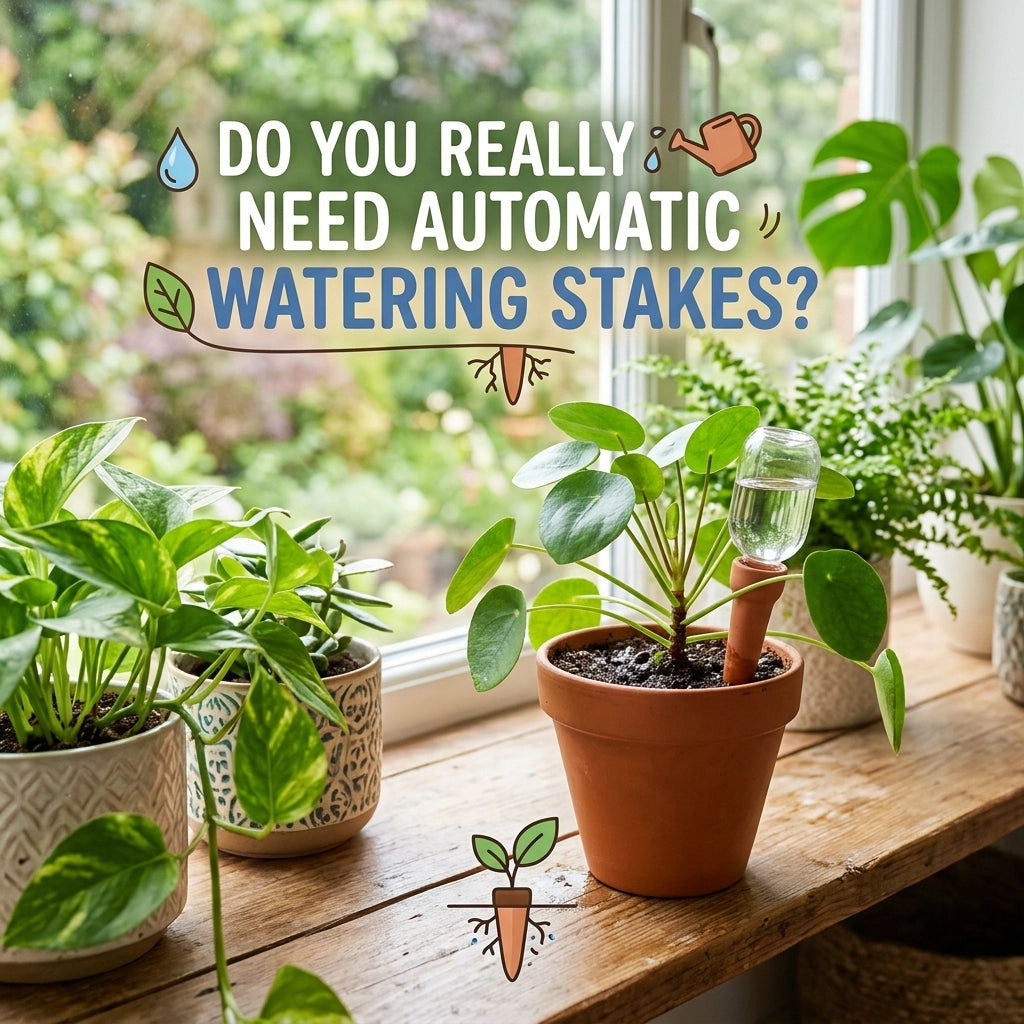
The market is flooded with "self-watering" gadgets. You’ve probably seen the glass globes (which look cool but often fail) and the terracotta spikes. The goal of these stakes is to create a "set it and forget it" environment.
How They Work
Most basic watering stakes work on a simple principle of osmosis or vacuum pressure. A porous material (usually terracotta or ceramic) is placed in the soil. As the soil dries out, it pulls moisture through the porous wall of the stake from a connected reservoir or bottle.

The Pros: Saving Your Sanity
The biggest "pro" is consistency. Plants crave a stable environment. When the moisture level in the soil stays within a specific range: rather than swinging wildly from "desert dry" to "swampy": the plant can focus all its energy on growth rather than recovering from stress.
For the hobbyist, these are a lifesaver during vacations. A decent set of stakes can keep a houseplant alive for two weeks while you’re at the beach. They are inexpensive, require no electricity, and are generally easy to set up.
The Cons: The "Failure" Factor
The fact of the matter is that cheap watering stakes can be fickle.
- Air Bubbles: If air gets into the line of a siphon-based stake, the flow stops. Your plant dries out, and you don’t realize it because the reservoir still looks full.
- Clogging: If you use organic nutrients or have "hard" water with lots of minerals, the tiny pores in the ceramic can clog up over time.
- Limited Capacity: A small wine bottle stuck into a terracotta spike only holds so much. For large, fast-growing plants, you might find yourself refilling those bottles every single day, which defeats the purpose of automation.
The Gold Standard: Blumat Systems
If you are serious about your garden: especially if you’re using fabric raised beds: standard terracotta spikes might not cut it. This is where Blumat systems come into play.
Unlike a simple "leak" system, a Blumat (specifically the Tropf-Blumat) acts like a brain for your plant. The ceramic heart of the Blumat senses the moisture tension in the soil. When the soil is dry, the pressure inside the cone drops, opening a valve that allows water to drip through a separate line. Once the soil is moist enough, the pressure increases and pinches the line shut.

Why Blumats Change the Game:
- True Demand-Based Watering: It only waters when the plant is actually thirsty. It accounts for changes in temperature, humidity, and the plant's growth stage.
- Scalability: You can connect dozens of these to a single large water storage tank.
- No Power Needed: It works entirely on gravity and water pressure. This makes it incredibly reliable for remote locations or areas with frequent power outages.
Consistency vs. Time: The Busy Gardener’s Dilemma
Most of us aren't professional farmers; we have jobs, families, and other responsibilities. If you find yourself rushing through your watering routine at 6:00 AM before work, you are likely doing more harm than good.
Using a system like the Blumat Automatic Watering Kit allows you to reclaim that time. Instead of spending 20 minutes with a watering can, you spend 5 minutes checking your reservoir and ensuring the lines are clear.
The Growth Factor:
When a plant has a consistent supply of water, it can keep its stomata open longer during the day for photosynthesis. If the soil dries out, the plant closes these "pores" to conserve moisture, which effectively stops growth. By using stakes or an automated system, you are maximizing the "up-time" of your plant’s metabolic processes.
Common Pitfalls and How to Avoid Them
It’s not all sunshine and rainbows. If you decide to go the route of automatic stakes, you need to be aware of the "Caution" zones.
1. The Reservoir Run-Dry
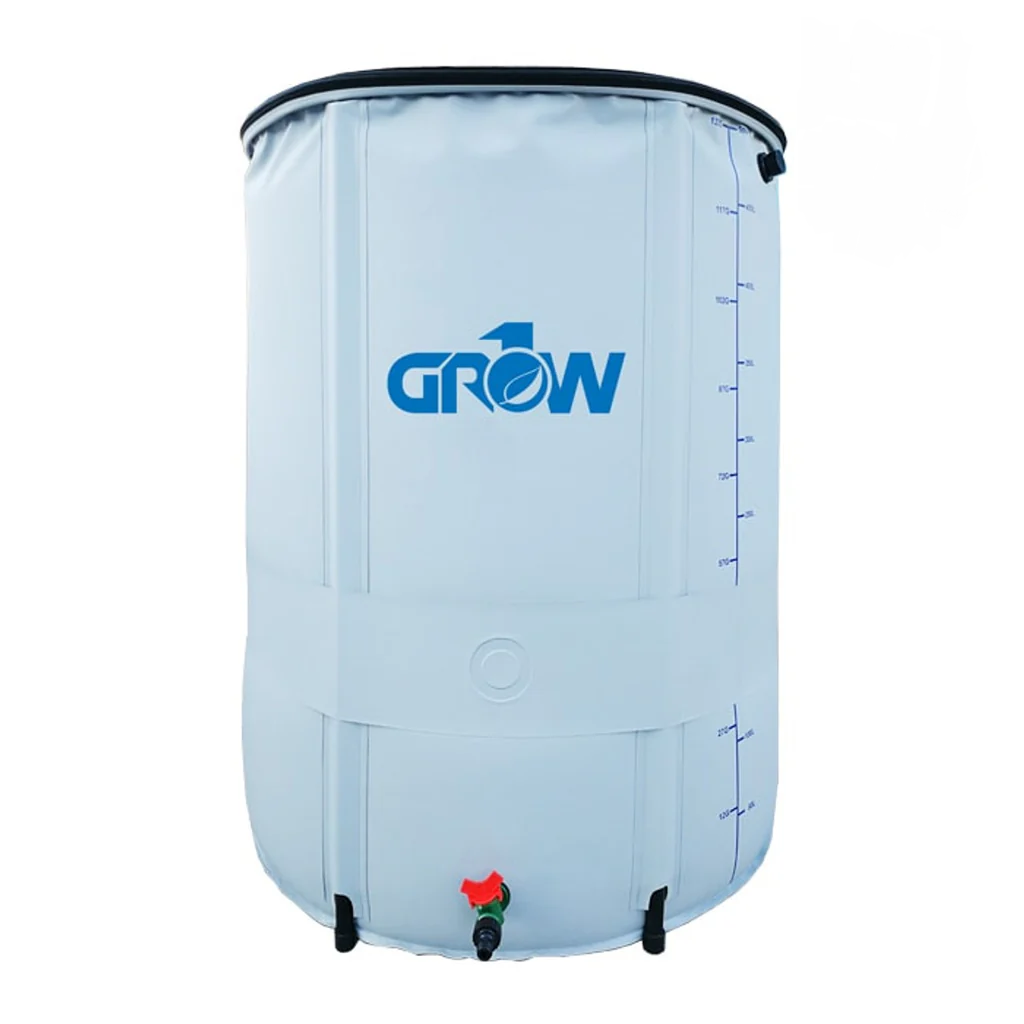
The most common failure isn't the stake; it's the grower forgetting to refill the reservoir. If you’re using a gravity-fed system, we highly recommend using a collapsible water tank with volume measurements. This makes it easy to see at a glance how much water your "girls" are drinking.
2. Nutrient Salt Buildup
If you are running heavy mineral nutrients through your lines, they will eventually crystallize and clog the drippers or the pores of the stakes.
- Solution: Use clean, filtered water in your reservoir and apply your nutrients via a separate top-dress or a periodic manual feeding. Alternatively, ensure you are using highly soluble nutrients designed for irrigation systems.
3. The "Runaway" Dripper
Occasionally, a stake might get knocked loose or a valve might fail, leading to a "runaway" where the reservoir empties into the soil all at once. This is why we always suggest placing your pots in trays or using a liner if you're growing indoors.

Who Really Needs Them?
So, back to the original question. Do you really need them?
- You DON'T need them if: You only have a few plants, you enjoy the daily ritual of hand-watering, and you are rarely away from home for more than 48 hours.
-
You DO need them if:
- You have more than 10 plants.
- You travel frequently.
- You are growing in fabric pots, which dry out much faster than plastic ones.
- You want to achieve the highest possible yield through environmental consistency.
- You are tired of the "feast or famine" watering cycle.
Final Thoughts: The Hybrid Approach
It seems more like an "all or nothing" choice, but it doesn’t have to be. Many successful growers use a hybrid approach. They set up a Blumat or stake system to provide the baseline "survival" water the plants need. Then, once or twice a week, they come in with a manual feeding of specialized microbes, like those found in Drops of Balance, to boost plant health and soil vitality.
This gives you the best of both worlds: the safety and consistency of automation, with the watchful eye and "love" of manual gardening.
If you're ready to stop being a slave to the watering can, starting with a basic set of stakes or a small Blumat kit is one of the best investments you can make for your garden's future. It’s not just about the plants: it’s about your peace of mind.
For more tips on setting up your ideal grow space, check out our Grow Help section or browse our latest hydroponic gear. Happy growing!

Leave a comment
This site is protected by hCaptcha and the hCaptcha Privacy Policy and Terms of Service apply.