
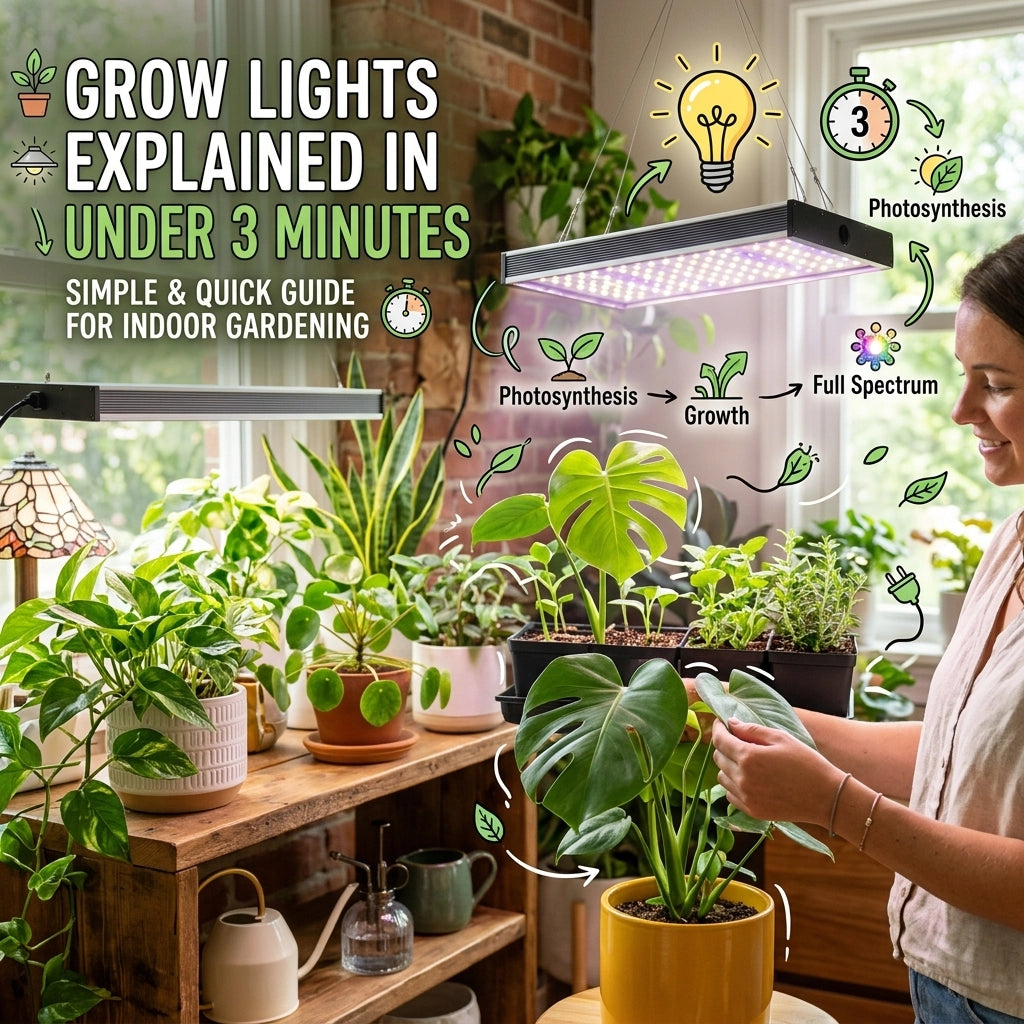
If you have ever tried to grow a tomato plant on a windowsill in the middle of January, you know the struggle. It gets leggy, turns a pale shade of "sad," and eventually just gives up. The truth of the matter is that indoor environments usually only provide about 10% of the light intensity that plants actually need to thrive.
That is where grow lights come in. But if you start looking into them, you’re immediately hit with a wall of acronyms: PAR, PPFD, Spectrum, LUX, Kelvins. It feels like you need a degree in quantum physics just to buy a light bulb.
Here is the good news: you don’t. At Perfect Gardens, we believe gardening should be accessible, not over-complicated. Let’s break down everything you need to know about grow lights in a way that actually makes sense.
Why Your Household Bulbs Are Failing Your Plants
You might be thinking, “I have a bright LED light in my kitchen, can’t I just use that?”
Unfortunately, no. Standard household bulbs are designed for human eyes. We see best in the yellow-green part of the spectrum. Plants, however, are much more interested in the ends of the spectrum: the blues and the reds.
Household bulbs emphasize those "middle" colors that make leaves look green to us, but they offer very little of the energy plants need for photosynthesis. Grow lights are engineered to deliver the specific wavelengths that drive growth. Using a standard bulb for a high-intensity plant is like trying to feed a professional athlete nothing but celery; it looks like food, but there is no real energy in it.
Understanding the "Color" of Light: Spectrum
When we talk about "Spectrum," we are talking about the color of the light the fixture emits. In the old days, growers had to swap bulbs depending on what stage the plant was in. Today, we have "Full Spectrum" LEDs that do it all.
- Blue Light (400-500nm): This is the "veggie" light. It encourages short, bushy growth, thick stems, and lush green leaves. If you want your seedlings to stay strong and not get "leggy," they need blue light.
- Red Light (600-700nm): This is the "fruiting and flowering" light. Red light tells the plant that it’s time to reproduce. It helps with bud development and fruit size.
- Full Spectrum: Most modern lights, like those from MEDIC GROW or KIND LED, are considered "Full Spectrum." This means they mimic the sun, providing a balanced mix of colors so you don't have to change your setup as the plant grows.
What the Heck is PPFD?
If you look at a spec sheet for a light like the Spectrum-Y Wireless LED, you’re going to see a number for PPFD. This is the most important number you’ll encounter, but don't let the name scare you.
PPFD (Photosynthetic Photon Flux Density) basically measures how many "bits" of light (photons) are actually hitting your plant's leaves every second.
Think of it like rain.
- PAR is the "type" of rain (is it water, or is it something else?).
- PPF is how much rain is coming out of the cloud.
- PPFD is how much rain is actually hitting your umbrella.
As a general rule:
- Seedlings/Clones: Need low PPFD (around 100-300).
- Vegetative Stage: Need moderate PPFD (around 400-600).
- Flowering Stage: Need high PPFD (600-1,000+).
If your PPFD is too low, the plant grows slow and weak. If it’s too high without enough CO2 or nutrients, you can actually "bleach" or burn the leaves. It’s all about finding that "Goldilocks" zone for your specific grow essentials.
Why LED is the King of the Grow Room
There are other types of lights out there: Fluorescents (T5s) and High-Intensity Discharge (HPS/MH) lights: but the industry has almost entirely shifted to LED. Why?
- Efficiency: LEDs produce way more light per watt of electricity. Your power bill will thank you.
- Heat Management: Old-school HPS bulbs get hot enough to fry an egg. LEDs run much cooler, which means you don't need a massive industrial AC unit just to keep your plants from wilting.
- Longevity: A good LED fixture can last 50,000 to 100,000 hours. You won't be buying replacement bulbs every six months.
Featured Gear: MEDIC GROW & KIND LED
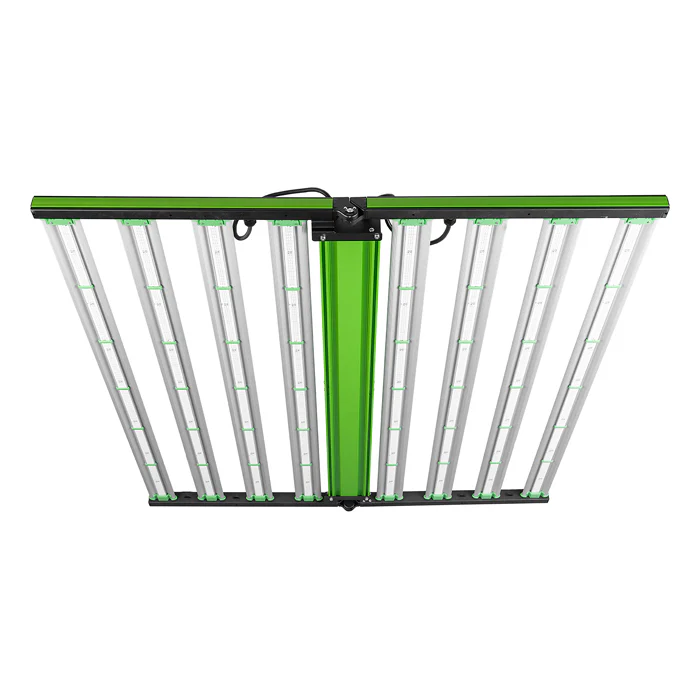
When you’re looking for reliability, two names constantly come up in the Army of Growers community: MEDIC GROW and KIND LED.
KIND LED has been a pioneer in the space for a long time. Their X-series lights are famous for having a "targeted" spectrum that really pushes the boundaries of what plants can do in the flowering stage. They are built like tanks and offer incredible light distribution.
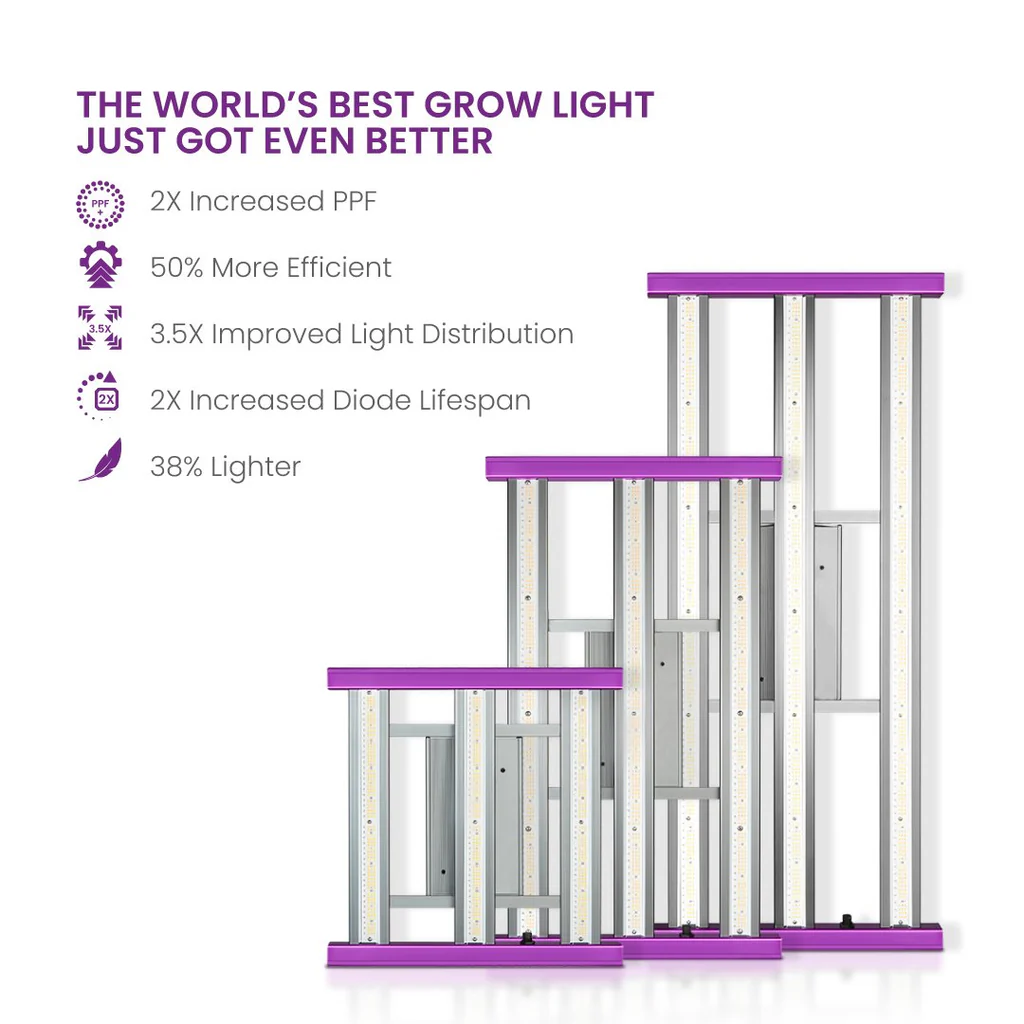
MEDIC GROW is a fantastic option for those who want commercial-grade power without the massive price tag. Their Spectrum-Y is a beast of a light. It’s wireless, tunable, and gives you 880W of power. The cool thing about the Spectrum-Y is that it includes UV and IR (Infrared) output, which can help increase resin production and overall plant health.

Setting Up Your Lights: Distance and Timing
The most common mistake beginners make is hanging their light and never touching it again.
1. Distance Matters
As your plant grows, you need to move the light.
- Seedlings: Keep the light further away (24-36 inches). They are delicate and can be easily overwhelmed.
- Mature Plants: You can bring the light closer (12-24 inches) to maximize that PPFD during the flower stage.
Caution: Always check your manufacturer's "hanging height" chart. Every light is different, and some LEDs are so powerful they can damage plants even from 2 feet away.
2. Don’t Forget the Sleep
Plants need to sleep just like we do. Most indoor growers run their lights on a timer:
- Veg Stage: 18 hours on / 6 hours off.
- Flower Stage: 12 hours on / 12 hours off.
Consistent timing is key. If you keep changing the schedule, you’ll stress the plant out, and it might turn into a hermaphrodite or simply stop growing.

Maximizing Your Light Efficiency
Light that hits your walls instead of your plants is wasted money. This is where tents and film come into play. If you aren't growing in a dedicated grow tent, you should consider lining your space with Panda Film.
Panda Film is black on one side (to block light from escaping or entering) and white on the other. That white side is incredibly reflective. By lining your walls with it, you can increase the light reaching your plants by 20% to 30% without spending another dime on electricity.

Troubleshooting Common Issues
Even with the best MEDIC GROW or KIND LED setup, things can go sideways. Here’s what to look for:
- Yellowing Tops: If the leaves closest to the light are turning yellow or white, but the bottom of the plant looks fine, your light is too close. This is "Light Burn." Move the light up 6 inches.
- Stretching: If your plant looks like it’s trying to reach for the ceiling and has long gaps between leaves, the light is too far away. It’s "stretching" to find more energy. Lower the light.
- Slow Growth: If everything looks healthy but the plant just isn't getting bigger, check your PPFD. You might just have a light that isn't powerful enough for the size of your grow space.
Final Thoughts
Choosing a grow light doesn't have to be a headache. Focus on getting a quality LED with a full spectrum, pay attention to your PPFD levels, and make sure you have a way to reflect that light back onto the plants.
Whether you are just starting your first cloning room or upgrading a massive commercial facility, the principles remain the same. Plants need quality "food" in the form of light to give you the yields you’re looking for.
If you have more questions or need a personalized recommendation, feel free to check out our grow help videos or reach out to us on our contact page. We’ve helped thousands of growers dial in their setups, and we’d love to help you too. Happy growing!

Leave a comment
This site is protected by hCaptcha and the hCaptcha Privacy Policy and Terms of Service apply.