
You’ve spent weeks, maybe months, nurturing your plants. You’ve dialed in the nutrients, managed the light cycles, and now you’re finally seeing those beautiful, resinous buds stacking up. It’s the home stretch. But then, you see it: a tiny web in the corner of a leaf, a cluster of aphids on a stem, or the dreaded "frass" (caterpillar poop) on your colas.
Panic sets in. Your first instinct might be to grab the strongest bottle of pesticide you have, but stop right there. Late-bloom pest management is a high-stakes game. What you spray now stays on the plant, and eventually, it ends up in your lungs or your stomach. The fact of the matter is that many products that are perfectly safe during the vegetative stage are a total "no-go" once the flowers have formed.
In this guide, we’re going to break down how to defend your garden during the most sensitive stage of the grow without ruining the quality, taste, or safety of your harvest.
The Late-Bloom Dilemma: Why You Can’t Just Spray Away
When your plants are in the final weeks of flowering, they are at their most vulnerable. The buds are dense, sticky, and full of nooks and crannies where pests love to hide. This same architecture also traps liquids. If you spray heavy oils or systemic chemicals now, you’re looking at two major problems:
- Residual Toxicity: Systemic pesticides can stay in the plant tissue for weeks. In late bloom, there isn’t enough time for the plant to metabolize these chemicals before harvest.
- Bud Rot (Botrytis): Introducing moisture into dense, late-stage buds is a recipe for mold. If the liquid doesn't dry quickly, you might kill the bugs but lose the whole crop to rot.
- Flavor and Aroma Contamination: Essential oils like Neem or high-viscosity horticultural oils can coat the trichomes, altering the terpene profile and making the final product taste like "burnt rubber" or chemicals.
So, how do we handle this? We focus on "Low-Impact" and "Physical" interventions.
1. Timing is Everything: The Dawn/Dusk Rule
If you absolutely must use a foliar application, timing is your best friend. The most critical safety measure is timing your pest control for dawn or dusk.
If you are growing outdoors, spraying at dusk protects pollinators like bees that are active during the day. If you are growing indoors under LED lights, you want to spray just before the lights go out or right as they come on. However, spraying right before "lights out" in a humid environment is risky for mold.
Pro Tip: If you spray in the morning (or when lights come on), make sure you have enough airflow to dry the plants within 30–60 minutes. Use fans to keep the air moving through the canopy.
2. Safe "Last Resort" Sprays
When the infestation is moving faster than you can manage by hand, you need a safe biochemical or physical killer.
Insecticidal Soaps and OrganiShield
Insecticidal soaps work by disrupting the cell membranes of soft-bodied insects like aphids, mealybugs, and spider mites. Because they work on contact and break down rapidly, they don't leave a long-term residue that affects the taste of your buds.

Products like OrganiShield are excellent for this because they are USDA Organic certified and designed to be used even on the day of harvest (though we still recommend a "water-only" period). These types of sprays are "physical" killers, they suffocate or dehydrate the bug rather than poisoning it.
Horticultural Oils (Use with Caution)
Light horticultural oils can be used to smother mites, but we generally advise against them in the last 2–3 weeks of bloom. If you must use them, dilute them heavily and spot-treat rather than spraying the entire plant.
3. Biological Warfare: Strengthening the Plant from the Inside
Prevention is always better than a cure. One of the best ways to handle late-bloom pests is to have a plant that is so healthy its own immune system does half the work. This starts in the root zone.
Using beneficial microbes like BAM! (Beneficial Ancient Microbes) and Mykos creates a symbiotic relationship where the plant is more resilient to stress. While these don't "kill" spider mites on the leaves, they help the plant recover from the damage and maintain its resin production despite the pest pressure.
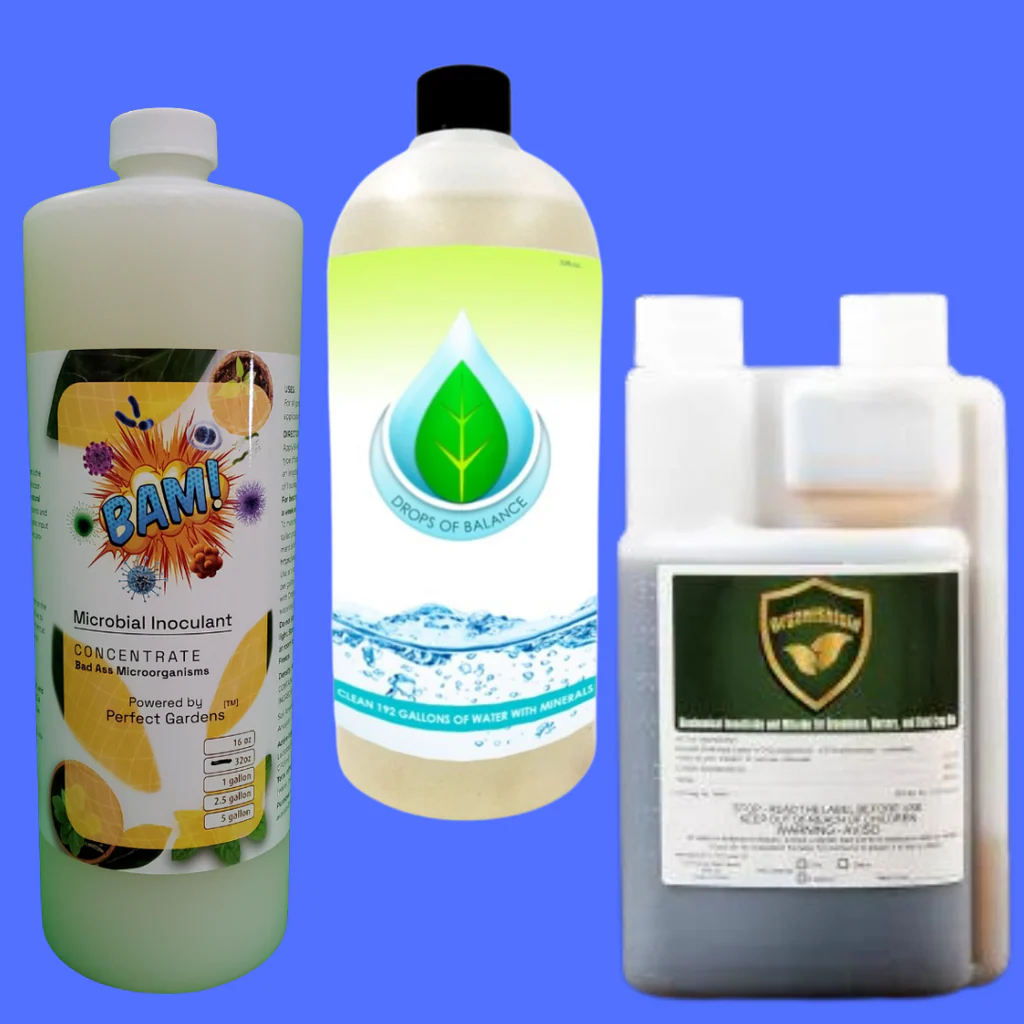
When you use a Nutrient and Microbial Inoculant Kit, you are essentially building a fortress. A plant with a robust root system and a full profile of trace minerals is less "tasty" to certain pests and much better at healing from bites.

Caption: A close-up of healthy trichome development on a plant supported by microbial inoculants.
4. Manual Intervention: The Hands-On Approach
It’s not glamorous, but hand-picking pests is one of the most effective ways to save a late-stage crop.
- Caterpillars: These are the kings of late-bloom destruction. They eat the bud from the inside out, and their waste causes rot. Go in with a flashlight during the "dusk" hours and look for them. If you see a leaf that looks like it's dying for no reason in the middle of a bud, pull it back: there's likely a caterpillar in there.
- Sticky Traps: Use yellow and blue sticky traps at the base of your plants and at canopy level to catch fungus gnats and winged aphids before they can lay eggs.
- The Shop Vac Method: It sounds crazy, but for heavy infestations of whiteflies or even some mites, a small handheld vacuum can remove a massive percentage of the population without ever touching the plant with a chemical.
5. Environmental Controls and Canopy Management
Pests thrive in stagnant, humid air. As your buds get thicker, the airflow inside the plant decreases. This creates a "micro-climate" that is perfect for spider mites.
Using a plant tying tool kit or garden ties to pull branches apart can increase the light penetration and airflow. This not only helps with pest management by making the environment less hospitable for them, but it also increases your yield and prevents bud rot.

If you are growing in Gorilla Grow Tents, make sure your exhaust fans are dialed in. Lowering your temperatures slightly (if possible) can also slow down the reproductive cycle of spider mites, which can double their population every few days in high heat.
6. What to Avoid at All Costs
There are a few "old school" remedies that should never touch a flowering plant:
- Dish Soap: Most household dish soaps contain degreasers and perfumes that will strip the wax off your leaves and ruin your resin. Only use dedicated "insecticidal soaps."
- Heavy Neem Oil: Neem is great in veg, but in late flower, the smell is impossible to wash off. It also lingers in the soil.
- Pyrethrins (Late-Stage): While organic, pyrethrins are broad-spectrum and very strong. If you use them too close to harvest, you risk failing a lab test if you are a commercial grower, or just having a harsh smoke if you are a hobbyist.
7. The Post-Harvest "Bud Wash"
If you had a pest issue during late bloom and you’re worried about dead bugs or "frass" remaining on your flowers, you might consider a bud wash at harvest.
This involves dipping your freshly cut branches into a series of buckets:
- Bucket 1: Lukewarm water with a tiny bit of lemon juice and baking soda (or a very diluted H2O2).
- Bucket 2: Clean, pH-balanced water.
- Bucket 3: Clean, pH-balanced water.
Gently swirl the buds in the water. You’ll be shocked at what comes off. The resin (which is oil-based) stays on the plant, while the dust, dirt, and dead bugs (which are not) wash away. Just make sure you have plenty of fans during the initial drying phase to get that extra moisture off the buds quickly.
Summary Checklist for Late-Bloom Defense
- Monitor Daily: Use a jeweler's loupe to look at the undersides of leaves.
- Increase Airflow: Use Grow Essentials like fans and ties to open up the canopy.
- Use Biologicals: Keep the roots strong with BAM! to help the plant fight back.
- Spray Safely: If needed, use OrganiShield or insecticidal soaps at dusk/dawn.
- Clean Up: Consider a bud wash if the infestation was significant.
It seems more like a daunting task when you're staring at a pest problem, but the fact is, most crops can be saved if you act quickly and use the right tools. Don't let a few bugs ruin months of hard work. Keep it clean, keep it organic, and keep that air moving.
For more help with your grow or to find the right Nutrients to keep your plants resilient, check out our full collection. Happy growing!


Leave a comment
This site is protected by hCaptcha and the hCaptcha Privacy Policy and Terms of Service apply.