

As we roll through May, the garden is finally starting to look like that paradise you’ve been dreaming of all winter. The lights are dialed in, the clones are taking off, and the outdoor beds are warming up. But there is a silent transition happening right now that every grower needs to be ready for.
As the calendar flips toward June, we aren’t just gaining daylight; we are gaining humidity and heat. For an indoor grower, this means your lung room is working harder. For a hydroponic grower, it means your reservoir temperatures are creeping up. And for the plants? It means they are entering the high-risk zone for the "silent killer": Root Rot.
Today, we’re talking about the best insurance policy you can buy for your garden: Microbial Inoculants. If you wait until you smell that swampy, sulfur-like stank coming from your root zone, you’re already playing defense. The goal is to build a biological fortress before the humidity hits.
What Exactly is Root Rot?
Root rot isn’t actually a single disease; it’s usually a tag-team effort by water-borne pathogens like Pythium, Phytophthora, and Fusarium. These "fungus-like" organisms thrive in anaerobic conditions: places where there is plenty of water but very little oxygen.
When the humidity spikes in late spring, your plants transpire differently. If your ventilation and controllers aren't perfectly dialed in, the root zone can become a stagnant, warm breeding ground. Pathogens move in, turn your beautiful white roots into brown slime, and essentially "choke" the plant from the bottom up. By the time you see yellowing leaves or wilting at the top, the basement is already flooded.
The Bodyguard Logic: How Microbes Save the Day
Think of your growing medium (soil, coco, or water) like a crowded nightclub. There’s only so much room at the bar. If you fill that club with friendly, helpful "bouncers" (beneficial microbes) early on, there simply isn’t any room for the "troublemakers" (pathogens) to get in the door.
This is the core principle of microbial inoculants. We aren't just adding "fertilizer"; we are introducing a living workforce. According to recent research, these beneficial microbes protect your plants through three main mechanisms:
- Resource Competition: Beneficial bacteria like Bacillus subtilis are greedy. They eat the food and take up the physical space that pathogens need to survive. If the "bad guys" can't find a place to land, they can't infect the plant.
- Antibiotic Production: Some heavy hitters, like Bacillus amyloliquefaciens, actually release natural antibiotic compounds. These chemicals act like a localized "search and destroy" mission against pathogens such as Cylindrocaryon destructans and Pythium.
- Systemic Acquired Resistance (SAR): This is the coolest part. When beneficial microbes colonize the roots, they essentially "prime" the plant’s immune system. It’s like a vaccine for plants. The plant becomes hyper-aware of threats and strengthens its cell walls, making it much harder for rot to take hold.

Why May is the "Golden Window" for Application
Timing is everything in gardening. Research shows that for maximum effectiveness, you must introduce microbes before symptoms appear. Once a plant is heavily infected with root rot, the beneficial microbes have a much harder time "evicting" the established colony of pathogens.
During the mid-May transition, your plants are usually in a high-growth phase. Their root systems are expanding rapidly, looking for new territory. This is the perfect time to apply a microbial inoculant like BAM! to ensure that every new inch of root growth is immediately "painted" with beneficial bacteria.
The Impact of Colonization
When you apply these microbes early, they form a symbiotic relationship with the plant that can last the entire life cycle. The plant provides the microbes with sugars (exudates), and the microbes provide the plant with protection and better nutrient availability.
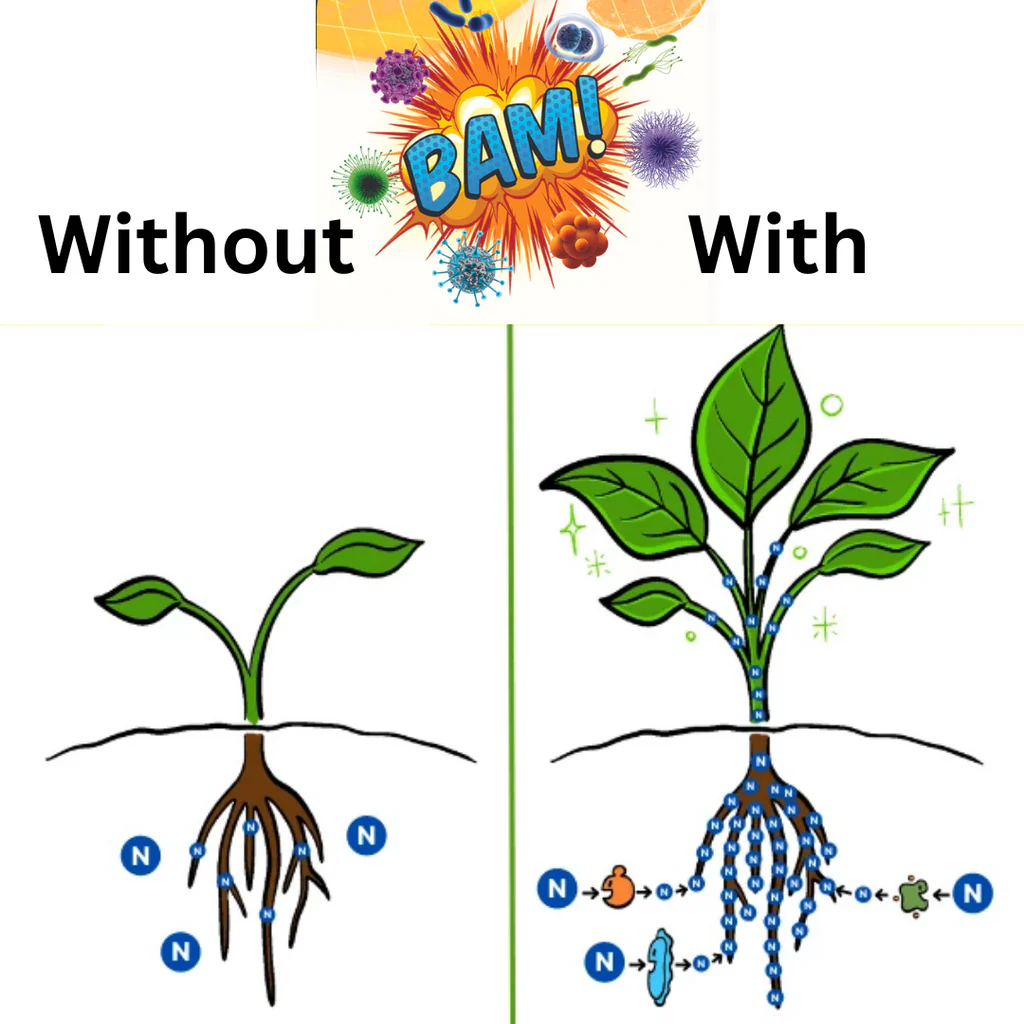
As you can see in the comparison above, the difference in root architecture is massive. Healthy, microbe-rich roots have more "hairs," which increases surface area for nutrient uptake. More surface area means a faster-growing plant and a much higher tolerance for the stress of summer heat.
Choosing Your Arsenal: The Key Players
Not all microbes do the same job. When you're looking at plant nutrient packages, you want a diverse "team."
1. Mycorrhizae (The Infrastructure)
Fungi like Glomus intraradices (found in products like Mykos) act as an extension of the root system. They reach out into the soil to grab water and phosphorus that the plant can't reach on its own. While they are great for growth, their primary "anti-rot" benefit is keeping the plant hydrated and healthy so it doesn't become stressed and vulnerable.
2. Nitrogen-Fixing Bacteria
Bacteria like Azos take nitrogen from the air and turn it into a form the plant can use. This is crucial for that lush, green canopy growth we want in May.
3. The "Cleaners" (BAM! and Drops of Balance)
For those growing in hydroponics, you need something that keeps the water clean and the pathogens at bay. BAM! (Beneficial Adaptive Microbes) is specifically designed to dominate the root zone. When paired with something like Drops of Balance to mineralize the water, you create an environment where root rot simply cannot survive.

(Placeholder for an image showing a healthy white root system in a hydroponic DWC bucket vs. a brown, rotted root system)
Practical Application: How to Do It Right
So, how do you actually get these "good guys" into the garden? It depends on your setup, but here are the three most effective ways for May:
The Soil/Coco Drench
This is the most common method for home gardeners.
- Mix your microbial inoculant (like BAM! or Mykos) into de-chlorinated water.
- Apply it as a "drench" until you see a little bit of runoff.
- Pro Tip: If you use tap water, let it sit out for 24 hours or use a filter. Chlorine is designed to kill bacteria: it doesn't care if they are the "good guys" or the "bad guys."
The Hydroponic Reservoir Add
In a reservoir system, temperatures often rise as the room warms up.
- Add your microbes directly to the tank after every reservoir change.
- Keep an eye on your water temps. If your water gets above 72°F, the oxygen levels drop, and the "bad guys" start to get an advantage. This is when your microbial colony is most important.
The Seedling and Clone Stage
If you are just starting your May run in a propagation dome, you can dust your rooting plugs with mycorrhizae. This ensures the very first root that emerges is immediately protected.

Common Pitfalls to Avoid
While microbes are powerful, they aren't magic. You still have to be a good "landlord" for your biological workforce.
- Overwatering: Even with the best microbes in the world, if you keep your soil "swampy" 24/7, you will eventually kill the beneficial aerobic bacteria and invite the anaerobic pathogens back in. Let your pots dry out slightly between waterings.
- Excessive Heat: If your LED lights are cranking and your tent is hitting 90°F, your microbes will struggle. Use proper airflow to keep the root zone cool.
- Chemical Overload: Using heavy synthetic fungicides can wipe out your beneficial colony. If you are going the organic or "bio-synthetic" route, stick to it. Don't send in the "bouncers" and then pepper-spray the whole club.
Summary: Your May To-Do List
As we gear up for the heat of June and July, your mission this week is simple: Inoculate.
- Check your inventory: Do you have enough beneficial bacteria and fungi to last through the summer?
- De-chlorinate your water: Ensure your delivery system isn't killing your investment.
- Monitor humidity: If your hygrometer is regularly climbing above 60-70% in your grow space, your risk for root rot is escalating.
- Re-apply: Microbes are living things. In a fast-growing indoor environment, it’s a good idea to re-apply your inoculants every 2 weeks to keep the populations strong.
By taking these steps now, you’re ensuring that when the "Summer Swelter" arrives, your plants won't just survive: they’ll thrive. If you have questions about which microbial package is right for your specific setup, check out our Grow Help section or grab a complete nutrient kit to take the guesswork out of it.
Keep those roots white and those canopies green!


Leave a comment
This site is protected by hCaptcha and the hCaptcha Privacy Policy and Terms of Service apply.