
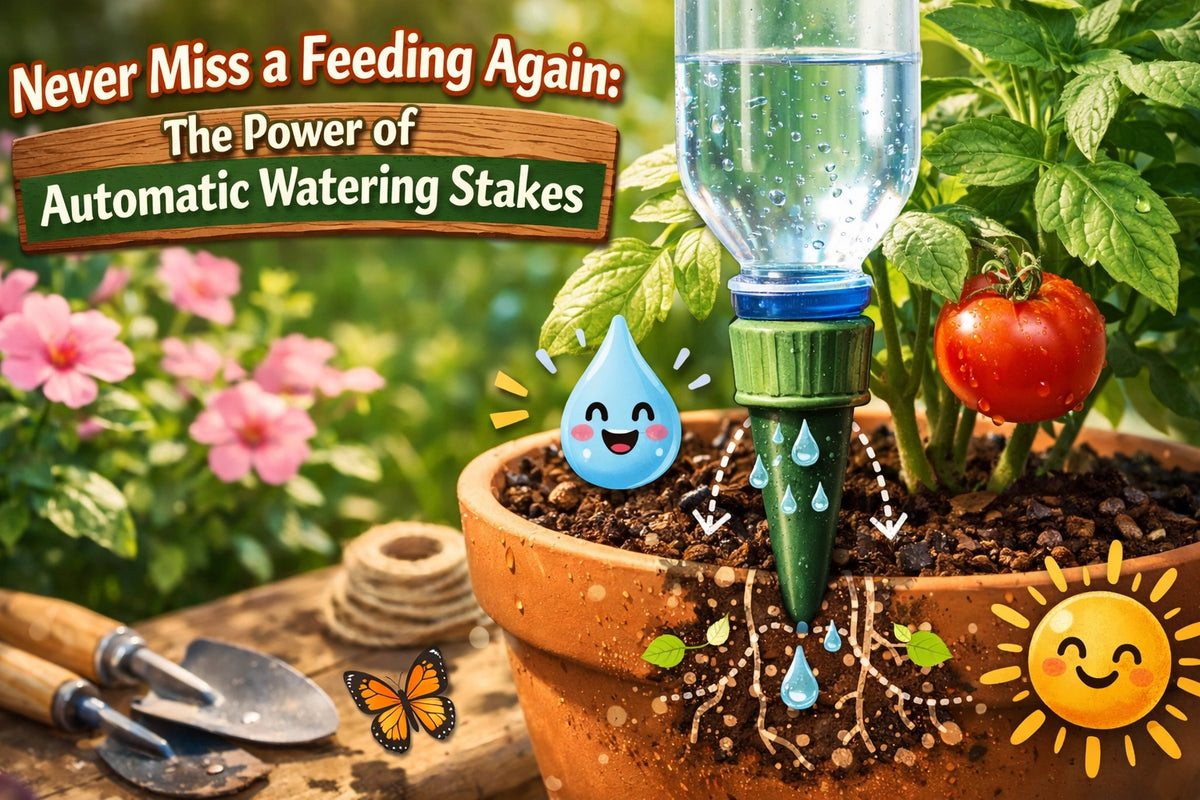
If you’ve been gardening for any length of time, you know the "Sunday Morning Panic." It’s that moment you walk into your grow room or out to your patio only to find your prize-winning plants looking like limp noodles because you forgot to water them: or worse, you overwatered them in a fit of guilt the night before.
The fact of the matter is that manual watering is the single most common point of failure for both hobbyist and professional growers. We are human; we get busy, we go on vacation, or we simply misjudge how much a plant "drank" during a particularly hot afternoon. This is where automatic watering stakes, specifically high-quality systems like Blumat, change the game entirely.
In this guide, we’re going to break down why these simple-looking ceramic stakes are actually sophisticated sensors that can stabilize your garden, increase your yields, and finally give you the freedom to step away from your plants without a hovering sense of dread.
The Problem with the "Wet-Dry" Cycle
Most growers are taught to wait until the top inch of soil is dry before watering again. While this prevents the roots from literally drowning, it creates a "yo-yo" effect. Your plants go from being saturated (where oxygen is pushed out of the soil) to being bone dry (where the fine root hairs begin to die off).
This constant stress forces the plant to spend energy on repairing its root system rather than focusing that energy on leaf production or flower development. When you switch to a consistent delivery system, the plant never hits that "stress zone." It stays in a state of perpetual "Goldilocks" moisture: not too wet, not too dry, but just right.
How Automatic Watering Stakes Actually Work
It seems more like magic when you first see a plant stay perfectly hydrated for two weeks without a pump or a timer, but the science is straightforward. Most high-quality stakes, like the ones found in a Blumat Automatic Watering System Kit, operate on the principle of tension.
1. The Ceramic Sensor (The "Carrot")
The core of the system is a hollow ceramic cone. This ceramic is porous. When you fill the cone with water and "prime" it, the water inside the cone wants to equalize with the moisture in the surrounding soil.
2. The Suction Mechanism
As the soil dries out, it exerts a physical "pull" or suction on the water inside the ceramic cone. This suction pulls on a rubber diaphragm at the top of the stake.
3. The Valve Release
When the diaphragm is pulled down by the drying soil, it opens a small valve that allows water to flow through a thin piece of tubing (dripline). As the soil becomes moist again, the suction decreases, the diaphragm moves back up, and the valve pinches the tube shut.
This is what we call a "demand-based" system. Unlike a digital timer that turns on regardless of whether the plant needs water, a watering stake only delivers water when the soil moisture tension reaches a specific threshold.

Why Blumat is the Industry Standard
When we talk about automatic stakes at Perfect Gardens, we focus heavily on Blumat. Why? Because most cheap plastic stakes you find at big-box stores are just "gravity drips." They have a hole in them and they drip until the bottle is empty. That’s not automation; that’s just a slow leak.
The Blumat system is a true tensiometer. It senses the "thirst" of the soil. This is critical for growers using different mediums. If you are growing in a Grassroots fabric raised bed, your evaporation rate is much higher than someone using a plastic pot. The Blumat stake automatically adjusts for that higher evaporation rate without you having to touch a single dial.
Key Benefits of Switching to Stakes
1. Water Conservation and Nutrient Retention
In a traditional "drain to waste" setup, you pour water in until it runs out the bottom. This runoff often carries away expensive nutrients and beneficial microbes. With a stake system, there is no runoff. The water stays in the root zone, and the nutrients stay where the plant can actually use them.
2. Healthier Microbe Colonies
If you are using products like BAM Microbial Inoculant, those microbes need a stable environment to thrive. If the soil dries out completely, your microbial colony crashes. By keeping the moisture levels consistent, you are essentially building a stable "house" for your beneficial bacteria and fungi to do their work.
3. Deep Drip Irrigation
Surface watering often leads to "channeling," where water finds one path through the soil and ignores the rest of the root ball. Stakes deliver water deeper into the pot, encouraging roots to grow down and outward, leading to a much more robust root architecture.

Setting Up Your System: A Step-by-Step Guide
Setting up watering stakes isn't difficult, but it does require attention to detail. If you rush the "priming" phase, the system won't work correctly.
- Soak the Stakes: Before installing, submerge your ceramic stakes in water for at least 15 minutes (some growers prefer 12 hours). This ensures the ceramic is fully saturated.
- Fill and Seal: While underwater, screw the cap onto the stake. This is vital because you cannot have any air bubbles trapped inside the "carrot." Air bubbles will break the suction and the system will fail to shut off.
- Prep the Soil: Your soil should be at the "ideal" moisture level before you put the stakes in. The stakes are designed to maintain moisture, not to re-hydrate a bone-dry pot.
- The "Two-Finger" Rule: Insert the stake into the soil, leaving about an inch of the brown cap exposed.
- Dialing It In: Tighten the adjustment screw until the water stops dripping, then loosen it just slightly (usually about two "markings" on the dial). This sets the sensitivity.
For a visual walkthrough on how to avoid common setup errors, check out our Grow Help Videos.
Managing Your Reservoir
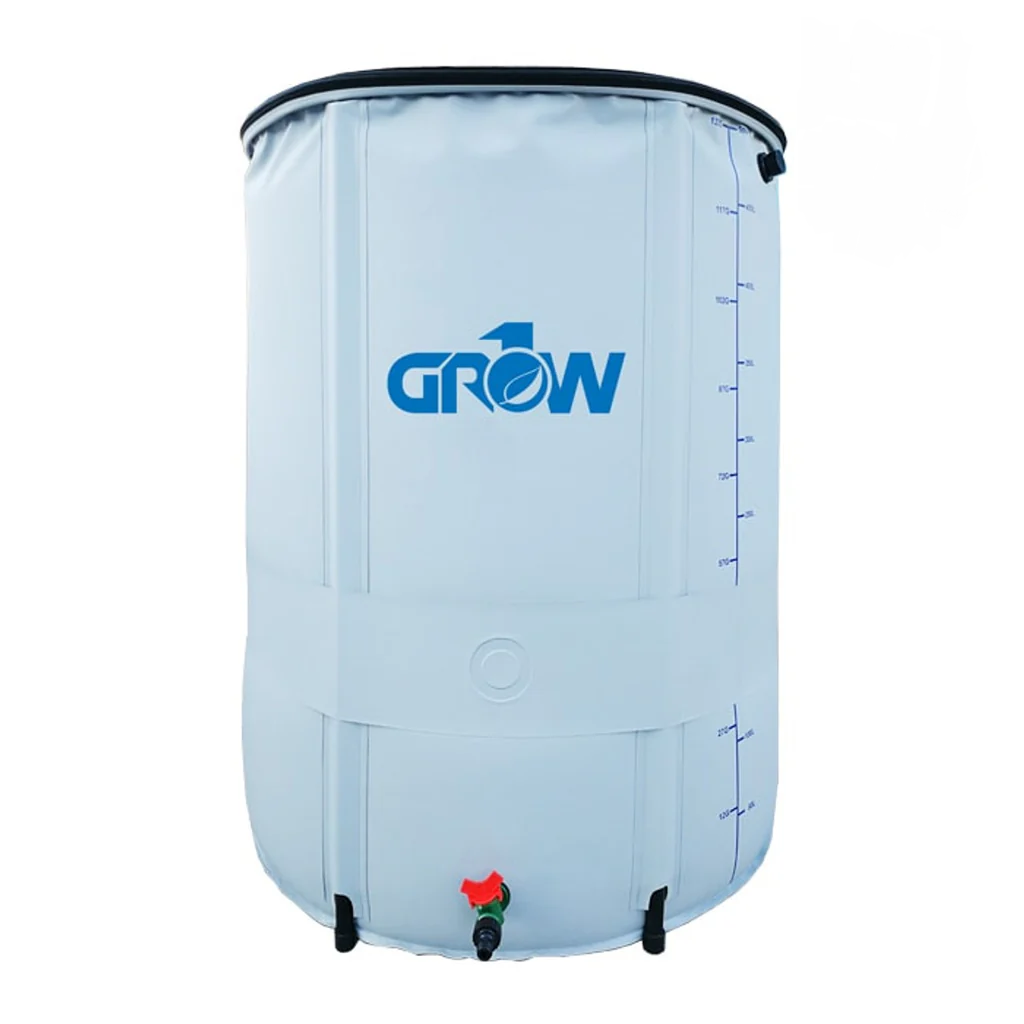
Since these systems are often gravity-fed, your water source needs to be elevated above the plants. A Grow1 collapsible water storage tank is an excellent choice for this. It’s durable, easy to clean, and features a bottom spigot that connects directly to your Blumat tubing.
A Word of Caution on Reservoirs:
If you are adding nutrients to your reservoir, be aware that organic nutrients can sometimes "clog" the thin 3mm dripper lines over time. If you use heavy organics, you may need to flush your lines with a cleaner or stick to a "water-only" reservoir while top-dressing your nutrients. Many growers find that using a high-quality mineral concentrate in the reservoir, such as those found in our Mineral Concentrate Gallon, keeps the lines clean for the entire season.
Common Pitfalls and How to Avoid Them
Even the best systems have limitations. Here is what we see most often:
- The "Runaway" Carrot: This happens when an air bubble gets into the stake. The sensor "thinks" the soil is dry because the water column is broken, and it stays open. You come home to a flooded tent. Solution: Always double-check your seals and ensure your reservoir never runs dry.
- Improper Height: If your reservoir is too high, the water pressure might be too strong for the valves to close properly. Usually, 3 to 5 feet of elevation is plenty.
- Ignoring the Tubing: Over time, algae can grow in clear tubing if it’s exposed to light. Always use black or opaque tubing to keep your lines clear.
Scaling Up: From One Pot to a Whole Room
One of the best things about automatic watering stakes is their modularity. You can start with a single pot on your windowsill to see how it works. Once you trust the technology, you can link dozens of stakes together using T-connectors and a single main line.
This scalability is why many members of the Army of Growers have moved away from complex, pump-driven hydroponic systems in favor of "Blusoak" or drip-stake setups. It’s quieter, requires no electricity, and has fewer moving parts that can break.

Final Thoughts
Transitioning to automatic watering stakes is less about being "lazy" and more about being "efficient." By removing the human error from the watering equation, you are giving your plants the consistency they crave.
If you are tired of the daily watering chore or if you are planning a trip and don't want to come home to a graveyard of plants, it’s time to look into a stake system. It’s a small investment that pays for itself in the first harvest through saved time and increased plant health.
Still not sure which kit is right for your specific tent size? Contact us or browse our customer testimonials to see how other growers have integrated these systems into their setups. Your plants: and your schedule( will thank you.)




Leave a comment
This site is protected by hCaptcha and the hCaptcha Privacy Policy and Terms of Service apply.