
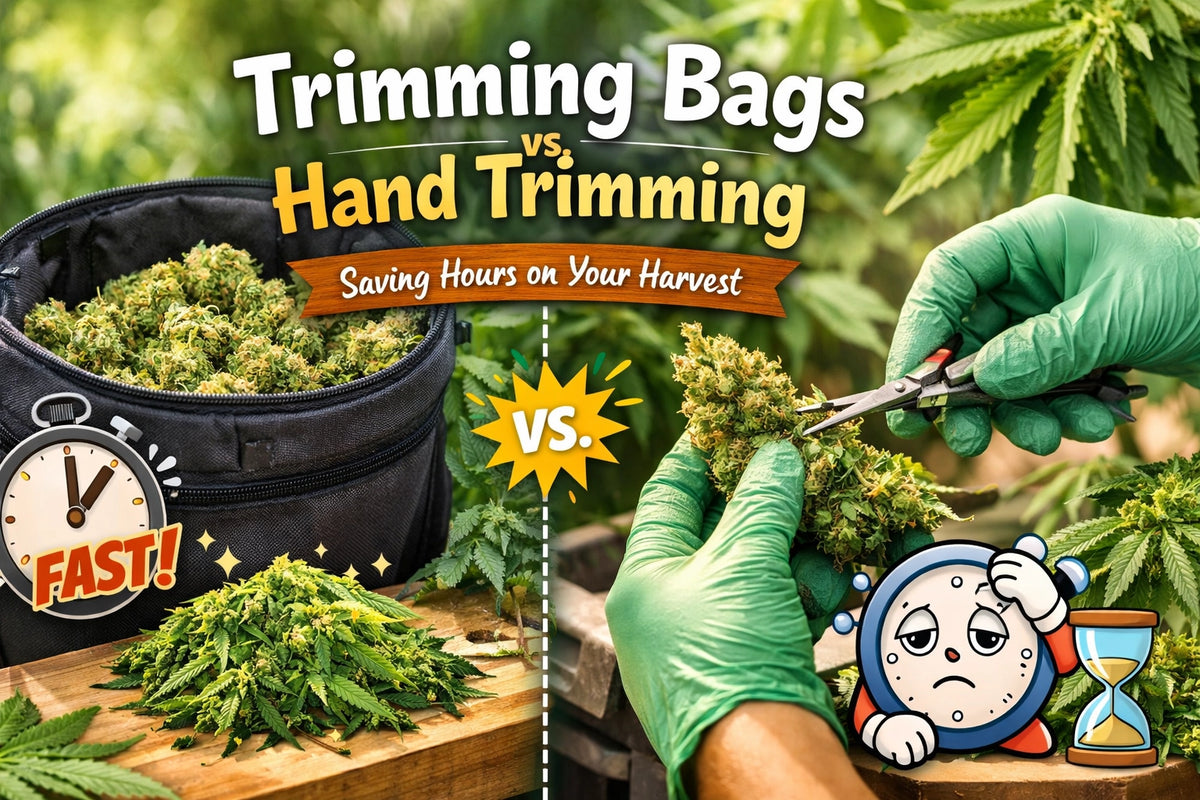
The finish line is finally in sight. You’ve spent the last three to four months obsessing over pH levels, nutrient ratios, and light heights. Your tent is smelling incredible, and the trichomes are perfectly milky. But for many growers, this is where the excitement turns into a bit of dread. Why? Because of "trimming jail."
Trimming jail is that grueling, multi-day process of sitting in a chair with a pair of sticky scissors, meticulously snipping away sugar leaves until your hands cramp and your back aches. Traditionally, hand trimming has been the only way to ensure a high-quality finished product. However, as technology in the gardening and hydroponics world evolves, we’ve seen the rise of more efficient methods.
Enter the trimming bag.
At Perfect Gardens, we are always looking for ways to help you work smarter, not harder. In this guide, we’re going to break down the battle between trimming bags and hand trimming, looking at efficiency, quality, and which method actually belongs in your harvest kit.
The Artisan Choice: Hand Trimming
Hand trimming is exactly what it sounds like: using a pair of specialized garden shears to manually remove the leaves from your flower. Most craft growers and hobbyists swear by this method for one main reason: control.
The Pros of Hand Trimming
- Aesthetic Perfection: You can tailor the look of every single bud. If you want that "boutique" look where every curve is perfectly manicured, scissors are your best friend.
- Trichome Preservation: When you handle a bud gently with scissors, you minimize the amount of contact with the resinous trichomes. This helps keep the potency and flavor profile exactly where you want it.
- No Upfront Cost: You don’t need much. A pair of sharp, spring-loaded shears and a clean tray are all it takes to get started.
The Cons of Hand Trimming
- The Time Sink: This is the big one. An experienced trimmer might be able to process one to two pounds of dried flower in a full 8-hour workday. If you have a large harvest, you're looking at a massive time commitment.
- Physical Strain: "Trimming thumb" is a real thing. Repetitive motion for hours on end can lead to carpal tunnel issues and general fatigue.
- Labor Costs: If you aren't doing it yourself, hiring a crew to hand-trim a large crop is one of the most significant expenses in a commercial or large-scale home grow.
The Efficiency Revolution: Trimming Bags
If hand trimming is a scalpel, a trimming bag is a specialized tool designed for speed. Devices like the Bubble Magic Dry Trimming Bag have changed the game for growers who need to process several pounds in minutes rather than days.

How They Work
Trimming bags work on the principle of friction. Unlike machine trimmers that use metal blades (which can often "mulch" your flower if you aren't careful), a trimming bag is bladeless. You place your dried, "bucked" flower into the bag and use a specific shaking or rotating motion. As the buds rub against each other and the interior fabric of the bag, the brittle sugar leaves snap off and fall through a screen into a collection chamber.
The Pros of Trimming Bags
- Incredible Speed: You can process roughly 2 pounds of flower in about 5 minutes. Let that sink in. What would take a human 10-15 hours can be done before your coffee gets cold.
- Cost Effective: While there is an upfront cost, the bag pays for itself in a single harvest when you factor in the value of your time.
- Built-in Sifting: One of the coolest features of a bag like the Bubble Magic is that it automatically separates your trim and kief from the main buds. You end up with a clean product and a pile of high-quality material ready for extraction.

The Cons of Trimming Bags
- The "Bag Appeal" Factor: While the buds look great, they won't have that 100% surgical precision that hand-trimmed buds do. There might be a few stubborn "crow's feet" (leaf stems) left behind.
- Dryness Dependency: This is the most important "Caution" note: Trimming bags only work for dry trimming. If your material is too wet, it won't work. If it's too dry, you risk breaking the buds themselves.
Head-to-Head: The Reality of Time Savings
The fact of the matter is that most growers reach a point where hand trimming is no longer sustainable. If you’re growing four plants in a small tent, stick to the scissors; it’s a rite of passage. But if you’ve expanded your canopy or you’re running multiple grow tents, the math changes.
Imagine you have a 5-pound harvest.
- Hand Trimming: Roughly 40 to 60 hours of labor.
- Trimming Bag: About 20 to 30 minutes of active work, followed by maybe an hour of "touch-up" snipping if you’re a perfectionist.
That is a life-changing difference for many of our customers. It allows you to focus on the next cycle of your garden or simply enjoy the fruits of your labor without the exhaustion. If you want to see these bags in action, we highly recommend checking out our grow help videos where we demonstrate the technique.
Step-by-Step: How to Use a Trimming Bag Properly
To get the best results and avoid damaging your crop, you need to follow a specific workflow.
- Dry Your Plants Whole: We recommend hang-drying the entire plant until the smaller stems "snap" rather than bend. This usually happens when the internal humidity of the bud is around 60-62%.
- Buck the Buds: Remove the buds from the main branches. Don't worry about the small leaves, but do remove the large "fan leaves" that don't have many trichomes.
- Don't Overfill: Place your material in the bag, but don't pack it tight. The buds need room to tumble and rub against each other.
- The "Flick of the Wrist": You aren't trying to destroy the plants. Use a rhythmic, circular shaking motion. Usually, 30 to 60 seconds of shaking is all it takes.
- Sift and Sort: Open the bottom compartment to collect your trim. Pour out your manicured buds and give them a quick look.
Caution: If you notice your buds are starting to look "rounded" like pebbles, you are shaking too hard or for too long. The goal is to knock off the leaves, not sand down the flower.
Maintaining Quality After the Trim
Regardless of which method you choose, the work isn't done until the cure is finished. Once you’ve used your trimming bag, you’ll want to move your flower into airtight containers. Because the trimming bag process involves a bit of agitation, maintaining the right environment is key to letting the terpenes "settle."
Using a two-way humidity control pack, like the Boveda 62%, is the best way to ensure your flower doesn't dry out further after the trim.

These packs are a "set it and forget it" solution. They pull moisture out if it's too high and release it if it's too low, keeping your harvest at that perfect "squishy" consistency that preserves the smell and flavor. For more on post-harvest health, you can visit our personal health collection.
Which Method is Right for You?
It seems more like a choice of "art vs. industry."
- Choose Hand Trimming if: You have a small harvest, you want the absolute highest "shelf-ready" look, or you find the process therapeutic.
- Choose a Trimming Bag if: You value your time, you have more than a pound to process, or you plan on using your trim for concentrates and want an easy way to separate it.
Many of our Army of Growers actually use a hybrid approach. They will hand-trim the massive "top colas" (the biggest, prettiest buds) to show off to friends and use a trimming bag for the rest of the mid-sized and smaller buds. This gives you the best of both worlds: boutique quality where it matters and industrial efficiency everywhere else.

Final Thoughts from the Garden
At the end of the day, the "best" method is the one that gets your harvest into jars without burning you out. We’ve seen too many growers get overwhelmed by the harvest and let their quality slip because they were too tired to finish the job properly.
If you’re on the fence about whether a trimming bag is right for your setup, or if you have questions about how to properly dry your plants before the trim, don't hesitate to contact us. We’re here to help you navigate every step of the grow, from seed to shelf.
Happy harvesting!


Leave a comment
This site is protected by hCaptcha and the hCaptcha Privacy Policy and Terms of Service apply.