
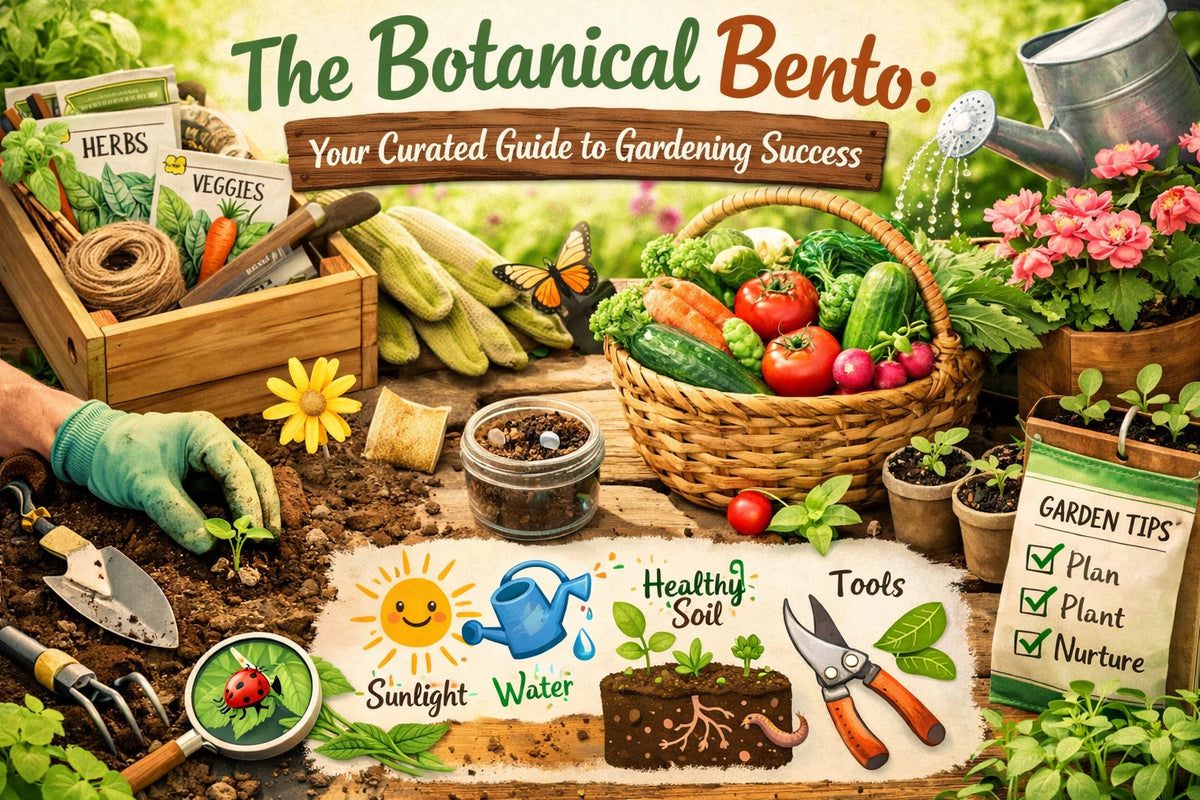
If you’ve ever opened a high-end Bento box, you know the feeling. Everything has its place. The rice is separate from the ginger, the protein is perfectly portioned, and the entire meal works together to give you a balanced experience. Gardening is, or at least it should be, exactly the same.
Too often, we treat our gardens like a junk drawer. We throw in a random bag of soil, some mystery fertilizer we found on sale, and hope for the best. But if you want to move from "surviving" to "thriving," you need a curated approach. At Perfect Gardens, we call this the Botanical Bento. It’s about breaking down your grow into essential, manageable compartments that, when combined, create a self-sustaining, high-yielding ecosystem.
In this guide, we’re going to look at the four essential compartments of your gardening bento: Nutrients, Microbes, Gear, and Watering.
Compartment 1: The Foundation (Water & Nutrients)
In a bento box, the rice is the foundation. In your garden, that foundation is your water and nutrient solution. You can have the most expensive seeds in the world, but if your water is "dirty" or your nutrients are imbalanced, your plants will struggle.
Most growers start with tap water, which is often loaded with chlorine, chloramines, and heavy metals. These don't just hurt your plants; they kill the beneficial life in your soil. This is where Drops of Balance comes in. Think of it as the ultimate purifier for your "botanical rice." It helps mineralize and purify water, ensuring that when you add your best nutrients for hydroponics, they are actually available for the plant to take up.

Why Mineralization Matters
The fact of the matter is that plants don't just eat "NPK" (Nitrogen, Phosphorus, Potassium). They need a full spectrum of trace minerals to build strong cell walls and complex terpene profiles. When you use a mineral concentrate like Drops of Balance, you are essentially "resetting" your water to a pristine, nutrient-dense state. This prevents the nutrient lockout issues that plague so many indoor growers.
Compartment 2: The Life Force (Microbes & Mycorrhizae)
If nutrients are the food, microbes are the digestive system. In our bento metaphor, this is the fermented side dish, the kimchi or pickled ginger, that makes everything else work better.
We talk a lot about the "Wood Wide Web." This is the invisible network of fungi and bacteria that live in the root zone. Specifically, we’re talking about mycorrhizae for plants. These are beneficial fungi that attach to your plant's roots and extend into the soil like a massive web, pulling in water and nutrients from places the roots can't reach on their own.
The Power of the Microbial Inoculant
Adding a high-quality microbial inoculant like BAM! (Beneficial Ancient Microbes) or Azos is like hiring a full-time security and catering team for your roots.
- BAM! Microbial Inoculant: This is a powerhouse of beneficial bacteria that breaks down organic matter and turns it into plant-available food.
- Mykos (Mycorrhizae): This helps with root expansion. It’s not uncommon to see a 20-30% increase in root mass just by adding a scoop of Mykos during transplanting.
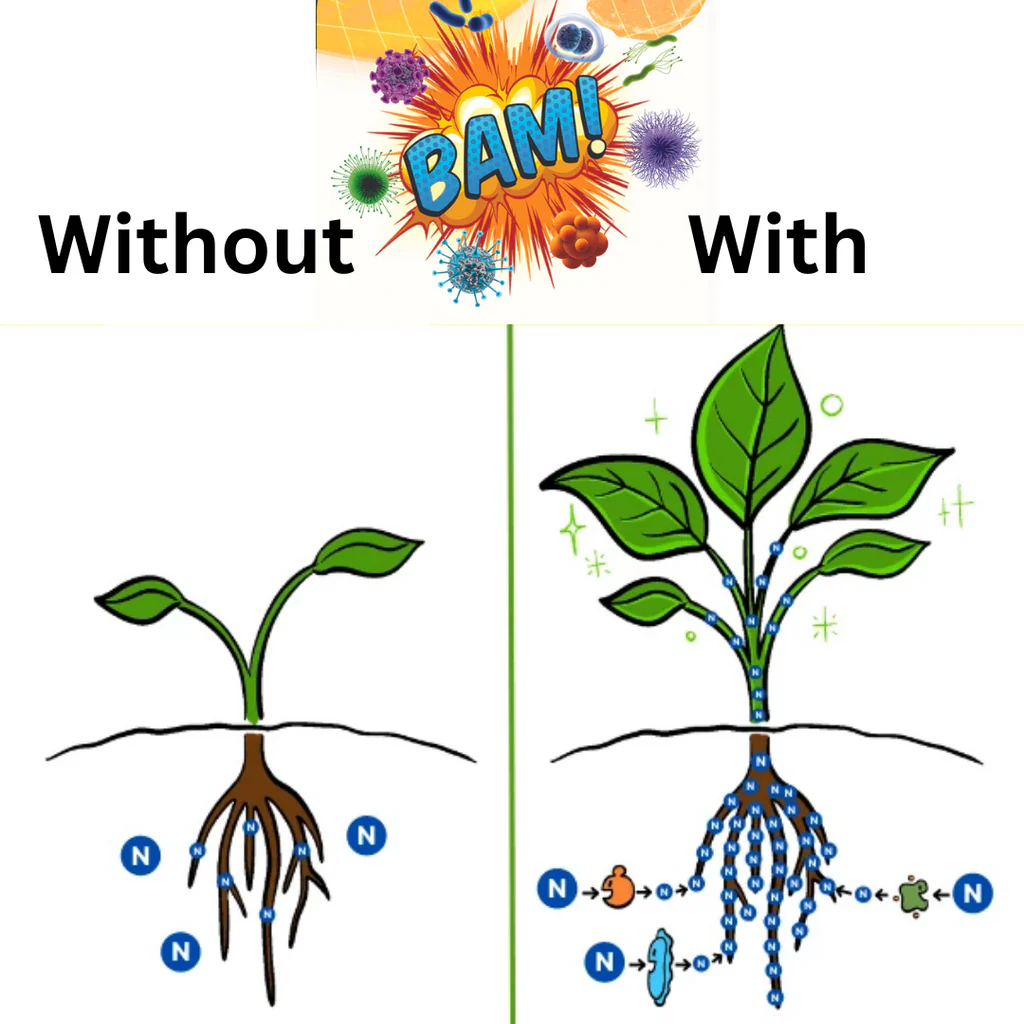
When these two work together, your plants become much more resilient to stress, drought, and over-fertilization. It’s the difference between a plant that’s "getting by" and one that’s exploding with life. You can find these specialized blends in our grow help collection.
Compartment 3: The Environment (Gear & Structure)
Now, let’s talk about the box itself: the structure that holds everything together. In gardening, this is your gear. Specifically, your pots and your lights.
Fabric Grow Pots vs. Plastic
If you are still using hard plastic pots, you’re missing out on a major growth hack. Fabric grow pots provide "air pruning." In a plastic pot, when a root hits the edge, it starts circling the container, eventually becoming "root-bound." In a fabric pot, when the root hits the edge and senses air, the tip dies off, signaling the plant to send out hundreds of small, fibrous feeder roots from the center. This creates a much denser and more efficient root system.
The Role of LED Grow Lights
You can't have a successful "Botanical Bento" in the dark. LED grow lights are the "sun" of your ecosystem. The technology has shifted from the old "blurple" lights to full-spectrum white light that mimics the actual sun.
When choosing LED grow lights, you want to look for:
- PAR Output: How much usable light is actually hitting the leaves?
- Spectrum: Does it have the blues for veg and the reds for flower?
- Efficiency: How much heat is it dumping into your tent?

Caption: A modern indoor garden setup using full-spectrum LED grow lights and fabric pots for maximum efficiency.
Compartment 4: The Delivery System (Watering)
The final piece of our bento box is the "utensils": the way you deliver everything to the plant. This is the part where most gardeners fail. Overwatering is the number one cause of plant death. It drowns the roots and starves them of oxygen, which leads to root rot and pest issues like fungus gnats.
Automatic Watering Stakes
The solution isn't to water less frequently; it's to water more precisely. Automatic watering stakes (like Blumat systems or gravity-fed drippers) act as the "chopsticks" of your garden. They deliver water slowly and consistently, exactly when the plant needs it.
The beauty of these systems is that they work based on the tension in the soil. When the soil gets dry, the stake opens up and allows water to flow. When the soil is moist, it stops. This creates a perfectly balanced moisture level: never too wet, never too dry. This consistency allows the microbial inoculant in your soil to stay hydrated and active 24/7.
Putting the Bento Together: The Balanced Ecosystem
The "Botanical Bento" approach works because it acknowledges that none of these pieces exist in a vacuum.
- If you have great LED grow lights but no microbes, your plants can't process the nutrients fast enough to keep up with the light intensity.
- If you have the best nutrients for hydroponics but you use a plastic pot, your roots won't have the surface area to absorb those nutrients efficiently.
- If you have mycorrhizae for plants but your water is full of chlorine, you’re killing your investment before it can even start working.
A Step-by-Step "Bento" Setup
- Prep your Water: Treat your reservoir or watering can with Drops of Balance to remove toxins and add minerals.
- Inoculate: When transplanting into your fabric grow pots, dust the root ball with Mykos and water in with BAM!.
- Set the Light: Hang your LED grow lights at the appropriate height (usually 18-24 inches for veg) to drive photosynthesis.
- Automate: Install your automatic watering stakes to ensure your microbes stay alive and your plants never experience "water stress."

Caption: A close-up of a healthy root system treated with mycorrhizae and maintained with consistent, automated watering.
Final Thoughts: The Art of Restraint
The secret to a great bento box is that it isn't overstuffed. Every ingredient is there for a reason. The same is true for your garden. You don't need fifty different bottles of "magic" bloom boosters. You need clean water, a solid base nutrient, a thriving colony of microbes, and an environment that allows the plant to breathe and eat.
By focusing on these four compartments: Nutrients, Microbes, Gear, and Watering: you take the guesswork out of the equation. You stop reacting to problems and start preventing them.
Ready to build your own Botanical Bento? Whether you're looking for a complete nutrient package or just want to upgrade your grow essentials, we’ve got the curated tools to help you succeed.
Happy growing!


Leave a comment
This site is protected by hCaptcha and the hCaptcha Privacy Policy and Terms of Service apply.