
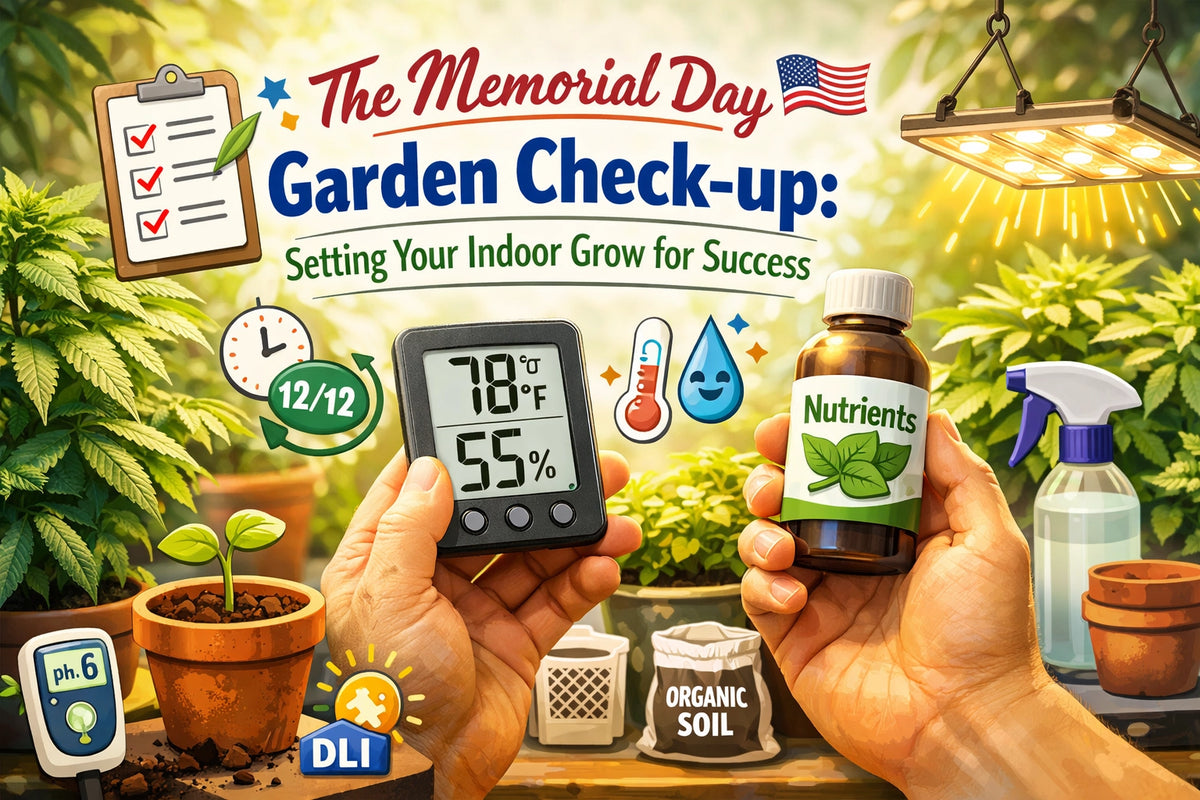
Memorial Day is usually seen as the unofficial start of summer: the weekend for BBQs, lake trips, and finally getting those tomatoes in the outdoor dirt. But for the indoor grower, Memorial Day represents something a bit more technical. It is the "gut check" moment. We are moving out of the forgiving, cool days of spring and heading straight into the high-heat, high-humidity gauntlet of summer.
If your indoor grow room is barely holding its temperature now, you are in for a rough June and July. This is the perfect time to perform a comprehensive garden check-up. Not only does this ensure your plants survive the upcoming heatwaves, but it also prepares your system for the possibility of you being away for the holiday weekend. Let’s break down the essential steps to dial in your grow for the summer transition.
The Environmental Gut Check: Heat and Humidity
The biggest challenge of summer growing is climate control. During the winter and early spring, your grow lights might actually be helping you keep the tent warm. In May, those same lights become your biggest enemy.
1. Assessing Your Light Footprint
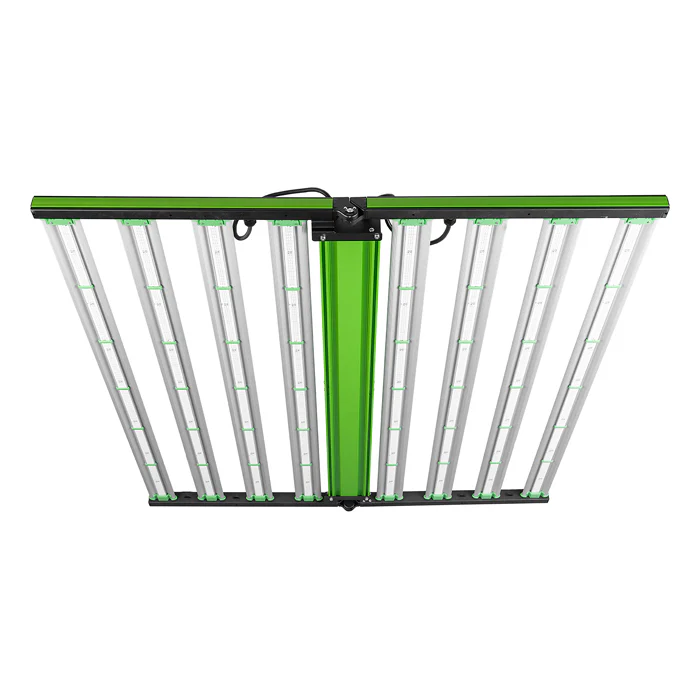
If you are still running HPS (High-Pressure Sodium) or MH (Metal Halide) lamps, you’ve likely noticed your exhaust fans working overtime. These lights emit a massive amount of infrared heat. As the ambient temperature in your house or garage rises, your cooling system might hit its limit.
Switching to LED lights is the single most effective way to drop your room temperature by 5 to 10 degrees. LEDs are far more efficient at converting electricity into usable light rather than heat. This means your air conditioner doesn't have to work as hard, and your plants won't suffer from heat stress or "foxtailing" in late flower.
2. The Humidity Trap (VPD)
Vapor Pressure Deficit (VPD) is a fancy way of describing the relationship between temperature and humidity and how it affects a plant’s ability to "breathe" or transpire. As it gets hotter, the air can hold more water. If your humidity is too high, the plant can’t pull water up through its roots because it can’t evaporate water off its leaves. This leads to nutrient deficiencies and, eventually, mold.
Now is the time to clean your dehumidifier filters and check your controllers. If your fans aren't ramping up automatically when the humidity spikes, you’re inviting powdery mildew to the party.
Root Zone Health: Preventing the "Summer Slime"
As your grow room warms up, your nutrient reservoir does too. In hydroponic systems, once your water temperature crosses the 72°F mark, the amount of dissolved oxygen in the water drops significantly. This creates the perfect breeding ground for Pythium, also known as root rot.
Microbial Defense
The best way to fight bad bacteria is to colonize the root zone with good bacteria. Using a microbial inoculant like BAM! is essential during the summer months. These beneficial microbes act as a protective shield around the roots, eating up decaying organic matter and out-competing the pathogens that cause slime and rot.
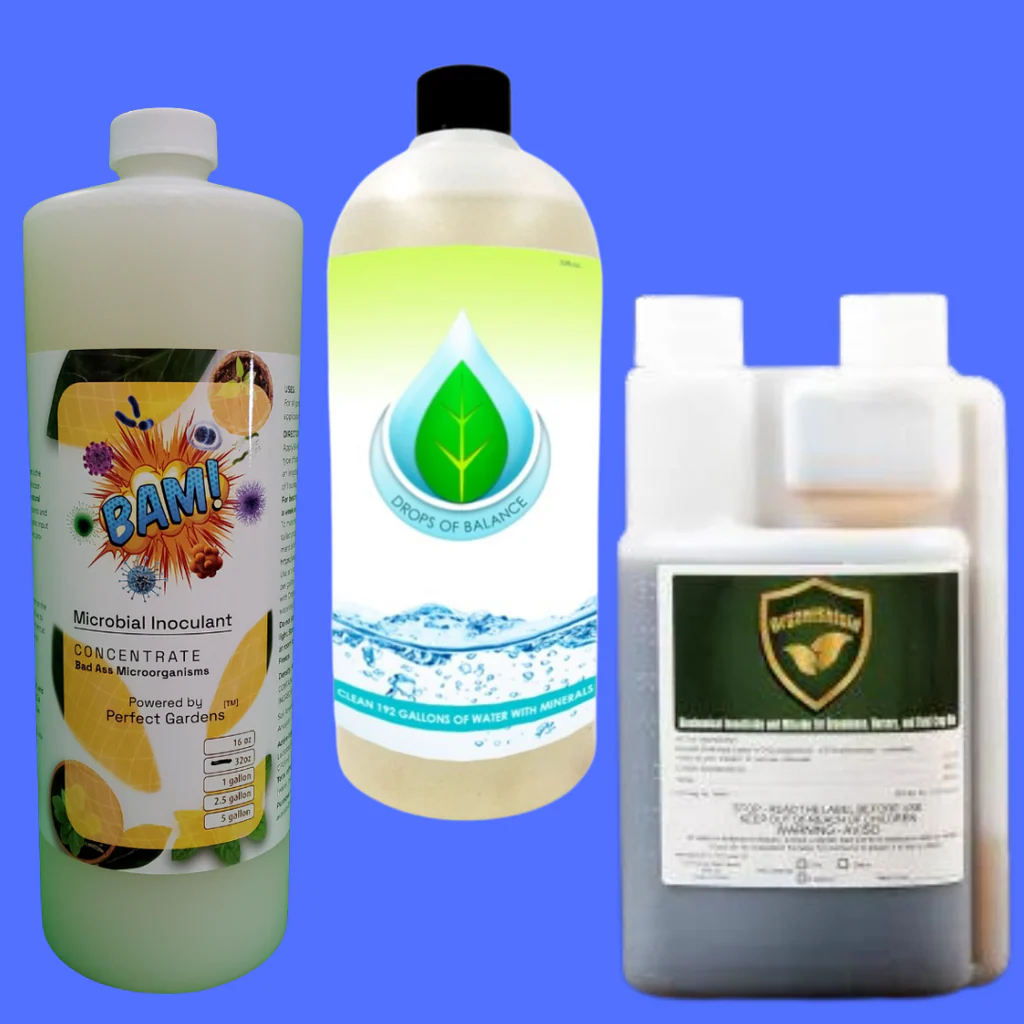
A solid nutrient and microbial kit can help you maintain a healthy bio-film even if your reservoir temps fluctuate. If you see roots turning brown or smelling "earthy" (and not in a good way), it’s time to flush and double down on the microbes.
Nutrient Adjustments for High Transpiration
Plants drink more water when it’s hot. This seems obvious, but many growers forget that plants don’t necessarily want more food just because they are thirsty.
When a plant transpires rapidly to stay cool, it pulls up the water from the nutrient solution but often leaves the mineral salts behind. This causes the EC (Electrical Conductivity) in your medium or reservoir to spike. If you keep feeding at full strength during a May heatwave, you might accidentally burn your plants.
The Pro Tip: Lower your nutrient concentration by about 10-20% as the temperatures rise. Focus on clean nutrients that don't leave heavy salt residues. This allows the plant to drink as much as it needs without over-fertilizing itself.
Automation: Don’t Kill Your Plants on Vacation
Memorial Day is a big travel weekend. The fastest way to ruin a three-month grow is to leave for three days and have a pump fail or a reservoir run dry. If you are still hand-watering, you are essentially tethered to your garden.
The Blumat Solution
For soil or coco growers, the Blumat system is a game-changer for holiday travel. It’s a gravity-fed, "on-demand" watering system that uses ceramic sensors to detect how dry the soil is. It doesn't require electricity, so even if there’s a summer thunderstorm that knocks out your power, your plants still get watered.

Setting up Blumat stakes a week before you leave gives you enough time to dial in the flow rate. By the time Friday afternoon rolls around, you can head out for your BBQ knowing your garden is on autopilot.
Structural Support: Preparing for the Stretch
Many growers started their seeds or clones in April, which means by late May, the plants are entering a massive growth spurt. If you haven't implemented a trellis or support system yet, your plants are going to start flopping over once they put on weight.
Using a plant tying tool kit can save you hours of frustration. Tying down the main canopy not only supports the weight of the future harvest but also opens up the middle of the plant for better airflow: which, again, is crucial for preventing mold during the humid summer months.

The Memorial Day "Pre-Flight" Checklist
Before you fire up the grill or head out of town, run through this 10-point checklist to ensure your grow room stays a sanctuary rather than a disaster zone:
- Clean the AC and Dehumidifier Filters: Dust buildup reduces efficiency and increases fire risk.
- Check Reservoir Levels: Ensure you have enough water to last at least 2 days longer than your planned trip.
- Inspect for Pests: May is when spider mites and fungus gnats start migrating from outdoors. Check the underside of the leaves.
- Calibrate Your Pens: pH and EC pens drift over time. Give them a quick calibration to ensure your readings are accurate.
- Test the Backup Sump/Pump: If you use an automated system, run a manual cycle to make sure no lines are clogged.
- Light Heights: If your plants are "stretching," make sure they aren't going to grow into the lights while you're away.
- Air Circulation: Check that all oscillating fans are actually oscillating. Dead air zones are where mold starts.
- Nutrient Check: Make sure you aren't about to run out of your base nutrients.
- Seal the Room: Check for light leaks. As the sun stays out longer, any cracks in your tent or room become more apparent.
- Remote Monitoring: If you have a Wi-Fi camera or sensor, make sure the app is updated and the connection is stable.
Real-World Caution: The Power Outage Threat
Late May often brings the first round of summer storms. A power outage is more than just an inconvenience; it can kill a hydroponic grow in hours due to a lack of oxygen in the root zone. If you are serious about your harvest, consider a small UPS (Uninterruptible Power Supply) for your air pumps. It won't run your lights, but it will keep your plants breathing until the power comes back on.
The transition into summer is one of the most common times for hobbyist growers to experience failure. The "set it and forget it" mentality of winter simply doesn't work when the thermometer starts climbing. By taking a few hours this Memorial Day weekend to audit your environment, strengthen your microbial colony, and automate your watering, you’re setting yourself up for a massive summer harvest rather than a mid-July headache.
If you’re unsure about where to start with your summer transition, check out our Grow Help resources or look into a complete hydroponic system that takes the guesswork out of the equation. Happy growing, and enjoy the holiday!


Leave a comment
This site is protected by hCaptcha and the hCaptcha Privacy Policy and Terms of Service apply.