
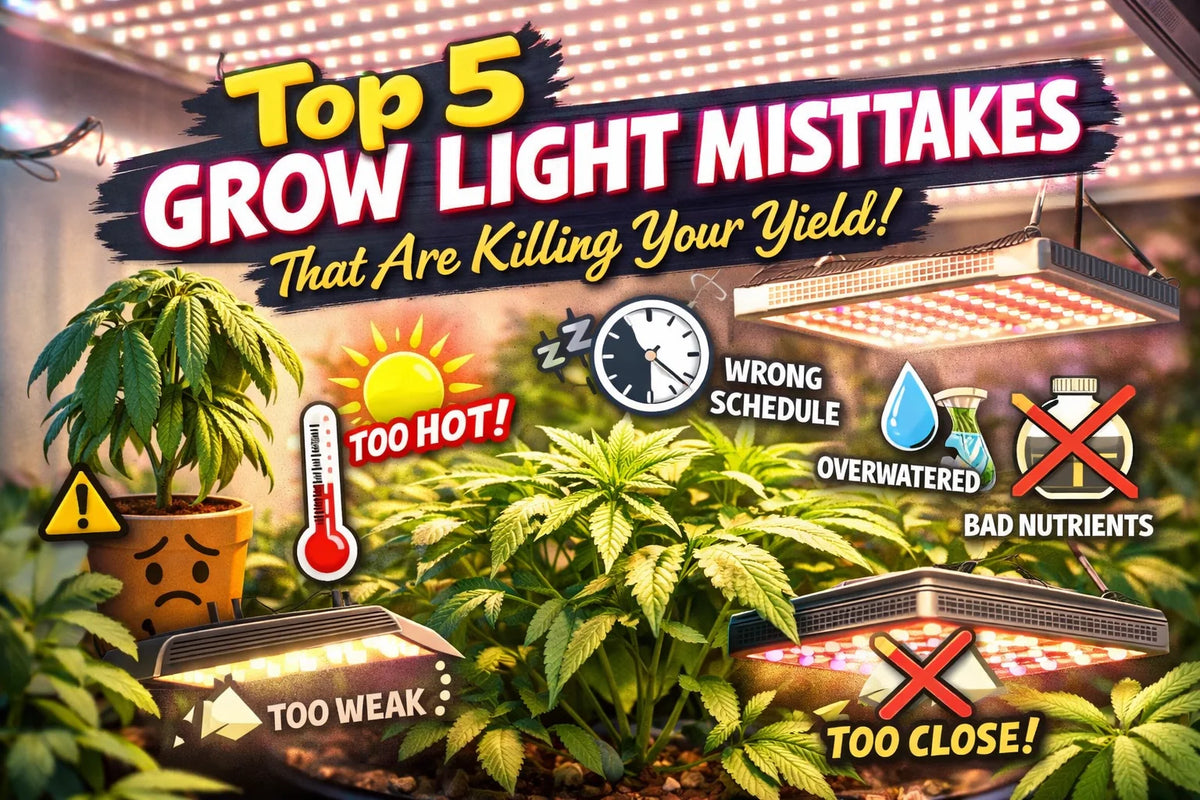
You've invested in your grow space, dialed in your nutrients, and set up a solid watering schedule. But if your yields are still underwhelming, there's a good chance your grow lights are the problem.
Lighting is the foundation of indoor growing: it's literally what powers photosynthesis. Yet most growers unknowingly sabotage their harvests with preventable lighting mistakes. The frustrating part? These errors often go unnoticed until you compare your results with what you should be getting.
Let's break down the five most common grow light mistakes that are quietly killing your yield: and more importantly, how to fix them.
Mistake #1: Using the Wrong Light Spectrum for Your Growth Stage
Plants don't just need light: they need the right kind of light at the right time. This is where many growers trip up, especially when using older or cheaper fixtures that don't offer proper spectrum control.
During vegetative growth, your plants crave blue light (400-500nm wavelengths). Blue light keeps plants compact, encourages thick stems, and promotes healthy leaf development. Too little blue light during veg? Your plants will stretch excessively, develop weak stems, and struggle to support heavy flowers later on.
When you flip to flowering, the game changes. Red light (600-700nm) becomes critical for robust bud development and maximizing photosynthesis efficiency. If you're still hitting your flowering plants with a veg-heavy spectrum, you're leaving yield on the table.
The fix is straightforward: invest in full-spectrum LED grow lights that either automatically adjust or allow manual spectrum tuning. Premium systems like KIND LED and MEDIC GROW offer spectrum profiles specifically designed to match each growth phase, eliminating the guesswork.
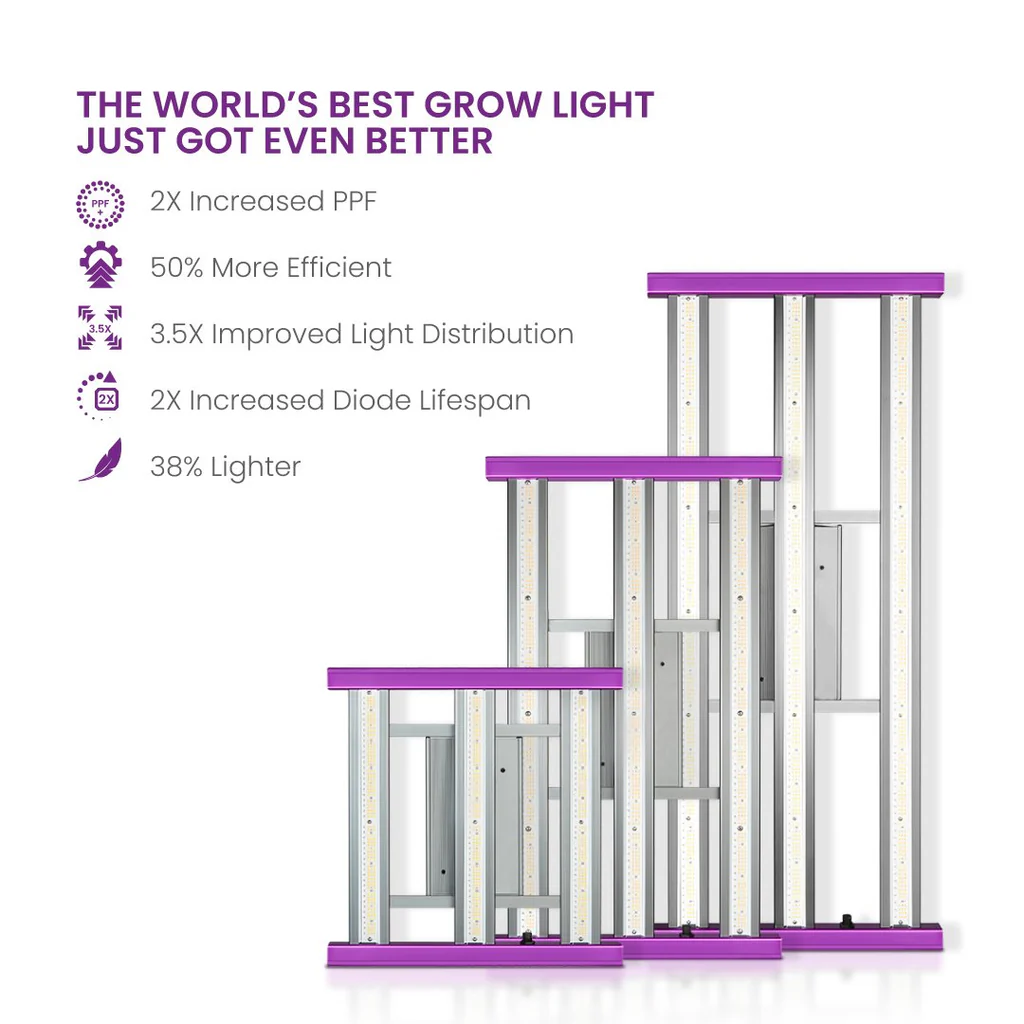
Quick tip: If your current fixture doesn't allow spectrum adjustment, consider running separate veg and flower lights, or upgrading to a tunable system. The yield increase typically pays for itself within one or two cycles.
Mistake #2: Mounting Your Grow Lights at the Wrong Height
Light height might seem simple, but it's one of the easiest ways to accidentally destroy your yield: and your plants.
Hang your grow lights too close, and you'll cause light stress or outright light bleaching. Research consistently shows that positioning LEDs closer than 12 inches at high intensity (around 800 μmol/m²/s) causes visible leaf damage, stunted growth, and reduced yields. The tops of your plants might look "sun-bleached," turning pale yellow or white. That's not a nutrient deficiency: it's your lights frying your canopy.
On the flip side, mounting lights too far away creates a different problem: your plants stretch desperately trying to reach adequate light. You'll end up with tall, lanky plants with wide internodal spacing and weak branches that can't support dense flowers.

The solution: Always follow the manufacturer's recommended hanging heights as your starting point. For most quality LED grow lights:
- Seedlings: 24-36 inches
- Vegetative growth: 18-24 inches
- Flowering: 12-18 inches
But don't just set it and forget it. Grab a PAR meter (or use a decent smartphone PPFD app) and actually measure light intensity at canopy level. Aim for 200-400 μmol/m²/s during veg and 600-900 μmol/m²/s during flower for optimal results. Adjust height as your plants grow: checking weekly is a good habit.
Mistake #3: Running Insufficient Light Intensity
This mistake is especially common with growers transitioning from HPS to LED, or those who purchased undersized fixtures to save money upfront.
Here's the reality: if you're not hitting minimum light intensity thresholds, your plants physically cannot photosynthesize efficiently. They'll grow, sure: but slowly, with pale leaves, stretched internodes, and disappointingly small yields.
Industry standards suggest:
- Seedlings and clones: 30 watts per square foot minimum
- Vegetative growth: 40 watts per square foot
- Flowering: 50+ watts per square foot
Note that these are actual wattage numbers: not the inflated "equivalent wattage" that budget LED manufacturers love to advertise. A light advertised as "1000W equivalent" might only draw 100W from the wall. Check the specs carefully.
Insufficient light intensity also compounds with other environmental factors. If you're running CO2 supplementation or pushing heavy nutrients, your plants need proportionally more light to utilize those inputs. Running low light with high CO2 is just wasting money and setting yourself up for nutrient imbalances.
The fix: Calculate your actual grow space square footage and ensure your fixture provides adequate wattage for your growth stage. If you're undersized, consider adding supplemental lighting or upgrading to a more powerful system. Commercial-grade fixtures from KIND LED, MEDIC GROW, and similar manufacturers are designed with proper intensity for serious yields: not just keeping plants alive.
Mistake #4: Ignoring Light Uniformity and Creating Hot Spots
You can have the perfect spectrum and correct height, but if your light distribution is uneven, you're still limiting your overall yield potential.
Uneven light coverage creates "hot spots" directly under the fixture where plants thrive, while plants at the edges struggle with insufficient light. The result? Inconsistent growth across your canopy. Some plants finish early and perfectly, while others lag behind: making harvest timing a nightmare and reducing your overall quality.
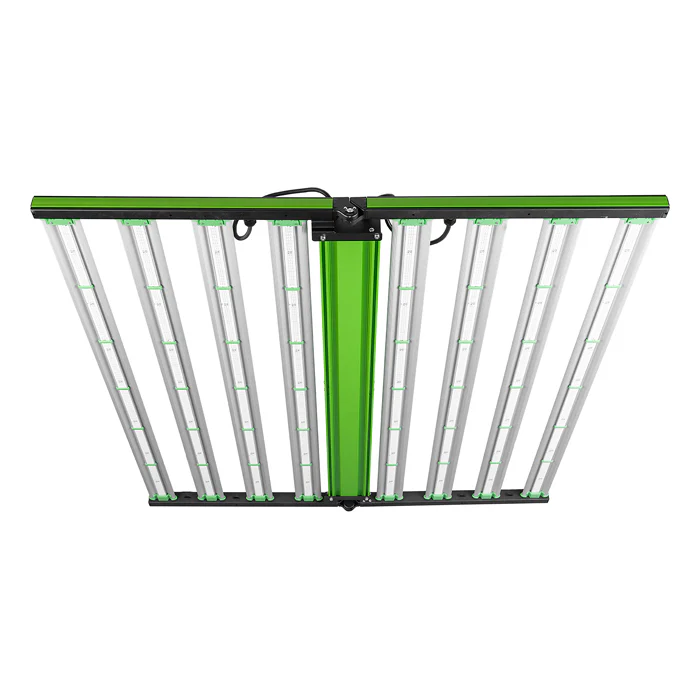
This is particularly problematic in larger grow spaces or when using single-point light sources. Traditional HPS lights and cheaper LED panels often concentrate light in the center, leaving corners and edges dramatically underlit.
Modern bar-style LED grow lights solve this issue with multiple diode bars spread across the fixture, creating much more uniform light distribution. Systems with adjustable or foldable bars let you customize coverage patterns for different tent sizes and growth stages.
Additional strategy: Under-canopy lighting can help boost lower bud sites and minimize popcorn buds, especially during flower. Just 10-20% additional wattage aimed at lower canopy sections significantly improves uniformity and overall yield without wasting energy.
Measure PPFD at multiple points across your canopy: center, edges, and corners. Ideally, you want less than 20% variance across your entire growing area. If you're seeing bigger differences, consider repositioning lights, adding supplemental fixtures, or upgrading to a system designed for better coverage.
Mistake #5: Cheaping Out on Low-Quality Grow Light Fixtures
This is the mistake that costs growers the most money long-term, even though it seems like a money-saver upfront.
Budget LED grow lights flood the market with promises of "full spectrum," "equivalent wattage," and impressive yields: all at bargain prices. The reality? These fixtures consistently underperform in ways that directly impact your bottom line:
Poor diode quality: Cheap LEDs degrade rapidly, losing 30-50% of their output within the first year. Your "300W" light might effectively become a 150W light by your third grow cycle.
Inaccurate or misleading spectrum: Many budget fixtures advertise "full spectrum" but deliver unbalanced wavelength ratios that don't match actual plant needs. Some emit excessive green light (which plants use inefficiently) while skimping on essential red and blue wavelengths.
High failure rates: Budget fixtures commonly experience driver failures, individual diode burnouts, or complete system failures: often right in the middle of a grow cycle. Good luck getting warranty service from a no-name manufacturer operating out of who-knows-where.
Terrible energy efficiency: Low-quality LEDs convert far less electricity into usable light. You're paying more on your power bill for worse results: the opposite of LED's core advantage.
Commercial-grade systems from established brands might cost 2-3X more upfront, but they deliver:
- Verified spectrum output with actual test data
- 5-10 year lifespans with minimal degradation
- Real warranty support and replacement parts
- 30-50% better energy efficiency
- Consistent, repeatable results

Bottom line: If you're serious about yields and consistency, allocate sufficient budget for quality lighting. Premium systems like KIND LED or MEDIC GROW pay for themselves through improved yields, energy savings, and reliability. Buying cheap lights repeatedly costs more than buying quality once.
Wrapping Up: Fix Your Lighting, Fix Your Yields
Grow lights aren't just a piece of equipment: they're the engine driving your entire operation. Getting lighting right means understanding spectrum needs, maintaining proper height, ensuring adequate intensity, creating uniform coverage, and investing in quality fixtures that actually deliver.
Most growers make at least one or two of these mistakes without realizing it. The good news? They're all fixable, and the yield improvements are often dramatic and immediate.
Take the time to audit your current lighting setup against these five mistakes. Measure your actual PPFD at canopy level. Check your fixture's spectrum output if possible. And if you're running budget lights that are more than a year old: seriously consider upgrading.
Quality grow lights are one of the few investments in indoor growing that directly and measurably impact every single harvest. Get this right, and everything else becomes easier.
Looking to upgrade your lighting setup? Check out our selection of premium LED grow lights designed for serious yields and long-term reliability.

Leave a comment
This site is protected by hCaptcha and the hCaptcha Privacy Policy and Terms of Service apply.