
You harvest your cannabis plants after months of careful cultivation, only to discover seeds scattered throughout your supposedly sinsemilla buds. Sound familiar? If you're wondering whether those tiny light leaks in your grow room could be the culprit, the answer is absolutely yes. Cannabis plants are incredibly sensitive to light disruption during their flowering cycle, and even the smallest crack of light can trigger hermaphroditism, causing your female plants to develop male characteristics and pollinate themselves.
Let's dive deep into why cannabis plants react so dramatically to light stress and what you can do to prevent it.
The Genetics Factor: Why Some Plants Hermie More Than Others
Before we blame everything on light leaks, it's crucial to understand that genetic stability plays a massive role in how cannabis plants respond to environmental stress. Not all cannabis genetics are created equal, and this directly impacts how easily your plants will "hermie out" under stress.
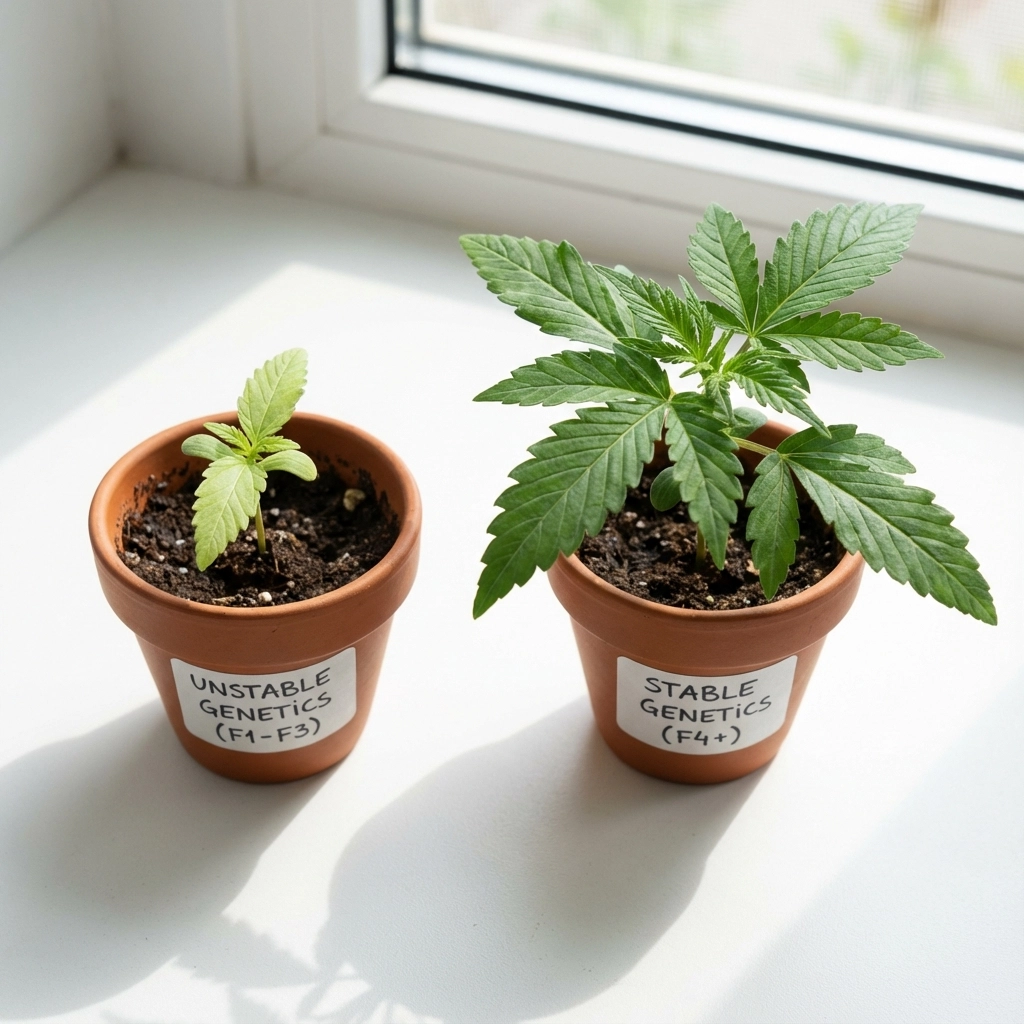
Cannabis breeding follows a generational system labeled F1, F2, F3, F4, and so on. Generally speaking, genetics become significantly more stable around the F4 generation and beyond. Here's what this means for your grow:
F1-F3 Genetics (Unstable):
- More prone to genetic irregularities
- May display unusual growth patterns (single leaves, abnormal branching)
- Highly susceptible to hermaphroditism under minimal stress
- Often cheaper but less predictable
F4+ Genetics (Stable):
- Consistent growth patterns and characteristics
- Better stress tolerance
- Less likely to hermie from minor environmental issues
- Generally more expensive but more reliable
If you're working with unstable genetics (anything below F4), your plants are essentially primed to hermaphrodite at the first sign of trouble. This means even perfect environmental conditions might not prevent seed production if your genetics are inherently unstable.
How Light Leaks Trigger the Hermaphrodite Response
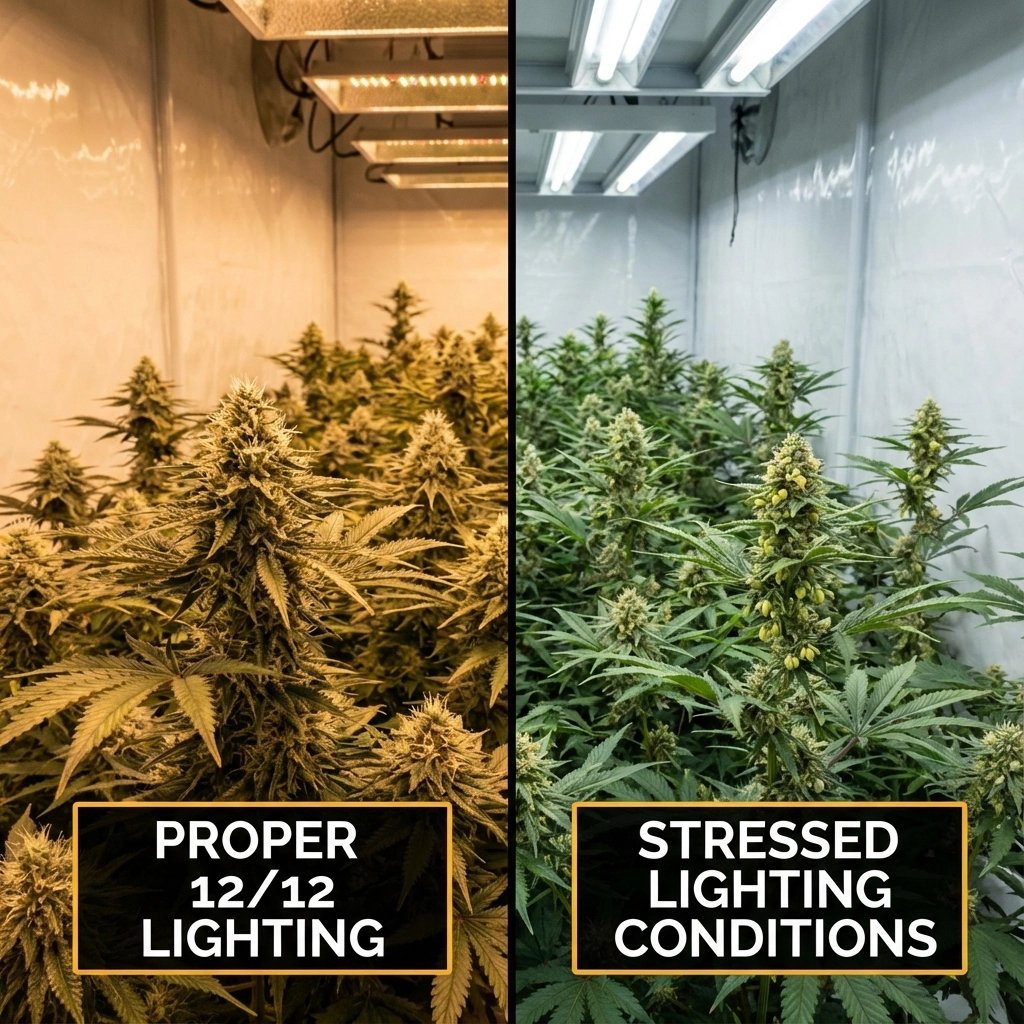
Cannabis plants are photoperiod-dependent, meaning they use light cycles to determine when to flower. During the vegetative stage, plants typically receive 18 hours of light and 6 hours of darkness. To trigger flowering, growers switch to a 12/12 cycle, 12 hours of light followed by 12 hours of complete, uninterrupted darkness.
When light leaks occur during the dark period, even from something as small as:
- LED indicator lights on equipment
- Cracks around door frames
- Light bleeding through tent zippers
- Nearby windows or external lighting
Your cannabis plants interpret this as a disruption to their photoperiod. The plant's internal biological clock becomes confused, and it can no longer reliably count the dark hours needed to maintain proper flowering.
This confusion triggers several stress responses:
-
Hormonal Disruption: The plant's hormone production becomes irregular, affecting its ability to maintain purely female characteristics.
-
Survival Mode Activation: Sensing environmental instability, the plant prioritizes reproduction over flower production.
-
Male Flower Development: The plant begins producing pollen sacs alongside female flowers to ensure genetic survival.
The result? Your carefully tended female plants start pollinating themselves, leading to seeded buds with significantly reduced potency and yield.
The Biological Drive: Why Plants Choose Seeds Over Flowers
Here's where things get fascinating from a biological perspective. We want beautiful, resinous flowers for consumption, but the plant has an entirely different agenda, genetic survival. Cannabis plants are hardwired to prioritize reproduction above all else, especially when environmental conditions suggest potential threats.
Think about it this way: when a cannabis plant senses stress (whether from light leaks, temperature fluctuations, nutrient deficiencies, or other factors), it essentially goes into panic mode. The plant's biological programming kicks in with one clear message: "I need to produce seeds RIGHT NOW before conditions get worse."
This survival instinct is so strong that stressed plants will literally sacrifice flower quality and potency to ensure seed production. It's not personal, it's evolution at work.
Environmental Stress Factors Beyond Light Leaks
While light leaks are a primary cause of hermaphroditism, they're not the only environmental stressor that can trigger this response. Understanding these factors helps you create a more stable growing environment:
Temperature Fluctuations:
- Sudden temperature swings during flowering
- Consistently high temperatures (above 85°F)
- Cold drafts or inadequate heating
Humidity Issues:
- Extreme humidity changes
- Consistently high humidity during late flowering
- Poor air circulation creating microclimates
Nutrient Stress:
- Severe deficiencies or toxicities
- Dramatic pH swings
- Inconsistent feeding schedules
Physical Damage:
- Broken branches or stems
- Root damage during transplanting
- Pest or disease pressure
The key point here is that cannabis plants are remarkably sensitive to environmental changes, especially during the critical flowering period. When multiple stressors combine, say, unstable genetics plus light leaks plus temperature fluctuations: the likelihood of hermaphroditism increases exponentially.
The Photoperiod Sensitivity Explained
Cannabis plants evolved in natural environments where consistent day/night cycles provided reliable seasonal cues. In these conditions, any disruption to the light cycle typically indicated significant environmental changes that might threaten the plant's ability to complete its reproductive cycle.
Modern indoor cultivation essentially tricks plants into thinking they're experiencing natural seasonal changes. When we switch from 18/6 to 12/12 lighting, we're simulating the shorter days of autumn that naturally trigger flowering in outdoor plants.
However, unlike the gradual seasonal transition plants would experience outdoors, indoor growing creates an artificial environment where even minor disruptions can have major consequences. A tiny light leak that wouldn't matter outdoors becomes a significant stressor in a controlled indoor environment.
This sensitivity manifests in several ways:
- Plants may revert to vegetative growth patterns
- Flower development may slow or stop entirely
- Existing buds may begin producing new vegetative growth
- Male flowers may appear anywhere from a few days to several weeks after light contamination begins
Prevention and Solutions
The good news is that preventing light leak-induced hermaphroditism is entirely manageable with proper planning and attention to detail.
Light-Proofing Your Grow Space:
-
Complete Darkness Test: During the dark period, enter your grow space and wait for your eyes to adjust. Any visible light sources need addressing.
-
Seal All Openings: Use weather stripping, tape, or specialized light-proof materials to seal cracks around doors, windows, and ventilation openings.
-
Equipment Management: Cover or relocate any electronic devices with LED indicators. Consider using timers without illuminated displays.
-
Tent Maintenance: Regularly inspect grow tent zippers and seams for light leaks. Replace worn components promptly.
Genetic Selection:
- Invest in stable, proven genetics from reputable breeders
- Research the generation status of your seeds (F4+ preferred)
- Consider feminized seeds from established genetic lines
- Keep detailed records of which genetics perform well in your specific environment
Environmental Control:
- Maintain consistent temperature and humidity levels
- Use quality environmental controllers with reliable sensors
- Implement gradual changes rather than dramatic adjustments
- Monitor your plants closely during the first few weeks of flowering
Recovery and Damage Control
If you discover hermaphroditic flowers on your plants, don't panic. The severity of the situation depends on how early you catch it and how widespread the problem has become.
Early Detection (Few Male Flowers):
- Carefully remove male flowers with sterilized tweezers
- Increase monitoring frequency
- Address the underlying stress factor immediately
- Plants may recover and continue normal flowering
Moderate Hermaphroditism:
- Remove heavily affected plants to prevent pollen spread
- Isolate remaining plants if possible
- Continue removing male flowers as they appear
- Accept that some seed production is likely unavoidable
Severe Cases:
- Consider harvesting early if male flowers are widespread
- Use affected material for extraction rather than smoking
- Start over with fresh genetics and improved environmental controls
The most important lesson here is that prevention is always easier than treatment. Creating a stable, light-proof environment from the beginning saves months of work and prevents the frustration of seeded harvests.
Understanding why cannabis plants "freak out" from light leaks isn't just academic knowledge: it's practical information that directly impacts your growing success. By respecting your plants' biological programming and creating the stable environment they need, you can consistently produce the high-quality, seedless flowers you're working toward.
Remember, every experienced grower has dealt with hermaphroditic plants at some point. The key is learning from these experiences and continuously improving your environmental controls. With stable genetics, proper light management, and consistent growing conditions, you can minimize stress factors and maximize your harvest quality.



Leave a comment
This site is protected by hCaptcha and the hCaptcha Privacy Policy and Terms of Service apply.