
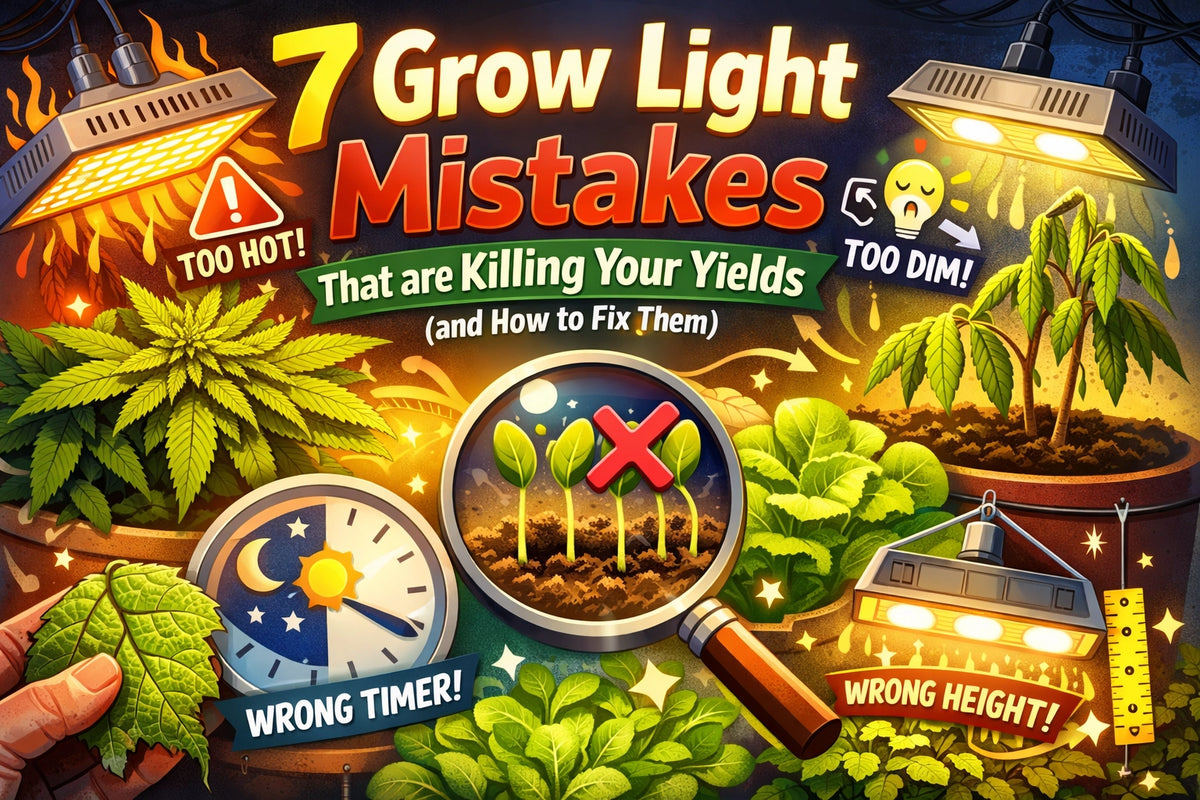
Walk into any indoor garden, and you'll see grow lights. But here's the thing, having a grow light doesn't mean you're using it right. In fact, most home growers are making at least one critical mistake that's quietly sabotaging their yields.
These aren't massive, obvious errors. They're subtle miscalculations that compound over weeks, leaving you scratching your head wondering why your plants aren't thriving like you expected. The good news? Every single one of these mistakes is fixable once you know what to look for.
Mistake #1: Not Measuring Light Intensity (Or Guessing Entirely)
Most growers never measure PPFD, photosynthetic photon flux density, at all. They hang a light, eyeball the distance, and hope for the best. This is like cooking without measuring ingredients. You might get lucky, but you're probably not optimizing anything.
Cannabis and high-yield vegetables need specific light intensities during different growth stages. Seedlings thrive around 200-400 PPFD. Vegetative plants want 400-600 PPFD. Flowering plants can handle 600-900 PPFD, sometimes more depending on other environmental factors.
The fix: Invest in a PAR meter. Yes, they're an extra expense, but they pay for themselves in increased yields. Measure the PPFD at canopy level in multiple spots across your grow space. Adjust your light height and intensity based on actual readings, not guesswork.
If a PAR meter isn't in the budget immediately, at least download a smartphone app that estimates PPFD. They're not perfect, but they're better than nothing.
Mistake #2: Hanging Your Lights at the Wrong Distance
Here's where things get interesting. Many growers transitioning from HPS or CMH lights hang their LEDs at the same 24-30 inch height they're used to. That's way too high for most LED systems.
LEDs don't produce the same infrared heat as traditional lighting, which means you can, and should, position them much closer to your plants. Most quality LED grow lights perform best at 6-12 inches from the canopy during peak growth phases.

On the flip side, hanging lights too close causes light stress. You'll see leaves curling upward (tacoing), bleaching at the tops, or even burning. If your plants look like they're trying to escape the light, they probably are.
The fix: Start with the manufacturer's recommended hanging distance, then adjust based on plant response. Watch for stretching (lights too far) or stress signals (lights too close). Use your PAR meter readings to dial in the sweet spot. When you switch to LEDs from HPS, expect to hang your lights significantly lower, this is normal and necessary.
Mistake #3: Ignoring Light Spectrum (Or Using the Wrong One)
Not all light is created equal. Plants use different wavelengths during different growth stages, and many growers either buy lights with inadequate spectral ranges or never adjust the spectrum settings on their adjustable fixtures.
Blue spectrum light (400-500 nm) promotes compact, stocky growth during the vegetative phase. It keeps internodal spacing tight and encourages strong stem development. Red light (600-700 nm) drives flowering, stimulates bud production, and enhances resin development.
If you're running a single spectrum through your entire grow, you're leaving yield on the table. It's that simple.
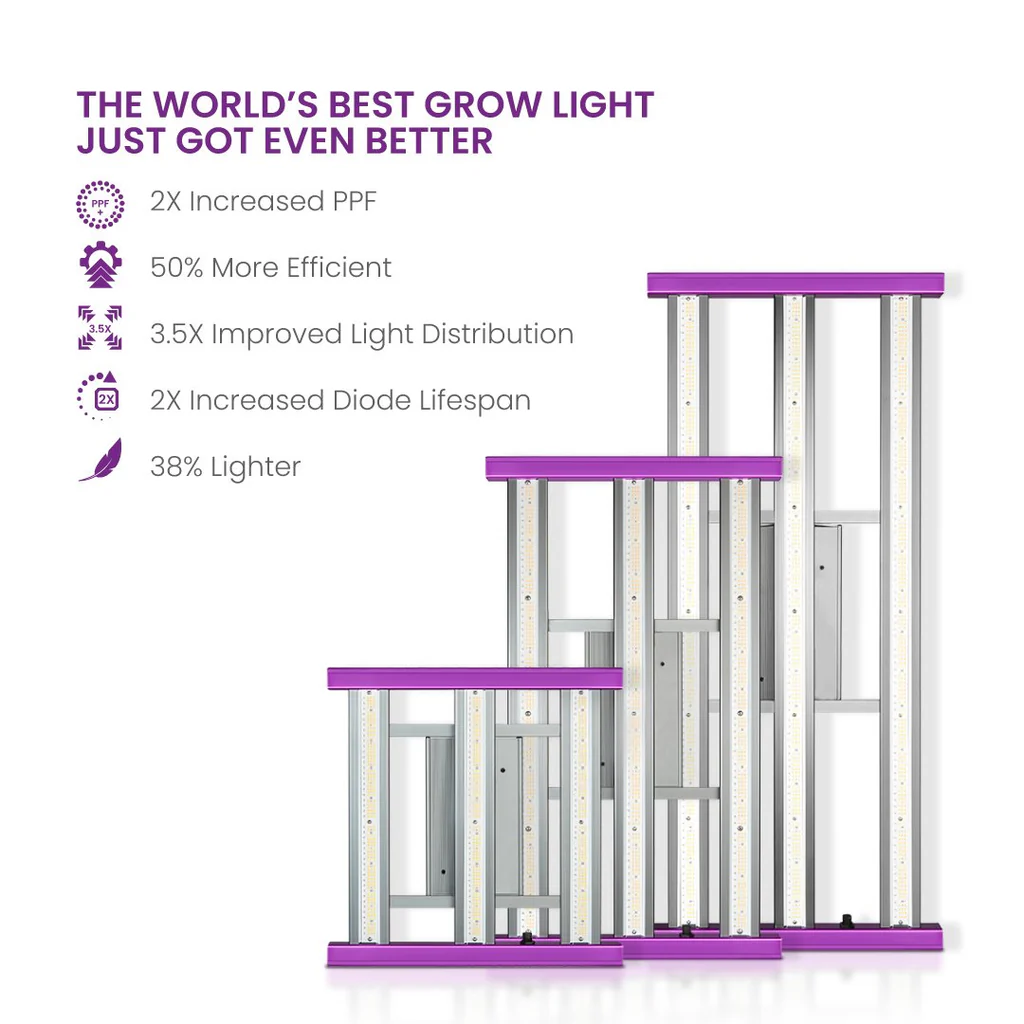
The fix: Choose full-spectrum LED grow lights that can support all plant growth stages. Better yet, select fixtures with adjustable spectrum controls so you can dial in blue-heavy light during veg and shift to red-dominant during flower. Systems like the KIND LED X420 offer this flexibility with proven reliability. MEDIC GROW's adjustable spectrum fixtures also excel in this department, giving you precise control over what your plants receive.
Mistake #4: Creating Dead Zones with Poor Light Distribution
Uneven light coverage is more common than you'd think. You'll see it in grows where the plants directly under the light are thriving, but anything at the edges looks weak, stretched, or stunted.
This happens when growers use a single, centrally-positioned light in a space that's too large, or when they don't account for how light spreads (or doesn't spread) from their particular fixture.
The fix: Position lights centrally, but also consider using multiple smaller fixtures instead of one large unit for more even coverage. Two 300W lights will often outperform one 600W light because they distribute photons more evenly across the canopy.
For advanced setups, automated light movers can work well, though they add complexity. The simpler solution is proper fixture selection and placement from the start. Measure PPFD at multiple points across your grow space, center, edges, corners. If you're seeing a 30% or greater drop-off at the edges, you need to adjust your setup.
Mistake #5: Buying Cheap Grow Lights (And Paying for It Later)
Budget LED lights flood the market with impressive specs on paper. But here's what they don't tell you: those advertised PAR values rarely match real-world performance, the spectrum is often unbalanced, and the components degrade faster than quality fixtures.
Low-quality lights have poor wattage-to-energy conversion. You're paying for electricity that doesn't translate into usable plant energy. The diodes fail prematurely. The drivers overheat. The spectrum drifts. It's a false economy.

The fix: Invest in reputable brands with proven track records. KIND LED and MEDIC GROW consistently deliver what they promise. Yes, they cost more upfront, but they actually produce the PPFD they advertise, maintain spectral accuracy over time, and last for years without performance degradation.
Talk to experienced growers in your local community or online forums before purchasing. Ask what they're running and why. You'll notice the same quality brands mentioned repeatedly, there's a reason for that.
Mistake #6: Overwatering After Switching to LED
This one catches almost everyone who transitions from HPS or CMH to LED lighting. You keep watering on your old schedule, and suddenly your plants are drooping, showing signs of root issues, or developing fungus problems.
HPS lights run hot, really hot. They produce significant infrared radiation that dries out soil and increases evapotranspiration rates. LEDs run much cooler. Your soil stays moist longer. Your plants transpire less aggressively. Your old watering routine becomes overwatering under the new system.
The fix: Monitor soil moisture before watering. Use the finger test, a moisture meter, or simply lift your containers to gauge weight. When you switch to LED, expect to water less frequently, often 30-40% less depending on your environment.
Adjust your expectations and your schedule. Check plants regularly during the first few weeks after switching, and establish a new watering rhythm based on actual plant needs, not calendar dates.
Mistake #7: Providing Too Much Light (Yes, That's Possible)
More light equals more yield, right? Not exactly. Cannabis and other high-light plants can absolutely receive too much light, causing nutrient lockout, bleaching, and stress even when temperatures are controlled perfectly.
Some LED systems pushing over 1000 PPFD can cause light bleaching: where the tops of your plants turn white or pale yellow. Leaf burn can occur on sensitive plants at 700 PPFD when lights are positioned very close. Your plants start showing what looks like nutrient deficiencies, but it's actually light stress.
The fix: Monitor PPFD levels and keep them within optimal ranges for your specific plants and growth stage. More importantly, watch your plants. They'll tell you when they're getting too much light through bleaching, tacoing, or apparent nutrient issues that don't respond to feeding adjustments.
Balance your yield goals with appropriate light intensity. Remember, yield should be measured in grams per square foot, not grams per watt. A slightly lower light intensity that keeps plants healthy and growing consistently will often outperform maximum PPFD that stresses plants and creates problems.
Getting It Right From the Start
The fact of the matter is that grow lights are both simpler and more complex than most people realize. The technology is straightforward: produce the right spectrum at the right intensity: but the execution requires attention to detail and willingness to measure, adjust, and respond to what your plants are telling you.
Quality equipment matters. A reliable PAR meter matters. But most importantly, understanding these seven common mistakes and actively avoiding them will do more for your yields than any other single factor in your indoor garden.
If you're starting fresh or upgrading your system, explore the grow light options we carry at Perfect Gardens. We focus on proven systems that actually deliver results: no gimmicks, no inflated claims, just reliable performance that helps you grow better.



Leave a comment
This site is protected by hCaptcha and the hCaptcha Privacy Policy and Terms of Service apply.