
Blog
Automatic Watering Stakes: Setting Up Your First System
Hand-watering your plants is one of those tasks that starts as a therapeutic ritual but quickly becomes a chore, especially when your garden grows from two plants to twenty. If you’ve ever come home to drooping leaves after a long weekend or struggled to keep moisture levels consistent in fabric pots, you’ve probably looked into automation.
While there are plenty of digital timers and pump-based drip systems on the market, many experienced growers in the Army of Growers community swear by a more "analog" approach: ceramic watering stakes, specifically the Blumat system. These aren't your typical "vacation spikes" that just dump a bottle of water into the dirt. These are moisture-sensing devices that act like a brain for your root zone.
In this guide, we’re going to break down how to set up your first automatic watering stake system, why they are a game-changer for fabric grow pots, and how to choose between a gravity-fed or pressure-regulated setup.
Why Use Automatic Watering Stakes?
The biggest challenge in any garden: whether it’s a small 2x2 tent or a full-scale greenhouse: is consistency. Plants love stability. When the medium goes through extreme "wet-dry" cycles, it stresses the root system.
Automatic stakes, particularly the ceramic "carrot" style, work through osmotic pressure. As the soil dries out, it pulls water from the ceramic tip. This creates a vacuum inside the stake that pulls on a rubber diaphragm, opening a valve and letting water drip through a tube. Once the soil is moist enough, the vacuum is released, and the valve closes.
The benefits are clear:
- No Electricity Needed: Most setups rely on gravity.
- Plant-Specific Watering: Each stake responds to the moisture level of its specific pot.
- Better Nutrient Uptake: By keeping the medium consistently moist (but not soaked), you maintain a healthy environment for microbes and nutrient solubility.
The Equipment: What’s in the Box?
Before you start sticking things in the dirt, you need to understand the components. A standard kit usually includes the ceramic stakes (often called carrots), 3mm drip tubing, 8mm supply tubing, and various connectors.

If you are looking to scale up, you might also be looking at tents and film to house your new automated paradise. Regardless of your garden size, the principle of the stake remains the same.
Step 1: Prepping the "Carrots"
This is where most beginners fail. You cannot just take a watering stake out of the box and put it in the soil. It needs to be "reset" and primed.
- Soak the Stakes: Submerge your ceramic stakes in water for at least 15 minutes (some growers prefer 12 hours). This ensures the ceramic is fully saturated.
- The "Under-Water" Close: While the stake is submerged, screw the green cap on tightly. You want to ensure there is zero air trapped inside the stake. If there is an air bubble, the vacuum won't form correctly, and your system will either never water or never stop watering.
- Pre-Water Your Medium: Your soil or coco should be at the exact moisture level you want to maintain before you install the stakes. The stakes are designed to maintain moisture, not to fix a bone-dry pot.
Step 2: Choosing Your Water Source (Gravity vs. Pressure)
There are two main ways to feed water to your stakes. The choice usually depends on your space and how much you trust your plumbing.
The Gravity-Fed System
This is the most common setup for hobbyists. You place a water storage tank or reservoir at least 3–5 feet above the level of your plants.
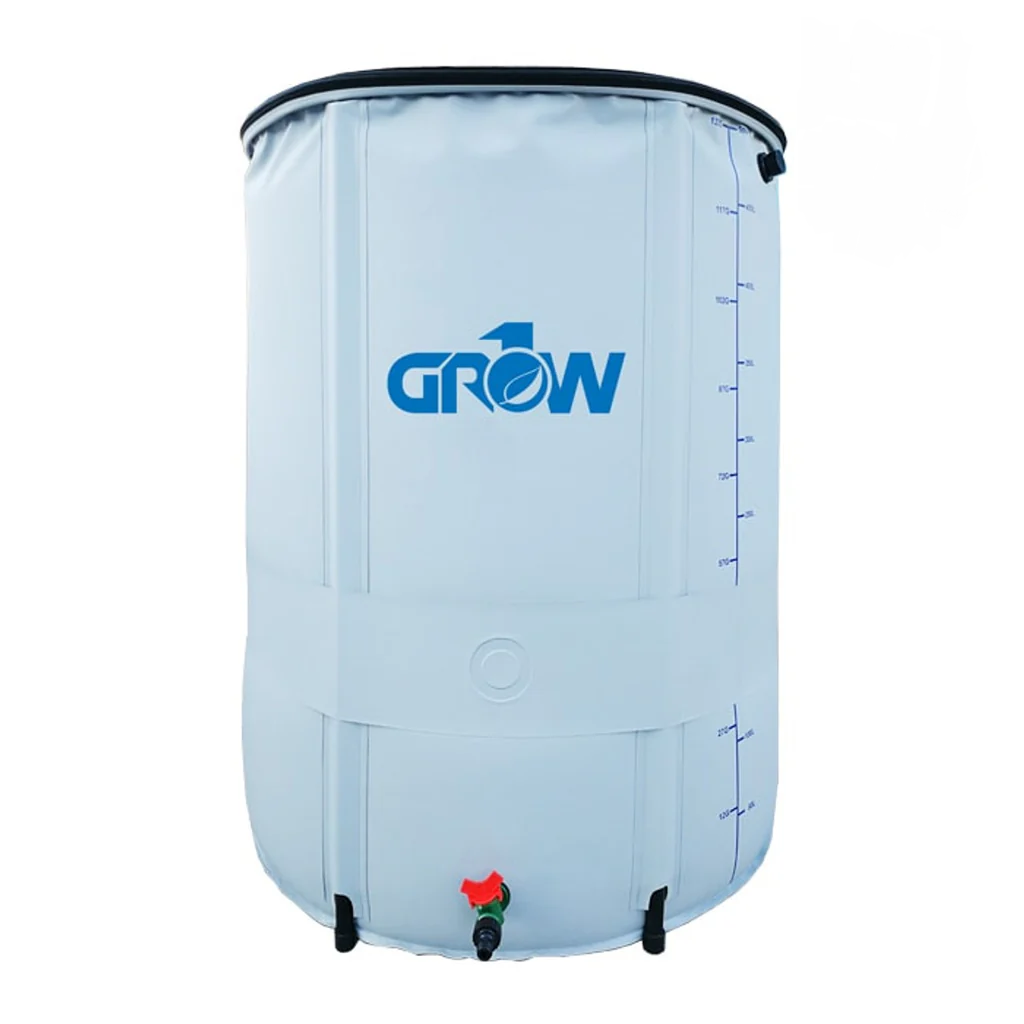
- Pros: It’s silent, doesn't require a pump, and works during power outages.
- Cons: You have to manually refill the reservoir, and if the water level gets too low, the pressure drops, which can mess with the drip rate.
The Pressure System
In this setup, you connect your system directly to a house faucet or a pump using a pressure regulator.
- Pros: You never have to refill a tank. It’s a "set it and forget it" solution.
- Cons: If a tube pops off, you have an infinite supply of water flooding your floor. We highly recommend using a pressure regulator to drop the PSI to around 15–20 for these systems.

Caption: A close-up of a pressure regulator connected to a standard garden hose for a Blumat setup.
Step 3: Installation and Calibration
Once your stakes are primed and your water source is ready, it’s time to install.
- Placement: Push the ceramic stake into the soil so the green cap is just above the surface. Place it near the plant but not directly against the main stem.
- The 8mm Main Line: Run your main supply line from the reservoir or pressure source around the perimeter of your pots.
- The 3mm Drip Line: Each stake will have a small 3mm tube coming out of it. Connect this to the main line using a T-junction.
- The Dial Setting: This is the "tuning" phase. Open the brown knob on top of the stake until a drop of water hangs from the end of the drip tube. Then, turn it back (clockwise) until the drip just stops. Usually, you’ll turn it an additional "two arrows" or clicks past the stopping point to set the baseline.
Why Fabric Pots Love Stakes
If you use fabric grow pots, you know they dry out faster than plastic ones. This is great for "air-pruning" roots, but it’s a nightmare for consistent watering.

When you use automatic watering stakes in fabric pots or raised beds, you solve the "dry pocket" issue. Because the stakes deliver water slowly, the fabric allows for even wicking throughout the entire root zone without the water just running out the sides of the pot: a common problem with heavy hand-watering.
Troubleshooting: Common Pitfalls
Even with the best gear, things can go wrong. Here is how to avoid the most common "rookie" mistakes:
1. The "Runaway" Carrot
This happens when the stake doesn't stop dripping, potentially flooding your tent. Usually, this is caused by an air bubble inside the ceramic stake or because the stake wasn't pushed deep enough into the medium. If the medium pulls away from the stake as it dries, the vacuum breaks, and the valve stays open.
2. Clogged Lines
If you are running thick organic nutrients through your lines, they will clog. We generally recommend using these systems for pure water or highly filtered mineral-based nutrients. If you want to use microbes, consider applying them via a Drip Siphon System separately or hand-watering your inoculants once a week.

3. Surface Tension
Sometimes the water will "bead up" on the surface of the soil rather than soaking in. Using a natural wetting agent (like yucca extract) in your reservoir can help the water penetrate the medium more effectively.
Maintenance and Long-Term Care
At the end of every grow cycle, you should pull your stakes and clean them. Use a soft brush to remove any roots or debris from the ceramic tips. It's also a good idea to flush your lines with a mild acidic solution (like Drip Clean or even diluted vinegar) to remove mineral scale buildup.
If you ever feel stuck or your plants aren't looking quite right, check out our Grow Help Videos for visual walkthroughs on system maintenance.
Final Thoughts
Setting up an automatic watering stake system like Blumat takes a little patience upfront, but the payoff is massive. You’re not just saving time; you’re providing your plants with a level of moisture consistency that is nearly impossible to achieve by hand.
Whether you’re a hobbyist looking to take a week off or a serious grower aiming for peak efficiency, these systems are a solid investment. Start small with a gravity-fed kit for a few plants, and once you master the "dial-in" process, you’ll likely never want to pick up a watering can again.
Need help picking out the right nutrients to go with your new setup? Check out our Nutrient Packages to ensure your reservoir stays clean and your plants stay fed.
Caution: Always test your system for 48 hours while you are actually home to monitor it. Never set up an automated system and immediately leave for a week-long vacation. Trust, but verify!