

When it comes to growing healthy plants, what happens underground matters just as much as what you see above the soil. Your root system is the foundation of everything, nutrient uptake, water absorption, and overall plant vigor all start with those fibrous networks beneath the surface.
That's why we developed BAM, and the results speak for themselves. If you've ever wondered why some plants just seem to thrive while others struggle along, the answer often lies in root development and the microbial activity surrounding those roots.
What is BAM?
BAM stands for Badass Microbes, and the name isn't just for show. This isn't your average bacterial inoculant sitting on a garden center shelf. BAM was created using the same raw materials that Drops of Balance is built on, which means you're getting something fundamentally different from standard microbial products.

When you give BAM to your plants, whether they're clones, seedlings, or mature flowering specimens, you're not just adding bacteria to your growing medium. You're delivering:
- Ionic minerals that are immediately available for plant uptake
- Co-enzymes that support metabolic processes
- Pre-produced enzymes from the bacteria themselves
That last point is critical. Because of how long it takes to create our product, the bacteria are already producing enzymes before they even reach your plants. This gives BAM a head start that other inoculants simply don't have.
The Communication Network Underground
Here's something most growers don't fully appreciate: roots don't work alone. They rely on an intricate communication system created by hyphae, those fine, thread-like structures that extend from beneficial fungi and connect with your root system.
When you look at plants treated with BAM, the difference is immediately visible. The roots are covered in fibrous hyphae, creating a dense network of connections. These hyphae do the heavy lifting when it comes to communication between your roots and your soil system.
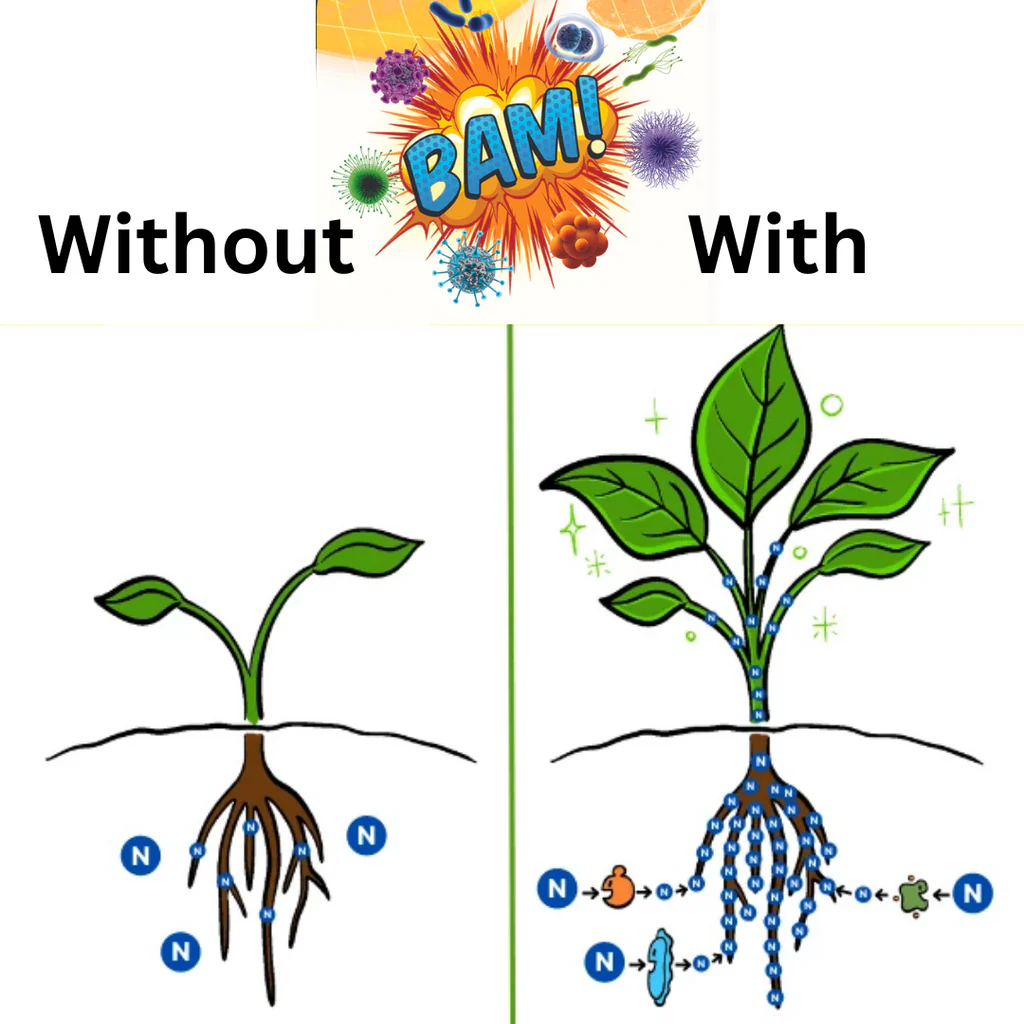
Plants without this robust hyphal network still develop roots, sure. You'll see some fibers starting to form. But that communication system? It's limited. And limited communication means limited potential.
Think about it this way: those hyphae are like having a high-speed internet connection versus dial-up. Both technically work, but one is going to get you where you need to go a lot faster.
The Healthy Baby Analogy
Mark from Perfect Gardens puts it in terms anyone can understand: it's like having a healthy baby.
When you use BAM from the beginning, on clones, seedlings, whatever stage you're starting with, it's like giving birth to a baby that's healthy, without defects or problems. That baby is going to have a stronger life. They're going to walk sooner, read sooner, and reach their potential faster when given the right environment.
Plants work the same way.
A clone or seedling that starts with a robust hyphal network and active microbial community is set up for success from day one. The genetic potential of that plant can actually be realized because nothing is holding it back.

On the flip side, a plant without these advantages? It's going to have some issues growing up. Here's what that typically looks like:
- Slower vegetative growth requiring extended veg times
- Higher electricity costs because you're running lights longer
- More nutrient expense trying to compensate for poor uptake
- Delayed harvest by potentially 3-4 weeks
When you add up those extra weeks of electricity, nutrients, and time, the cost difference becomes significant. And you still might not achieve the same results you would have with a properly inoculated plant.
When to Use BAM
One of the best things about BAM is its versatility. You can introduce it at virtually any stage of plant development:
Clones and Cuttings This is arguably the most impactful time to use BAM. When roots are just beginning to form, establishing that microbial relationship early sets the foundation for everything that follows.
Seedlings Young plants with developing root systems benefit enormously from the enzymatic activity and mineral availability BAM provides. This is when you're building the infrastructure for future growth.
Vegetative Stage Even if you didn't start with BAM, introducing it during veg can still improve nutrient cycling and root development. Better late than never applies here.
Flowering Yes, even flowering plants can benefit. While the root system is largely established at this point, the continued enzyme production and mineral availability support the heavy metabolic demands of flower production.
What Makes BAM Different From Other Inoculants
The market is flooded with microbial products. Walk into any grow store and you'll see dozens of options claiming to boost root health. So what actually sets BAM apart?
1. The Raw Material Foundation
BAM is built on the same substrate as Drops of Balance. This isn't just marketing: it means the product contains ionic minerals and trace elements that support both the bacteria and your plants simultaneously.
2. Pre-Produced Enzymes
Most inoculants give you dormant bacteria that need to wake up, establish themselves, and then start producing beneficial compounds. BAM's extended production process means the bacteria are already active and producing enzymes before application.
3. Co-Enzyme Delivery
Beyond just bacteria, you're getting co-enzymes that participate directly in plant metabolic processes. This is the kind of comprehensive approach that simple bacterial products can't match.

Real Results: What You'll Actually See
Let's be practical about expectations. When you use BAM correctly, here's what you should observe:
Root Appearance: Healthy, white roots with visible fuzzy hyphae extending outward. The root mass should appear fibrous and dense rather than sparse with just a few main roots.
Growth Rate: Plants should move through vegetative stages more quickly, with visible vigor in new growth. This doesn't mean overnight miracles, but consistent, noticeable improvement.
Stress Resistance: Plants with established microbial relationships handle environmental stress better. Temperature fluctuations, minor nutrient imbalances, and transplant shock are all easier to recover from.
Yield Potential: While genetics ultimately determine ceiling potential, BAM helps plants actually reach that ceiling rather than falling short due to poor nutrient uptake or weak root development.
Getting Started With BAM
If you're new to microbial inoculants or want to see what BAM can do for your garden, the process is straightforward. You can find detailed application instructions and usage rates on our grow help videos page.
For best results, consider pairing BAM with Drops of Balance to create a complete mineral and microbial foundation for your plants. Since both products share the same raw material base, they work synergistically.
The Bottom Line
Root health isn't glamorous. You can't post pictures of your root system on social media and expect much engagement. But experienced growers know that what happens underground determines success above ground.
BAM Microbial Inoculant gives your plants the foundation they need to reach their genetic potential. It's not magic: it's biology, done right.
The difference between a plant that struggles through its life cycle and one that thrives often comes down to those first few weeks of root development. Give your plants the healthy start they deserve, and you'll spend less time troubleshooting problems and more time enjoying the results.


Leave a comment
This site is protected by hCaptcha and the hCaptcha Privacy Policy and Terms of Service apply.