
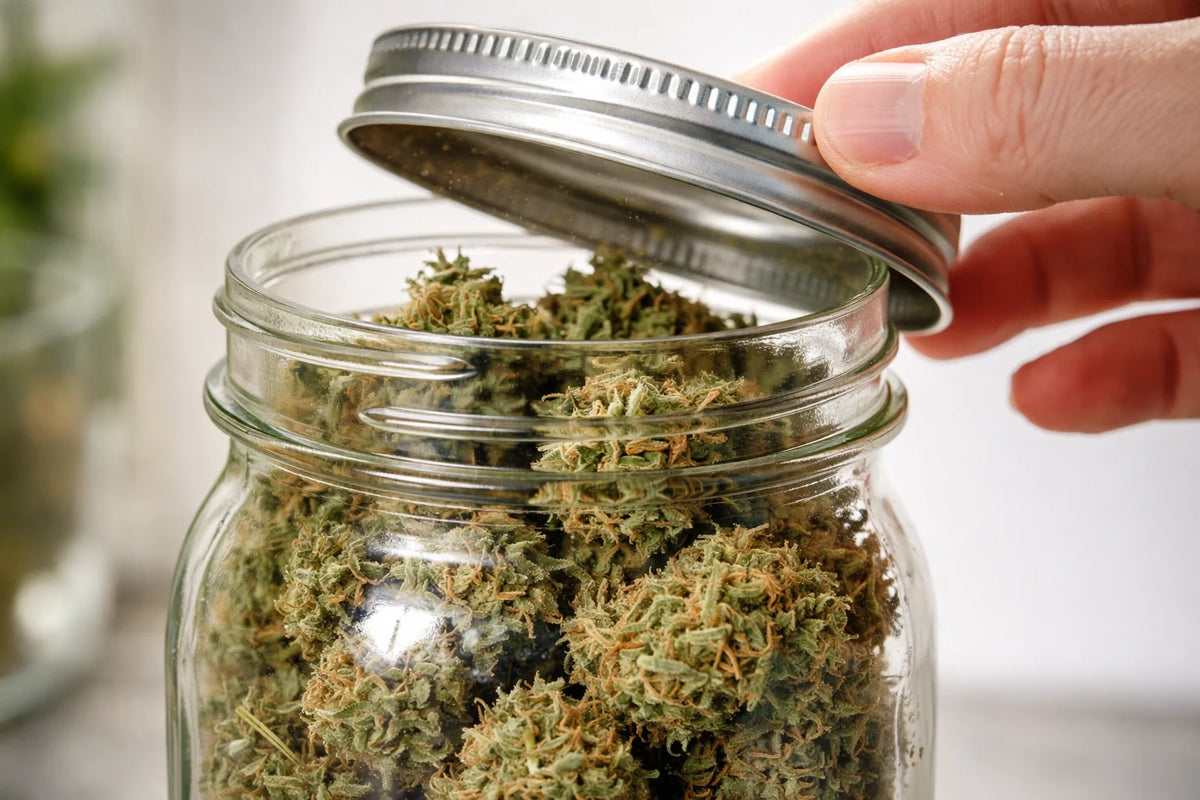
If you've made it to the curing stage of your cannabis grow, congratulations, you're in the home stretch. But here's the thing: all those months of careful cultivation can be undone in the final weeks if you skip or rush the burping process. So, is burping really necessary? The short answer is yes. The long answer involves a bit of science, some practical tips, and understanding why moisture management is everything when it comes to preserving your harvest.
Let's break down exactly what's happening inside those jars and containers, and how proper burping technique can make or break your final product.
What Is Burping, Anyway?
Burping is the process of opening your storage containers: whether that's glass jars, turkey bags, or other vessels: to release excess moisture and exchange stale air for fresh, drier air. The purpose is simple: get the excess moisture out of your flowers in a controlled, gradual way.
When you cut your plants and begin drying, moisture doesn't leave the flower evenly. The exterior dries first, while the interior (especially the stem running through the center of the bud) holds onto moisture longer. This uneven drying is where problems start: and why burping is essential.
The Problem: Moisture Gets Trapped Inside
Here's a scenario most growers have encountered at some point. You break open a flower that looks perfectly cured on the outside, only to find the center has turned brown. That browning is oxidation: and sometimes even the beginnings of mold: caused by moisture that got locked up inside the bud.
When flowers dry too quickly on the outside, that dry exterior essentially creates a barrier. Moisture in the center, particularly in the thick stem, can't escape. Over time, this trapped moisture causes the inside of the flower to break down and oxidize from the inside out.

This is why you're always testing for that "snap" in the stem during drying. When the stem snaps instead of bends, it means moisture has been drawn out. But here's the catch: you're only testing the exterior of the stem. The stem buried inside the dense flower may still be holding water.
The Science: Understanding the Osmotic Membrane
To really understand why burping works, it helps to think about osmotic pressure. Remember those experiments in school with the U-shaped containers and salt water? When you put salt water on one side and regular water on the other, the salt water pulls the regular water toward it because it's seeking balance.
The same principle applies to your flower. Think of the boundary between the dry exterior and the moist interior as an osmotic membrane. When you burp your container, you're allowing moisture from the center of the flower to travel through that membrane, break the surface tension of the dry exterior, and evaporate into the air inside the jar.
When you open the jar, that moist air escapes. Drier air comes back in. This cycle slowly and evenly pulls moisture from the center of the flower to the outside, until the entire bud has a consistent moisture level all the way through.
How Often Should You Burp?
This is where experience comes into play. If you're new to growing, err on the side of more frequent burping: at least once or twice a day. Every few hours is even better during the first week or so of curing.
Here's what you're doing each time you open that jar:
- Releasing excess moisture that has traveled from the center of the flower to the air inside the container.
- Allowing drier air back in to continue pulling moisture outward.
- Building your experience by feeling the flower: noticing how it starts dry, then softens as interior moisture equalizes.
If you're only burping every 15 minutes, you're not giving enough time for meaningful moisture exchange. The jar slows down the evaporation process, so you need to allow hours between burps for the moisture to actually migrate and accumulate in the container's air.

Storage Container Options
Not everyone uses glass jars, and that's fine. Different containers work for different situations and operation sizes. Here are some options:
Glass Jars The classic choice. Easy to monitor, reusable, and you can see your product. Great for smaller harvests and personal use.
Paper Bags Large paper bags are excellent for transitioning flower off the stem. They breathe well and help regulate moisture without trapping it.
Corrugated Cardboard Boxes These can serve as both a drying and final storage container. The cardboard absorbs excess moisture and provides a stable environment. Check out our trim and dry guides for more on this method.
Turkey Bags Popular for medium-sized batches. Pair them with a humidity control pack to maintain even conditions.
Large Mylar Bags (20-30 gallon) Ideal for larger operations where flower has already been trimmed and looks ready for storage. Mylar blocks light and, when paired with humidity packs, creates a stable environment.

Whichever container you choose, using a two-way humidity pack (like Boveda packs) helps maintain that sweet spot around 55-62% relative humidity. These packs absorb excess moisture and release it back when the environment gets too dry, creating a more forgiving curing environment.
Advanced Tip: Nitrogen for Long-Term Storage
Once you've completed the burping and curing process, you might want to store your flower for the long haul: months or even a year or more. Here's where things get interesting.
Oxygen oxidizes. Every time you open your storage container, you're letting oxygen back in, and that oxygen slowly breaks down your flower over time. To combat this, consider using nitrogen displacement.
There used to be a product called "420" that was essentially nitrogen in a bottle. The idea is simple: shoot nitrogen into your container to push the oxygen out. Nitrogen is inert: it won't react with your flower or cause degradation.
Combine nitrogen displacement with a humidity pack, store in a dark, cool environment, and your flower can stay as fresh as the day you harvested it for a year or two. Every time you open the container to grab some product, repeat the process: nitrogen in, humidity pack in the center, seal it up, and store it away from light.
Why Light and Temperature Matter
While we're talking about long-term storage, don't overlook environmental factors:
- Light breaks down cannabinoids and terpenes. Always store in a dark place or use opaque containers.
- Heat accelerates bacterial and enzymatic activity. A cool environment (not freezing, just cool) slows down metabolic processes that degrade your flower.
- Low oxygen, stable humidity, and darkness work together to preserve potency and flavor.
Building Your Experience
The truth is, burping is as much about building your intuition as it is about the technical process. Each time you reach into that jar and feel your flower: noticing how it started dry, then softened as moisture equalized, then gradually stabilized: you're developing the hands-on knowledge that separates good growers from great ones.
There's no substitute for this kind of experience. The more you pay attention during the curing process, the better you'll understand how your specific environment, strain, and drying setup affect the final product.
So, Is Burping Really Necessary?
Absolutely. Skipping or rushing the burping process means uneven moisture, internal oxidation, potential mold, and a final product that doesn't live up to the effort you put into growing it. Proper burping ensures that moisture levels equalize throughout the flower, giving you a smooth, flavorful, and long-lasting cure.
Take your time. Open those jars. Feel your flower. Build your experience. Your future self (and your harvest) will thank you.
For more tips on growing, harvesting, and maximizing your yields, check out our other guides on the Perfect Gardens blog.

Leave a comment
This site is protected by hCaptcha and the hCaptcha Privacy Policy and Terms of Service apply.