
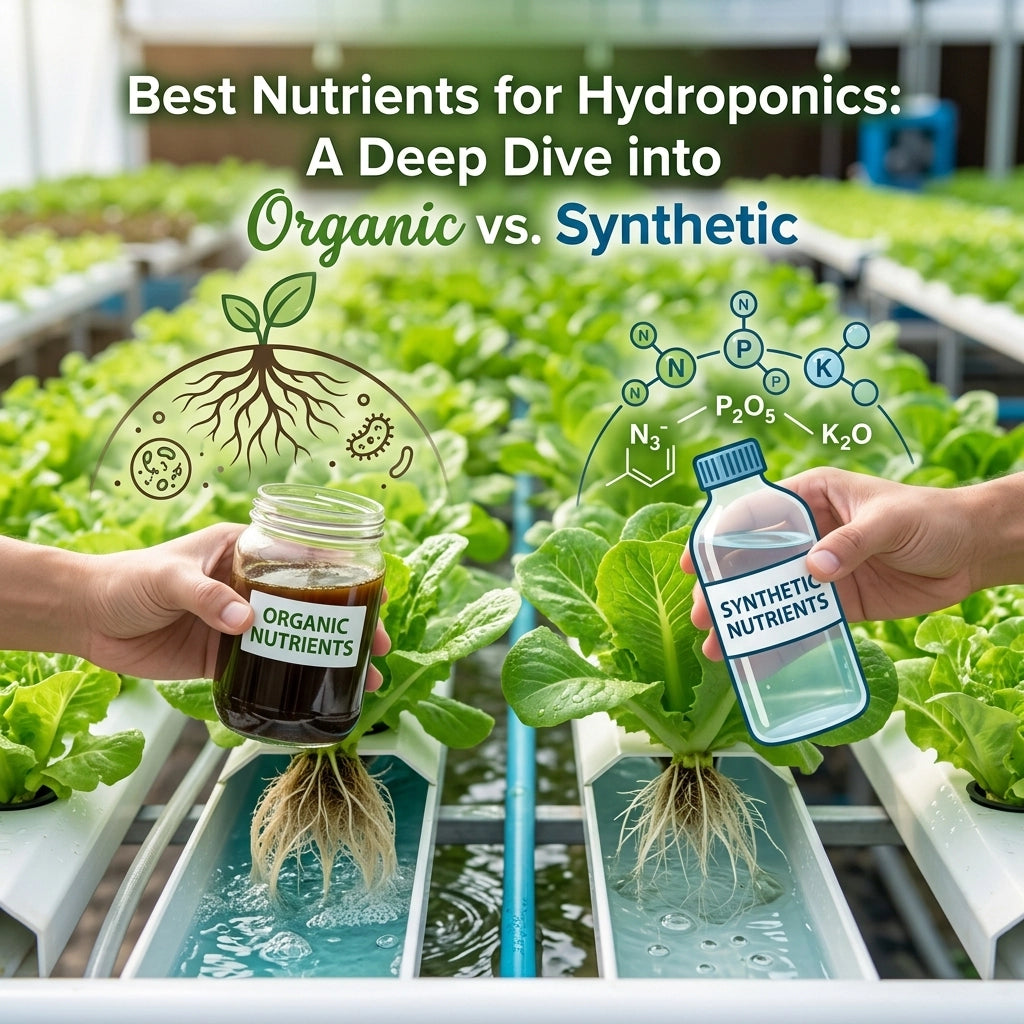
If you have spent any time in a grow shop or browsing online forums, you know that the "Organic vs. Synthetic" debate is one of the most heated topics in the gardening world. For hobbyist growers just starting their hydroponic journey, this choice can feel like a make-or-break decision. Should you go the "natural" route with organic compounds, or do you stick with the laboratory-precision of synthetic salts?
The truth is, hydroponics is a very different beast compared to traditional soil gardening. In soil, you have a massive buffer of microbes and organic matter to help feed your plants. In a hydro reservoir, you are the ecosystem. Your choice of nutrients doesn't just affect how big your plants grow; it affects your pH stability, your pump’s lifespan, and how often you’ll be scrubbing out your reservoir.
In this deep dive, we’re going to break down the science of how plants actually "eat" in a water-based environment and why one side of this debate usually wins out for the average indoor grower.
Understanding Synthetic Nutrients: The "Pre-Digested" Option
Synthetic nutrients are often referred to as "salt-based" nutrients. This can sound scary to beginners, but in a chemical sense, a salt is simply an ionic compound. Most synthetic nutrients are refined into a water-soluble form that is immediately available to the plant.
Instant Availability and Precision
In a hydroponic system, the roots are sitting directly in a nutrient solution. Synthetic nutrients are "chelated," meaning the minerals are wrapped in a way that keeps them available for the plant to suck up the moment they come into contact with the root hairs. Because these nutrients don't require microbes to break them down, you have 100% control over exactly what your plant is getting at any given moment.
The Multi-Part System Advantage
Most professional-grade synthetic lines, like those found in our plant nutrients packages, come in two-part or three-part systems. This allows you to adjust the ratios of Nitrogen, Phosphorus, and Potassium (NPK) depending on whether your plant is in the vegetative stage or the flowering stage.
Pros of Synthetic:
- Immediate Uptake: No waiting for biological processes.
- Water Soluble: They won't clog your drippers, air stones, or pumps.
- Consistency: Every bottle is chemically identical to the last one.
Cons of Synthetic:
- Salt Buildup: If you don't flush your system, salts can accumulate and cause "nutrient lockout."
- Less Room for Error: Because they are so concentrated, it’s easy to overfeed and burn your plants if you aren't measuring your EC (Electrical Conductivity) carefully.
The Organic Challenge in Hydroponics
Organic nutrients are derived from living sources, think kelp, fish emulsion, bat guano, and bone meal. While these are fantastic for soil, they present a unique set of challenges in a hydroponic environment.
The Microbial Middleman
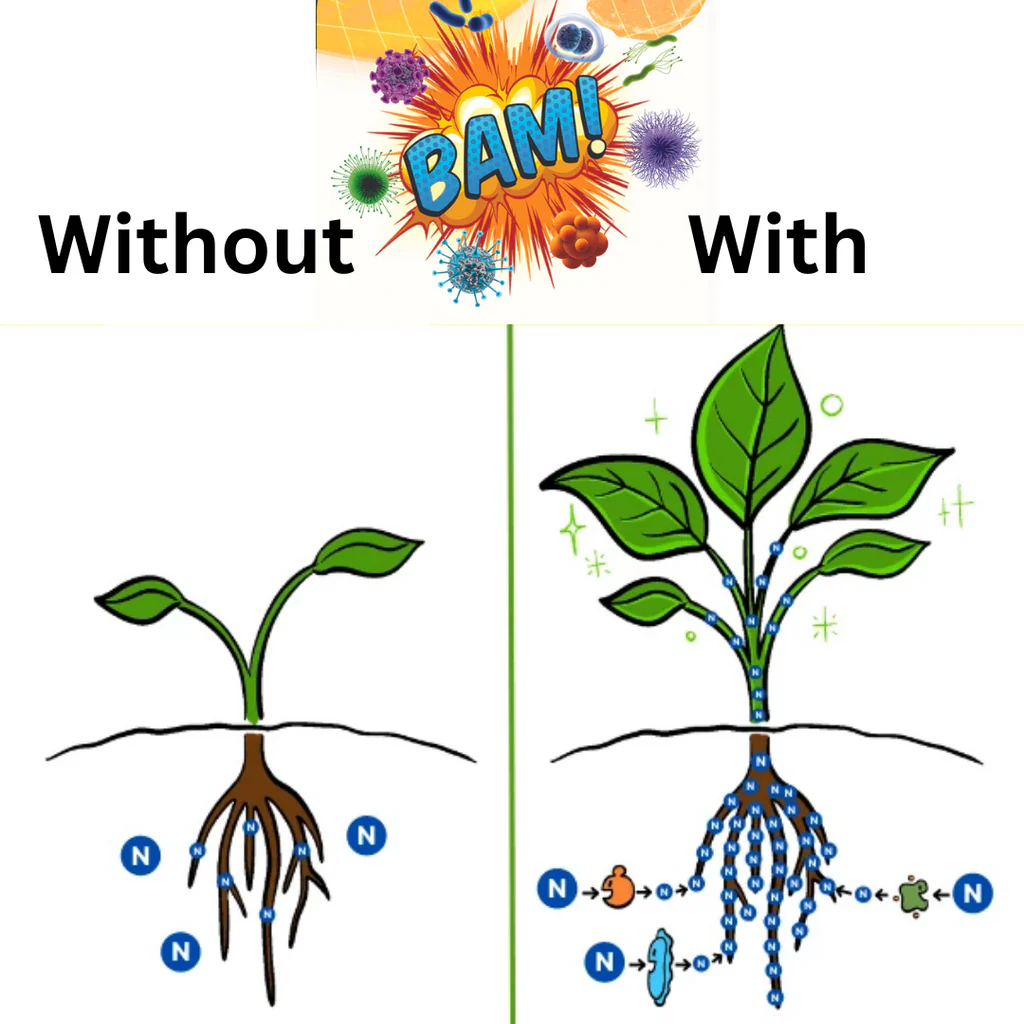
In nature, plants don't actually "eat" organic matter. They eat the waste products of microbes that digest that organic matter. If you put thick, organic sludge into a sterile hydroponic reservoir, your plants will likely starve because there are no bacteria present to break those complex molecules down into simple ions the roots can absorb.
The "Gunk" Factor
Organic nutrients are often viscous and contain suspended solids. In a recirculating system, this is a recipe for disaster. Organic material can quickly lead to the development of a "biofilm", a nasty, slimy layer of bacteria that coats your pumps, clogs your sprayers, and consumes the oxygen your roots desperately need.
The Critical Role of pH Stability
For many hobbyists, pH stability is the deciding factor. In hydroponics, the pH of your water determines which nutrients your plant can actually "see." If your pH swings too high or too low, the plant becomes "blind" to certain minerals, leading to deficiencies even if the nutrients are present in the water.
Synthetic nutrients are generally pH-buffered. This means they contain chemical stabilizers that help keep the solution in the "sweet spot" (usually between 5.5 and 6.5). Organics, however, are notoriously unstable. As microbes work to break down organic matter, they release gases and acids that can cause your pH to roller-coaster. If you aren't prepared to check and adjust your reservoir daily, a purely organic hydro run can quickly become a nightmare.
Bridging the Gap: Mineral Purification and Drops of Balance
One of the biggest mistakes growers make is ignoring the quality of the water they start with. Whether you go organic or synthetic, if your base water is full of chlorine, chloramines, or heavy metals, your nutrients won't perform correctly.
This is where a product like Drops of Balance becomes a game-changer for the hobbyist. Drops of Balance is a sulfate-based mineral solution that helps to purify and mineralize your water before you even add your primary nutrients.

By adding Drops of Balance to your source water, you cause contaminants to precipitate out of the solution. It essentially "cleans" the water and adds back a broad spectrum of trace minerals. This creates a stable, mineral-rich foundation that makes your primary synthetic or organic nutrients much more effective. It also helps in maintaining a more consistent pH, as the minerals act as a natural buffer against rapid shifts.
Can You Do Organic Hydro Successfully?
Yes, but it requires a "Biological" approach rather than a sterile one. If you are determined to grow organic in hydro, you must introduce beneficial microbes to act as your "external stomach."
Products like BAM! Microbial Inoculant or Xtreme Gardening Mykos are essential here. These introduce beneficial bacteria and fungi that colonize the root zone. These microbes break down organic compounds and protect the roots from the pathogenic "bad" bacteria that love to grow in organic sludge.
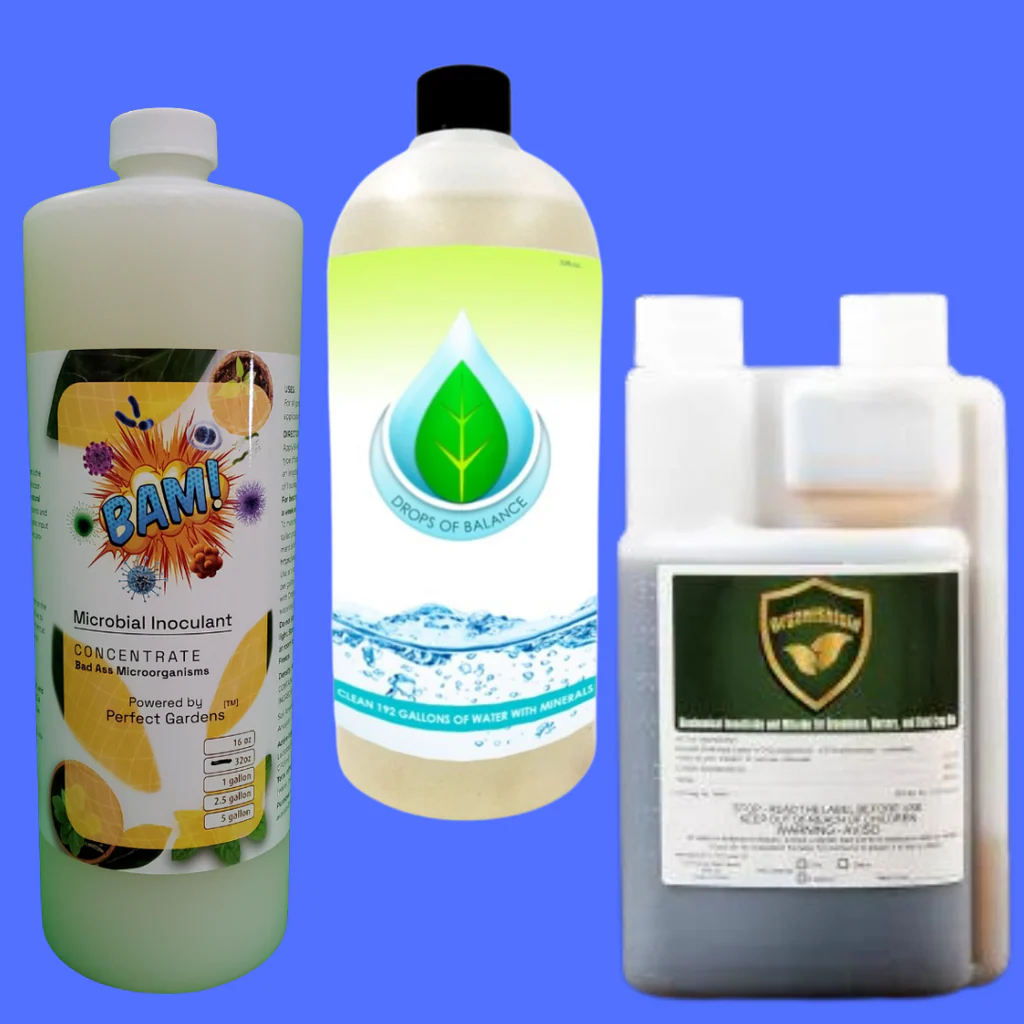
Using a Microbial Inoculant allows you to get some of the flavor and terpene benefits associated with organic growing while maintaining the speed of a hydroponic system. However, even with microbes, we generally recommend that hobbyists use a "Hybrid" approach: use high-quality synthetic base nutrients for stability and supplement with organic additives like kelp or microbes for plant health.
Plant Uptake: The Science of "How Roots Eat"
It’s important to remember that at a molecular level, a plant doesn't know the difference between a Nitrogen atom that came from a lab and one that came from a compost pile. The plant only cares if the Nitrogen is in a form it can absorb (Nitrate or Ammonium).
In a hydroponic setup:
- Water-soluble ions are pulled into the root through osmosis and active transport.
- Synthetic nutrients provide these ions directly.
- Organic nutrients must be converted into these ions by biology.
Because the water in a hydro system is usually highly oxygenated and moving, it's easier for synthetic ions to reach the root surface. This is why hydroponic plants often grow 30-50% faster than soil-grown plants, they spend zero energy "searching" or waiting for food.

Common Pitfalls for Hobbyist Growers
If you are just getting your feet wet, here are a few "Caution" points to keep in mind:
- The "More is Better" Trap: New growers often think that if a little nutrient is good, a lot is better. This leads to "nute burn." Always start at half the recommended dose on the bottle.
- Ignoring Water Temp: If your reservoir gets too warm (above 72°F), it loses oxygen. Low oxygen plus organic nutrients equals root rot. Keep it cool!
- Skipping the Clean: You should completely change your reservoir water every 7 to 10 days. This prevents "salt drift" and keeps the nutrient ratios balanced.
- Not Calibrating Meters: If your pH pen is off by just 0.5, your plants could be starving even if you’re using the "best" nutrients in the world.
The Perfect Gardens Recommendation
For the average hobbyist looking for the best results with the least amount of frustration, we recommend a Synthetic Base with Organic Supplements.
- Start with clean water: Use Drops of Balance to prep your tap or RO water.
- Use a 2-part or 3-part Synthetic Base: This ensures pH stability and immediate uptake.
- Add Life: Use a microbial inoculant like BAM! to keep the root zone healthy and clean.
- Monitor: Check your pH and EC daily.
This "Hybrid" method gives you the "insurance policy" of synthetic precision with the biological benefits of organic growing.
If you’re still feeling overwhelmed by the options, don't worry: we’ve been there. You can check out our Grow Help Videos for step-by-step guides on mixing nutrients, or join our Army of Growers to get advice from a community of people who have already made the mistakes so you don't have to.
Choosing the right nutrients is the first step toward a massive harvest. Whether you go synthetic, organic, or somewhere in between, the key is consistency and monitoring. Happy growing!


Leave a comment
This site is protected by hCaptcha and the hCaptcha Privacy Policy and Terms of Service apply.