
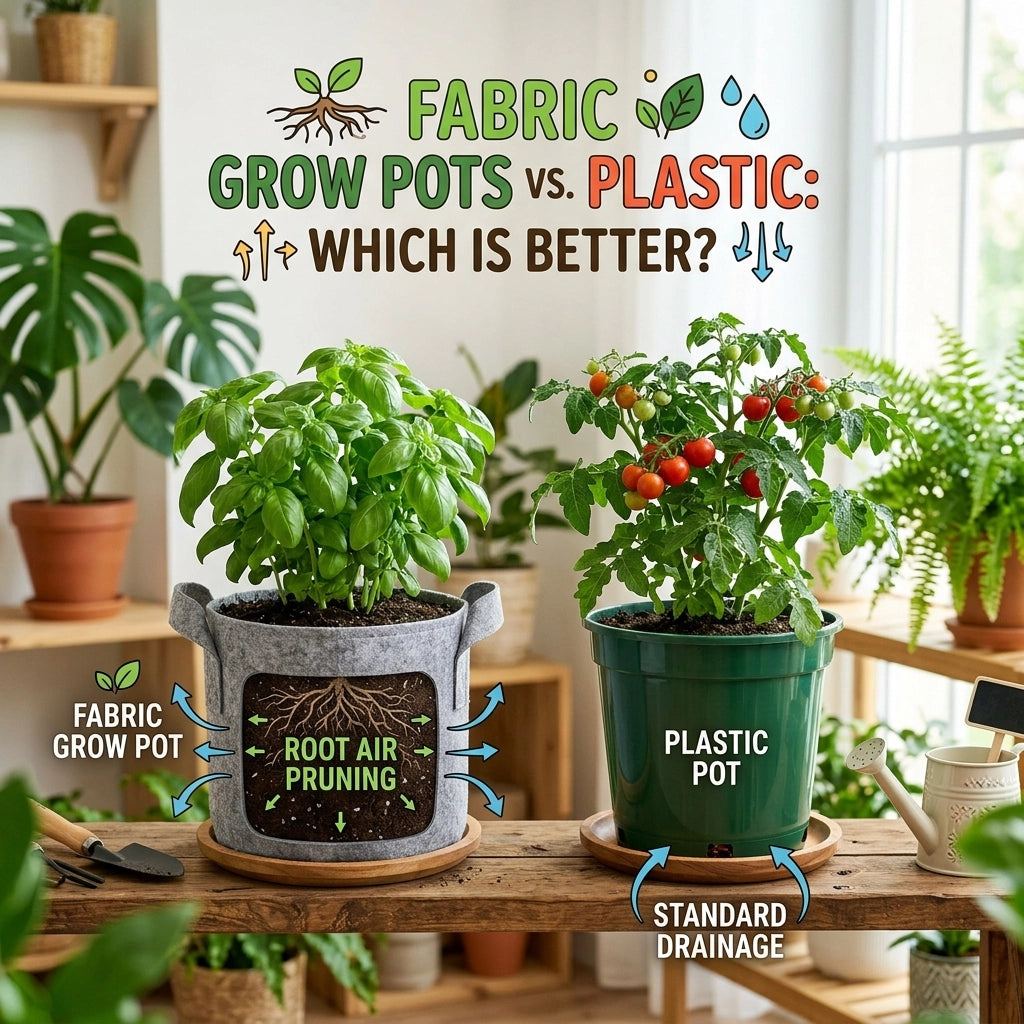
If you’ve been hanging around the indoor gardening world for more than five minutes, you’ve probably seen the debate: Fabric pots vs. Plastic pots. It’s one of those topics that every grower has an opinion on, and for a good reason. The container you choose is literally the foundation for your plant's root system. If the roots aren't happy, the plant isn't happy, and your harvest is going to reflect that.
For a long time, the standard green or black plastic pot was the only game in town. They’re cheap, they’re everywhere, and they’ve been used for decades. But as indoor growing technology has evolved: especially in the world of high-performance hydroponics and organic living soil: fabric pots have stepped into the spotlight. Specifically, brands like Grassroots have changed the conversation by offering a middle ground that solves some of the biggest headaches associated with traditional containers.
So, which one is actually better for your indoor garden? Let’s break down the science, the pros, the cons, and why fabric usually takes the crown for the Army of Growers looking for the best results.
The Old Guard: Why We Still See Plastic Pots
Plastic pots aren't "bad," per se. They serve a purpose. If you walk into any nursery, you’re going to see rows and rows of plastic.
The Pros of Plastic
The biggest advantage of plastic is moisture retention. Because the walls are non-permeable, the water stays inside the medium until the plant drinks it or it evaporates from the top. If you’re growing in a very dry environment or if you’re the type of person who forgets to water for three days at a time, plastic gives you a bit of a safety net.
They are also incredibly easy to clean and sanitize. You can scrub them down with a light bleach solution, and they’re ready for the next round. Plus, they’re cheap. If you’re starting hundreds of seedlings, buying 500 plastic cups is a lot more budget-friendly than buying 500 fabric pots.
The Major Downside: Root Circling
The fact of the matter is that plastic pots have a fundamental design flaw when it comes to root health. When a root hits the hard, smooth wall of a plastic pot, it doesn't stop. It keeps growing, but since it can’t go through the plastic, it starts to circle the perimeter.
This leads to "root-bound" plants. Eventually, the roots become a thick, tangled mess that chokes out the soil. This prevents proper nutrient uptake and can actually suffocate the plant because there’s no room for oxygen. If you’ve ever pulled a plant out of a plastic pot and seen a solid white wall of roots spiraling around the bottom, you’ve seen the problem firsthand.
The Fabric Revolution: What Changes?
Fabric pots (often called "smart pots") are made from breathable, porous materials. This one change in material creates a completely different environment for your root zone.
Air Pruning: The Game Changer
This is the single most important reason to switch to fabric. In a plastic pot, the roots circle. In a fabric pot, when a root tip reaches the edge of the container and senses the air coming through the fabric, it naturally stops growing in that direction. This is called air pruning.
Instead of one long root spiraling around the pot, the plant responds by sending out tons of tiny, fibrous "feeder roots" from the center. This creates a massive, dense root system that looks more like a sponge than a ball of yarn. More root tips mean more surface area to absorb water and nutrients, which directly leads to faster growth and bigger yields.
Temperature Control and Oxygen
Indoor grow rooms can get hot. Between the LED or HPS lights and the fans, the air temperature can fluctuate. Plastic pots trap heat. If the sun (or a grow light) hits a black plastic pot, the soil inside can cook, literally boiling the delicate root hairs.
Fabric pots breathe. As moisture evaporates through the sides of the fabric, it creates a "swamp cooler" effect that keeps the root zone significantly cooler than the ambient air. Furthermore, because the material is porous, oxygen is constantly being delivered to the roots. Roots need oxygen just as much as they need water. In a plastic pot, it's very easy to overwater and create an anaerobic (oxygen-free) environment that leads to root rot. Fabric pots make overwatering almost impossible because the excess water just leaks out the sides and bottom.
Why Grassroots Fabric Pots are Different
If you’ve used cheap fabric pots before, you might have noticed one annoying thing: they dry out too fast. Sometimes the edges get so dry that the water just runs down the inside of the fabric and out the bottom without ever soaking the middle of the soil.
This is where Grassroots Fabric Pots come in. They feature a specialized moisture-lock liner. The top few inches of the pot are lined with a non-porous material, while the bottom remains breathable fabric.

This design gives you the best of both worlds:
- Uniform Moisture: The liner prevents the sides from drying out too quickly, ensuring your living soil or coco stays moist throughout.
- Air Pruning Where it Counts: The bottom and lower sides still allow for air pruning and drainage.
- Durability: These aren't the "one-season-and-done" pots you find on discount sites. They are heavy-duty and designed to be washed and reused for years.
Comparing the Two for Indoor Use
When you are growing inside an AC Infinity Grow Tent, you have total control over the environment. Because of this, the "cons" of fabric pots (like needing to water more often) are easily managed with a good automated watering system.
| Feature | Plastic Pots | Fabric Pots (Grassroots) |
|---|---|---|
| Root Structure | Circling / Root-bound | Air-pruned / Fibrous |
| Oxygen Levels | Low (Top-down only) | High (All sides) |
| Temperature | Traps heat | Self-cooling |
| Watering | Less frequent | More frequent (but harder to overwater) |
| Durability | High (lasts years) | High (if quality like Grassroots) |
| Yield Potential | Standard | Superior (due to root mass) |
Managing the Learning Curve
If you're making the switch from plastic to fabric for the first time, there are a few things to keep in mind:
- Watering Habits: You will likely need to water about 20-30% more often. Don't let this scare you; it's a sign that your plant is "breathing" and transpiring efficiently.
- Drainage: You absolutely need saucers or a drainage tray. Since water can come out of the sides, it won't just neatly drip out of the bottom holes like a plastic pot.
- Humidity: Because fabric pots allow for more evaporation, the humidity in your grow tent might spike slightly. Ensure your exhaust fans are dialed in to handle the extra moisture in the air.
- Salt Buildup: If you are using synthetic nutrients, you might see a white crust form on the outside of the fabric. This is just salt wicking through. It's harmless to the plant, but it’s a good reminder to flush your pots occasionally to prevent buildup in the root zone.
The Verdict: Which Should You Choose?
It seems more like a personal preference until you actually see the results side-by-side. The fact of the matter is that for indoor growing, fabric pots are the clear winner.
The air pruning alone is worth the investment. When you combine that with the superior oxygenation and the temperature regulation, you're giving your plants the best possible home. If you are worried about the "drying out" issue, go with the Grassroots style liners. It solves the only real complaint people have with fabric.
Plastic pots still have their place: specifically for seedlings and clones where you need to maintain 100% humidity and don't want any dry-back. But once that plant is ready for its "forever home," put it in fabric.

Ready to upgrade your root zone? Check out our selection of Grow Essentials to find the right pots and nutrients for your next run. If you have questions about how to size your pots for your specific tent setup, don't hesitate to Contact Us or check out our Grow Help Videos.
Happy growing!


Leave a comment
This site is protected by hCaptcha and the hCaptcha Privacy Policy and Terms of Service apply.