
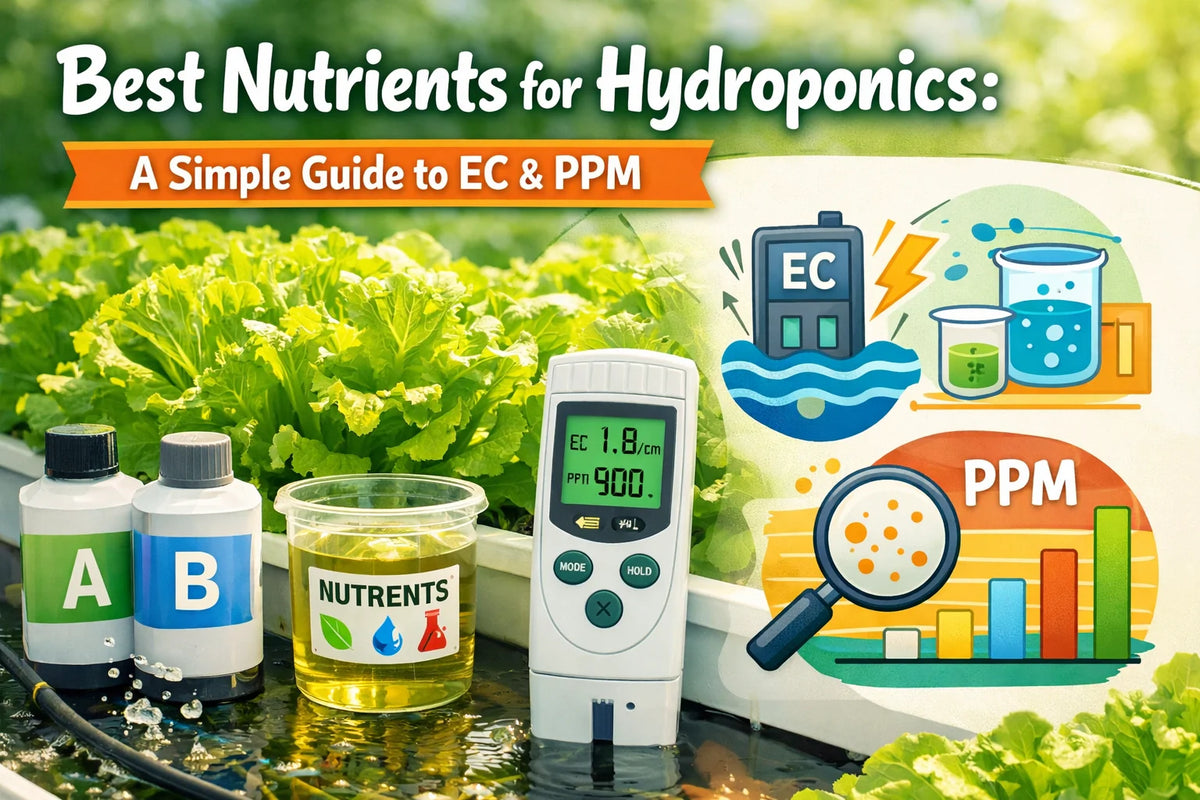
If you're new to hydroponics, you've probably seen the terms EC and PPM thrown around in grow forums and nutrient bottle instructions. Maybe you nodded along, pretending to understand, or maybe you googled it and ended up more confused than before. Here's the truth: these measurements are simpler than they sound, and once you understand them, choosing the right nutrients becomes a lot less overwhelming.
This guide breaks down EC and PPM in plain English, shows you how to measure them without a chemistry degree, and helps you avoid the common mistakes that cost beginner growers time, money, and dead plants.
What EC and PPM Actually Mean (Without the Science Lecture)
Let's start with the basics. When you mix nutrients into water for your hydroponic system, you're creating a solution that carries minerals to your plants' roots. EC (Electrical Conductivity) and PPM (Parts Per Million) are two ways to measure how concentrated that nutrient solution is.
Think of it this way: if your nutrient solution was a glass of lemonade, EC and PPM would tell you how much lemon and sugar you added. Too little? Bland lemonade and weak plants. Too much? Your mouth puckers and your roots burn.
EC measures how well the solution conducts electricity. The more dissolved nutrients (salts) in the water, the better it conducts. It's measured in millisiemens per centimeter (mS/cm) or microsiemens (µS/cm). Most growers use mS/cm because the numbers are easier to work with: typically between 0.5 and 3.0 for most hydroponic crops.
PPM measures the concentration of dissolved solids in parts per million. It's essentially EC converted into a different scale. The problem? There are three different conversion scales (500, 640, and 700), which causes endless confusion. One meter might read 700 PPM while another reads 980 PPM for the exact same solution.
This is why experienced growers prefer EC: it's standardized and eliminates the guesswork.

Why These Numbers Matter More Than You Think
Here's what happens when you ignore EC and PPM: you either starve your plants or you fry them. There's no middle ground when you're eyeballing nutrient strength.
In soil, you have a buffer. The soil holds nutrients and releases them gradually. In hydroponics, your plants sit directly in the nutrient solution: what you feed them is what they get, immediately. If your EC is too low, growth slows down and leaves turn pale yellow. If it's too high, you'll see nutrient burn: brown, crispy leaf tips that work their way inward. Neither problem fixes itself.
The fact of the matter is, different plants and different growth stages need different nutrient concentrations. Seedlings need gentle feeding (EC around 0.5-0.8). Vegetative plants can handle more (EC 1.0-1.8). Flowering plants often need the most (EC 1.5-2.5), though this varies by species.
How to Measure EC and PPM (The Practical Steps)
You'll need a digital EC or PPM meter. Cheap ones run about $15-30. Better ones with automatic temperature compensation cost $40-80. It's worth spending a bit more for accuracy: a faulty meter will cost you more in wasted nutrients and failed grows.
Here's the process:
1. Calibrate Your Meter
Most meters come with calibration solution. Follow the instructions. Do this every few weeks, or whenever readings seem off.
2. Mix Your Nutrients
Start with clean water (ideally filtered or RO water). Add nutrients according to the manufacturer's instructions. Mix thoroughly.
3. Take Your Reading
Dip the meter into the solution. Wait for the reading to stabilize: usually 5-10 seconds. Record the number.
4. Adjust as Needed
Too high? Add more water to dilute. Too low? Add more nutrients. Retest after each adjustment.

Pro Tip: Always measure EC/PPM after mixing all your nutrients together, not after each bottle. Some nutrients react with each other, and the final concentration is what matters.
Choosing Nutrients Based on EC and PPM
Not all nutrient lines are created equal. Some are highly concentrated (a little goes a long way), while others are more diluted (you need more to hit target EC). This is why following the bottle instructions blindly can backfire: those recommendations might not match your specific water, system, or plant needs.
Start with the manufacturer's recommended feeding schedule, but verify with your meter. If the bottle says "5ml per gallon" but your meter shows EC of 2.8, you're probably overfeeding. Cut back and let the numbers guide you.
Here's a general framework for most hydroponic crops:
- Seedlings/Clones: EC 0.5-0.8 (350-560 PPM on 700 scale)
- Early Vegetative: EC 0.8-1.2 (560-840 PPM)
- Late Vegetative: EC 1.2-1.8 (840-1260 PPM)
- Early Flowering: EC 1.5-2.0 (1050-1400 PPM)
- Peak Flowering: EC 1.8-2.5 (1260-1750 PPM)
- Late Flowering/Flush: EC 0.5-1.0 (350-700 PPM)
Your mileage will vary based on plant species, environment, and system type. Leafy greens stay on the lower end. Fruiting crops often push the higher ranges.

Common Mistakes That Kill Plants (And How to Avoid Them)
Mistake #1: Ignoring Your Water's Starting EC
Tap water isn't neutral. Depending on your location, it might have an EC of 0.2-0.5 before you add anything. Always measure your base water first, then add nutrients to reach your target total EC. If your tap water is already at 0.4 and you want a final EC of 1.6, you only need to add nutrients that raise it by 1.2.
Mistake #2: Forgetting Temperature Affects Readings
EC changes with temperature. Most meters auto-compensate, but if yours doesn't, know that warmer solutions read higher. Measure at reservoir temperature for accuracy.
Mistake #3: Letting pH Drift Without Checking
EC and pH go hand in hand. You can have perfect EC, but if your pH is off (below 5.5 or above 6.5 for most hydro systems), your plants can't absorb those nutrients properly. Check both regularly.
Mistake #4: Cranking Up EC When Plants Look Hungry
Pale leaves don't always mean "feed me more." Sometimes it means lockout from pH issues, root problems, or specific nutrient deficiencies that won't be fixed by raising overall EC. Diagnose before dumping in more food.
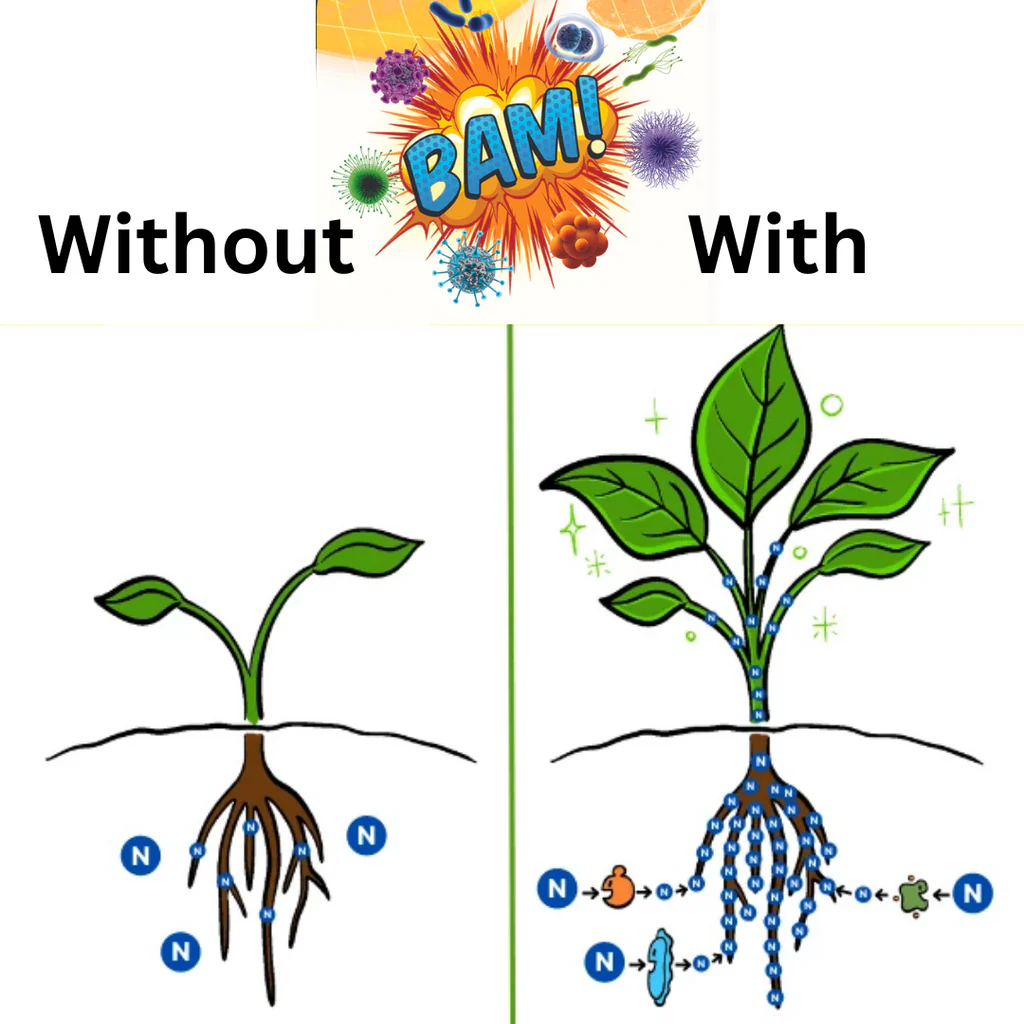
Mistake #5: Using Dirty Meters
Nutrient buildup on the probe throws off readings. Rinse your meter with distilled water after each use. Store the probe in storage solution (or a bit of tap water if you don't have storage solution: never let it dry out completely).
When to Adjust Your Nutrient Strength
Your plants will tell you when something's wrong, but by then you're already behind. Check EC every few days at minimum, daily if you're running a recirculating system.
Signs Your EC is Too High:
- Crispy brown leaf tips and edges
- Stunted growth despite healthy appearance
- Plants wilting even when reservoir is full
- Salt buildup on grow media or around system
Signs Your EC is Too Low:
- Pale, lime-green leaves (especially new growth)
- Slow growth and small leaves
- Weak stems and floppy plants
- Early flowering or premature senescence
In recirculating systems, EC naturally climbs as plants drink more water than they consume nutrients. You'll need to top off with lower-EC water or dump and remix the reservoir every 1-2 weeks.
In drain-to-waste systems, you have more control since each feeding is fresh. Just mix to target EC and pour.
The Role of Quality Nutrients and Water Optimization
Here's something a lot of beginner guides skip: the quality of your nutrients and starting water matters as much as hitting the right numbers. You can have perfect EC with garbage nutrients and still get poor results.
Premium nutrient lines provide balanced ratios of macronutrients (nitrogen, phosphorus, potassium) and micronutrients (iron, manganese, zinc, etc.) in forms plants can readily absorb. Cheap nutrients often lack chelated micronutrients or use inferior nitrogen sources.
Water quality is equally critical. Hard water, chlorine, and chloramines interfere with nutrient uptake. This is where products like Drops of Balance come in: they remineralize and purify water, creating an optimal foundation before you add nutrients. Think of it as starting with a clean slate rather than trying to build on contaminated ground.
Pairing water optimization with quality nutrients and regular EC monitoring creates a system where plants thrive instead of just survive.
Getting Help When You Need It
The learning curve in hydroponics is real. You can read every guide online and still hit problems that don't fit the textbook. This is normal. Every grow room has different variables: water source, temperature, humidity, light intensity, system type. What works perfectly for someone else might need tweaking in your setup.
This is where experienced consultation shortens the curve dramatically. At Perfect Gardens, we help growers dial in their nutrient programs based on their specific conditions. Instead of spending months troubleshooting EC swings, pH drift, and deficiency symptoms, you get a roadmap tailored to your system. We've seen every mistake in the book (and made a few ourselves), so we can spot issues before they become crop failures.
Whether you need help choosing a nutrient line, interpreting your EC readings, or figuring out why your plants aren't responding to adjustments, our team is available for consultation. Sometimes a 15-minute conversation saves you weeks of frustration.
Start Simple, Then Dial It In
Here's your action plan: Get a reliable EC meter. Learn your plant's baseline needs. Measure regularly. Adjust based on what your plants show you, not just what the bottle says.
Don't overthink it. You're not trying to become a chemist: you're trying to grow healthy plants. EC and PPM are just tools to help you do that consistently. Once you've run a few grows and watched how your plants respond to different EC levels, it becomes second nature. You'll start to see patterns: "Week 3 of veg always needs a bump to 1.4 EC" or "Flush starts at 0.8 EC in week 8."
The growers who succeed in hydroponics aren't the ones who memorize charts: they're the ones who measure, observe, adjust, and learn from each grow. Start there, and you'll be dialing in perfect nutrient strength faster than you think.
Want help building a nutrient program that actually works for your setup? Reach out to Perfect Gardens: we'll help you skip the expensive trial-and-error phase and get straight to healthy, productive grows.



Leave a comment
This site is protected by hCaptcha and the hCaptcha Privacy Policy and Terms of Service apply.