
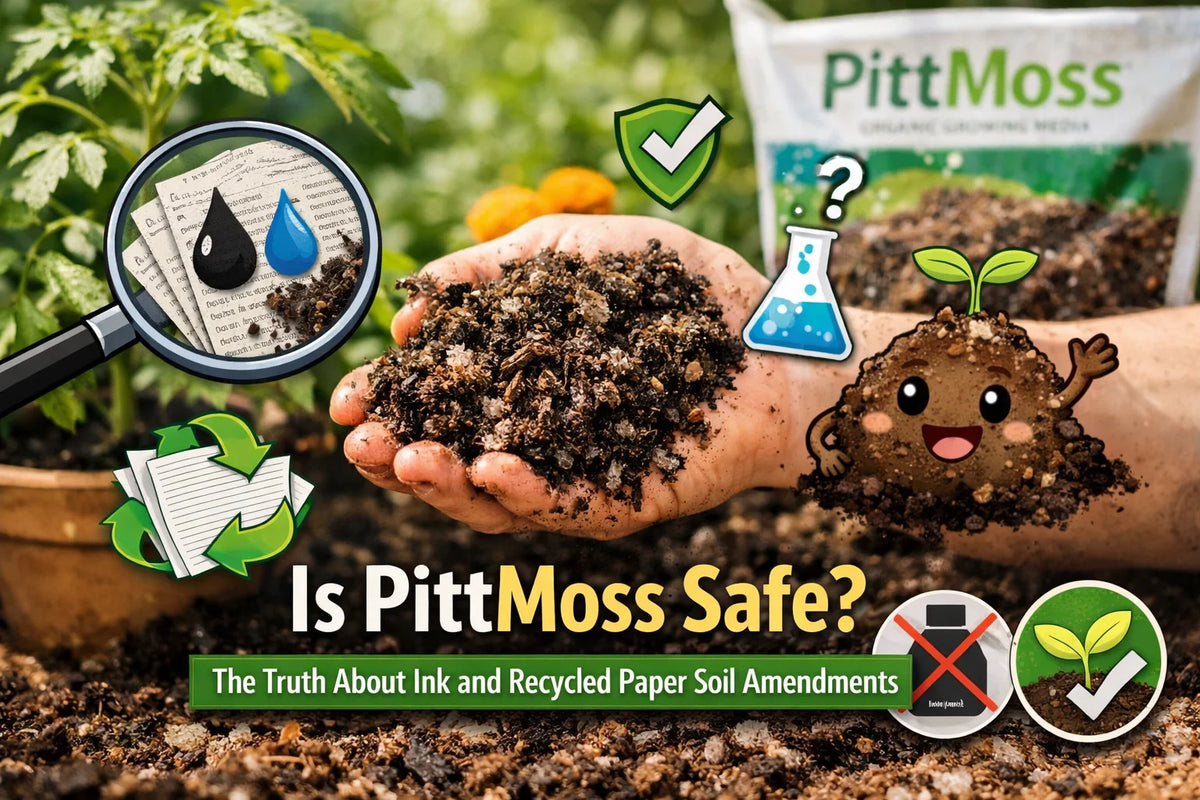
Let's address the elephant in the room right away: "Is that ink from recycled paper going to poison my plants?"
I get this question constantly. And honestly? It's a smart question to ask. If you're putting something into your soil, especially soil you're growing food or medicine in, you should absolutely know what's in it.
Here's the short answer: No, PittMoss is not toxic. But let's go deeper than that, because "trust me" isn't good enough when it comes to what you're feeding your plants.
What Exactly IS PittMoss?
First things first: PittMoss is NOT peat moss. Despite the name, it has nothing to do with harvested peat bogs.
PittMoss is a recycled paper product that's been processed into a soil amendment. Think of it as the ultimate upcycle project: taking paper waste that would otherwise end up in a landfill and turning it into something that actually helps your grow.
The material acts as a soil conditioner. It improves water retention, adds organic matter, and supports soil biology. It's fluffy, it aerates your medium, and it holds onto moisture without getting waterlogged the way some amendments do.
But here's where people get nervous: recycled paper = ink. And ink = chemicals. So let's talk about that.

The Ink Question: What Happens to It?
When I first heard about PittMoss, my reaction was the same as yours probably is right now: "Wait... what about the ink?"
Recycled paper: especially newsprint and cardboard: has ink all over it. Some of that ink is petroleum-based. Some contains heavy metals. Not exactly something you want hanging out in your root zone.
Here's what most people don't know: PittMoss doesn't just grind up paper and bag it. The company runs the material through an extensive cleaning and washing process specifically designed to strip out toxins, including ink residues.
This isn't a quick rinse. It's a multi-stage industrial cleaning system. The goal is to remove contaminants before the material ever gets near your plants. And based on third-party testing (more on that below), it works.
The Science Behind the Safety
PittMoss has been put through some serious testing. Here's what independent labs found:
Heavy Metals: All four PittMoss blends showed extremely low levels of heavy metals. Mercury and cadmium? Not detectable. Lead, arsenic, selenium, and cobalt? Little to no presence. Chromium and nickel were well below established tolerance levels.
PFAS (Forever Chemicals): PittMoss Grower Grade-F was tested for 24 PFAS compounds: the stuff that sticks around in soil and water for decades. Result? No detectable content.
OMRI-Listed: PittMoss is certified for organic growing. That means it passed the standards for use in certified organic operations. It's free of pathogens, weed seeds, and harmful contaminant levels.
Here's the part that matters most to me: it's safe enough that you can handle it without gloves, use it around pets and kids, and even technically ingest it (though I wouldn't recommend making a smoothie out of it).
The testing shows that whatever ink was in the paper, it's been successfully removed or reduced to trace levels that don't pose a risk.
Real-World Testing: 6-7 Years of Continuous Use
Lab results are great. But you know what's even better? Years of real-world use.
I've been running PittMoss in my grows for 6 to 7 years now. Same soil, re-amended and reused season after season. And here's what I've observed:
The soil is still soft. It hasn't compacted or broken down into muck. PittMoss holds its structure over time, which is rare for organic amendments.
Water retention is still excellent. I'm not seeing the material degrade into a hydrophobic mess like some coco blends or peat can do after a few cycles.
The biology is thriving. When I dig into the medium, I see healthy root systems, visible microbial activity (especially when paired with BAM microbial inoculant), and no signs of toxicity or nutrient lockout.
If there were lingering ink toxins or heavy metals building up over time, I'd see it. Plants would show stress. Growth would slow. Leaves would discolor. None of that has happened.

Why PittMoss Works So Well
Beyond the safety factor, PittMoss just performs. Here's why it's become a go-to amendment in my mixes:
1. Water Retention Without Sogginess
PittMoss holds moisture really well, but it doesn't stay wet the way straight peat or coco can. It keeps a moisture reserve available to roots without creating anaerobic conditions. That balance is hard to find.
2. Aeration and Fluffiness
Even after multiple growing cycles, the material stays light and fluffy. Roots can push through it easily. You don't get the dense, compacted mess you sometimes see with overused peat or compost.
3. Supports Soil Biology
Microbes love it. The structure gives them space to colonize, and the organic matter provides a food source (though it breaks down slowly, which is actually a good thing: you don't want rapid decomposition causing nitrogen tie-up).
When you combine PittMoss with a good microbial inoculant like BAM or a mineral/enzyme solution like Drops of Balance, you're building a living, functional soil system that keeps getting better over time.
4. Sustainable Alternative
Peat moss is harvested from bogs that take thousands of years to form. Coco coir has a massive carbon footprint from overseas shipping. PittMoss? It's made from waste paper that's already here. It's a genuinely sustainable option that doesn't compromise on performance.
When to Use PittMoss (and When Not To)
PittMoss works best as a soil amendment, not as a standalone growing medium. Here's how I use it:
Best Applications:
- Mixing into living soil builds (15-30% of total volume)
- Top dressing to improve moisture retention in existing beds
- Amending native garden soil to improve texture and water-holding capacity
- Outdoor raised beds where you want season-after-season performance
Not Ideal For:
- Pure hydroponic systems (it's designed for soil biology, not inert hydro)
- 100% standalone medium (you'll want to mix it with compost, castings, aeration, etc.)
Think of PittMoss the way you'd think of peat or coco: it's a foundational ingredient, not the whole recipe.
The Bottom Line: Is It Safe?
Yes. PittMoss is safe.
The cleaning process removes the ink and toxins that would otherwise be a concern. Third-party lab testing confirms extremely low contaminant levels. OMRI certification backs up the organic-safe claim. And years of real-world use show no signs of toxicity, buildup, or plant stress.
Is it perfect? No product is. But for growers who want a sustainable, high-performing soil amendment that actually delivers on water retention and long-term soil health, PittMoss is one of the best options out there.
If you've been on the fence because of the "recycled paper = toxic ink" concern, you can let that go. The science and the real-world results both say the same thing: it's clean, it's safe, and it works.
Want to see more breakdowns like this? Check out the Perfect Gardens blog for no-BS info on amendments, nutrients, and soil biology: or head over to Perfect Gardens TV for the full video library.

Leave a comment
This site is protected by hCaptcha and the hCaptcha Privacy Policy and Terms of Service apply.