
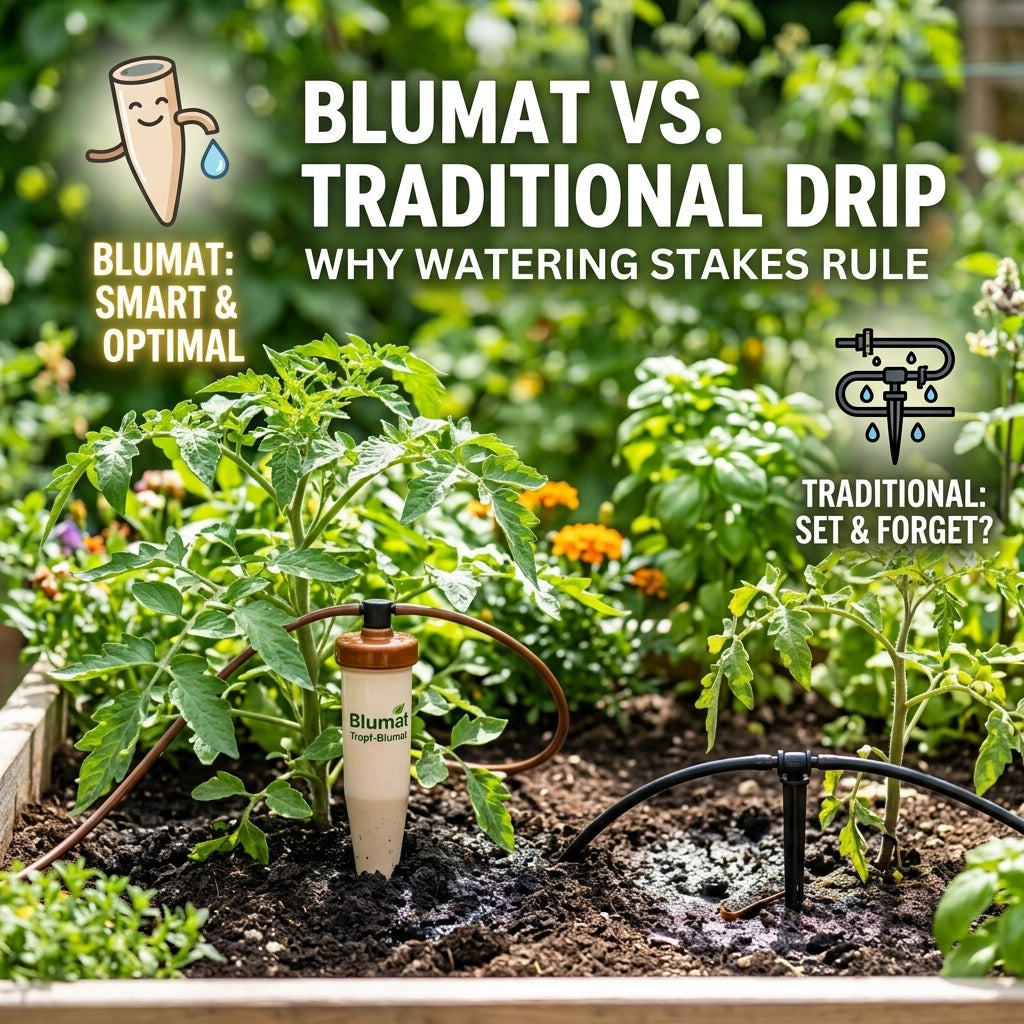
If you have been growing for any length of time, you know that the most tedious part of the job isn't the harvest or even the trimming, it’s the watering. Keeping your plants perfectly hydrated is a balancing act. Give them too much, and you deal with root rot and fungus gnats; give them too little, and you stunt their growth.
For years, the "professional" answer was a traditional drip irrigation system. But as technology has advanced, automatic watering stakes, specifically the Blumat system, have started to dominate the conversation. The fact of the matter is that traditional drip systems, while effective, often create more work for the home grower than they solve.
In this guide, we’re going to break down the differences between Blumat stakes and standard drip systems, why gravity-fed systems are changing the game, and why these ceramic stakes might be the best investment you make for your 2027 grow.
Understanding Traditional Drip Systems
Traditional drip irrigation usually relies on a pump, a timer, and a network of tubes and emitters. You set a timer to kick the pump on for, say, two minutes every six hours. During that time, water is pushed through the lines and dripped into the pots.
The Pros:
- Scalability: It’s easy to run lines to 50 or 100 plants if you have a powerful enough pump.
- Control: You can strictly control exactly how many milliliters of water each plant gets: provided the emitters don't clog.
The Cons:
- The "One Size Fits All" Problem: A timer doesn't know if your plant is thirsty. If it’s a hot day, the plant might need more water; if it’s a humid, cool day, the timer will still dump the same amount of water, potentially leading to overwatering.
- Maintenance: Emitters are notorious for clogging, especially if you are using organic nutrients.
- Power Dependency: If your timer fails or the power goes out, your plants don't get watered.
- Run-off Waste: Most drip systems are designed to "water to waste," meaning you have to manage the runoff, which is a waste of both water and expensive nutrients.
What are Blumat Automatic Watering Stakes?
Blumat systems operate on a completely different principle. Instead of a timer telling the plant when to drink, the plant tells the system when it's thirsty.

A Blumat stake is a ceramic cone filled with water. As the soil dries out, it creates a capillary suction that pulls water from the cone. This suction pulls down a rubber diaphragm inside the "carrot" head, which opens a small valve on the water line. When the soil is moist again, the suction stops, the diaphragm moves back up, and the water flow is pinched off.
Why Ceramic Sensors are Superior
The magic here is the consistency. In a study comparing Blumat systems to traditional hand watering, the Blumat system showed a 24.7% increase in yield. Why? Because it maintained a near-perfect soil moisture level of around 94 mBar. Hand watering and traditional drip systems tend to swing wildly between 40 mBar (saturated) and 200+ mBar (bone dry). Plants hate stress, and those moisture swings are a major source of it.
The Showdown: Comparison of Key Features
When we look at automatic watering stakes versus traditional drip, several factors stand out that favor the stakes for both indoor and outdoor gardening.
1. Gravity-Fed Simplicity
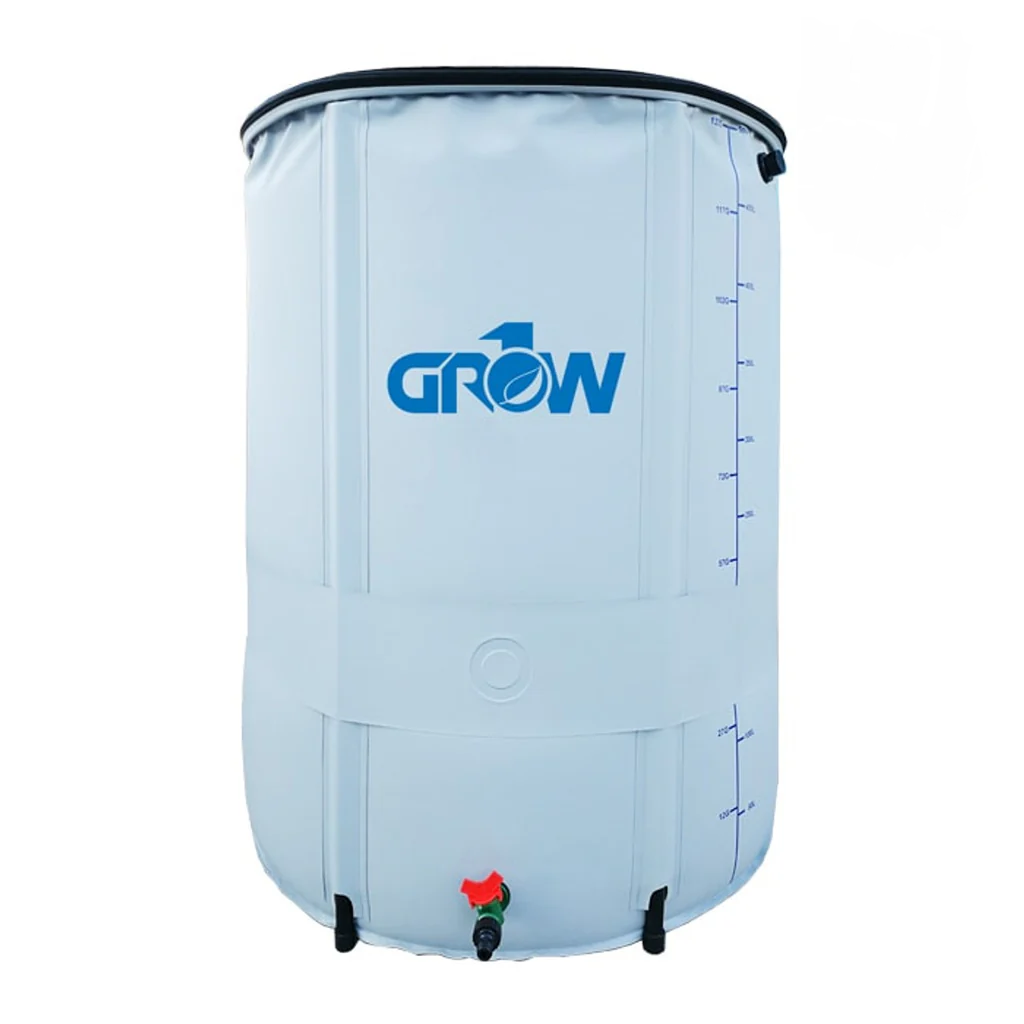
One of the biggest advantages of the Blumat system is that it is primarily a gravity-fed setup. You don't need a loud pump or a complex electrical timer. You simply place your reservoir: like a Grow1 collapsible water storage tank: above the level of your plants. Gravity provides all the pressure needed.
2. Elimination of Run-off
Traditional drip systems often require 10-20% runoff to ensure the entire root ball is saturated and to flush out salt buildup. Blumat systems, however, operate without any runoff. Because the water is delivered slowly and only when the plant needs it, the moisture stays in the root zone.
Pro Tip: Because there is no runoff, you can actually reduce your nutrient concentration to about 50% or even 25% of the recommended dose. This prevents nutrient lockout and saves you a ton of money on your hydroponic nutrients.
3. Precision vs. Generalization
A traditional drip system treats every plant the same. If you have one plant that is slightly larger and drinking more, it will end up underwatered. If you have a smaller plant in the same line, it will be overwatered. With individual watering stakes, each "carrot" acts as its own brain. Each plant gets exactly what it needs, and not a drop more.

Setting Up Your System for Success
Setting up a Blumat system is straightforward, but it does require a bit more "finesse" during the initial installation compared to just plugging in a pump.
Step 1: Prep the Carrots
You must soak your Blumat carrots in water for at least 15-20 minutes. While they are underwater, screw the tops on to ensure there is no air trapped inside. An air bubble will prevent the sensor from working correctly.
Step 2: Establish the Reservoir
Position your water tank at least 3-5 feet above the plants. For every foot of elevation, you gain about 0.43 PSI of pressure. Most Blumat systems thrive on low pressure. If you are connecting directly to a garden hose, you will need a pressure reducer to keep it below 15 PSI.
Step 3: Dialing it In
This is where most people get frustrated. Once the carrot is in the ground (make sure the soil is already at your "ideal" moisture level), you tighten the brown knob until the water stops dripping, then loosen it just a tiny bit (usually about two "markings" on the knob).
Step 4: Use a Fabric Bed for Best Results
If you are using a Grassroots fabric raised bed, the Blumat system works incredibly well because the fabric allows for air pruning and excellent drainage, which complements the consistent moisture of the stakes.

Water Quality and Clogging Issues
A common misconception is that Blumat stakes clog just as easily as drip emitters. While the 3mm feeder tubes are small, the fact that water isn't constantly being forced through them under high pressure helps. However, you still need to be mindful of your water quality.
If you are using tap water, the minerals can eventually build up. We highly recommend using a water conditioner like Drops of Balance to help keep the lines clean and ensure your plants are getting mineral-rich, purified water.

Caution: If you are running thick, organic teas through your reservoir, you will eventually clog the 3mm lines. For heavy organics, it is often better to hand-feed your teas once a week and use the Blumat system for your base water and mineral nutrients.
Why "Watering Stakes Rule" for the 2027 Grower
As we look toward the future of indoor gardening, efficiency and automation are king. The modern grower wants a system that is "set it and forget it," but also one that doesn't sacrifice the health of the plant for the sake of convenience.
Automatic watering stakes offer a middle ground that traditional drip systems can't touch. They provide the precision of hand-watering with the labor-saving benefits of automation.
Key Benefits Summary:
- Increased Yields: Up to 24% higher biomass due to moisture stability.
- Zero Electricity: Perfect for off-grid setups or reducing your power bill.
- Silent Operation: No humming pumps in the middle of the night.
- Nutrient Efficiency: Lower dosages required and zero runoff waste.
Common Pitfalls to Avoid
It wouldn't be a Perfect Gardens guide if we didn't give you the "real talk" on the challenges.
- The "Runaway" Carrot: If a carrot loses its prime (the water inside the ceramic cone dries out), it will think the soil is bone dry and open the valve completely. This can lead to a "flood" where your entire reservoir empties into your tent.
- The Fix: Check your reservoir levels daily. If the reservoir goes dry, air will enter the lines, and you will have to re-prime every single carrot.
- The Learning Curve: It takes about a week of observation to really "dial in" the knobs. Don't set them up and immediately go on a two-week vacation. Watch them for a few days first.
Final Thoughts
The debate between Blumat and traditional drip really comes down to how much you trust your gear. If you love tinkering with timers and don't mind the waste of runoff, a standard drip system is fine. But if you want a system that mimics the natural needs of the plant and uses the laws of physics (gravity and capillary action) to do the heavy lifting, automatic watering stakes are the clear winner.
Ready to upgrade your irrigation? Check out our full range of controllers and automation tools to take your grow to the next level. Whether you're a hobbyist or looking to scale, getting your water right is the first step toward a perfect harvest.



Leave a comment
This site is protected by hCaptcha and the hCaptcha Privacy Policy and Terms of Service apply.