
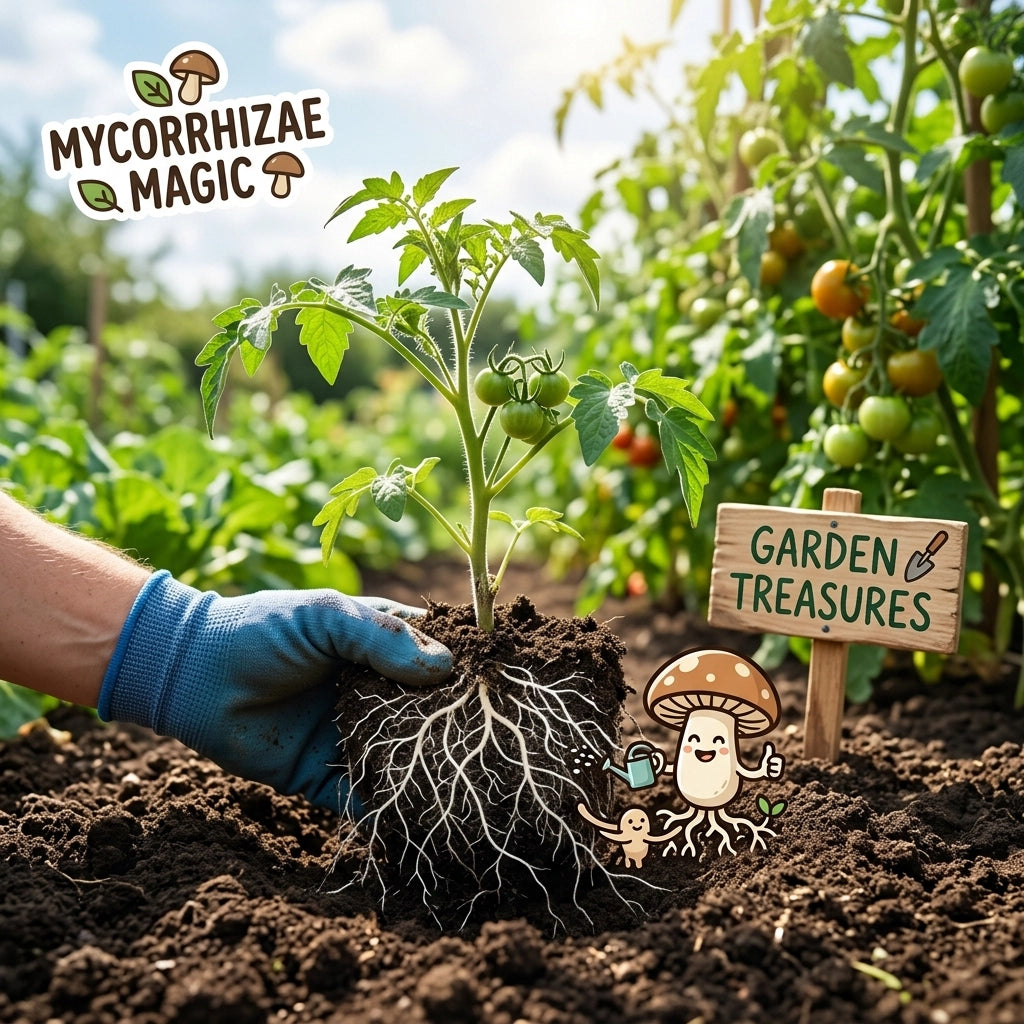
If you’ve been hanging around the gardening or hydroponics world for more than five minutes, you’ve probably heard the term "mycorrhizae" thrown around like it’s some kind of magic pixie dust. People claim it can make your plants grow faster, resist disease, and: the big one: double your yield.
But let’s be real for a second. In the world of growing, "doubling your yield" is a massive claim. As a grower, you’re always looking for that edge, but you’ve also been burned by hype before. At Perfect Gardens, we are obsessed with micro-biology because we’ve seen what it can do when applied correctly. The fact of the matter is that while mycorrhizae might not literally double your harvest in every single scenario, the impact it has on plant health and nutrient efficiency is nothing short of revolutionary.
In this post, we’re going to break down the science of this symbiotic relationship, look at what the research actually says about yield increases, and explain why the "living soil" approach is the secret sauce to a successful grow.
What Exactly Is Mycorrhizae?
To understand how it helps your yield, you first have to understand what it actually is. "Mycorrhiza" (singular) literally means "fungus-root." It isn't a fertilizer; it’s a living organism. Specifically, it’s a beneficial fungus that forms a symbiotic relationship with the roots of your plants.
Think of it as an underground trade agreement. Your plant is an expert at photosynthesis: it creates sugars (carbohydrates) from sunlight. The fungi, on the other hand, are experts at mining the soil for water and minerals, but they can’t make their own food.
The deal is simple: The plant gives the fungi some of its sugar, and in exchange, the fungi act as a massive extension of the plant's root system, bringing back nutrients and water that the plant couldn't reach on its own.
The Science of the "Underground Internet"
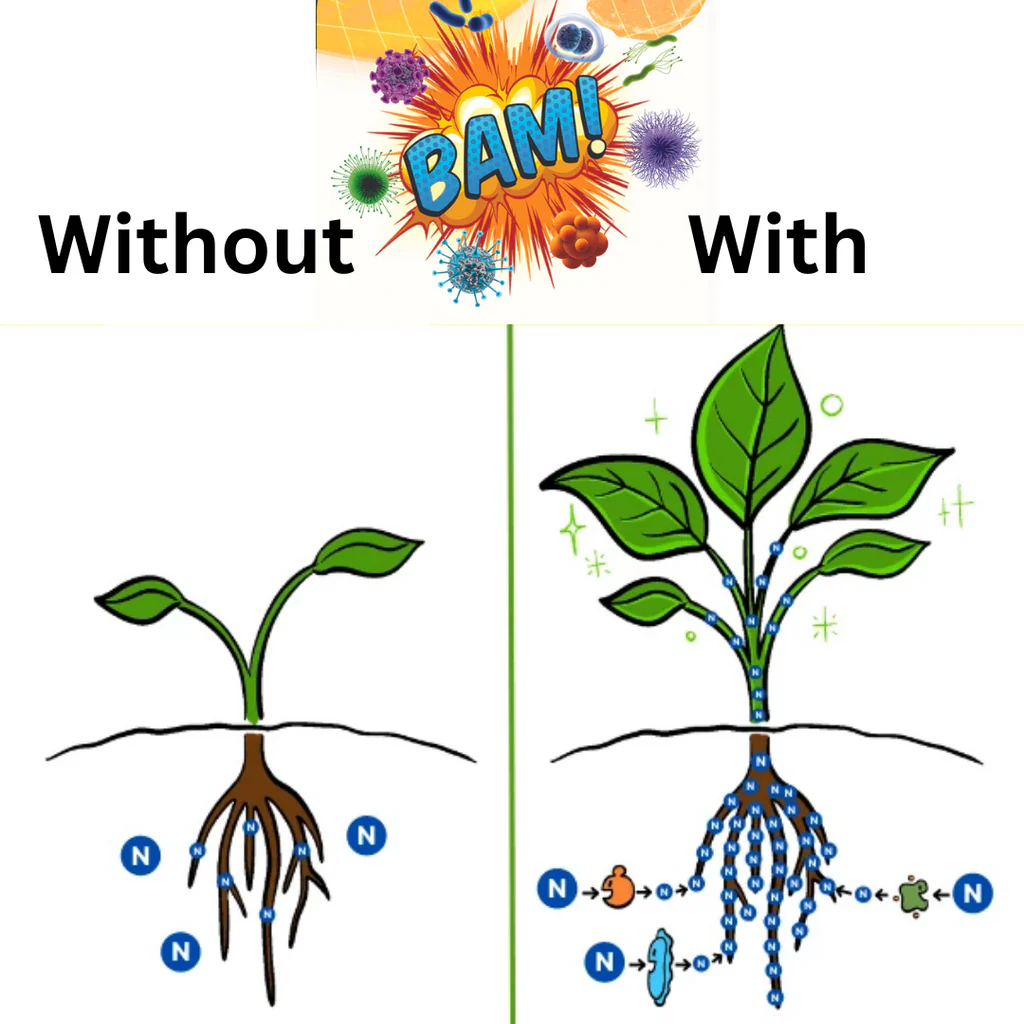
When you inoculate your soil or growing medium with mycorrhizae, the fungal spores germinate and send out tiny threads called hyphae. These hyphae are significantly thinner than even the finest root hairs. This allows them to penetrate microscopic pores in the soil that a plant root could never dream of entering.
Research shows that this fungal network can extend the effective surface area of a root system by 100 to 700 times. Imagine your plant has a straw to drink water. Adding mycorrhizae is like giving it a massive industrial pump and a thousand extra straws reaching out in every direction.
1. Unlocking "Stuck" Nutrients
One of the biggest hurdles in any garden is nutrient "lock-out" or availability. Phosphorus is a prime example. It is notoriously immobile in soil and often binds with other minerals, becoming chemically inaccessible to your plants. It’s estimated that up to 80% of applied phosphorus becomes "stuck" in the soil.
Mycorrhizal fungi produce enzymes that dissolve these chemical bonds, unlocking the phosphorus and delivering it directly to the plant. Studies have shown that plants with a healthy fungal colony can see up to a 60% increase in phosphate uptake and a 30% increase in nitrogen uptake.
2. Water Transport and Drought Resistance
Beyond nutrients, these fungi are masters of water management. Because the hyphae reach so far and into such small spaces, they can find moisture during dry spells that would leave a non-mycorrhizal plant wilting. This doesn't just keep the plant alive; it keeps the metabolic processes running at full speed even under stress, which is a key component of maintaining high yields.

Can It Really Double Your Yield?
Now, let’s talk about that "double your yield" claim. Does it happen? Sometimes. Is it guaranteed? No.
The extent to which mycorrhizae will increase your yield depends heavily on your starting point. If you are growing in a sterile, chemically-heavy environment where the plants are already being spoon-fed every nutrient they need, the jump might be less dramatic: perhaps a 10-20% increase in quality and weight.
However, if you are growing in soil or a medium where nutrient availability is a bottleneck, or if your plants face environmental stressors like heat or inconsistent watering, the difference can be night and day. Research from Texas A&M documented that potatoes treated with these fungi showed significantly greater water and nutrient uptake, leading to substantially higher yields. Similarly, organic tomato studies at the University of California showed that infected plants consistently outperformed their "clean" counterparts.
The truth is, even if you don't literally get 200% more fruit, the return on investment is astronomical. For the price of a small bag of inoculant, you are getting a more resilient plant that uses less fertilizer and produces a higher quality end product.
The Perfect Gardens Approach: Biology Over Chemicals
At Perfect Gardens, we’ve always advocated for a biology-first approach. Most "old school" growing methods focus on dumping salts and synthetic N-P-K onto the roots. The problem with this is that it eventually kills the natural life in the soil, making the plant entirely dependent on you (and your wallet).
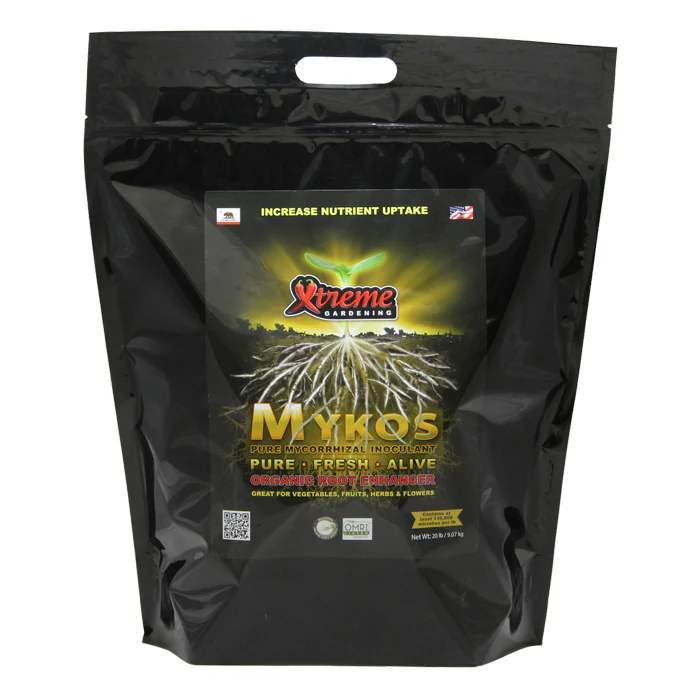
When you focus on micro-biology, you are building an ecosystem. Products like Xtreme Gardening Mykos are a staple in our community because they provide a pure, high-concentration source of these beneficial fungi.
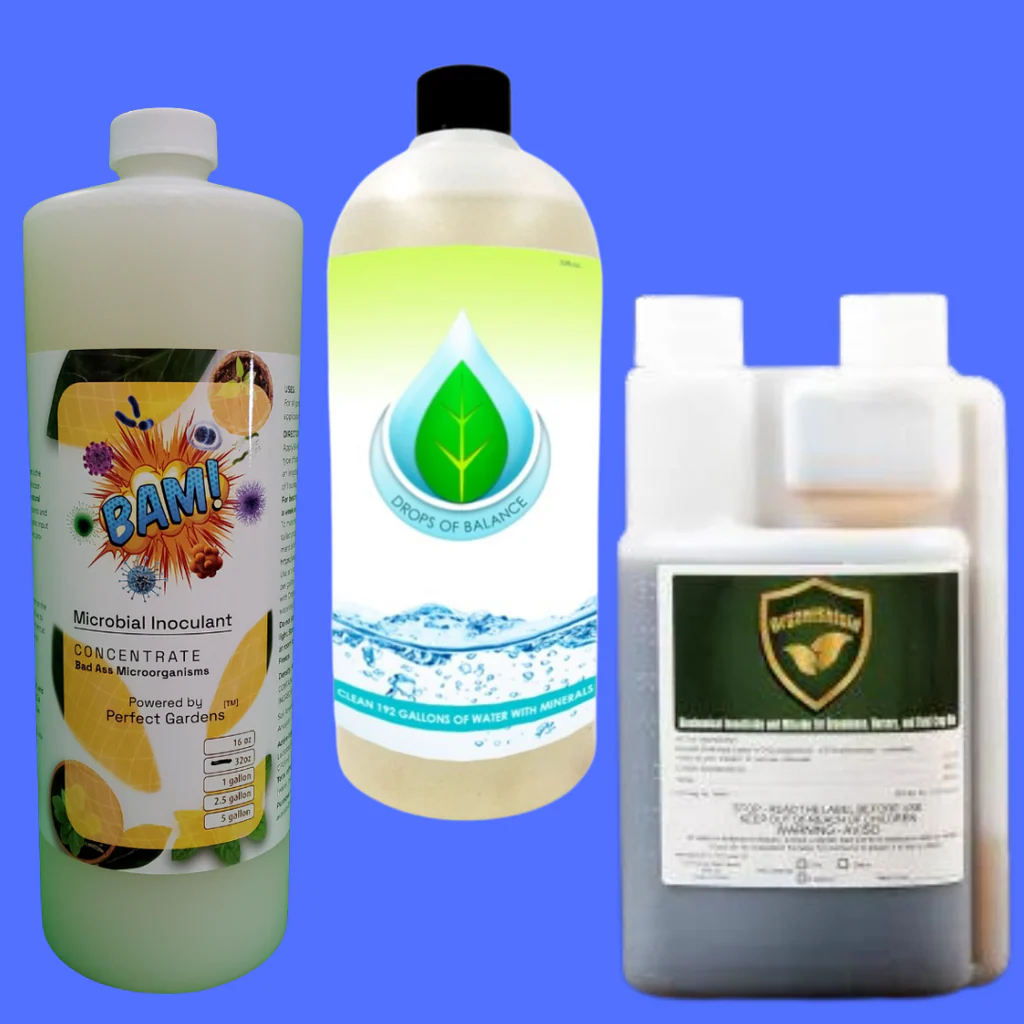
When you combine mycorrhizae with other beneficials like BAM! (Beneficial Adaptive Microbes), you create a powerhouse root zone. While Mykos focuses on that physical root extension, BAM! focuses on the overall microbial health and nutrient cycling in the medium.
How to Successfully Use Mycorrhizae
It’s not enough to just throw some powder at your plants and hope for the best. To get those yield-doubling results, you need to follow a few ground rules:
- Direct Contact is Key: Mycorrhizae need to physically touch the roots to form a connection. The best time to apply it is during transplanting. Sprinkle the inoculant directly into the planting hole or dust the root ball.
- Avoid High Phosphorus Fertilizers at Start: Paradoxically, if the plant has too much readily available phosphorus right at the beginning, it might "reject" the fungi. It thinks, "Why should I give up my sugars when I have all the P I need?" Use a balanced or low-P start to encourage the symbiosis.
- Watch Out for Fungicides: This should go without saying, but if you use a soil-drench fungicide to kill a pathogen, you’re probably going to kill your beneficial fungi too.
- Check Your Medium: Mycorrhizae work best in soil, coco coir, and some rockwool setups. However, they don't always thrive in high-flow, purely liquid hydroponic systems where there isn't a "home" for the hyphae to latch onto. If you are running hydro, you might want to look into specialized kits designed for microbial life.
Common Misconceptions and Pitfalls
"More is always better"
While you can't really "overdose" on mycorrhizae, there is a saturation point. Once the root system is fully colonized, adding more spores won't provide additional benefits. Focus on a solid initial inoculation and maybe a mid-season "booster" if you are in a long-cycle grow.
"It works for all plants"
Most garden plants love mycorrhizae, but there are exceptions. Members of the Brassica family (broccoli, kale, cauliflower) and spinach generally do not form these symbiotic relationships. Don't waste your expensive inoculants on your kale patch.
"Synthetic nutrients kill them"
This is a half-truth. Extreme concentrations of synthetic salts can harm microbial life, but you can absolutely run a "hybrid" program. Many growers use mycorrhizae to bridge the gap, allowing them to use lower doses of synthetic nutrients while maintaining high growth rates.
The Verdict: Is It Worth It?
If your goal is to push your plants to their genetic limit, then mycorrhizae are non-negotiable. They are the foundation of what we call "Growing Essentials." By improving nutrient uptake by 30-60% and massively expanding the reach of your root system, you are setting the stage for the biggest yields possible.
Whether you're a hobbyist looking to get more out of your backyard garden or a pro grower aiming for that record-breaking harvest, the biology in your soil is your greatest ally. It's about working smarter, not harder. Instead of just adding more fertilizer, give your plants the tools they need to actually use what's already there.
Ready to see the difference for yourself? Check out our range of microbial inoculants and start building a better root zone today. The fact of the matter is, your plants want to thrive( you just need to get the biology right.)



Leave a comment
This site is protected by hCaptcha and the hCaptcha Privacy Policy and Terms of Service apply.