
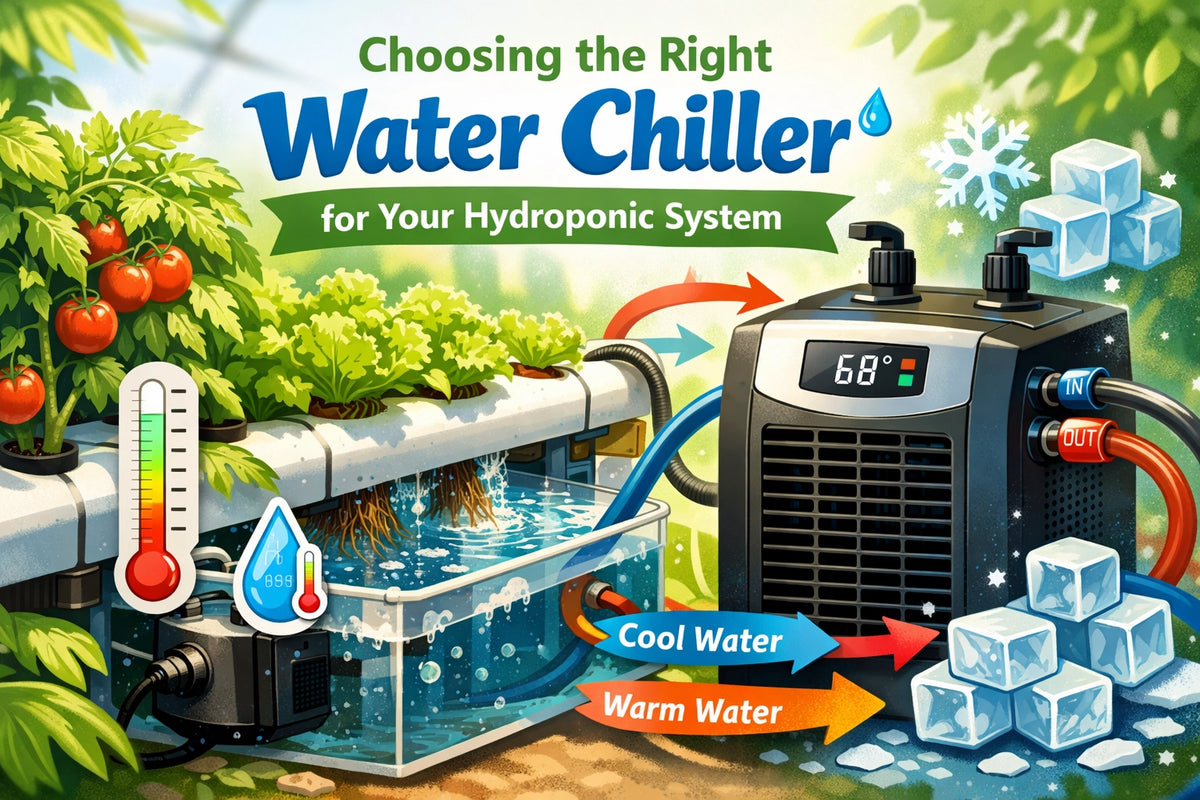
If you’ve been growing for a while, you know that summer isn't always a grower’s best friend. When those July temperatures start climbing, the biggest battle isn't just keeping your tent cool: it’s keeping your nutrient solution from turning into a warm, oxygen-depleted soup.
In most hydroponic systems, the "sweet spot" for water temperature is between 68°F and 72°F. Once you cross that 75°F threshold, you’re inviting a whole mess of trouble, specifically root rot (Pythium) and a massive drop in dissolved oxygen. If the roots can't breathe, the plant can't eat. It’s that simple.
The fact of the matter is, fans and swamp coolers can only do so much. When the ambient heat is high, you need a dedicated water chiller to handle the heavy lifting. In this guide, we’re going to break down how to size a chiller, what technical specs actually matter, and how to set it up so you don't burn out your equipment in a month.
Why Water Temperature is the "Secret Sauce"
Before we get into the nuts and bolts of BTU and horsepower, let’s talk about science for a second. Water holds more oxygen when it’s cold. As the temperature rises, the water’s ability to hold dissolved oxygen (DO) plummets.
Think of your reservoir like a battery. Cold water is a fully charged battery; warm water is a dying one. When DO levels drop, your plants' metabolic processes slow down, and anaerobic bacteria: the bad guys: start to thrive. If you’ve ever seen slimy, brown, or smelly roots, you’ve seen the result of high reservoir temps.
Investing in a chiller for your hydroponic systems isn't just an "extra" luxury; for many indoor growers, it’s the only way to ensure a harvest during the peak of summer.
Sizing Your Chiller: Horsepower and Gallons
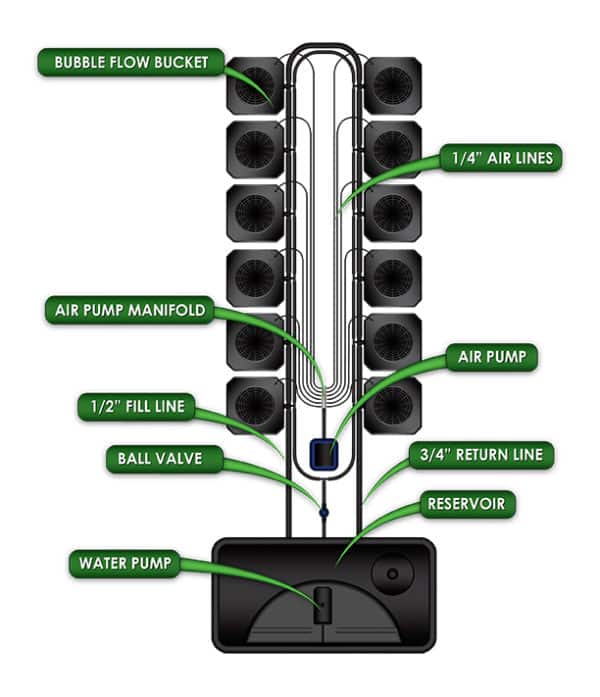
Choosing a chiller is a bit like buying an air conditioner for your house. If you buy one that’s too small, it’ll run 24/7, rack up your power bill, and eventually die from exhaustion without ever actually hitting your target temp. If it’s too big, you’re just wasting money upfront.
Chillers are usually rated by Horsepower (HP). Here is a general sizing framework to get you started:
- Under 15 Gallons: You can usually get away with a 1/20 HP compressor or even a 60–90W thermoelectric chiller. Thermoelectric units are quiet and cheaper, but they only work if your room isn't already a furnace.
- 15–50 Gallons: This is the sweet spot for a 1/10 HP chiller. This is common for small DWC (Deep Water Culture) setups or single-tent grows.
- 50–100 Gallons: You’ll want a 1/4 HP chiller. This provides enough "headroom" to pull temperatures down quickly even if your grow lights are pumping out heat.
- Over 100 Gallons: Move up to 1/3 HP or even a 1 HP split-system for commercial-scale reservoirs.
The 20% Safety Margin Rule:
Always account for the ambient heat. If your grow room regularly hits 85°F or 90°F, your chiller has to work twice as hard. We always recommend "sizing up." If you have a 40-gallon reservoir but your room gets hot, don't buy the 1/10 HP: go for the 1/4 HP. It’s better for the unit to run for 10 minutes and kick off than to run for 60 minutes straight.
Technical Specifications: What to Look For
Not all chillers are built the same. If you go out and buy a cheap aquarium chiller, you might find it failing within a single season. Here are the non-negotiables:
1. Titanium Evaporator Coils
This is the most important technical spec. In hydroponic systems, your water isn't just water: it’s a corrosive mix of salts and minerals. Traditional copper or aluminum coils will corrode over time when exposed to high Electrical Conductivity (EC) levels. Titanium is inert and won't leach heavy metals into your root zone.
2. BTU Ratings
BTU (British Thermal Units) measures the cooling capacity. A 1/10 HP chiller usually puts out about 1,000 to 1,500 BTUs. If you’re trying to calculate exactly what you need, remember that your water pump and your air stones also add heat to the water. A high-flow submersible pump can raise reservoir temps by 2-5 degrees just by running!
3. Flow Rate Compatibility
Your chiller requires a specific amount of water moving through it to work correctly. Most 1/10 HP units want between 200 and 600 Gallons Per Hour (GPH). If your pump is too weak, the water inside the chiller will freeze, potentially cracking the internal lines. If it’s too fast, the water won’t stay in contact with the cooling coils long enough to actually drop in temperature.

Setting Up Your Chiller: Placement is Everything
A common mistake we see in the Army of Growers community is putting the chiller inside the grow tent. Do not do this.
A chiller is a heat exchanger. It pulls heat out of the water and blows it out of the back of the unit via a fan. If you put the chiller in your tent, you are essentially cooling your water while simultaneously heating up your plants. It’s a losing battle.
Pro Tips for Installation:
- External Placement: Keep the chiller outside the tent or even in a different room if possible.
- Ventilation: Ensure there is at least 12 inches of clear space around the chiller’s intake and exhaust.
- Insulation: Insulate your lines. Use foam pipe insulation on the black tubing running from your chiller to your reservoir. This prevents the "cool" from escaping before it hits the plants.
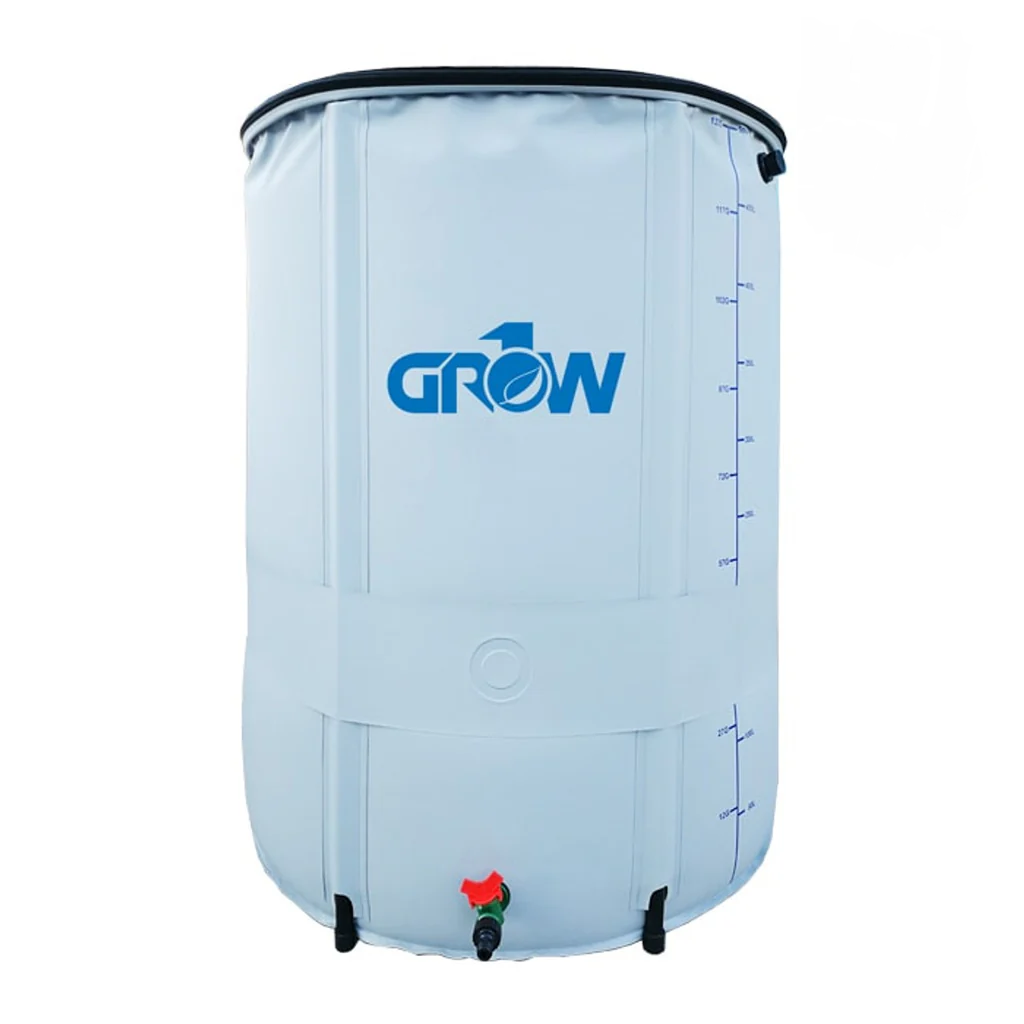
- The Reservoir: Using a high-quality reservoir like the Grow1 collapsible water storage tank makes it easy to manage your inputs and outputs, but remember that thin-walled reservoirs lose "cold" faster. Consider wrapping your reservoir in reflective bubble insulation (Panda Film works too!) to keep the heat out.
Maintenance: Keep it Clean
Hydroponic nutrients are messy. Over time, salt and biofilm will build up inside your chiller’s heat exchanger. If you don't clean it, the efficiency will drop, and eventually, the unit will clog.
- Air Filter: Most chillers have a removable dust filter on the front. Clean this every two weeks. If the air can't get in, the heat can't get out.
- Internal Flush: Between grows, run a mixture of water and food-grade citric acid or a specialized equipment cleaner through the chiller for 24 hours. This dissolves mineral deposits.
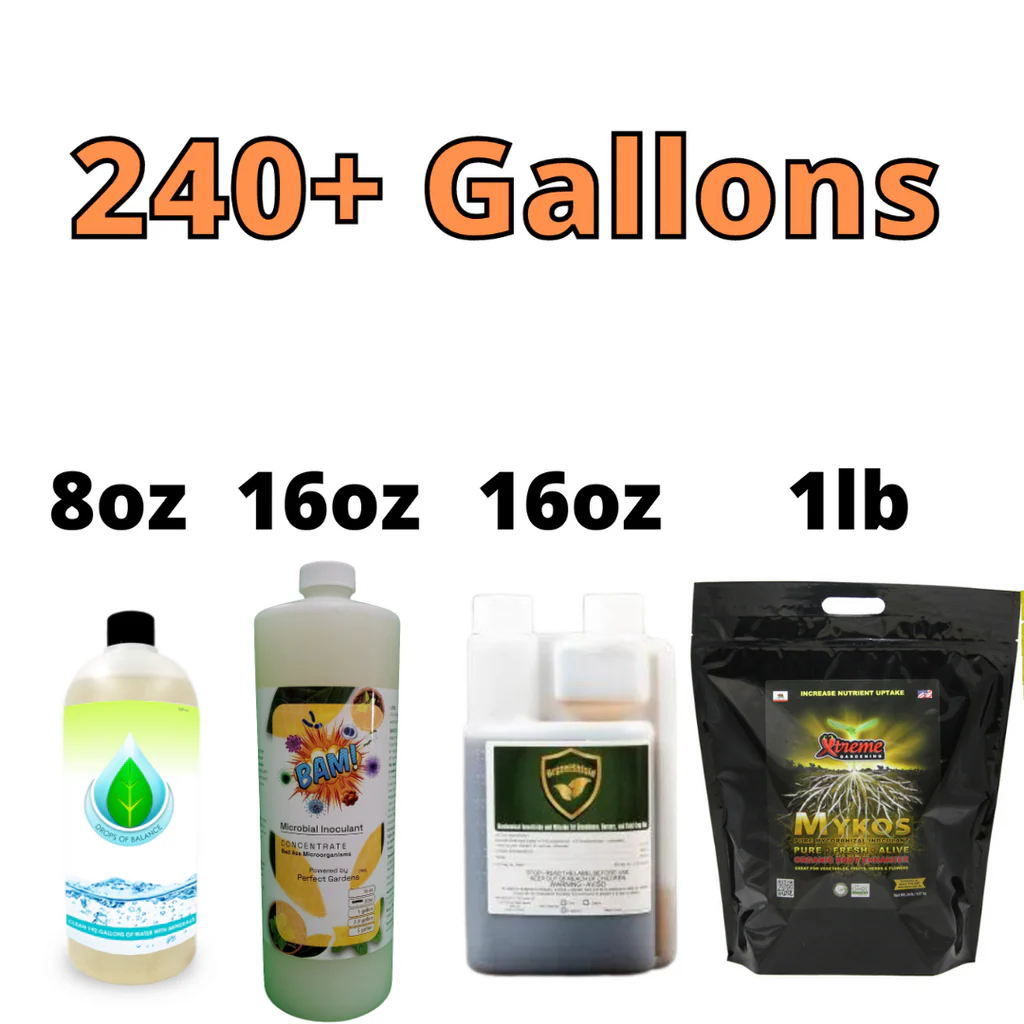
- Water Quality: Using products like Drops of Balance or mineral concentrates can help keep your water chemistry stable, which actually reduces the amount of "gunk" that precipitates out and sticks to your equipment.
Common Pitfalls and "Cautions"
It seems more like a simple plug-and-play device, but it's not always the case. Here are a few things that trip people up:
- The "Ambient Temp" Trap: Most manufacturers rate their chillers based on a room temperature of 70°F. If your room is 85°F, that "50-gallon" rating drops significantly.
- Ignoring the Pump Heat: Submersible pumps are basically heaters. If you’re struggling to keep temps down, consider switching to an external pump.
- Calibration: Cheap digital controllers can be off by 2-3 degrees. Always double-check your chiller’s readout with a high-quality hand-held thermometer.
If you are just starting out and feeling overwhelmed by the technical side of things, check out our Grow Help Videos for a visual walkthrough on plumbing these systems.
Summary: Is it Worth the Investment?
If you live in a climate where summer temperatures are a factor, a chiller is one of the best investments you can make for your hydroponic systems. It provides peace of mind. Instead of freezing gallon jugs of water and tossing them into your reservoir every four hours (we’ve all been there), you can set your target temp and walk away.
Healthy roots lead to heavy yields. By keeping your reservoir at a crisp 68°F, you are maximizing dissolved oxygen and ensuring your plants have the metabolic energy to stack on weight.
Ready to upgrade your environment? Whether you're looking for a specific chiller or need help balancing your nutrients to keep those lines clean, we're here to help. You can reach out to us at our Contact Page or browse our latest equipment in the Perfect Gardens store.
Keep those roots cold and your lights bright!


Leave a comment
This site is protected by hCaptcha and the hCaptcha Privacy Policy and Terms of Service apply.