

Ask any experienced grower what their biggest nightmare is, and they won’t say "low yields" or "power outages." They’ll say "spider mites" or "root rot." When you’re growing indoors, you are creating a perfect, controlled environment for your plants. Unfortunately, that same environment, warm, humid, and full of food, is also a paradise for pests and pathogens.
The old-school way of dealing with bugs was simple: see a bug, spray some heavy-duty poison, and hope for the best. But we’ve learned a lot since then. Not only are those chemicals bad for you and the environment, but pests actually build up resistance to them. That’s where Integrated Pest Management (IPM) comes in.
IPM isn't a single product or a "one-and-done" spray. It’s a strategy. It’s an ecosystem-based approach that focuses on long-term prevention. In this guide, we’re going to break down how to build your own IPM strategy from the ground up, moving from biological defenses to environmental controls, and only using "knockdown" sprays as a last resort.
The Philosophy: Prevention Over Cure
The fact of the matter is that it is ten times easier to keep a pest out of your grow room than it is to get rid of one once it’s moved in. In an IPM system, your first line of defense is making your plants so healthy and your environment so hostile to bugs that an infestation never starts.
Think of your grow room like a fortress. You have walls (your tent), guards (beneficial microbes), and surveillance (monitoring tools). If one layer fails, the next one is there to catch the problem. We use a four-tiered approach to keep things running smoothly:
- Setting Action Thresholds: Knowing when a few bugs are a problem and when they are a catastrophe.
- Monitoring and Identification: Constantly checking your plants so you know exactly what you’re up against.
- Prevention: The core of IPM. Keeping the grow room clean and the plants strong.
- Control: Using the softest, most organic methods first before escalating to stronger interventions.
Step 1: Strengthening the Plant from the Inside Out
A weak plant is a target. Pests and diseases are nature’s "garbage collectors", they are evolved to take out the weak. If your plants have a robust immune system and a massive root structure, they can often survive a minor pest attack that would kill a weaker plant.
This starts in the root zone. One of the most effective ways to build a "biological shield" is by using mycorrhizae for plants. These beneficial fungi form a symbiotic relationship with your roots, effectively extending the root system's reach and increasing nutrient uptake. But more importantly for IPM, they occupy the space around the roots, making it much harder for soil-borne pathogens like Pythium (root rot) to take hold.
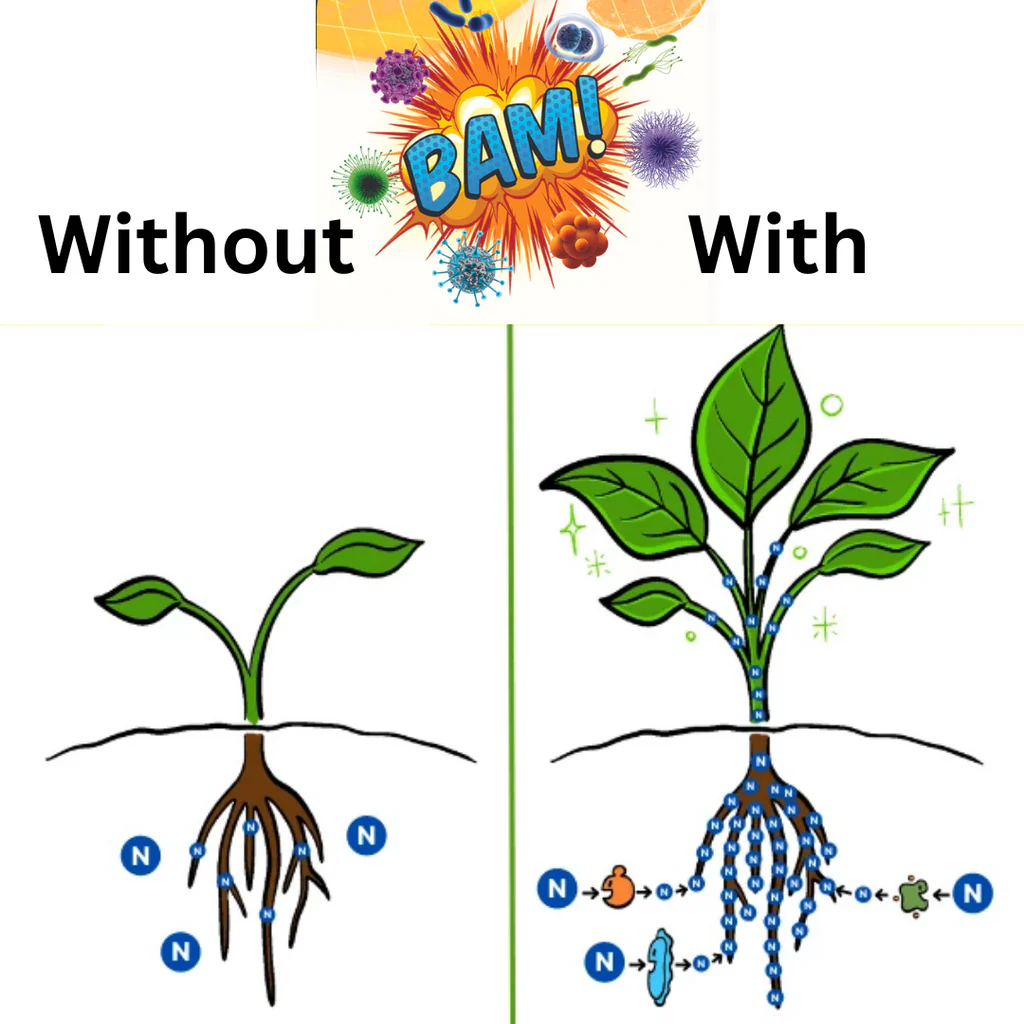
Beyond fungi, you need a high-quality microbial inoculant. Products like BAM! (Beneficial Adaptive Microbes) introduce a diverse community of bacteria and fungi that break down organic matter and outcompete "bad" microbes. When you saturate your medium with beneficial life, there simply isn't any "room at the inn" for the stuff that wants to eat your plants.
Using a microbial inoculant package early in the vegetative stage ensures that by the time the summer heat hits in July, your plants have the internal biological hardware to withstand stress.
Step 2: Environmental Controls and Sanitation
You can have the best genetics in the world, but if your grow room is a mess, you’re asking for trouble. Most indoor pests are brought in by the grower.
The Golden Rules of Grow Room Sanitation:
- Never go from your outdoor garden to your indoor grow: If you’ve been mowing the lawn or working in the flower bed, you are covered in hitchhikers. Change your clothes and wash your hands before entering your grow space.
- Manage your waste: Dead leaves on the floor are a breeding ground for fungus gnats and mold. Keep the floor spotless.
- Clean your tools: Use food-grade hydrogen peroxide or a bleach solution to sterilize your trimmers, pots, and reservoirs between runs.
Your "walls" are also vital. Using high-quality black and white panda film or a dedicated grow tent helps seal the environment. This isn't just about light reflection; it’s about creating a barrier that bugs can’t easily crawl through.
Step 3: Constant Monitoring (The Surveillance Phase)
You can’t manage what you don’t measure. IPM relies heavily on "scouting." This means getting up close and personal with your plants every single day.
- Yellow Sticky Traps: These aren't just for catching bugs; they are your early warning system. Check them daily. If you see three fungus gnats on Monday and twenty on Wednesday, your "action threshold" has been met, and it’s time to move to the control phase.
- The Underside of the Leaf: This is where spider mites and aphids hide. Use a jeweler’s loupe or a digital microscope to check the undersides of leaves, especially those near the bottom of the plant.
- Smart Sensors: Modern tech makes this easier. Using an app interface to monitor your temperature and humidity in real-time allows you to spot "danger zones." If your humidity spikes to 80% at night, you know you’re at high risk for powdery mildew.

Step 4: Cultural and Mechanical Controls
If you find a few bugs, don't panic and reach for the poison. Start with mechanical controls. If you see a leaf covered in aphids, pull that leaf off and get it out of the house.
Cultural controls involve changing the environment to make it inhospitable for the pest. For example, if you have fungus gnats, it usually means your soil is too wet. By letting the top inch of soil dry out completely, you kill the larvae. If you have spider mites, dropping your temperature and increasing airflow can slow their reproduction cycle to a crawl.

Step 5: Biological and Biochemical Controls (The Knockdown)
When prevention and mechanical controls aren't enough, it’s time to step up the defense. In a true IPM program, we use "soft" chemistry. We want something that kills the target pest but breaks down quickly and doesn't harm the person consuming the final product.
This is where biochemical insecticides like OrganiShield come into play. These are often derived from natural sources and work by dehydrating or suffocating the insect rather than neuro-poisoning them. They are highly effective against soft-bodied insects like mites, thrips, and aphids but don't leave a toxic residue on your flowers.

If you’re dealing with root issues, the combination of Xtreme Gardening Mykos and a solid nitrogen-fixing microbe like Azos can help the plant recover quickly from the stress of a pest attack. It’s all about helping the plant pivot its energy from "survival" back to "production."
The "July Heat" Factor
As we move into the hotter months, your IPM strategy needs to be tighter than ever. Heat accelerates the life cycle of almost every common pest. A spider mite egg that might take a week to hatch at 65°F will hatch in just a few days at 85°F.
This is why we focus so heavily on the root zone during the summer. Using mycorrhizae for plants helps the root system stay resilient even when reservoir temperatures start to creep up. If you're feeling overwhelmed or seeing things in your garden you don't recognize, don't guess: check out our grow help videos for visual ID and specific solutions.
Summary: Building Your Defense Routine
To make IPM work, you have to turn it into a routine. It’s not something you do once a month; it’s the way you grow every single day.
- Daily: Check sticky traps, look under leaves, and monitor your environment via your app.
- Weekly: Add your microbial inoculant and check for any signs of nutrient stress that could invite pests.
- Monthly: Deep clean your workspace and check your intake filters.
The fact of the matter is, if you follow these steps, you’ll find that you rarely: if ever: need to use heavy sprays. You’ll save money, your plants will be healthier, and your final harvest will be much cleaner.
If you have questions about specific pests you’re seeing right now or want a custom nutrient and protection package, feel free to contact us. We’ve helped thousands of growers transition from "reactive spraying" to "proactive IPM," and the results speak for themselves.
Keep it clean, keep it biological, and happy growing!

Leave a comment
This site is protected by hCaptcha and the hCaptcha Privacy Policy and Terms of Service apply.