

Let’s be real for a second: summer is a rough time to be a plant. While we’re hanging out by the pool with an iced tea, your garden is out there baking in the triple-digit heat, fighting off spider mites, and trying not to wilt into a crispy brown mess. If you’ve noticed your leaves looking a little dull or your growth stalling out as the mercury rises, your plants don't just need more water, they need a biological intervention.
Enter the world of compost tea. Think of it as a probiotic super-smoothie or a high-octane "cold brew" for your soil. It’s not just a liquid fertilizer; it’s a living, breathing population of beneficial microorganisms that can turn a struggling garden into a lush, resilient jungle.
If you want to survive the summer surge and actually enjoy your harvest, it’s time to talk about why compost tea is the "microbe kick" your garden is begging for.
What Exactly Is This "Tea," and Why Should You Care?
In the simplest terms, compost tea is a liquid extract of high-quality compost. But we aren't just letting a bag of dirt sit in a bucket of water. To get the real benefits, we use a compost tea brewer to infuse the water with oxygen. This process "brews" a concentrated dose of beneficial bacteria, fungi, protozoa, and nematodes.
When you apply this to your plants, you are essentially inoculating your garden with a tiny army of workers. These microbes go to work breaking down organic matter, unlocking nutrients that were previously "stuck" in the soil, and protecting your plant's roots from pathogens.
The fact of the matter is that most "dead" soil or sterile hydroponic setups are missing this biological component. Without microbes, your plants are essentially on a liquid diet of synthetic salts, which works, until the first heatwave hits and the plant doesn't have the biological backup to handle the stress.

The Summer Advantage: Disease Suppression and Heat Resilience
Why focus on compost tea in May and June? Because that’s when the "bad guys" show up. High humidity and high heat are the perfect breeding grounds for powdery mildew and root rot.
Research has shown that aerated compost tea can reduce powdery mildew by as much as 50% on certain crops. This happens because the beneficial bacteria in the tea literally take up all the "parking spaces" on the leaf surface. When a disease spore lands on a leaf covered in beneficial microbes, it has nowhere to land and nothing to eat. It’s biological warfare at its finest, and your plants are the winners.
Furthermore, microbes help with water retention. By improving the soil structure (creating "micro-pores"), your soil can hold onto moisture longer. This means your Blumat automatic watering system doesn't have to work quite as hard, and your plants stay hydrated even when the sun is blasting.
The Secret Ingredient: Mycorrhizae for Plants
If compost tea is the Gatorade, then mycorrhizae for plants is the specialized training staff. While the tea provides a broad spectrum of microbes, adding a high-quality mycorrhizal inoculant takes things to the next level.
Mycorrhizae are specialized fungi that form a symbiotic relationship with your plant roots. They physically attach to the roots and extend out into the soil like a web of microscopic "extra roots." This massively increases the surface area of the root zone, allowing the plant to suck up water and nutrients from parts of the soil it could never reach on its own.
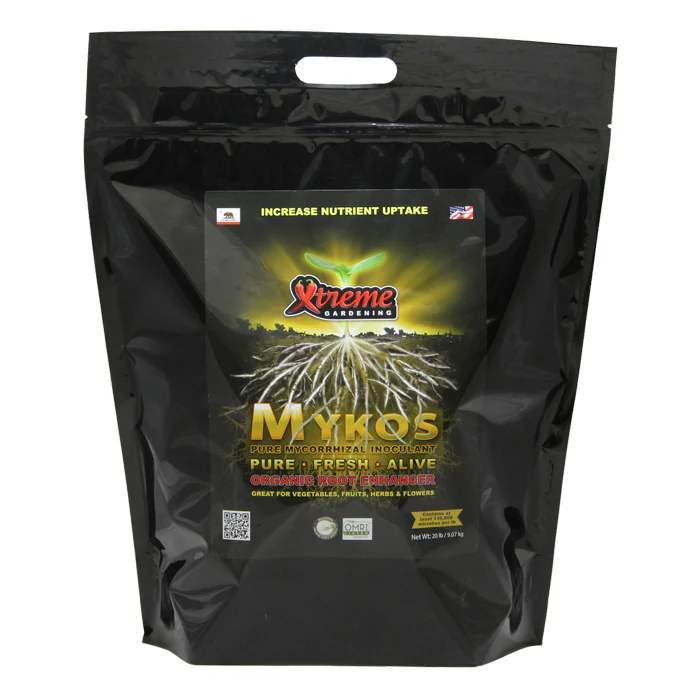
When you combine a fresh batch of compost tea with something like Xtreme Gardening Mykos, you’re giving your garden the ultimate survival kit. The tea provides the immediate biological "kick," while the mycorrhizae build the long-term infrastructure for the rest of the season.
How to Brew the Perfect Batch (Without Making a Mess)
You don’t need a degree in biology to brew a great tea, but you do need the right tools. While you can DIY a bucket and an air stone, if you want professional-grade results, you’ll want a dedicated vortex brewer. These systems are designed to keep the water moving in a way that maximizes oxygenation, ensuring your microbes stay alive and happy.
1. Start with Clean Water
This is where most beginners fail. If you’re using tap water, the chlorine and chloramines designed to kill bacteria in your drinking water will also kill the beneficial microbes in your tea. It’s like trying to start a fire with a fire extinguisher.
Use something like Drops of Balance to mineralize and purify your water before you even think about adding compost.
2. The Food Source
Microbes need to eat to multiply. Most recipes call for unsulphured blackstrap molasses (for bacteria) or liquid kelp and fish hydrolysate (for fungi). Be careful not to overdo the sugar, too much molasses can lead to a bacterial explosion that uses up all the oxygen, making your tea go anaerobic (and trust us, you’ll know it by the smell).
3. Inoculate with the Good Stuff
Don't just rely on a handful of old dirt. Use a proven microbial inoculant like BAM! (Beneficial Adaptive Microbes). This ensures you are starting with a diverse range of species specifically chosen for plant health.

4. Let it Rip
Brew your tea for 24 to 48 hours. The water should look like a dark, frothy Guinness. If it smells earthy and sweet, you’ve nailed it. If it smells like a swamp or rotten eggs, throw it out: that’s a sign of "bad" anaerobic bacteria that can actually harm your plants.

Application: Root Drench vs. Foliar Spray
Once your tea is ready, you have two main ways to use it.
The Root Drench: This is the most common method. You simply pour the tea at the base of your plants. This is the best way to deliver mycorrhizae for plants and other soil-dwelling microbes directly to the root zone. It improves nutrient uptake and helps build that long-term soil health we talked about.
The Foliar Spray: This is the "secret weapon" for disease prevention. By spraying a diluted version of the tea directly onto the leaves, you create that protective microbial barrier. Just make sure to do this in the early morning or late evening. Spraying your leaves in the middle of a 90-degree afternoon is a great way to accidentally "cook" your plants via the magnifying effect of the water droplets.
Caution: Common Pitfalls to Avoid
While compost tea is generally very safe, there are a few things to keep in mind:
- Cleanliness is Godliness: After you’re done brewing, clean your compost tea brewer immediately. Biofilm (a slimy layer of bacteria) will build up on the pipes and air stones. If you leave it there, the "bad" bacteria will colonize it, and your next batch will be ruined before it even starts.
- Don't Store It: Compost tea is a living product. Once you turn off the air pump, the oxygen levels start to drop rapidly. Use your tea within 4-6 hours of finishing the brew. If you let it sit overnight without bubbles, it's basically just expensive swamp water.
- Quality In, Quality Out: Your tea is only as good as your starting material. If you use cheap, unfinished compost, you're not going to get the results you want. Stick to high-quality nutrients and amendments to ensure your "tea bags" are packed with the right stuff.
Building a Living Ecosystem Indoors
For the indoor crowd, you might think compost tea is only for "dirt" gardeners. That is absolutely not the case. Even if you’re running a hydroponic system, you can use microbial inoculants to keep your reservoir clean and your roots white.
In a sterile hydro setup, if a single pathogen gets in, it spreads like wildfire because there is no "good" bacteria to fight it off. By introducing beneficial microbes, you’re creating a balanced ecosystem that is much more forgiving of temperature swings or pH fluctuations.
If you're looking for a complete "one-and-done" solution to get started, we recommend a Nutrient and Microbial Inoculant Kit. It takes the guesswork out of the equation so you can focus on watching your plants explode with growth.
Summary: Give Your Garden a Fighting Chance
The summer heat is coming, whether you're ready or not. You can either spend the next three months struggling with yellowing leaves and pests, or you can give your garden the biological tools it needs to thrive.
By investing in a compost tea brewer, focusing on mycorrhizae for plants, and keeping your water clean with Drops of Balance, you’re not just growing plants: you’re managing an ecosystem.
Ready to start brewing? Check out our Grow Help section for more tips, or grab a bottle of BAM! today and see the difference a little "microbe kick" can make. Your garden will thank you (and you might actually get to spend some time by that pool instead of hovering over a wilting tomato plant).



Leave a comment
This site is protected by hCaptcha and the hCaptcha Privacy Policy and Terms of Service apply.