
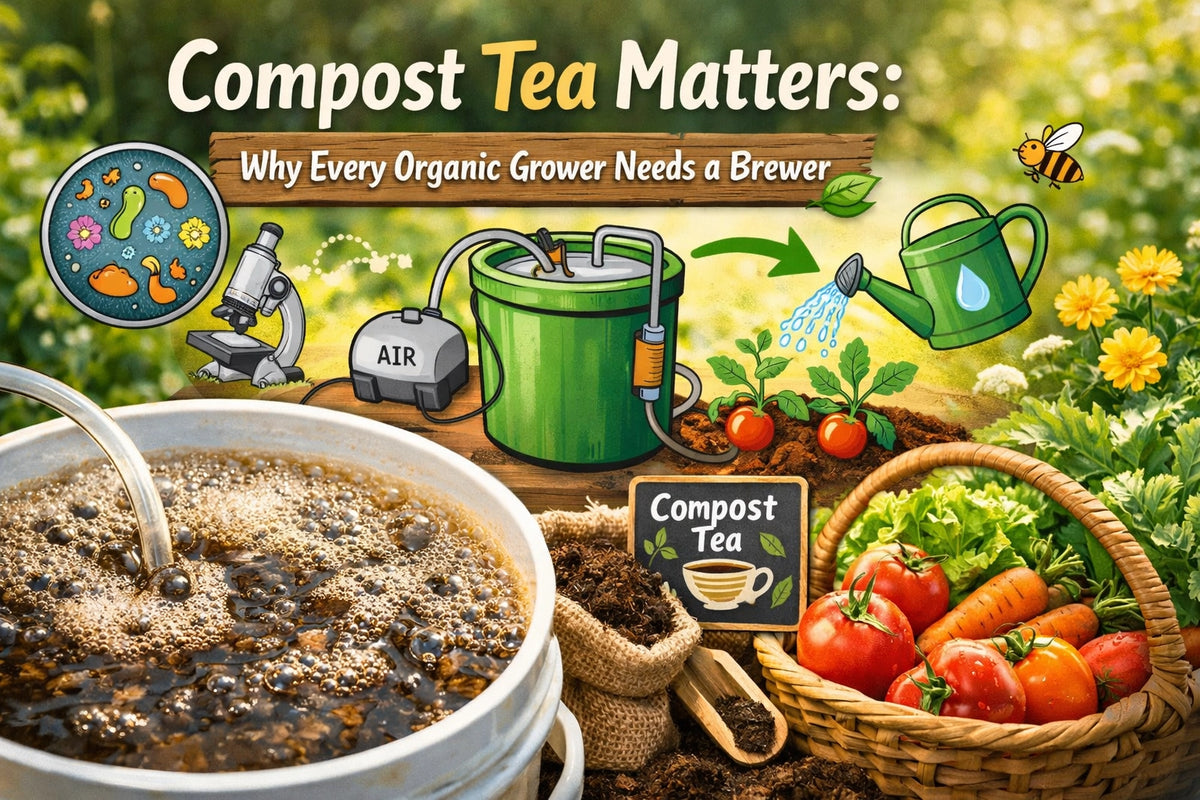
If you’ve been hanging around the organic gardening world for more than five minutes, you’ve probably heard someone raving about "compost tea." It sounds like something you’d serve at a very earthy garden party, but in reality, it is the single most powerful tool in an organic grower's arsenal.
The fact of the matter is, most people treat their plants like they’re in a hospital, hooked up to "IV drips" of synthetic nutrients. While that works for a while, it doesn’t build a legacy. If you want explosive growth, insane terpene profiles, and plants that can actually fight off pests on their own, you need to stop feeding the plant and start feeding the soil.
That’s where the compost tea brewer comes in. In this guide, we’re going to break down why compost tea is essential, why the "brewing" part isn't optional, and how you can use it to transform your garden from average to elite.
What Exactly is Compost Tea? (And Why Standard Compost Isn't Enough)
Think of standard compost as a massive library of biological information. It’s full of organic matter, minerals, and dormant microbes. It’s great stuff, but it takes a long time to break down and become "available" to your plants.
Compost tea is like taking that entire library, digitizing it, and putting it on a high-speed server. By "brewing" the compost, you are extracting the beneficial bacteria, fungi, protozoa, and nematodes into a liquid solution. But more importantly, you are multiplying them.
When you use a high-quality compost tea brewer, you aren't just making "brown water." You are creating a biological explosion. You’re taking a small population of microbes and turning them into a massive army, billions strong, ready to go to work in your root zone.
Why You Need a Compost Tea Brewer
You might be thinking, "Can't I just throw some compost in a bucket of water and stir it?"
Well, you could, but you probably shouldn't. That is what we call "extract." While extract has some benefits, it lacks the microbial density of a true aerated compost tea (ACT).
1. Oxygen is the Key to Life
The "good guys" in the soil: the microbes that help your plants grow: are aerobic. They need oxygen to thrive. If you just let compost sit in a bucket of water, the oxygen levels drop quickly. This creates an "anaerobic" environment, which is where the "bad guys" (pathogens and root rot) love to live.
A dedicated compost tea brewer uses an aeration system to keep oxygen levels high. This keeps the beneficial microbes alive and encourages them to reproduce at a staggering rate. Without consistent aeration, you’re basically brewing a soup of pathogens that could actually hurt your plants.
2. Bioavailability
When microbes eat organic matter, they "poop" out nutrients in a form that plants can immediately absorb. By using a brewer, you are essentially pre-digesting the nutrients. When that tea hits your soil or your leaves, the plant doesn't have to wait. It gets a direct hit of energy, minerals, and biological protection.
The Massive Benefits for Organic Growers
The science behind compost tea isn't just "hippie magic": it’s backed by serious data. Whether you are growing tomatoes in the backyard or high-value crops in an indoor gardening setup, the results are measurable.
Explosive Root Growth and Yield
Research has shown that plants treated with aerated compost tea can see significant increases in root mass. In one famous experiment on a lawn at Harvard, researchers found that combining compost tea with organic inputs resulted in twice the root growth and three to four times more nitrogen production naturally. More roots mean more nutrient uptake, which ultimately leads to bigger yields.
Disease and Pest Resistance
This is the big one. When you spray compost tea on your leaves (foliar feeding), the beneficial microbes occupy all the "parking spaces" on the leaf surface. When a disease spore like powdery mildew lands on the leaf, there’s nowhere for it to set up shop.
Studies have shown that specific compost tea mixes can achieve a 50% reduction in powdery mildew. It’s also been known to help suppress spider mites. Instead of reaching for harsh chemical pesticides, you are using a biological shield.
Improved Soil Structure
If you’re dealing with heavy clay or sandy soil, compost tea is a lifesaver. The microbes create "glues" (polysaccharides) that help bind soil particles together into aggregates. This improves soil tilth, allows for better oxygen penetration, and increases water retention by up to 30%.
The "Secret Sauce": Essential Additives
While high-quality compost or worm castings are the base of your tea, adding specific microbial inoculants can take your brew to the next level. At Perfect Gardens, we’re big fans of focusing on the "Soil Food Web."
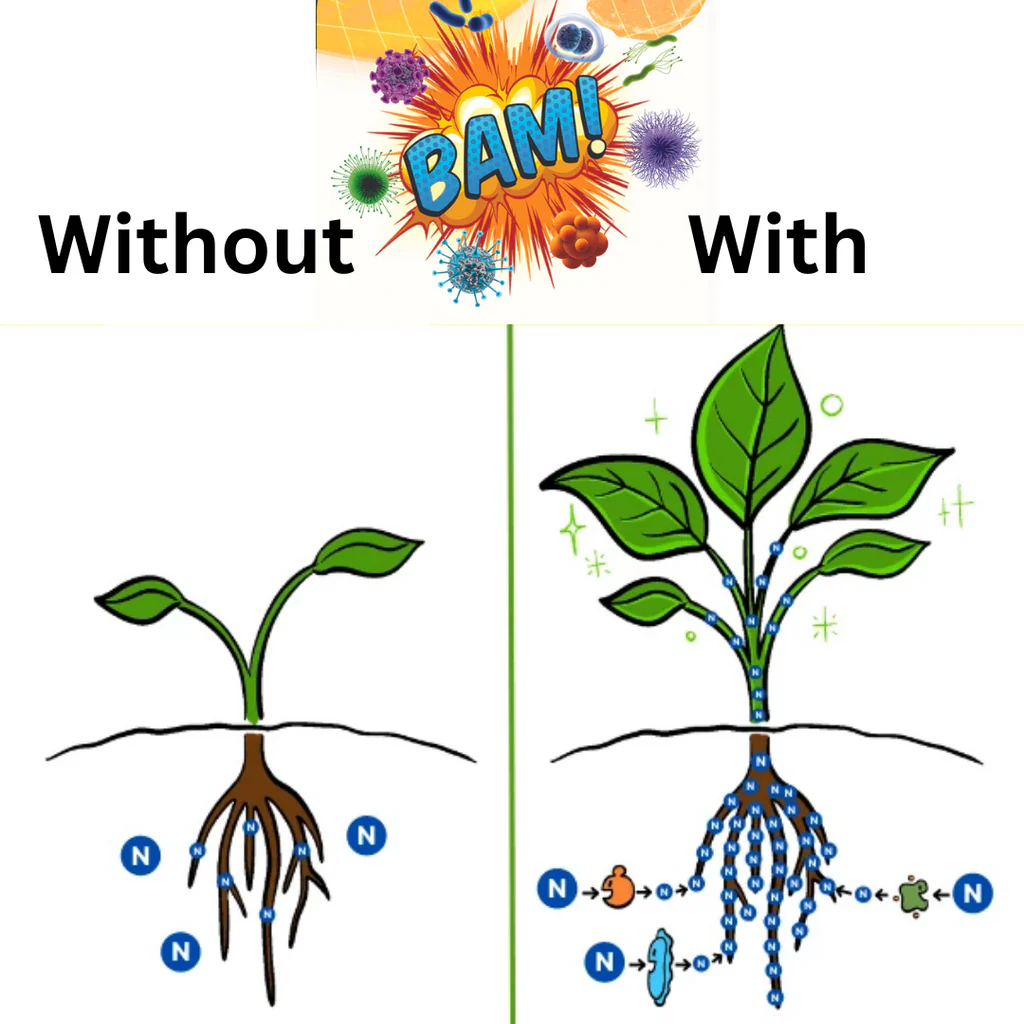
BAM! Microbial Inoculant
BAM! is a premium microbial inoculant that is perfect for boosting the biological activity in your tea. It’s designed to increase nutrient uptake and support vigorous growth from the inside out.

Xtreme Gardening Mykos
Mykos is a mycorrhizal fungus that creates a symbiotic relationship with your roots. It essentially acts as an extension of the root system, reaching out into the soil to grab nutrients and water that the plant couldn't reach on its own. Adding this to your regimen is a game changer.
How to Use Your Compost Tea
Once your compost tea brewer has finished its cycle (usually 24 to 48 hours), you need to act fast. Remember, those microbes are alive and they are breathing. Once you turn off the air, the oxygen levels will start to drop.
- Soil Drench: Pour the tea directly at the base of your plants. This is the best way to rebuild the soil food web and deliver minerals directly to the root zone.
- Foliar Spray: Strain the tea and put it in a sprayer. Apply it to the leaves of your plants early in the morning or just before the lights go off. This provides a biological barrier against pests and diseases.
- Dilution: Most teas can be used full strength, but if you’re on a budget, you can often dilute them up to 1:10 with de-chlorinated water and still see great results.

Common Pitfalls and Cautionary Tales
While brewing tea is relatively simple, there are a few ways to mess it up.
- The Chlorine Killer: If you use tap water straight from the hose, the chlorine or chloramine will kill the very microbes you’re trying to grow. Always use a filter or let your water sit out for 24 hours (with an air stone) to off-gas the chlorine before adding your compost.
- Dirty Equipment: This is the most common mistake. Biofilms (slimy gunk) can build up inside your brewer's tubes and stones. If you don't clean your compost tea brewer thoroughly after every use, you’ll be breeding pathogens in your next batch. Clean it like your harvest depends on it: because it does.
- The "Smell Test": Good compost tea should smell earthy, like a fresh forest floor. If it smells like rotten eggs, sewage, or something died in the bucket, do not put it on your plants. It has gone anaerobic, and it will do more harm than good.
Is a Brewer Worth the Investment?
The fact of the matter is, if you are serious about organic growing, a brewer isn't an "extra": it’s a necessity. It allows you to stretch your expensive organic inputs much further. Instead of buying bags and bags of compost, you can buy one high-quality bag and turn it into hundreds of gallons of liquid gold.
It reduces your reliance on chemical fertilizers, protects your plants from the environment, and creates a self-sustaining ecosystem in your grow room or garden.
If you have questions about which microbes to use or how to set up your first brew, check out our Grow Help Videos or reach out to us. We’ve helped thousands of growers transition to the "Army of Growers" who prioritize biology over bottles.
Final Thoughts
Compost tea is the bridge between "just growing" and "mastering the craft." By investing in a compost tea brewer, you are taking control of the biology in your garden. You’re not just a gardener anymore; you’re a micro-rancher, tending to the billions of tiny workers that make plant life possible.
Ready to get started? Check out our full range of nutrients and microbial kits to find the perfect starting point for your next brew. Happy growing!

Leave a comment
This site is protected by hCaptcha and the hCaptcha Privacy Policy and Terms of Service apply.