
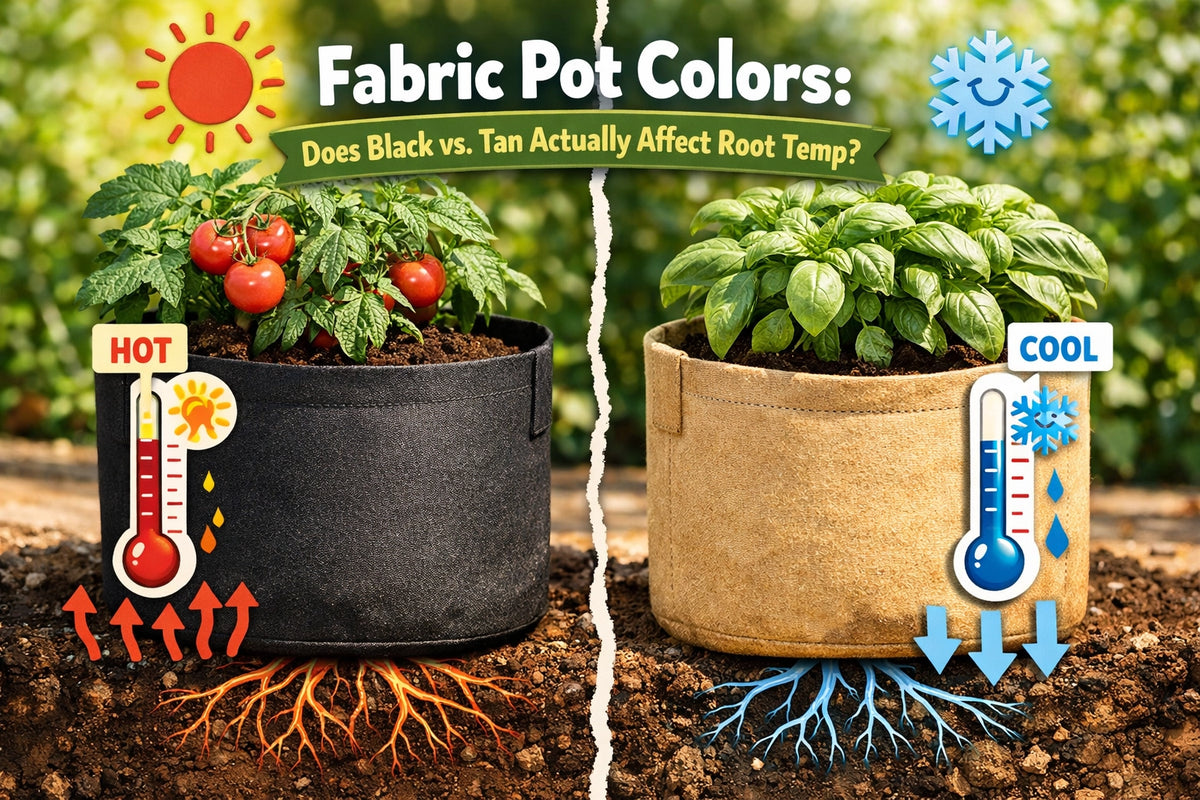
You've probably stood in the grow shop, staring at two identical fabric pots, one black, one tan, and wondered if the color actually matters. The short answer: yes, it does. But how much it matters depends entirely on where you're growing and what kind of environment you're working with.
Let's cut through the noise and figure out which color makes sense for your setup.
The Science Behind Pot Color and Heat
Here's the deal: darker colors absorb more light energy, while lighter colors reflect it. This isn't gardening theory: it's basic physics called the albedo effect. Black absorbs the most solar radiation, white reflects the most, and tan sits somewhere in the middle.
When sunlight hits a black fabric pot, that energy converts to heat. Your growing medium warms up. Your roots feel it. In some cases, this is helpful. In others, it's a recipe for root stress and stunted growth.
Research on container color consistently shows that white containers maintain significantly cooler root zones than black ones. Studies on plastic pots found that white "Light Pots" substantially outperformed black nursery pots in reducing substrate temperature, leading to better growth in heat-sensitive plants like blueberries and olives.
The same principle applies to fabric pots: but with an added advantage. Fabric pots breathe. They allow for air pruning and better oxygen exchange at the root zone. Combine that breathability with a lighter color, and you've got a thermal management advantage that plastic can't match.

Black Fabric Pots: When They Work (and When They Don't)
Black fabric pots dominate the market for one simple reason: they're the default. Most manufacturers produce them because they hide dirt, staining, and algae buildup better than lighter colors. From a visual standpoint, they look cleaner longer.
When black pots make sense:
- Indoor grows with climate control – If you're running a sealed room with AC and consistent temps, the heat absorption issue is minimal. Your HVAC system compensates.
- Cold climates or basements – Growing in a chilly basement or unheated greenhouse? That extra warmth from black pots can actually boost root activity and growth rates.
- Winter growing – If you're running a winter grow and struggling to keep root zones warm, black pots can passively collect and hold heat from your grow lights.
When black pots become a problem:
- Outdoor summer grows – Direct sunlight on black fabric can push root zone temps well into the danger zone (above 80°F). Your roots literally cook.
- Greenhouse growing – Even with ventilation, greenhouses trap heat. Black pots amplify the problem.
- Hot grow rooms – If your room already runs warm, black pots make temperature management harder.
The fact of the matter is this: black fabric pots are versatile, but they're not universally ideal. You need to match the color to your environment.
Tan Fabric Pots: The Middle Ground
Tan (or light brown) fabric pots offer a compromise. They don't absorb as much heat as black, but they're also not as reflective as white. They hide staining better than white pots, while still providing some thermal relief compared to black.
Tan pots work well for:
- Outdoor growers in moderate climates – If you're not dealing with extreme heat, tan pots provide enough heat reduction without going full white.
- Greenhouse setups with partial shade – Tan pots can handle some sun exposure without overheating as quickly as black.
- Growers who want lower maintenance – Tan hides mineral buildup, salt staining, and algae better than white, while still offering cooler root zones than black.
Here's the reality: tan pots won't perform as well as white pots in extreme heat, but they'll outperform black pots in most scenarios. If you're growing outdoors and aesthetics matter to you, tan is the practical choice.

Indoor vs. Outdoor: Which Color for Your Setup?
The environment matters more than the color itself. Let's break this down by growing situation.
Indoor Growers
If you're growing indoors with climate control, black pots are usually fine. Your lights provide heat, but your AC or ventilation keeps things in check. The main consideration is whether your room runs hot. If you're constantly battling high temps, switching to tan or white pots can reduce your cooling costs and keep your roots happier.
One exception: if you're using high-intensity LEDs or HPS lights without sufficient ventilation, black pots directly under the lights can still get too warm. Feel the sides of your pots mid-cycle. If they're hot to the touch, you've got a problem.
Outdoor Growers
Outdoor growers have a different calculation. Direct sunlight changes everything. A black fabric pot sitting in full sun can reach surface temperatures 20–30°F higher than a tan or white pot in the same conditions.
For hot climates (Southern states, desert regions): Use tan or white pots. Period. Your roots will thank you. Cooler root zones mean better nutrient uptake, less stress, and healthier plants.
For cooler climates (Northern states, high altitude): Black pots can actually give you an edge. The extra warmth extends your growing season and keeps roots active during cooler nights.
Greenhouse Growers
Greenhouses are tricky because they trap heat but also benefit from passive solar warming. If your greenhouse gets above 85°F regularly, go with tan or white pots. If you're in a cooler region and your greenhouse struggles to stay warm, black pots help.
Grassroots Fabric Pots: The Premium Option
When we talk about fabric pots, Grassroots sets the standard. These aren't your bargain-bin fabric pots that fall apart after one season. Grassroots pots use a proprietary fabric blend that's thicker, more durable, and better at promoting air pruning than most competitors.
They offer both black and tan options, and the tan pots use a natural, UV-resistant fabric that holds up under intense sunlight. If you're serious about fabric pots and plan to reuse them season after season, Grassroots is worth the investment.
Their raised bed-style fabric pots (like the tan model in our inventory) are particularly useful for outdoor growers who want the benefits of fabric with the structure of a traditional raised bed. The tan color keeps root temps down, while the durable construction handles years of use.

Practical Recommendations Based on Your Setup
Let's cut to the chase. Here's what you should actually do:
1. Outdoor growers in hot climates: Use tan or white fabric pots. The temperature difference is real and measurable. Your plants will grow faster, and you'll deal with fewer heat-related issues.
2. Indoor growers with climate control: Black pots are fine. Save the money. Focus on dialing in your environment instead of worrying about pot color.
3. Cold climate or winter growers: Black pots give you a passive heat advantage. Use them.
4. Greenhouse growers: Tan is your best bet unless you're in a cold region. Test your temps mid-summer before committing to a full run of black pots.
5. Growers who reuse pots: Go with tan. They age better visually and functionally. Black pots show wear faster and degrade under UV exposure more noticeably.
What About White Pots?
You might be wondering why we haven't focused more on white fabric pots. Here's the truth: white pots offer the best thermal performance, but they're a maintenance nightmare. They stain easily, show every bit of algae and mineral buildup, and look rough after one season.
Unless you're dealing with extreme heat and have no other option, tan pots give you 80% of the benefit with far less hassle.
The Bottom Line
Pot color affects root temperature. That's not up for debate. The question is whether it matters enough in your setup to change your buying decision.
If you're growing outdoors in summer heat, the answer is a clear yes. Switch to tan or lighter-colored pots. If you're growing indoors with good climate control, it's probably not worth overthinking.
The safest bet for most growers: Go with tan fabric pots. They split the difference, age well, and work in a wider range of conditions than black or white. Brands like Grassroots offer durable, UV-resistant tan options that'll last multiple seasons without performance degradation.
At the end of the day, your environment matters more than your pot color: but if you're already dialing in temperature, light, and nutrients, pot color is one more variable you can optimize. And in gardening, every little edge adds up.

Leave a comment
This site is protected by hCaptcha and the hCaptcha Privacy Policy and Terms of Service apply.