
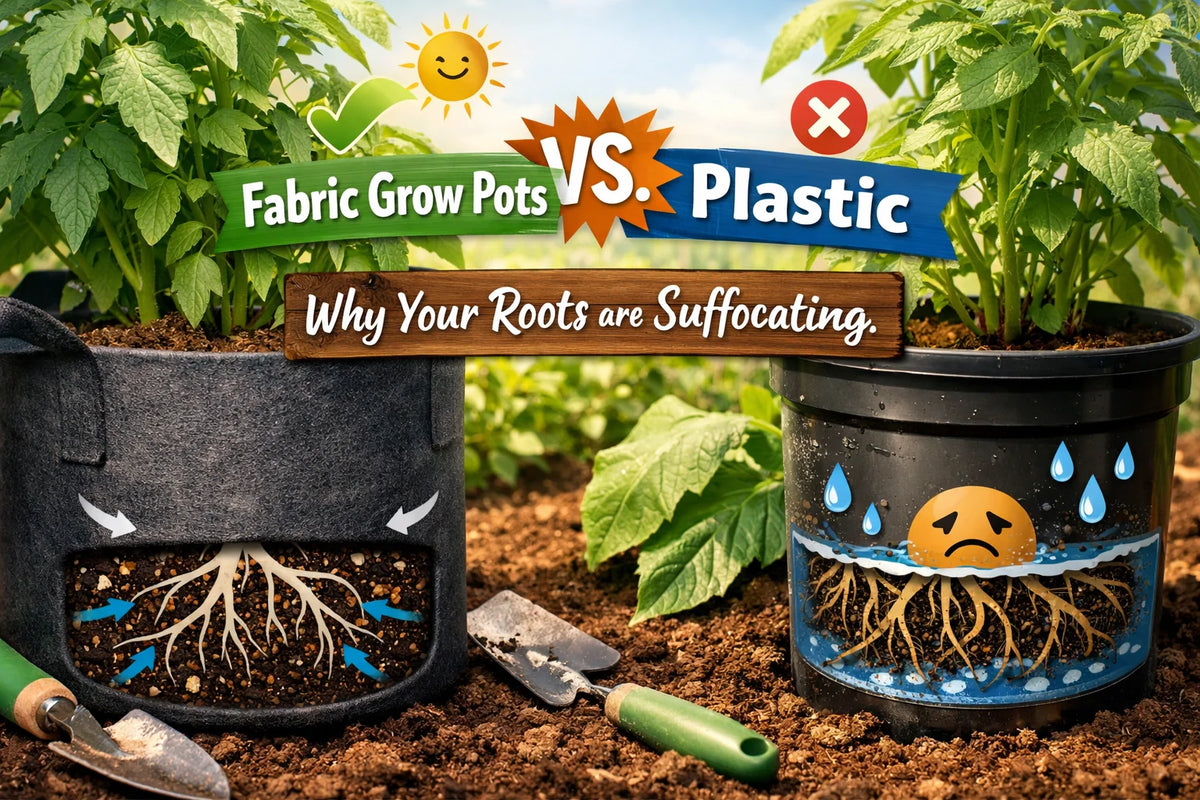
If you've ever pulled a plant out of a plastic pot and seen a tangled mess of roots circling the bottom like a bird's nest, you've witnessed root suffocation in action. Those circling roots aren't just ugly: they're a sign your plant has been slowly strangling itself, cutting off nutrient uptake and limiting growth potential.
The fabric pot revolution promised to fix this. But like most things in growing, the reality is more nuanced than the marketing suggests. Let's break down what's actually happening at the root level and whether fabric pots are worth the hype: or just another expense that creates new problems.
The Oxygen Problem Nobody Talks About
Here's the core issue: roots need oxygen to function. Not just a little: they need constant access to breathe and process nutrients. In a plastic pot, air can only penetrate through the top layer of soil. The sides and bottom are sealed off completely.
This forces roots to do something counterintuitive: they grow toward the edges of the pot searching for oxygen. When they hit the plastic wall, they don't stop. They keep growing along the edge, circling around and around, creating that characteristic root-bound spiral pattern.
These circling roots aren't just wasting energy. They're actively choking each other out, reducing the overall root mass that can actually feed your plant. Worse, when you transplant a root-bound plant, those circling roots often continue their pattern even in new soil, never properly spreading out to access available nutrients.

How Air Pruning Actually Works
Fabric pots solve the oxygen problem through a mechanism called air pruning. The concept is elegantly simple: when a root grows through the soil and reaches the fabric wall, it encounters air and drier conditions. Instead of continuing to grow along the wall, the root tip dries out and stops.
This isn't killing the root: it's triggering a response. When the growing tip is air-pruned, the root branches back into the pot, creating lateral growth instead of length. The result is a denser, more fibrous root network distributed throughout the entire pot volume.
More importantly, that fabric wall allows air exchange through the entire root zone, not just the top. Oxygen can penetrate from the sides, creating an environment where roots can develop throughout the pot without competing for air access. This is why plants in fabric pots often develop noticeably healthier root systems compared to identical plants in plastic.
The air circulation also creates a secondary benefit: temperature regulation. The evaporative cooling effect through the fabric walls keeps root zones cooler in summer heat and provides some insulation during colder periods.
The Water Management Trade-Off
Here's where fabric pots stop being a universal solution and become a choice with real consequences.
That same breathability that provides oxygen and air pruning also means water evaporates through the sides of the pot. Not just a little faster: significantly faster. In hot weather or dry indoor environments, fabric pots can dry out twice as fast as plastic equivalents.
For some growers, this is actually beneficial. If you're running coco coir or another fast-draining medium, the increased wet-dry cycle can promote root growth and prevent overwatering issues. But it demands attention. Miss a watering day in summer, and you might come back to severely wilted plants.
There's another issue most people don't realize until they've used fabric pots for a season: the outer 1-2 inches of soil becomes too dry for productive root growth. The constant air exposure dries this zone out, making it essentially dead space. In practical terms, a 5-gallon fabric pot only provides about 3-3.5 gallons of usable root space. That's a 30-56% reduction in effective growing volume depending on pot size and environmental conditions.
Longevity and Real-World Costs
Plastic pots are nearly indestructible. A quality plastic pot will last decades with minimal care. You can clean them, sterilize them, throw them around, and they'll keep working season after season.
Fabric pots typically last 2-4 seasons before the fabric degrades, especially if you're using organic nutrients that promote microbial growth in the material. The fabric breaks down, develops weak spots, and eventually tears. Some growers report getting more life out of premium brands, but even the best fabric pots are consumables, not permanent equipment.
The upfront cost of fabric pots is usually lower than quality plastic, which makes them attractive for first-time setups. But when you factor in replacement every few years, the cost advantage disappears. You're essentially choosing between higher upfront investment or recurring expenses.
When Plastic Actually Makes Sense
Despite all the advantages of fabric pots, plastic still has legitimate use cases.
For hydroponic systems: Fabric pots are impractical for most hydroponic setups. You need a sealed container for water-based growing methods.
For automated watering: If you're running drip irrigation or automated watering systems, the unpredictable water requirements of fabric pots create complications. Plastic's consistent watering needs are easier to automate.
For outdoor growing in humid climates: If you're growing outdoors in areas with high humidity and regular rainfall, the faster drying of fabric pots is less critical, but the durability of plastic becomes more valuable when pots are exposed to UV and weather year-round.
For propagation and seedlings: Small plastic containers remain the standard for seed starting because they're easier to sterilize between uses and provide more consistent moisture levels for germination.
Making the Choice for Your Setup
The decision between fabric and plastic isn't about which is objectively better: it's about which problems you'd rather deal with.
Choose fabric pots if:
- You're growing in soil or coco coir
- You're able to check plants daily and adjust watering
- Root health is a priority (which it should be)
- You're willing to replace pots every few seasons
- You're dealing with heat issues in your root zone
Stick with plastic if:
- You need consistent, predictable watering schedules
- You're running hydroponic systems
- You want containers that last indefinitely
- You have periods where you can't monitor plants daily
- You're propagating seeds or cuttings
For most soil growers with the time to manage watering properly, fabric pots are worth it. The improvement in root health translates directly to healthier plants and better yields. But it's not a magic solution: it's a trade-off that requires adjustment to your growing routine.

Practical Recommendations
If you're switching to fabric pots, don't do it mid-season or with your entire garden at once. Start with a few pots to learn how they behave in your specific environment. Different growing spaces, media types, and climate conditions will affect how quickly they dry out.
Size up. Because of that dry outer zone, a 5-gallon fabric pot performs more like a 3-gallon plastic pot in terms of usable volume. If you normally use 3-gallon plastic containers, consider 5-gallon fabric versions.
Set up a routine. Fabric pots reward consistency. Water on a schedule based on observation, not guessing. Stick your finger in the soil daily until you learn the pattern: fabric pots are less forgiving of "I'll water tomorrow" decisions.
Consider your growing medium carefully. Peat-based soils can become difficult to rewet once they dry out in fabric pots. Coco coir or soil mixes with better water retention properties work better with the increased evaporation.
The bottom line: fabric pots solve a real problem with root development, but they create a new requirement for more frequent watering. Whether that trade-off makes sense depends entirely on your growing style, environment, and how much attention you can give your plants. Neither option is wrong; they're just different tools for different situations.


Leave a comment
This site is protected by hCaptcha and the hCaptcha Privacy Policy and Terms of Service apply.