
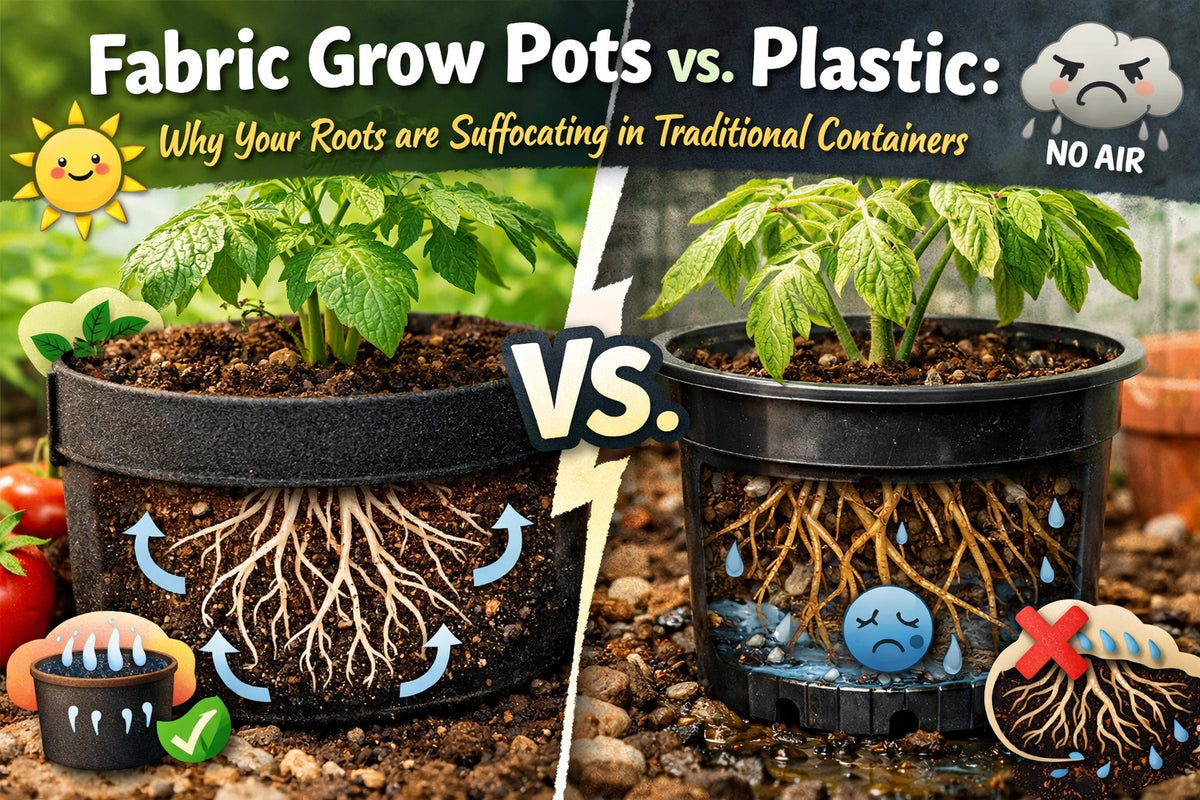
If you've been growing in plastic pots your entire life, you might not realize your plants are slowly suffocating. It's not your fault, traditional plastic containers have been the standard for decades. But here's the thing: just because something's been done a certain way for a long time doesn't mean it's the best way.
The roots of your plants need three things to thrive: water, nutrients, and oxygen. Most growers focus on the first two and completely forget about the third. That's where fabric grow pots come in, and why they're changing the game for anyone serious about plant health.
The Plastic Pot Problem: Why Your Roots Can't Breathe
Traditional plastic containers create what I call a "root prison." The solid walls block air circulation, which means oxygen is only available at the very top layer of your growing medium. Your roots growing deeper in the pot? They're essentially gasping for air.
This oxygen deprivation limits root development and overall plant health. But it gets worse. When roots reach the edge of a plastic pot, they don't just stop growing, they start circling around the container's perimeter. This phenomenon, called "root circling" or "pot-bound," causes roots to essentially strangle themselves. The root mass becomes a tangled mess that chokes out new growth and creates weak spots in your plant's foundation.

Plastic pots also retain moisture significantly longer than fabric alternatives. While this might sound like a benefit (less watering, right?), it's actually a major problem. The most common mistake in growing, especially for beginners, is overwatering. Plastic containers make this mistake even easier to make because excess water has nowhere to go. It sits at the bottom of the pot, creating anaerobic conditions that lead to root rot, fungal issues, and ultimately plant death.
I've seen growers lose entire crops to root rot simply because their plastic pots held water too efficiently. It's frustrating because it's completely preventable with the right container choice.
How Fabric Grow Pots Actually Work
Fabric pots solve the oxygen problem through breathability. The permeable material allows air to move freely throughout your growing medium, not just at the surface. This constant air exchange means your roots get consistent oxygen delivery from top to bottom.
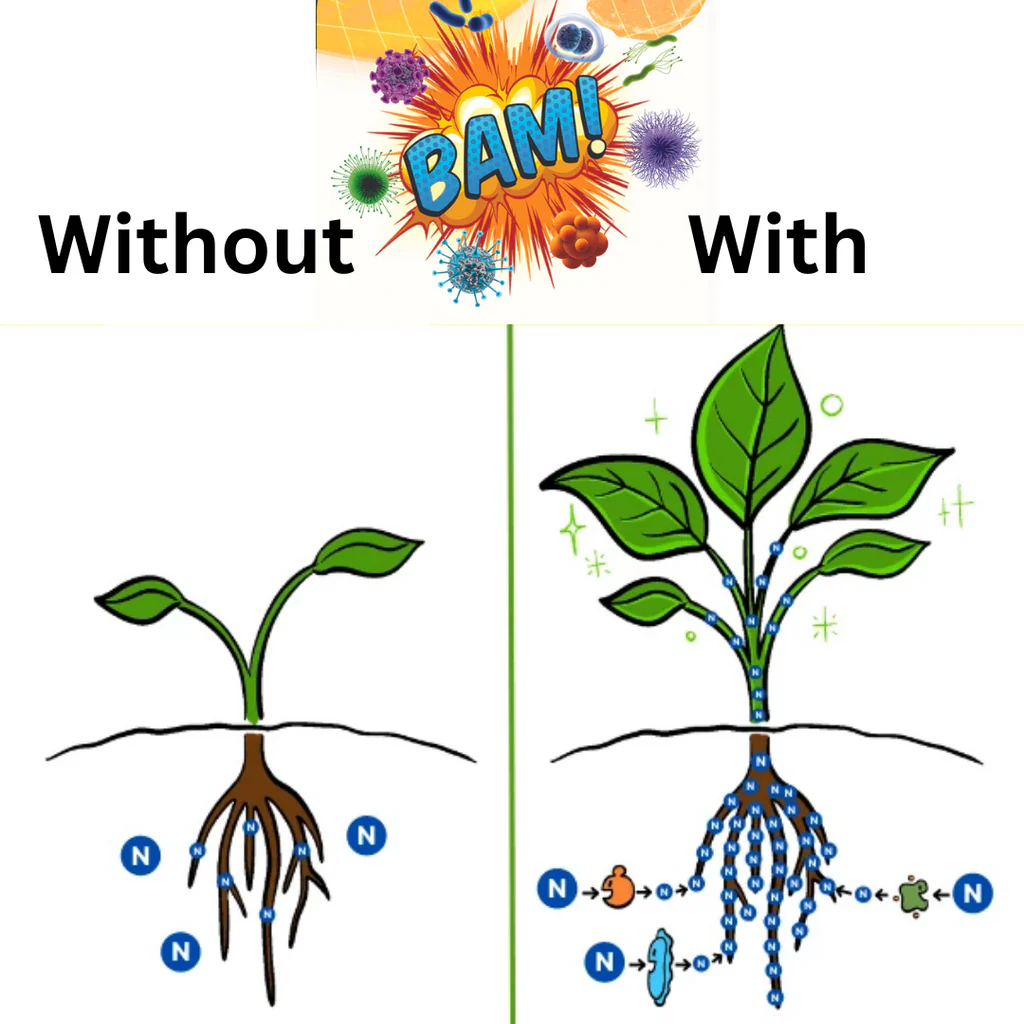
But the real magic happens at the container walls. When roots reach the fabric edge, they encounter air instead of a solid barrier. This triggers a process called "air pruning", the root tip naturally dries out and stops growing. This might sound bad, but it's actually exactly what you want.
Air pruning forces your plant to develop new lateral roots further back along the main root. Instead of circling, your plant creates a dense, fibrous root network that spreads throughout the entire container. More roots mean better nutrient uptake, stronger structural support, and healthier overall growth. Plants in fabric pots typically develop root systems that are 30-40% more efficient than those in plastic containers.
The breathable structure also acts as a natural drainage system. Excess water wicks through the fabric walls instead of pooling at the bottom. This makes it nearly impossible to overwater your plants, a huge advantage if you're still dialing in your watering routine. The faster drainage also means better oxygen availability because waterlogged soil displaces air pockets that roots need.
Temperature Control: The Often-Overlooked Advantage
Here's something most growers don't think about until it's too late: container temperature. Plastic pots insulate heat, which sounds good until you realize that means they also trap excess heat during warm periods. In a grow tent under lights, plastic containers can get significantly hotter than the ambient air temperature, potentially cooking your roots.
Fabric pots breathe, which means they regulate temperature more effectively. They heat up faster when it's cold (getting your root zone active quicker in the morning) but also cool down faster when it's hot. This temperature modulation creates a more stable root environment throughout the day-night cycle.
However, and this is important, that same breathability means fabric pots can cool too much in cold environments. If you're growing in an unheated space during winter, plastic might actually be the better choice for maintaining root zone warmth. Know your environment before making the switch.
The Practical Trade-Offs You Need to Consider

Let's be realistic about what you're getting into with fabric grow pots. Yes, they're better for root health, but they come with their own set of considerations.
Watering Frequency: Because fabric pots drain and breathe so well, they dry out significantly faster than plastic. You'll water more often, sometimes twice as frequently depending on your environment. For some growers, this is a deal-breaker. For others, it's a built-in safeguard against overwatering. If you travel frequently or can't check your plants daily, this might be a problem.
Durability: Quality fabric pots like those from Grassroots last 2-3 growing seasons with proper care. Plastic pots can last indefinitely if you don't crack them. That said, fabric pots fold flat for storage, a huge space-saver if you're working with limited room. You can store 20 collapsed fabric pots in the space two plastic containers take up.

Cost: Fabric grow pots cost more upfront. A quality 5-gallon fabric pot runs $8-12, while a plastic equivalent might be $2-4. However, the increased yield and plant health often offset this cost difference within a single growing season. You're not just buying a container, you're investing in a healthier root system that produces better results.
Maintenance: Fabric pots require cleaning between grows. You can't just rinse them out like plastic. Most growers either hand-wash them with mild soap or run them through a washing machine without detergent. Yes, it's extra work. No, it's not that bad. Takes maybe 10 minutes per pot.
When to Choose Plastic (Yes, Really)
Despite everything I've said about fabric pots, there are legitimate situations where plastic makes more sense.
If you're growing plants that prefer consistently moist soil: certain vegetables or moisture-loving tropicals: plastic's water retention is actually beneficial. Fabric pots would dry out too quickly for these species.
If budget is your primary concern and you need 50+ containers for a large operation, plastic's lower cost makes it the practical choice. Not everyone can afford to outfit an entire greenhouse with premium fabric pots.
If you're growing in an outdoor environment with extreme cold, plastic's insulation properties help protect root zones from freezing temperatures better than fabric.
For starting seeds or propagating clones, plastic trays and small pots are actually preferable. The moisture retention helps delicate young roots establish before you transplant into larger fabric containers.
Making the Switch: What to Expect
If you decide to transition from plastic to fabric grow pots, here's what the adjustment period looks like:
Your first grow in fabric will require you to relearn your watering schedule. What worked in plastic won't work in fabric. Start by checking soil moisture more frequently: stick your finger 2 inches into the medium. If it's dry, water. You'll develop a feel for the new rhythm within 2-3 weeks.
You might see some leaf drooping initially as you dial in watering. This is normal. You're not killing your plants: you're learning their new needs.
Within 3-4 weeks, you should notice visibly healthier growth. Leaves will be darker green, stems thicker, and overall plant vigor will increase. By harvest, the difference in root development will be obvious when you compare against your previous plastic grows.
The fact of the matter is that fabric pots require more attention and a slightly different approach than plastic. But for growers who want optimal root health and are willing to adjust their routine, the benefits far outweigh the learning curve.
The Bottom Line
For most growers focused on plant health and maximum yields, fabric grow pots are the clear winner. The air pruning effect creates stronger, more efficient root systems. The improved drainage prevents the number-one beginner mistake: overwatering. The temperature regulation keeps root zones in the optimal range for growth.
Are they perfect? No. You'll water more frequently and spend a bit more upfront. But the improvement in plant health and productivity makes fabric pots the better investment for anyone serious about growing quality plants.
If you're ready to give your roots the oxygen they've been missing, check out our selection of fabric pots designed specifically for serious growers who want results, not excuses.


Leave a comment
This site is protected by hCaptcha and the hCaptcha Privacy Policy and Terms of Service apply.