
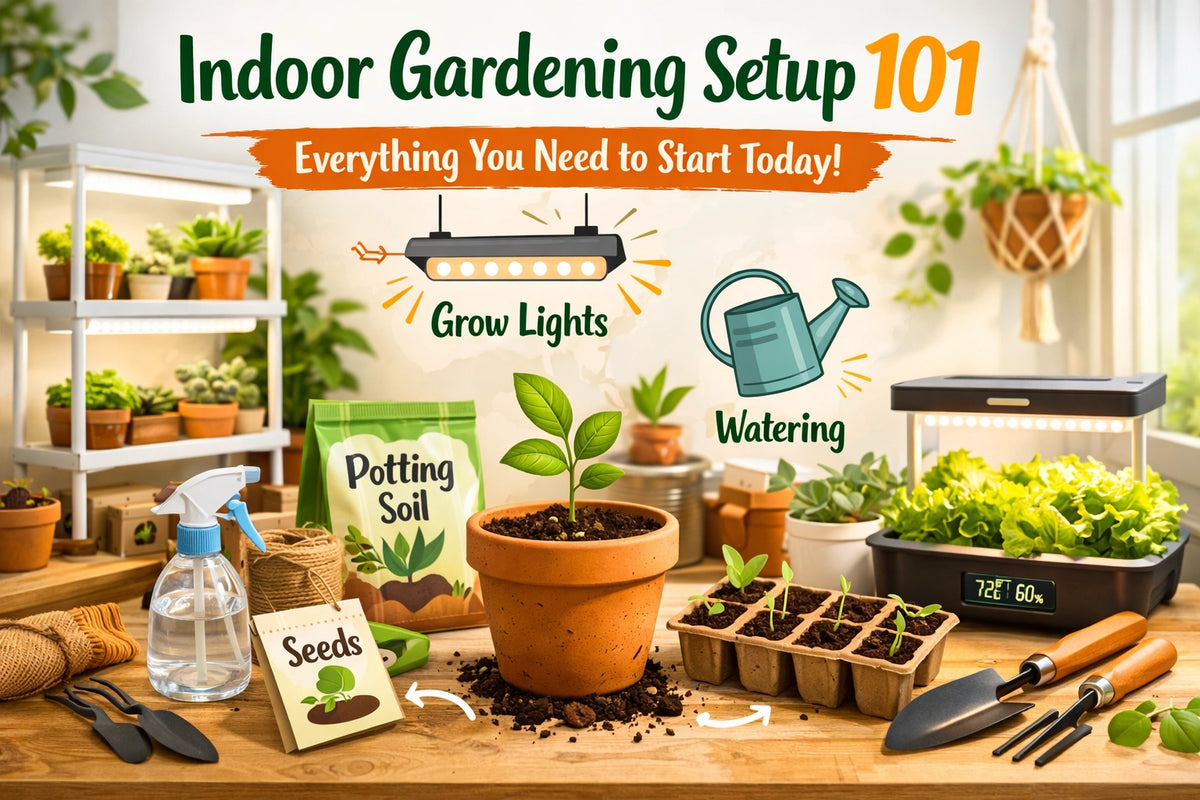
If you’ve been thinking about starting an indoor garden, there has never been a better time to jump in. Maybe you want to grow your own organic salads, or perhaps you’re looking to cultivate specific medicinal herbs. Whatever the reason, the barrier to entry is lower than it used to be, but the "information overload" is higher.
The fact of the matter is that most beginners fail not because they lack a "green thumb," but because they lack a cohesive system. They buy a light here, a bag of dirt there, and some cheap plastic pots, and then wonder why their plants look sad three weeks later.
At Perfect Gardens, we believe in setting you up for success from day one. This guide will walk you through the essential components of a professional-grade indoor setup that actually works.
1. Defining Your Grow Space: The Tent Advantage
The first mistake most people make is trying to grow in an open room or on a windowsill. While a windowsill is fine for a small pot of basil, it’s nearly impossible to control the environment for high-yield plants.
We almost always recommend a grow tent for beginners. A tent allows you to control the "climate" (temperature and humidity) and keeps your light concentrated on the plants rather than leaking out into your living room.

When picking a tent, look for thickness and durability. The AC Infinity tents are a gold standard because they use high-density 2000D canvas. This prevents light leaks and keeps the internal environment stable. For most beginners, a 2'x2' or a 4'x4' tent is the sweet spot. A 4'x4' tent can easily fit 8–10 plants, giving you plenty of room to experiment.
2. The "Sun" Factor: Choosing Quality Lighting
Lighting is the most expensive part of your setup, and it’s where most people try to cut corners. Don't do it. Cheap "blurple" lights from big-box websites often lack the spectrum and intensity required for plants to actually thrive.
If you want professional results, you need a full-spectrum LED. We’ve seen incredible results with KIND LED grow lights.
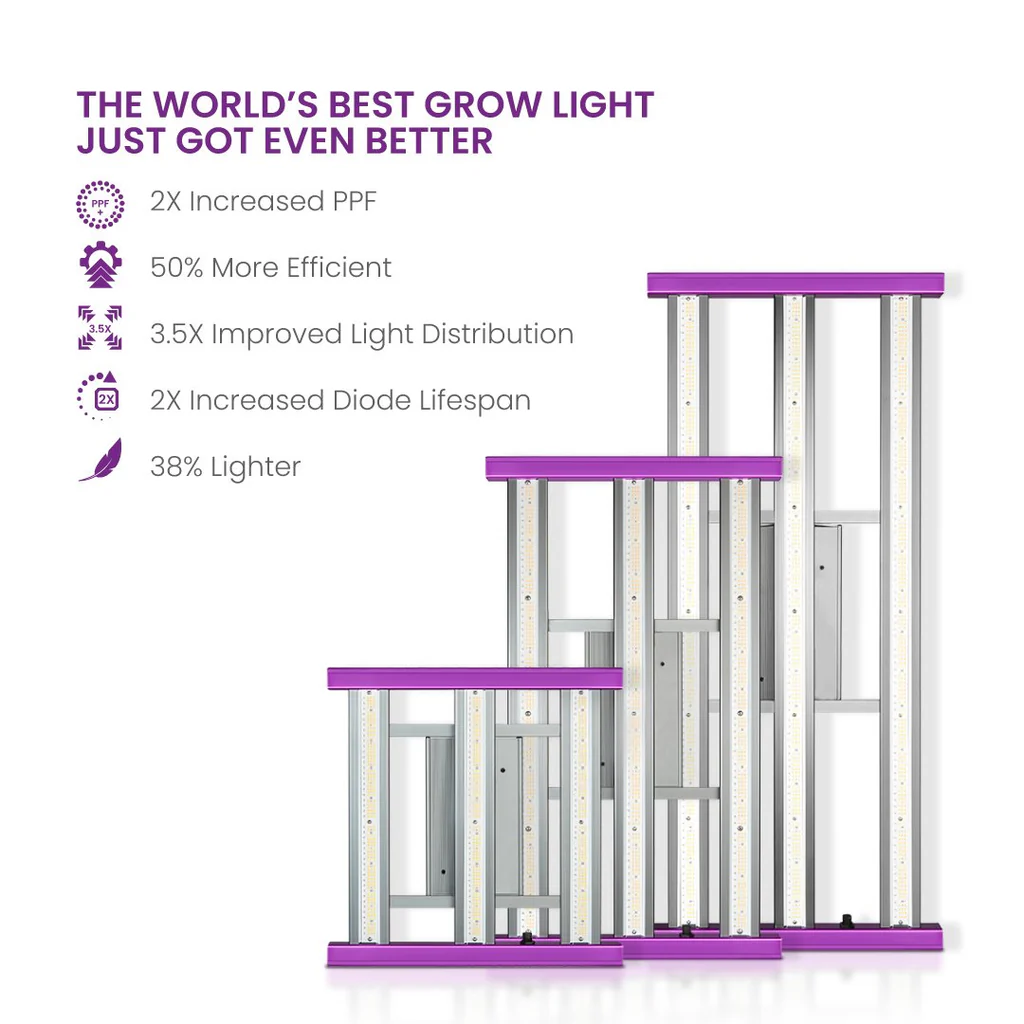
KIND LEDs are designed to mimic natural sunlight, offering a 2X increase in Photosynthetic Photon Flux (PPF). In plain English: it’s more "food" for your plants. They are about 50% more efficient than older lighting technologies, meaning you get more growth for less money on your electricity bill. When you use a light like this, you aren't just keeping a plant alive; you're pushing it to its maximum genetic potential.
3. The Foundation: Why Pots and Soil Matter
Most people grab the cheapest plastic pots they can find. This is a mistake. Plastic pots trap heat and can lead to "root circling," where the roots grow in a spiral around the edge of the pot, eventually choking the plant.
This is where Grassroots Fabric Pots changed the game.

Fabric pots allow the roots to "air prune." When a root hits the fabric side, it’s exposed to air and naturally stops growing, branching out into a more fibrous, healthy root system. The Grassroots fabric beds take it a step further with a moisture-retaining liner that prevents the edges from drying out too fast. If you’re serious about plant health, fabric is the only way to go.
For your growing medium, stay away from "garden soil" meant for the backyard. You need a high-quality potting mix or a coco-coir blend that offers excellent drainage. Indoors, drainage is your best friend.
4. Ventilation and Environment Control
Plants breathe just like we do. In a closed tent, they will quickly use up all the CO2 and moisture levels will spike, leading to mold and powdery mildew.
To prevent this, you need two things:
- An Inline Fan: This pulls old air out of the tent and brings fresh air in.
- Small Oscillating Fans: These move air around inside the tent, strengthening the stems of your plants and preventing "hot spots" of stagnant air.
Pro Tip: If you are worried about the smell of your garden, an inline fan paired with a carbon filter is non-negotiable. It scrubs the air before it leaves the tent, making your hobby virtually odorless to the outside world.
5. Nutrients and Microbes: Feeding the System
You can have the best lights in the world, but if your soil is "dead," your plants will struggle. In an indoor environment, the soil depletes its nutrients much faster than it would outside.
We recommend a two-pronged approach: high-quality nutrients and microbial inoculants.
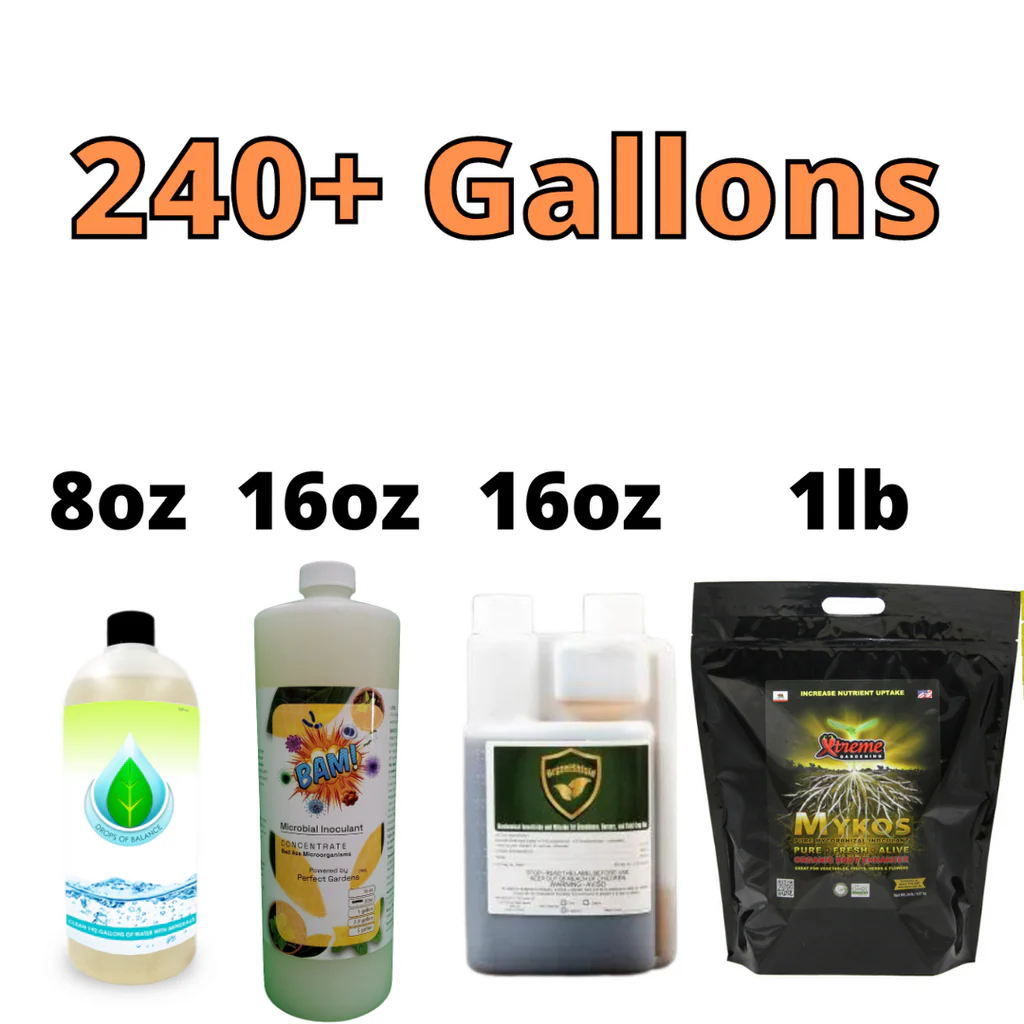
Think of microbes like probiotics for your plants. Products like BAM! Microbial Inoculant and Mykos mycorrhizae help the plant's roots absorb nutrients more efficiently. It builds a symbiotic relationship where the microbes break down minerals into a form the plant can actually eat. Without these, you're basically leaving free growth on the table. You can find these in our plant nutrients packages.
6. Automation: The Secret to Consistency
The biggest "plant killer" isn't bugs or bad luck: it's human error. Specifically, inconsistent watering. You either forget to water for three days, or you overcompensate and drown the roots.
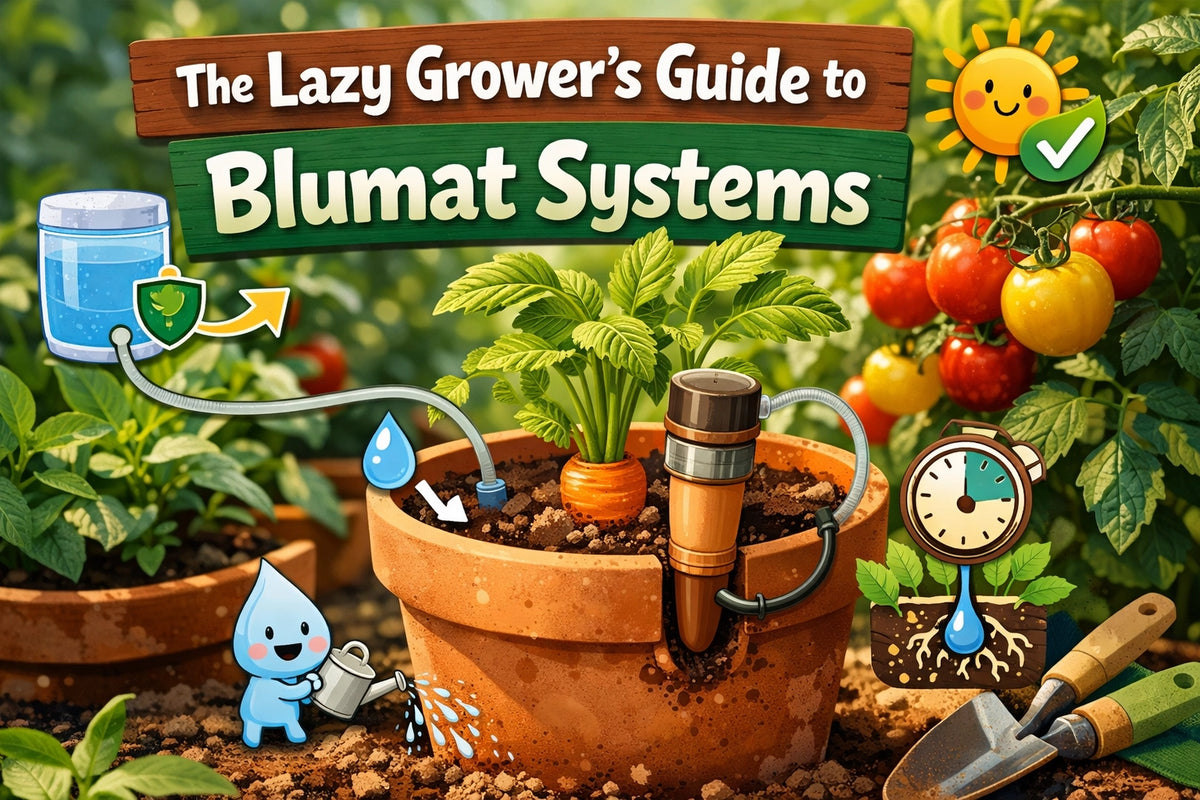
If you have a busy schedule, you need an automated watering system. We are huge fans of the Blumat Automatic Watering System.

Unlike electronic timers that water on a schedule regardless of how wet the soil is, Blumat systems use ceramic sensors that "feel" how thirsty the plant is. When the soil gets dry, the sensor opens and lets water through. When the soil is moist, it closes. It’s a gravity-fed system that requires no electricity, making it incredibly reliable.
Common Pitfalls for New Growers
Before you go out and buy your gear, keep these three "Cautions" in mind:
- Don't Over-Love Your Plants: Overwatering is the #1 cause of death for indoor plants. If the top inch of soil is still damp, leave it alone.
- Check Your Water Quality: If your tap water is very "hard" (full of minerals), it can cause nutrient lockout. Consider using a filter or letting your water sit out for 24 hours to off-gas chlorine. Check out our Personal Health section for more on water quality.
- Keep It Clean: An indoor garden is a controlled environment. If you bring in outside dirt or tools without cleaning them, you can introduce pests that will thrive in the perfect conditions of your tent.
Putting It All Together
Starting your first indoor garden doesn't have to be a guessing game. If you focus on the fundamentals: a solid tent, a high-quality light like a KIND LED, breathable containers like Grassroots pots, and a microbial-rich soil: you are already ahead of 90% of beginners.
The beauty of indoor gardening is that you are in total control. You aren't at the mercy of the rain or the seasons. You are the "Master of the Universe" inside that 4'x4' canvas box.
If you’re feeling overwhelmed or want to see these setups in action, check out our Grow Help Videos. We’ve spent years documenting what works (and what doesn't) so you don't have to learn the hard way.
Ready to start? You can browse our full collection of indoor gardening essentials or contact us if you have specific questions about your space. We're here to help you grow.

Leave a comment
This site is protected by hCaptcha and the hCaptcha Privacy Policy and Terms of Service apply.