

If you've ever killed a plant because you forgot to water it for three days straight, this one's for you. Automatic watering stakes aren't just for people going on vacation: they're for anyone who wants to grow without the daily commitment of hand-watering every single pot.
Blumat systems are gravity-fed, self-regulating watering devices that use ceramic sensors to detect soil moisture and deliver water exactly when your plants need it. No timers. No guessing. No coming home to crispy leaves because you got busy at work.
Let's break down how they work, why they're worth it, and what you need to know before setting one up.
What Exactly Are Blumat Systems?
Blumat automatic watering stakes are simple devices that consist of a porous ceramic cone connected to a water reservoir via tubing. The cone sits in your soil and "reads" the moisture level. When the soil dries out, the ceramic draws water from the reservoir through capillary action and releases it directly into the root zone.
Think of it like a plant babysitter that never takes a day off.
The system is entirely passive: no electricity, no pumps, no Wi-Fi connection required. You fill a reservoir (a bucket, a tank, whatever), connect the tubing, and the Blumats handle the rest. As long as there's water in the reservoir, your plants stay hydrated.

Why Blumats Beat Hand Watering (and Timers)
1. Consistent Moisture Levels
Plants don't like extreme swings. Letting soil dry out completely and then flooding it creates stress. Blumats maintain a steady moisture level right in the sweet spot: moist but not waterlogged. This consistency leads to healthier roots, faster growth, and fewer issues like nutrient lockout or root rot.
2. No More Forgetting to Water
This is the big one. Life happens. You get distracted, you work late, you go on a weekend trip. With Blumats, your plants keep getting watered whether you're there or not. It's the ultimate "set it and forget it" system for hobbyists who don't want their grow room to become a full-time job.
3. Saves Time
Hand-watering a dozen pots every other day adds up. If you're running 20+ plants, that's easily 30–45 minutes per session. Blumats cut that down to filling a reservoir once a week (or less, depending on your setup). Spend that time doing literally anything else.
4. Better Than Timers
Drip irrigation on a timer waters on a schedule, not based on actual plant needs. If it's hot one week and cool the next, your timer doesn't adjust. Blumats respond in real time to soil conditions, so you're not overwatering on cloudy days or underwatering during a heat wave.
How to Set Up a Blumat System (The Basics)
Setting up Blumats isn't complicated, but it does require a little patience the first time. Here's the process:
Step 1: Soak the Ceramic Cones
Before you install anything, soak the ceramic cones in water for at least 15 minutes. This primes the porous material so it can start sensing moisture right away. Skip this step and your system won't work properly.
Step 2: Fill Your Reservoir
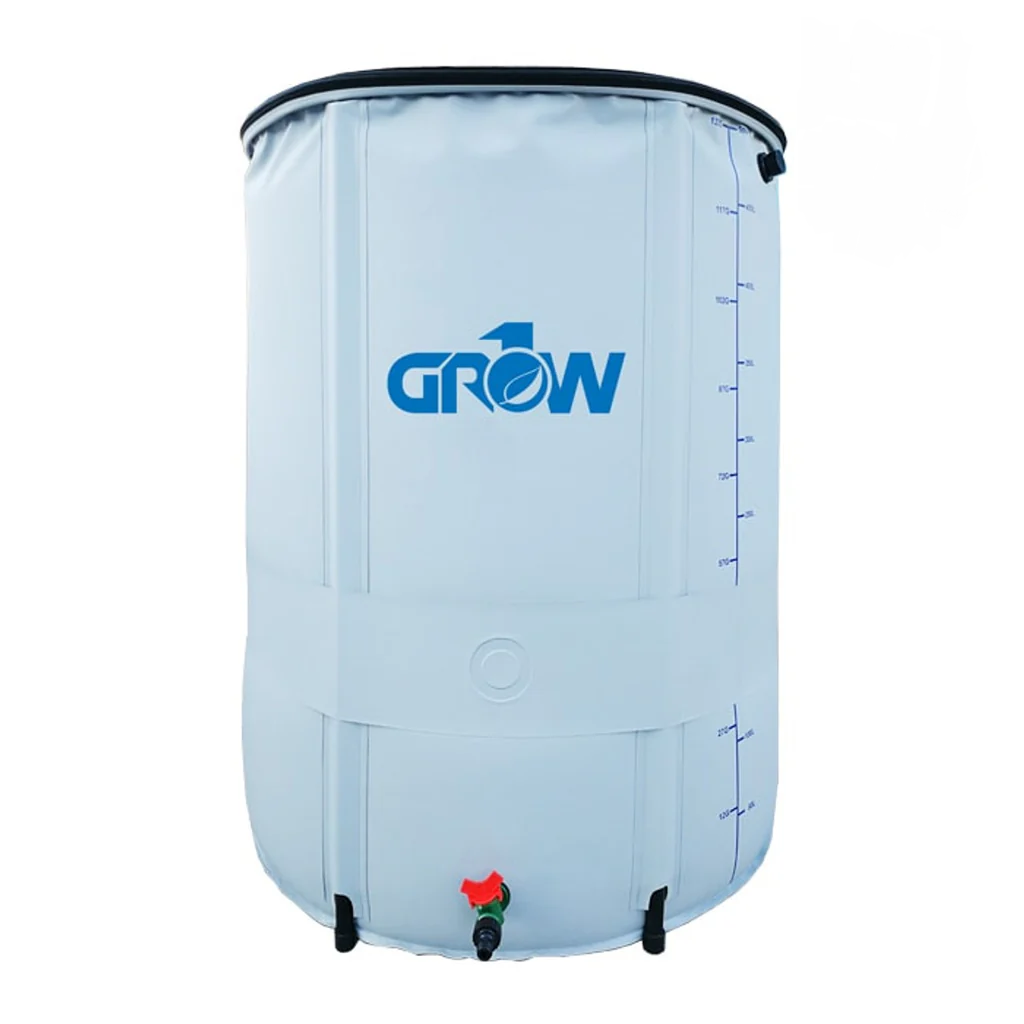
You'll need a water source positioned above your plants. Gravity does the work, so the higher your reservoir, the stronger the water pressure. Most growers use a 5-gallon bucket elevated on a shelf or a collapsible water tank. Make sure it's stable: you don't want 40 pounds of water tipping over.
Step 3: Connect the Tubing
Run tubing from your reservoir to each Blumat stake. If you're watering multiple plants, you'll use T-connectors to split the line. The tubing should be snug but not kinked. Air bubbles in the line will mess with the flow, so take your time here.
Step 4: Insert the Stakes
Push the ceramic cone into the soil about 2–3 inches deep, near the center of the pot. Don't jam it against the root ball. You want it close enough to sense moisture but not so close it gets clogged by roots.
Step 5: Adjust the Flow
Each Blumat has an adjustment screw on top. Turn it clockwise to reduce flow, counterclockwise to increase it. Start conservative: you can always add more water, but fixing an overwatered mess is a pain. Monitor your plants for the first few days and tweak as needed.
Common Pitfalls (and How to Avoid Them)
Air Bubbles in the Line
This is the number one issue. Air pockets block water flow and make the system act like it's broken. To prevent this, fill your reservoir slowly and "burp" the tubing by holding it upright and tapping it to release trapped air. If you're still getting bubbles, raise your reservoir higher to increase pressure.
Runaway Dripping
If a Blumat starts pouring water nonstop, it usually means the adjustment screw is too loose or the ceramic cone wasn't soaked properly. Tighten the screw a quarter-turn at a time until the dripping slows to a stop. Once the soil reaches the right moisture level, the system should regulate itself.
Clogged Ceramic
Over time, mineral buildup or algae can clog the porous ceramic. If a stake stops working, pull it out and soak it in a 50/50 vinegar and water solution for an hour. Rinse thoroughly before reinstalling.
Reservoir Running Dry
Blumats can't water if there's no water in the tank. Check your reservoir every few days, especially during hot weather or if you're running a lot of stakes. Some growers connect their reservoir to a garden hose with a float valve for automatic refills, but that's optional.

When Blumats Make the Most Sense
Indoor Grows with Multiple Pots
If you're running 10+ fabric pots in a tent, Blumats are a lifesaver. Instead of dragging a watering can around and trying not to spill on your floor, you fill one reservoir and walk away.
Raised Beds and Living Soil
Blumats work great in fabric raised beds where maintaining even moisture is critical for microbial activity. Pair them with a Grassroots fabric bed and you've got a low-maintenance living soil setup that practically runs itself.
Outdoor Gardens During Summer
If you're growing outdoors and tired of watering twice a day in July, Blumats take the pressure off. Just make sure your reservoir is big enough to handle the evaporation rate.
Vacations and Extended Absences
This is the obvious one. Going away for a week? No problem. As long as your reservoir has enough water, your plants won't know you're gone.
Blumats vs. Other Watering Methods
Blumats vs. Hand Watering
Hand watering gives you more control and lets you visually inspect each plant. But it's time-consuming and inconsistent. Blumats trade some of that hands-on control for automation and reliability.
Blumats vs. Drip Irrigation on Timers
Timers are cheaper upfront, but they don't respond to soil conditions. You'll end up overwatering or underwatering depending on the weather. Blumats self-regulate, which makes them more efficient in the long run.
Blumats vs. Hydroponic Systems
Hydroponics requires pumps, timers, and constant monitoring of pH and EC. Blumats are simpler and work in soil or soilless mixes. If you want automation without the complexity of a full hydroponic setup, Blumats are the middle ground.
What You'll Need to Get Started
A basic Blumat kit includes everything you need for 10–12 plants: ceramic stakes, tubing, T-connectors, and shut-off valves. You'll also need a reservoir: a 5-gallon bucket works fine for small setups, but larger grows might need a 15–20 gallon tank.
If you're running living soil with microbial inoculants, you can still use Blumats. Just make sure your reservoir water is treated properly. Products like Drops of Balance help mineralize and purify water before it hits your plants, which keeps your soil biology happy.
The Bottom Line
Blumat automatic watering stakes won't turn you into a master grower overnight, but they'll save you time, reduce stress, and keep your plants healthier by maintaining consistent moisture levels. They're not foolproof: you still need to check your reservoir and make occasional adjustments: but once dialed in, they're about as low-maintenance as watering gets.
If you're tired of hand-watering every day or you just want peace of mind when you're away from your grow, Blumats are worth the investment. Check out the selection at Perfect Gardens and get your setup dialed in before the busy season hits.


Leave a comment
This site is protected by hCaptcha and the hCaptcha Privacy Policy and Terms of Service apply.