
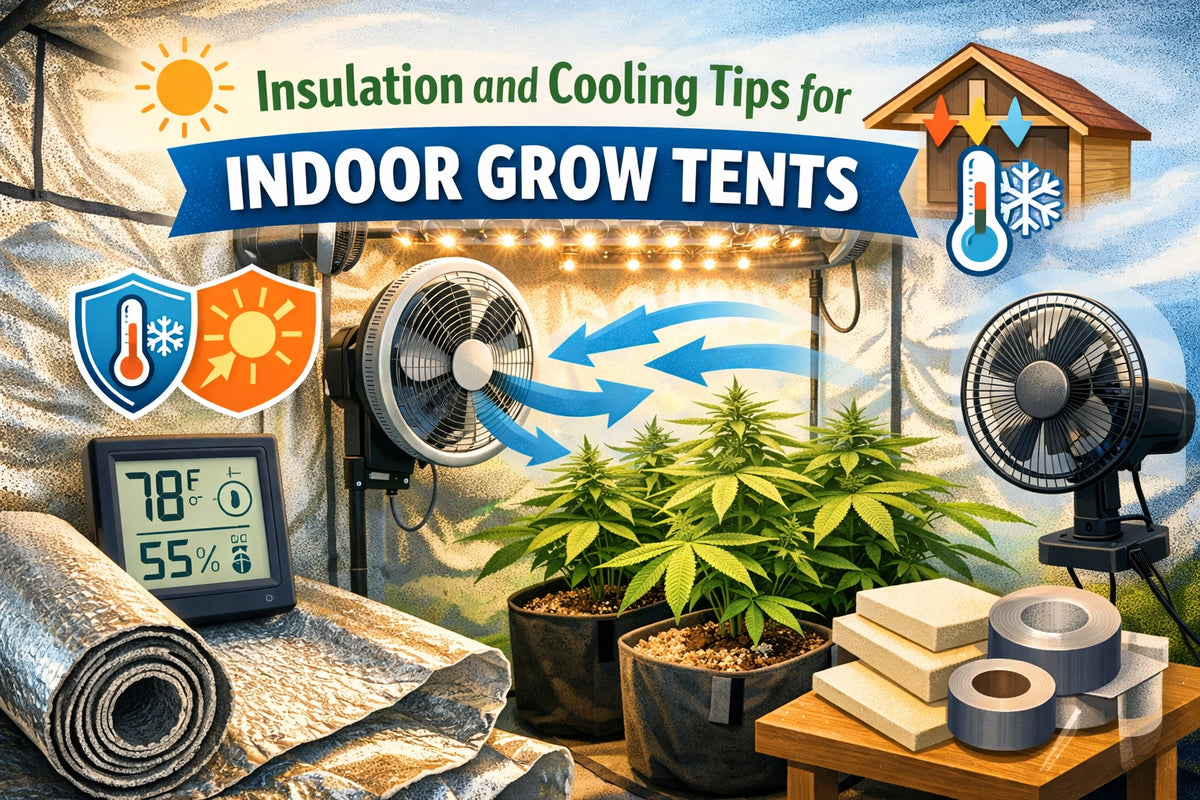
As the summer months roll in, indoor growers face a common enemy: heat. Whether you’re running a small hobby setup in a spare closet or a more robust system in a garage, managing the ambient temperature inside your grow tent is critical for plant health. If your tent gets too hot, you’re looking at stunted growth, nutrient burn, and an open invitation for pests like spider mites.
The fact of the matter is that most standard grow tents are designed for light reflection and containment, not necessarily for thermal insulation. To keep your garden thriving when the mercury rises, you need a two-pronged strategy: keeping the heat out through insulation and moving the heat out through cooling. Here is how you can optimize your indoor gardening setup to handle the peak of summer.
Start with the Room, Not the Tent
Before you start taping insulation to your tent, look at where the tent is sitting. The ambient temperature of the room surrounding your tent dictates about 80% of your success. If your tent is in a room that is already 85°F, your exhaust fans are simply pulling in hot air to "cool" the plants, which doesn't work.
If possible, move your setup to a basement. Basements are naturally insulated by the earth, keeping them significantly cooler than upper floors. If a basement isn't an option, choose a room with thick walls and minimal windows. For rooms with windows, use blackout curtains or thermal-lined drapes to block out the afternoon sun.
Another often overlooked tip is floor insulation. Concrete floors can be cold in the winter, but in the summer, they can actually hold onto heat or lack the necessary "breathability" for your pots. Placing your plants on upside-down trays or a thick rug creates a thermal break between the floor and your root zone.
Choosing the Right Tent for Thermal Control
Not all tents are created equal. If you are in the market for a new setup, pay attention to the "D" rating (Denier), which refers to the thickness of the fabric. A tent with a 2000D canvas exterior, like some of the AC Infinity models, provides a much better thermal barrier than a flimsy 600D budget tent.

Thicker material doesn't just keep light in; it acts as a buffer against the temperature swings of the room. High-quality tents also feature reinforced zippers and tighter seals, preventing cool air from leaking out and hot air from seeping in through the cracks.
DIY Insulation Hacks for Small Spaces
If you already have a tent and it’s struggling to stay cool, you can "mod" it with external insulation. This might not look like a professional showroom, but it works wonders for temperature stability.
- Reflective Bubble Wrap (Radiant Barrier): This is the easiest and most effective DIY method. Wrap the exterior of your tent in reflective bubble wrap insulation (often found at hardware stores). This material reflects radiant heat away from the tent. Use protective foil tape to seal the seams.
- Panda Film: If you are building a custom space or want to add an extra layer of protection, Panda Film is an industry standard. The white side reflects 90% of light (and heat) back into the plants, while the black side ensures total light proofing.
- Polyfoam Boards: For growers in extreme environments (like a hot garage), you can build a "shell" around the tent using rigid polyfoam insulation boards. It creates a "room within a room" effect that makes climate control much more manageable.

The Science of Air Exchange
Insulation keeps the outside heat away, but what about the heat generated inside the tent by your lights and equipment? This is where your ventilation system becomes the MVP.
To properly cool a tent, you need to calculate your CFM (Cubic Feet per Minute) requirements. You want to be able to exchange the entire volume of air in your tent at least once every minute. If you are adding a carbon filter to scrub odors, remember that the filter adds resistance, effectively cutting your fan's efficiency by 30-50%. Always over-spec your exhaust fan.
Pro Tip: Place your intake vents at the bottom of the tent and your exhaust fan at the very top. Since heat rises, this "chimney effect" naturally assists your fans in pulling the warmest air out of the environment.
Lighting: The Main Heat Source
If you are still running High-Pressure Sodium (HPS) or Metal Halide (MH) bulbs in a small tent during July, you are fighting a losing battle. These lights act like space heaters. Switching to high-efficiency LED grow lights is the single biggest "cooling" upgrade you can make.
LEDs produce significantly less heat per watt of light delivered to the plant. Furthermore, many high-end LED fixtures allow you to mount the driver (the part that gets the hottest) outside of the tent. By moving the driver 6 feet away from the plants, you can drop the tent temperature by 3-5 degrees instantly.

Protecting the Root Zone with Fabric Grow Pots
When we talk about cooling, we often focus on the leaves, but the roots are actually more sensitive to heat. When the medium gets too hot, oxygen levels drop, and the plant's metabolism slows down, leading to "heat wilt."
This is why we highly recommend using fabric grow pots. Unlike plastic pots that trap heat and can literally cook the roots, fabric pots allow for "air pruning" and evaporative cooling. As moisture evaporates through the sides of the fabric, it naturally lowers the temperature of the root ball.
For larger setups, a fabric raised bed provides even more thermal mass, which helps stabilize temperatures throughout the day. If you find your pots are still getting too hot, try placing them inside a larger secondary container to provide a "dead air" space for extra insulation.

Smart Scheduling: Beat the Midday Sun
One of the simplest and cheapest ways to manage heat is to flip your light schedule. Instead of running your lights during the hottest part of the day (noon to 6 PM), set your "daytime" for the plants to occur at night.
By running your lights from 8 PM to 8 AM, you are utilizing the naturally cooler nighttime air for your intake. This also helps you save on electricity costs in many regions where off-peak rates are lower. It seems like a small change, but it can result in a 10-degree difference in peak tent temperatures.
Monitoring and Automation
You can't manage what you don't measure. In a small grow space, temperatures can spike in less than an hour if a fan fails. Using a smart controller allows you to set triggers. For example, if the temperature hits 82°F, the controller can automatically increase the exhaust fan speed to 100%.

Monitoring your VPD (Vapor Pressure Deficit) is also crucial. As temperatures rise, your plants will need higher humidity to keep their stomata open and continue transpiring. If it gets hot and dry, the plants will shut down to protect themselves, and your growth will grind to a halt. You can check out our grow help videos for a deeper dive into balancing heat and humidity.
Summary Checklist for a Cool July Grow:
- Insulate the floor: Get those pots off the hot or cold ground.
- Upgrade the tent: Look for 2000D canvas for better thermal resistance.
- External Wrap: Use reflective bubble wrap or Panda Film to deflect external heat.
- LED Transition: Move heat-generating drivers outside the tent.
- Use Fabric Grow Pots: Enable evaporative cooling for the root zone.
- Nighttime Lighting: Run your "day" cycle when the sun is down.
- Over-spec Ventilation: Ensure your exhaust fan can handle the resistance of a carbon filter.
Growing indoors during the summer requires a bit more vigilance, but with the right insulation and cooling strategy, you can maintain "springtime" conditions year-round. If you're struggling with a specific heat issue or need help sizing a fan for your space, feel free to reach out to us. We’ve helped thousands of growers dial in their environments, and we’re happy to help you too.


Leave a comment
This site is protected by hCaptcha and the hCaptcha Privacy Policy and Terms of Service apply.