
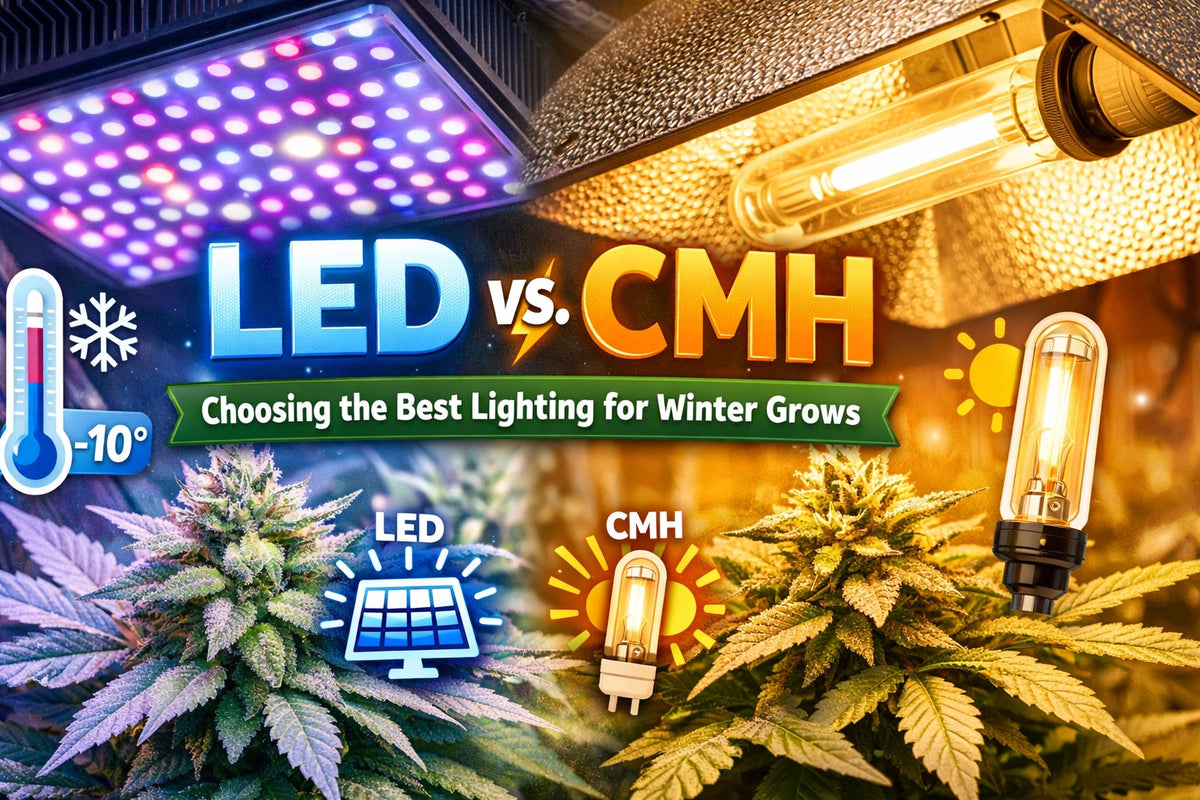
As the outdoor temperature begins to dip in September, indoor growers are shifting their focus from cooling strategies to heat management and environmental stability. For many, this seasonal transition is the perfect time to upgrade or rethink their lighting setup. The two heavy hitters in the industry right now are Light Emitting Diodes (LED) and Ceramic Metal Halide (CMH).
Both technologies have their die-hard supporters, but when you are growing in the dead of winter, the "best" light isn't just about PAR output: it’s about how that light interacts with your specific environment. In this guide, we will break down the technical differences between LED and CMH to help you decide which one will carry your garden through the frost.
The Winter Heat Factor: Waste Heat vs. Supplemental Heating
The biggest differentiator between LED and CMH during the winter is thermal output. In the summer, heat is an enemy that we spend hundreds of dollars trying to exhaust. In the winter, however, heat can be a valuable resource.
Ceramic Metal Halide (CMH) fixtures are known for running hot. Technically, they are much more efficient than old-school HPS lights, but they still convert a significant portion of energy into heat. Research suggests that LED fixtures cast off only about 20% as much heat as a comparable CMH setup.
The fact of the matter is, if you are growing in a cold basement or a garage, that "waste" heat from a CMH light acts as a built-in space heater. It can keep your root zones warm and your transpiration rates steady without the need for additional equipment.
On the flip side, LED lights run significantly cooler. While this is great for energy bills, it can be a double-edged sword in a winter grow. If your grow room drops below 65°F (18°C) when the lights are on because your LEDs aren't producing heat, your plants’ metabolism will crawl to a halt. You might find yourself having to buy an electric space heater just to keep the room in the "sweet spot" of 75-80°F. This often negates the energy savings you thought you were getting with the LED.

Light Spectrum: Mimicking the Sun vs. Targeted Efficiency
When we talk about spectrum, we are looking at the colors of light the fixture produces. Plants use different wavelengths for different stages of growth.
- CMH Spectrum: CMH is often called a "full-spectrum" or "sun-mimicking" light. It produces a very natural white light that includes Ultraviolet (UV) and Infrared (IR) wavelengths. UV light is particularly interesting for winter growers; it helps stress the plant in a positive way, often increasing resin and terpene production. Furthermore, the IR (heat) helps with cell expansion.
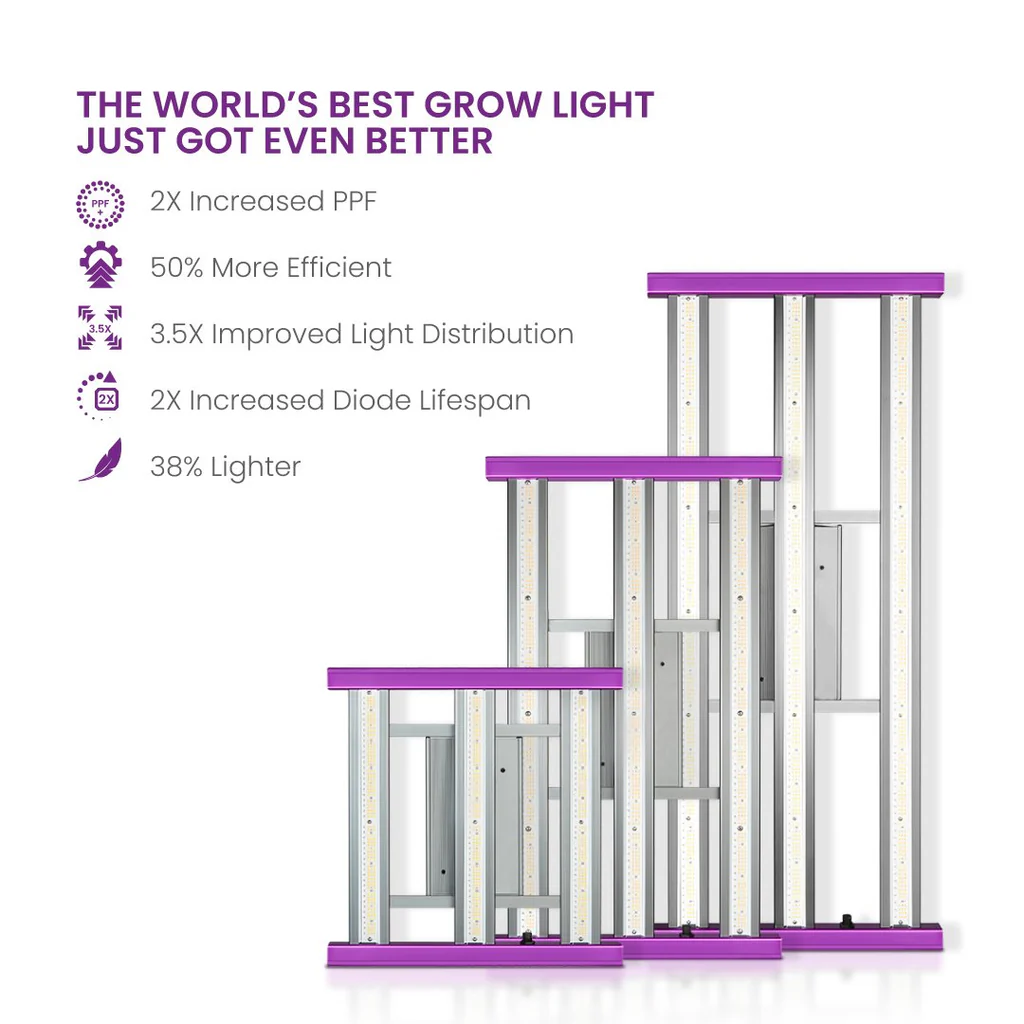
- LED Spectrum: Modern LED lights have become incredibly sophisticated. High-end models, such as the KIND LED grow lights, use targeted "recipes" to provide exactly what the plant needs. Some newer LEDs even feature tunable spectrums, allowing you to increase UV/IR during the flower cycle manually.
Canopy Penetration and Hanging Heights
The physics of how light travels from the fixture to your plants is another area where these two technologies diverge.
- CMH Penetration: CMH bulbs have incredible "punch." They can penetrate 18 to 24 inches into the plant canopy even when hung three feet above the plants. This makes them ideal for growers who prefer larger plants or have the vertical space to let them stretch.
- LED Coverage: LEDs generally need to be hung closer to the plants (often 6 to 12 inches) to maintain high intensity. Because the light is spread across many small diodes rather than one central bulb, the light is more uniform, but it doesn't always drive as deep into the lower branches. If you are growing in a height-restricted space, like an AC Infinity Grow Tent, LEDs are often the safer bet to avoid light bleaching and heat stress.
Efficiency and Long-Term Costs
It seems more like everyone focuses on the "watts used," but the true cost of a light includes the initial purchase and the maintenance over time.
LED (High Upfront, Low Maintenance):
- Initial Cost: Generally higher. A professional-grade LED can be a significant investment.
- Lifespan: Most are rated for 50,000 to 100,000 hours. You won't be changing bulbs for years.
- Savings: You save roughly 15-20% on your power bill compared to CMH, provided you don't need to add a heater to the room.
CMH (Lower Upfront, Regular Maintenance):
- Initial Cost: More affordable out of the box.
- Bulb Replacement: This is the "hidden" cost. CMH bulbs degrade over time and generally need to be replaced every 12 months to maintain their spectral integrity.
- Efficiency: While highly efficient compared to HPS, they still pull more amperage than a modern LED for the same light output.
Environmental Control in the Winter
Regardless of which light you choose, winter growing requires tighter control over your environment. Because indoor air is often very dry in the winter, your Vapor Pressure Deficit (VPD) can get out of whack quickly.
Using controllers to manage your fans and humidity is essential. If you choose CMH, you’ll need to make sure your exhaust system is responsive enough to kick in if the room gets too hot. If you go with LED, you might need a controller that can trigger a heater if the temps drop too low during the "lights off" period.

Pro Tip: If you are struggling with cold walls or floors in a winter grow, consider lining your space with Panda Film. This heavy-duty poly sheeting helps reflect light back to the plants while providing a minor layer of insulation against cold surfaces.
Caution: Humidity and Mold
In the winter, we often seal our rooms up tight to keep the heat in. This creates a trap for humidity. Transpiration from your plants can quickly lead to spikes in relative humidity (RH), which is a recipe for bud rot.
CMH lights, because they run hotter, can actually help lower the RH slightly by increasing the air's capacity to hold moisture. However, if you are using LEDs, you must be extremely vigilant with your dehumidification. Since the room is cooler, moisture will condense on leaves and walls much faster.
Which One Should You Choose?
The decision usually comes down to your "starting" environment:
- Choose CMH if: You are growing in a cold basement, garage, or uninsulated spare room. The added heat and UV spectrum will help maintain plant health and save you the hassle of running supplemental heaters. It’s also the better choice for those on a tighter initial budget who don’t mind the annual bulb replacement.
- Choose LED if: You are growing in a well-insulated, climate-controlled part of your home where heat is already a concern. If you want the absolute highest efficiency and the longest lifespan, LED is the winner. Just be prepared to monitor your temperatures closely and perhaps supplement with nutrients designed to help plants thrive in slightly cooler conditions.

Final Thoughts
Neither light is "better" in a vacuum; they are different tools for different jobs. For a winter indoor grow, the "best" light is the one that allows you to maintain a stable environment with the least amount of effort.
If you're still on the fence, we recommend checking out our full selection of LED lights and Grow Essentials to see which specs align with your space. Winter is one of the most rewarding times to grow: no bugs, no outdoor humidity spikes, and a beautiful harvest just in time for the spring. Choose your light wisely, and the rest will fall into place.



Leave a comment
This site is protected by hCaptcha and the hCaptcha Privacy Policy and Terms of Service apply.