

As the calendar turns toward the darker months, the transition from outdoor gardening to a controlled indoor environment becomes a necessity for many growers. Whether you are running a year-round hydroponics setup or simply trying to keep your favorite cultivars alive through the winter, the most critical decision you will make is your choice of grow lights.
For decades, High-Pressure Sodium (HPS) was the undisputed king of the grow room. However, the rapid advancement of Light Emitting Diode (LED) technology has sparked a fierce debate. In the winter, this choice isn't just about plant growth; it’s about managing electricity costs, controlling your environment’s temperature, and ensuring your plants get the "sunlight" they crave when the real sun is nowhere to be found.
In this guide, we will break down the differences between LED and HPS specifically through the lens of winter indoor gardening.
1. Energy Efficiency: The Long Winter Run
During the darker months, your grow lights are doing the heavy lifting. Without supplemental natural light from windows or greenhouses, you are likely running your lights for 12 to 18 hours a day. This is where energy efficiency moves from a "nice-to-have" to a financial necessity.
Research shows that LED grow lights consume between 50% and 80% less electricity than HPS systems while delivering comparable, and often superior, yields. For a standard 4x4 grow tent, switching from a 1000W HPS to a high-efficiency 600W LED can save a grower anywhere from $200 to $400 annually in electricity costs alone.
The reason for this lies in how the light is produced. HPS bulbs rely on heating a gas to create light, a process that is inherently inefficient. LEDs use semiconductors to convert electricity directly into light photons. When you are running lights for months on end during the winter, that efficiency difference compounds every single day.
2. Heat Output: The Winter Paradox
The most common argument in favor of HPS during the winter is the heat they produce. Because HPS lights convert about 60-70% of their energy into heat rather than light, they act as a secondary heater for your grow room. In a cold basement or a poorly insulated garage, this "waste" heat can actually help maintain the 75-80°F temperatures plants need to thrive.
However, relying on your lights for heat is a double-edged sword:
- Uneven Distribution: HPS heat is radiant and concentrated directly under the bulb. This can lead to "hot spots" where the tops of your plants get heat stress while the roots remain too cold.
- Lack of Control: When your lights turn off for the "night" cycle, your heat source vanishes. This causes massive temperature swings that can shock plants and invite mold or PM (Powdery Mildew).
- Inefficiency: It is almost always cheaper to use a highly efficient LED light and a dedicated, thermostatically controlled space heater than it is to use an inefficient HPS light to heat the room.
LEDs run significantly cooler. While they still produce some heat (mostly dissipated through heat sinks on the back of the fixture), the light footprint itself is cool. This allows you to keep the lights closer to the canopy without burning the plants, which is vital for maximizing "usable" light in small winter setups.
3. Light Spectrum and Plant Health
In the summer, plants often get a "fuller" spectrum if they have any access to natural light. In the winter, they are entirely dependent on what you provide.
HPS lights are notorious for having a "fixed" spectrum. They are very heavy in the yellow and red wavelengths, which is great for the flowering stage but can lead to "stretchy," weak plants during the vegetative stage. To combat this, HPS growers often have to swap to Metal Halide (MH) bulbs for the first half of the grow, adding cost and labor.
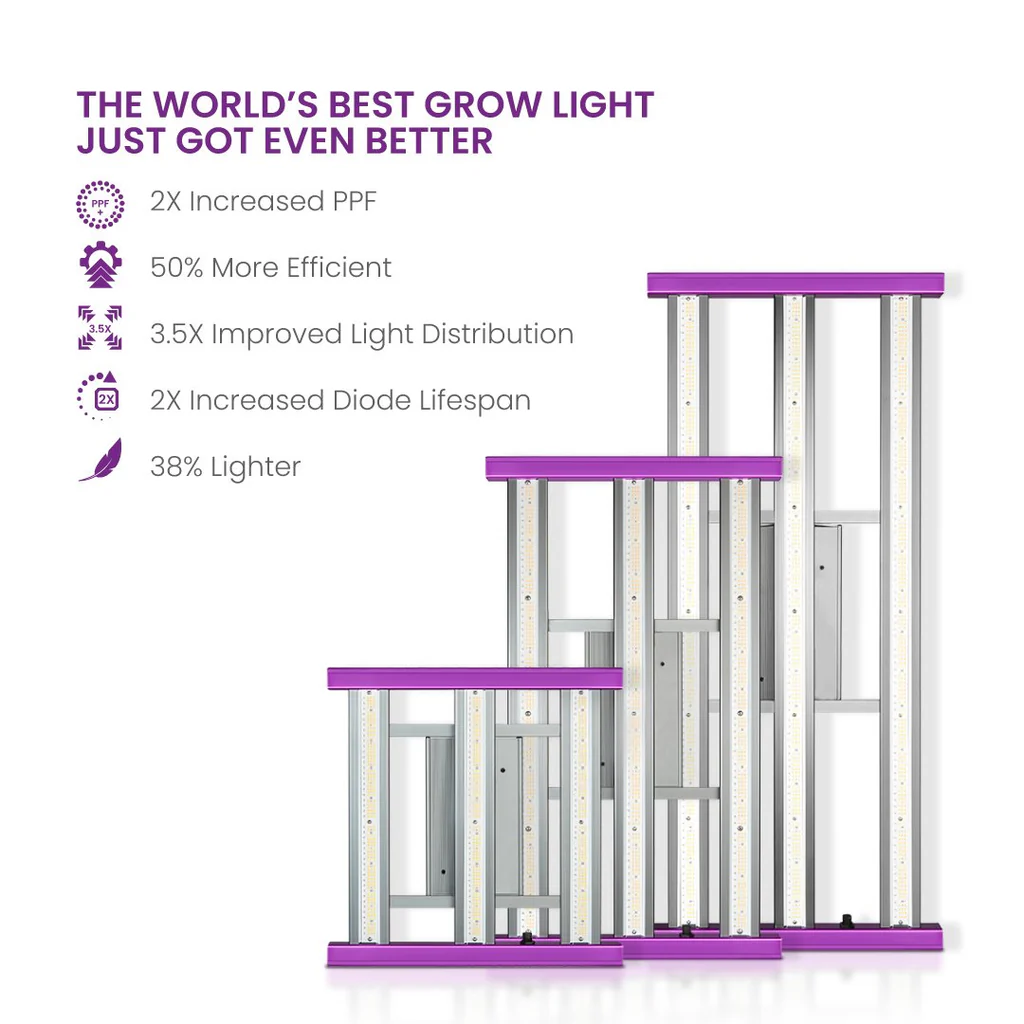
Modern LEDs, such as those from Medic Grow, offer a full-spectrum output that mimics natural sunlight. Many high-end models even feature "tunable" spectrums or dedicated UV/IR bars.

The inclusion of Blue light helps keep plants squat and bushy, while Red and Far-Red wavelengths drive heavy flower production. For winter growers, providing this complete "nutritional" light profile ensures that plants don't just survive the winter but thrive as if it were July.
4. Longevity and Maintenance
Winter is the worst time for a hardware failure. If an HPS bulb burns out or a ballast kicks the bucket in the middle of a January blizzard, your plants are in immediate danger from the cold and the dark.
HPS bulbs degrade quickly. Most professional growers recommend replacing HPS bulbs every 12 months because their light output (PAR) drops significantly over time. You might think the light looks the same, but your plants can tell the difference.
LEDs are built for the long haul. Most quality fixtures are rated for 50,000 to 100,000 hours. If you run your lights 12 hours a day, a 50,000-hour LED will last over 11 years. There are no bulbs to change and no fragile glass to break. For the indoor gardener looking for a "set it and forget it" solution during the busy holiday season, LED is the clear winner.

5. Environment Control: Tents and Insulation
Regardless of which grow lights you choose, winter gardening requires extra attention to your environment. Because you are fighting external cold, you need to maximize the efficiency of every photon and every degree of heat.
Using an AC Infinity Grow Tent provides an insulated, reflective environment that keeps the heat in and the cold out. To further enhance this, many growers use Panda Film to line their walls. Panda Film has a 90% reflection rate, ensuring that the light from your LEDs or HPS isn't absorbed by your walls but is reflected back onto the lower branches of your plants.
Winter Tip: If you are using LEDs in a cold room, consider raising your pots off the floor. Cold floors can chill the root zone, slowing down nutrient uptake regardless of how good your lights are.

6. Comparing the Costs: Initial vs. Total
The only area where HPS still holds a slight lead is the initial purchase price. You can often find a complete HPS kit for a lower upfront cost than a premium LED fixture.
However, we encourage growers to look at the "Total Cost of Ownership" (TCO):
- Electricity: LED saves $20-$40 per month on average.
- Bulb Replacements: HPS requires a $50-$100 bulb every year.
- Cooling/Ventilation: HPS often requires more powerful (and expensive) fans to duct out the excess heat.
- Yield: Because LEDs provide a better spectrum, many growers see a higher quality of harvest, which has its own intrinsic value.
When you add these up, an LED fixture usually pays for itself within the first 12 to 18 months of operation. Given that the "darker months" happen every year, the investment in high-quality grow lights is one that pays dividends for years to come.
Summary Checklist for Winter Light Selection
To help you decide, consider these specific scenarios:
- Choose HPS if: You are growing in a very cold, unheated space (like an outdoor shed) and you need the radiant heat to keep the plants alive, and you are on a very tight initial budget.
- Choose LED if: You want the best possible plant quality, you want to save money on your monthly power bill, you prefer a low-maintenance setup, or you are growing in a space where managing high heat is difficult (like a bedroom or a small closet).
The transition to winter gardening doesn't have to be a struggle. By choosing the right grow lights and understanding how they interact with your environment, you can maintain a lush, productive garden all year round.
If you’re ready to upgrade your winter setup, explore our full collection of LED lights or check out our about us page to learn more about how we help growers succeed in every season. Or, if you have questions about which light is right for your specific square footage, feel free to reach out to our team!


Leave a comment
This site is protected by hCaptcha and the hCaptcha Privacy Policy and Terms of Service apply.