
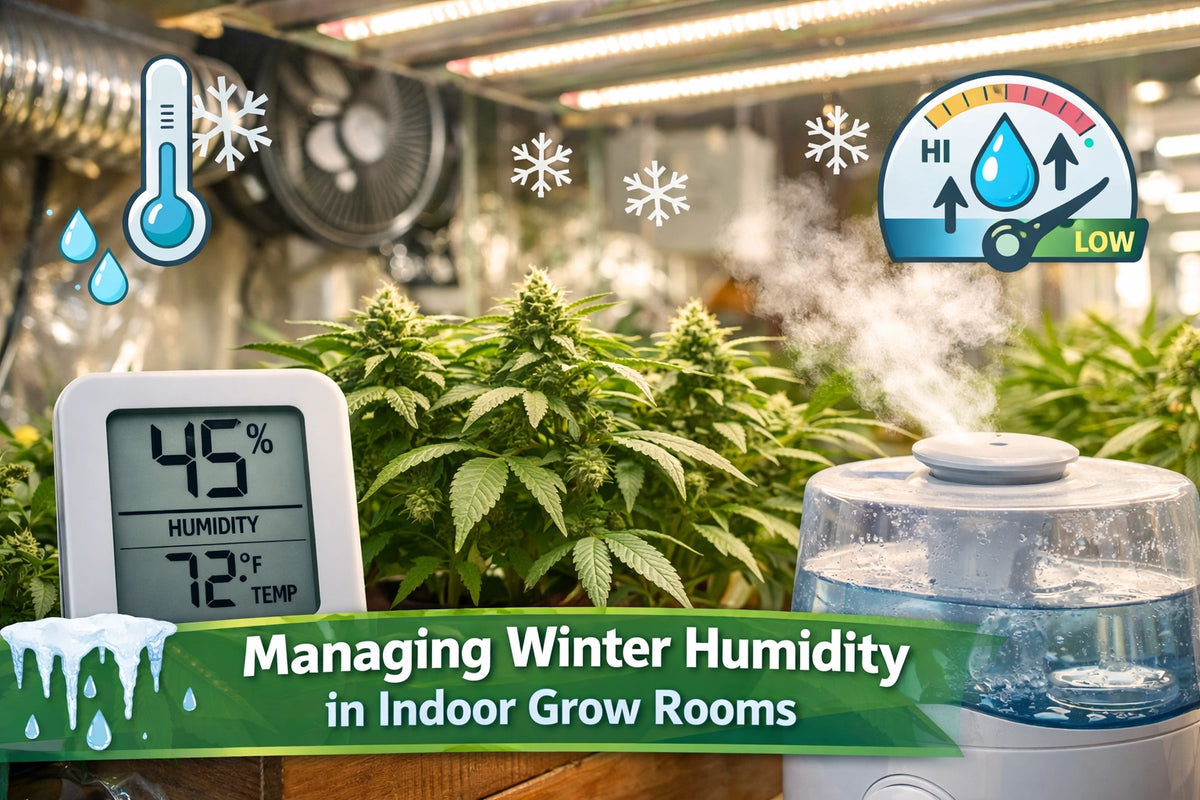
As the calendar flips toward November, growers across the country start feeling that familiar bite in the air. For indoor gardeners, winter isn't just about wearing extra layers; it’s about a total shift in how we manage our environment. While summer was a battle against heat and high ambient moisture, winter presents a unique "double-edged sword." On one hand, the outdoor air is often drier; on the other, the cold temperatures create a high risk for condensation and "cold spots" that can invite mold and mildew faster than you can say "Powdery Mildew."
At Perfect Gardens, we see a lot of growers struggle during this transition. Managing winter humidity isn't just about turning on a humidifier or dehumidifier and walking away. It’s about understanding the relationship between temperature, moisture, and your plants' transpiration. Let’s dive into how you can keep your grow room dialed in while the snow starts to fall.
The Science of Winter Air: Why "Dry" Can Be "Damp"
One of the biggest misconceptions in indoor growing is that because winter air is "dry," you won't have humidity issues. While it’s true that cold air holds less water vapor than warm air, the reality inside a grow tent is different.
When you bring that cold, dry air into your house and heat it up to 75°F, the Relative Humidity (RH) drops significantly. However, your plants are constantly pumping moisture into the air through transpiration. If your grow room is sealed or poorly ventilated to "keep the heat in," that moisture builds up quickly.
The real danger in winter is the Dew Point. If the air in your grow room is 75°F with 60% humidity, and it hits a cold tent wall or a window that is 55°F, the air instantly cools down and loses its ability to hold water. That water then condenses into liquid droplets. This is how you end up with "rain" inside your tent, leading to bud rot and fungal issues even when your hygrometer says your humidity is "fine."
Dehumidification: Your Primary Winter Tool
In the summer, many growers rely on high-volume exhaust fans to pull humid air out and fresh air in. In the winter, this becomes expensive because you’re constantly exhausting the air you just spent money to heat.
This is where a high-quality dehumidifier becomes your best friend. Instead of relying on ventilation to dump moisture, you use a dehumidifier to pull water directly out of the air while retaining your heat.
Pro Tip: During the "lights-off" period, plant transpiration slows down, but the temperature also drops. This is the danger zone. We recommend running your dehumidifier on a more aggressive schedule during the dark cycle. If you're looking to automate this without breaking the bank, using a Grow Essentials 240V Single Outlet Mechanical Timer can help you cycle equipment effectively if you aren't using a fully integrated controller yet.

Temperature Management and the LED Factor
Temperature and humidity are two sides of the same coin. If your room is too cold, your plants' metabolism slows down, they drink less, and they become more susceptible to root rot.
If you are running LED lights, like the KIND LED X420 or the KIND LED X330, you might notice your room stays cooler than it did with old-school HPS bulbs. While these lights are incredibly efficient and produce a superior spectrum, they don't provide the "free" infrared heat that HPS does.
In November, you might actually need to add a small space heater to your lung room (the room outside the tent) to keep the intake air at a reasonable temperature. Keeping your daytime temps between 75-82°F ensures your plants keep "breathing" and processing nutrients, which helps stabilize the microclimate.

Airflow: Don't Let the Air Stagnate
Winter is the season of stagnant air. Because we tend to close up our houses and reduce fan speeds to keep things warm, "dead zones" can form in the corners of your grow room. These pockets of still air are where humidity spikes and mold spores take hold.
- Oscillating Fans: Ensure you have fans both above and below the canopy.
- Distance from Walls: Try to keep your AC Infinity Grow Tent at least a few inches away from exterior walls of your house. Those walls get cold, and that temperature transfer can cause condensation inside the tent.
- Defoliation: Be a bit more aggressive with pruning lower fan leaves. This improves airflow through the center of the plant, preventing moisture from being trapped in the "understory."
 Suggested AI Image Prompt: A high-quality close-up of a digital hygrometer showing 55% humidity inside a lush green grow tent, with a blurry winter scene visible through a distant window in the background.
Watering Habits in the Cold Months
Your plants will likely drink less in the winter because the evaporation rate is lower and the air is denser. Overwatering is a common winter pitfall that leads to spiked humidity levels and root issues.
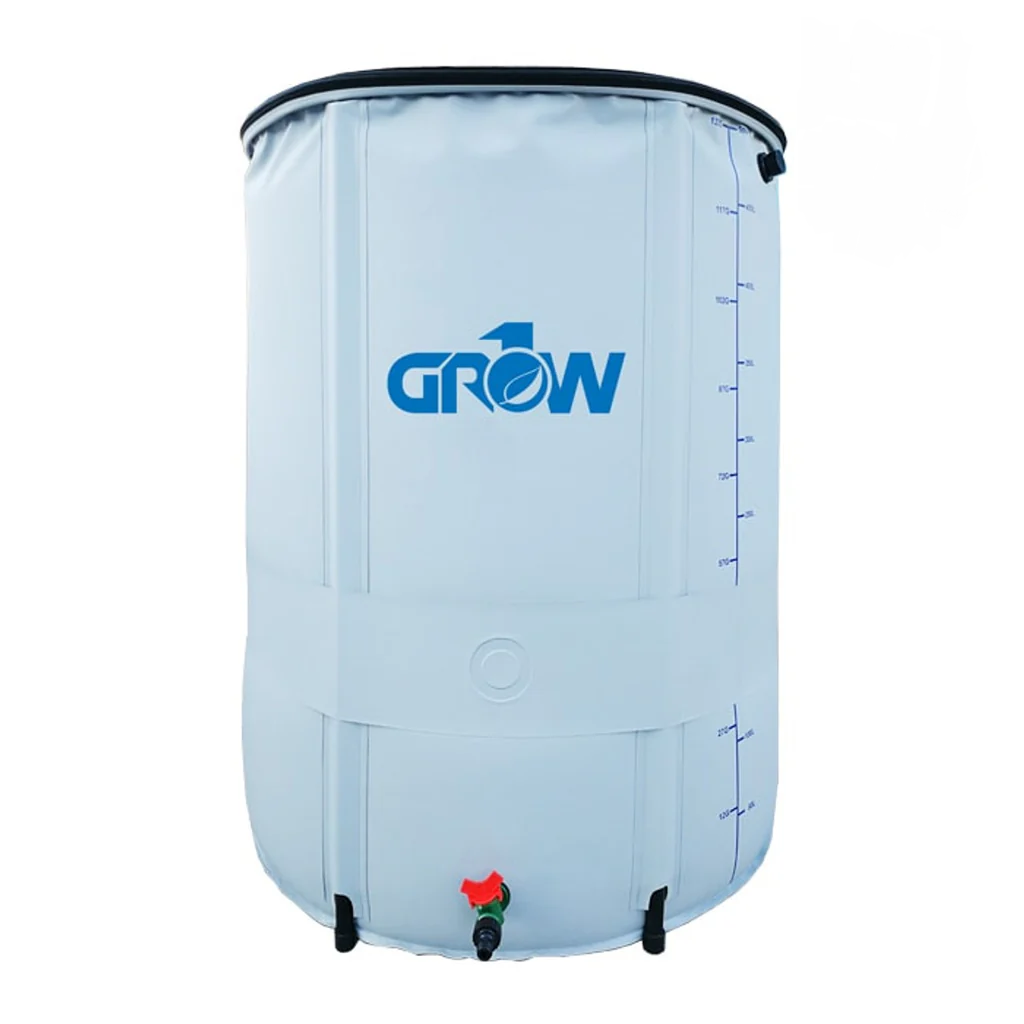
If you’re using microbial inoculants like Xtreme Gardening Azos, keeping the root zone at a consistent temperature is vital. Cold water can shock the microbes and the roots, stalling growth. We recommend letting your water sit out to reach room temperature before feeding, or using a small aquarium heater in your Grow1 collapsible water storage tank to keep your nutrient solution around 68-70°F.
Curing and Harvesting: The Winter Challenge
If you’re timing your harvest for late November, you need to be careful. While we talk about managing high humidity in the grow room, the "lung room" (your house) might be sitting at 20-30% humidity because of your home's central heating.
If you hang your plants to dry in 30% humidity, they will "flash dry" in 3 days. This ruins the terpene profile and leaves you with hay-smelling buds that are harsh to smoke. To prevent this, you may actually need a humidifier in your drying space to keep it at a steady 60% humidity and 60°F.
Once your harvest is dry, maintaining that "sweet spot" is much easier with Boveda 62% humidity packs. Also, consider using Black Vacuum Seal Bags to protect your hard work from the dry winter air once everything is cured.
Preparing for the Holiday Season
November isn't just about environment management; it’s the gateway to the biggest sales of the year. If you’ve been eyeing a Bubble Magic Washing Machine for fresh frozen hash or wanting to upgrade to a Vortex Brewer for the spring, now is the time to start your wishlist.
Black Friday and Cyber Monday are right around the corner. At Perfect Gardens, we always recommend investing in quality gear that solves problems. If your current tent is leaking light or your fans are too loud, look for those upgrades during the November sales. A solid environment is the foundation of every successful harvest.
 Suggested AI Image Prompt: A wide-angle, bright and crisp shot of a professional indoor hydroponic setup featuring LED lights and a clean, organized floor space with various gardening tools.
Summary Checklist for Winter Success:
- Monitor Your Dew Point: Use a smart controller like AC Infinity to track when condensation is likely to occur.
- Calibrate Your Sensors: Winter is a great time to recalibrate your pH pens and hygrometers to ensure your readings are accurate.
- Manage Your Intake: Don't pull freezing air directly onto your plants. Let it warm up in a "lung room" first.
- Check Your Insulation: A simple piece of foam board insulation under your pots can keep root temperatures from plummeting on a cold basement floor.
- Plan Your Harvest Gear: Ensure you have your extraction bags and curing supplies ready before the dry winter air hits your drying room.
If you’re feeling overwhelmed by the seasonal shift, don’t sweat it. We offer 30-minute Grow Room Consulting sessions to help you dial in your specific setup. Whether you're fighting high humidity or trying to keep your temps up, our experts can give you a personalized roadmap.
Winter growing is incredibly rewarding because the lower outdoor pest pressure makes for a cleaner run: as long as you keep your environment in check. Stay warm, keep those fans spinning, and happy growing!



Leave a comment
This site is protected by hCaptcha and the hCaptcha Privacy Policy and Terms of Service apply.