
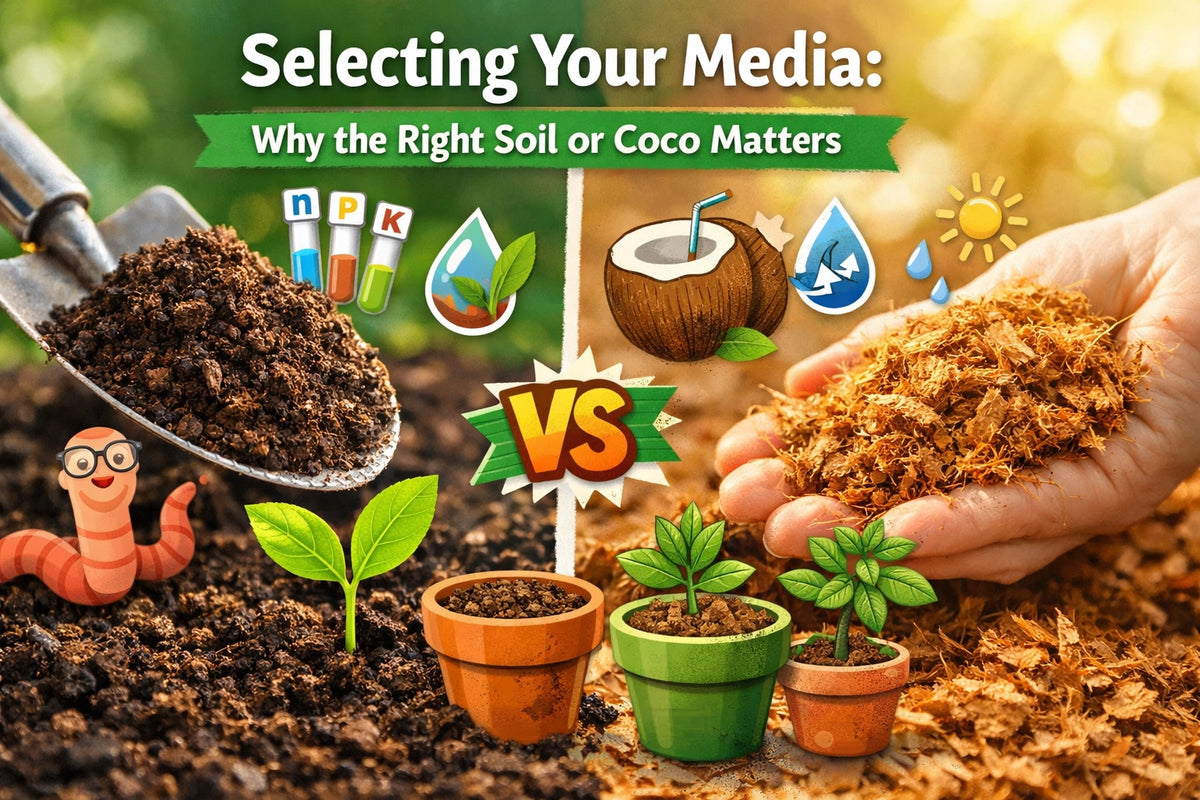
When you’re transitioning your garden indoors for the winter, one of the first and most critical decisions you’ll make is what your plants will actually grow in. It’s easy to get caught up in the latest LED lights or high-tech fans, but the growing medium is the literal foundation of your plant's health.
The medium you choose dictates your daily routine, how often you water, and how you manage your nutrient schedule. At Perfect Gardens, we see growers succeed with both soil and coco coir, but the "best" choice depends entirely on your goals, your experience level, and how much time you can dedicate to your grow room every day.
The Biological Sponge: Understanding Soil
Soil is often seen as the traditional choice, and for good reason. It is a living ecosystem. When you use a high-quality organic soil, you aren't just providing an anchor for the roots; you are providing a home for beneficial microbes, fungi, and a pre-loaded "battery" of nutrients.
1. The "Buffer" Effect
One of the biggest advantages of soil is its ability to buffer against human error. Because soil contains organic matter and minerals, it has a high Cation Exchange Capacity (CEC). This basically means it can hold onto nutrients and release them slowly. If you accidentally swing your pH a little too high or too low, the soil acts as a cushion, protecting the roots from immediate shock.
2. Pre-Loaded Nutrition
Most premium potting soils come "pre-charged." This means you can often grow a seedling for the first two to three weeks using nothing but plain water. For beginners, this is a massive relief because it removes the complexity of mixing plant nutrient packages during the most delicate stage of the plant's life.
3. Flavor and Terpene Profiles
Many veteran growers swear by soil for the final quality of the harvest. The complex microbial activity in a living soil environment is believed to help the plant express its full genetic potential, often leading to richer aromas and more complex terpene profiles.
The Precision Engine: Understanding Coco Coir
Coco coir is made from the husks of coconuts. It’s a "soilless" medium, meaning it is naturally inert. It contains virtually no nutrients on its own. While that might sound like a disadvantage, for the control-freak grower, it’s a dream come true.
1. Oxygen and Aeration
Coco has a unique structure that provides incredible aeration even when fully saturated. It is very difficult to "drown" a plant in coco because the fibers hold onto oxygen so effectively. This high level of oxygen in the root zone leads to much faster vegetative growth compared to soil.
2. Absolute Control
Because coco is inert, you are in the driver's seat. Every single milligram of nitrogen, phosphorus, and potassium the plant gets comes from your nutrient reservoir. This allows you to steer the plant’s growth with extreme precision. If you see a deficiency, you can flush the medium and correct it almost instantly.
3. Sustainability and Reusability
Coco is a byproduct of the coconut industry, making it more environmentally friendly than peat-based soils. Furthermore, if you take care of it and enzymatically break down old root matter, coco can often be reused for multiple cycles.
Watering Frequency: The Day-to-Day Reality
The choice between soil and coco fundamentally changes your relationship with your watering can.
Soil Watering: The Wet-Dry Cycle
Soil acts like a dense sponge. It holds water for a long time. In a typical indoor setup, you might only need to water every 2 to 4 days. You generally follow a "wet-dry" cycle: you water until the pot is heavy, then wait until the top inch of soil is dry and the pot feels light before watering again.
Caution: The most common mistake in soil is overwatering. Because soil holds moisture so well, watering too frequently can lead to anaerobic conditions, root rot, and fungus gnats.
Coco Watering: High-Frequency Fertigation
Coco is much closer to a hydroponic system. It doesn’t hold onto water the way soil does; it holds onto air. Because it drains so well, you have to water more often: sometimes once or even twice a day during the peak of the flowering cycle. This is often called "fertigation" (fertilizing + irrigation).
If you’re someone who travels a lot or can’t check on your plants daily, coco might be a challenge unless you invest in an automated drip system. If you want to see how these systems look in action, check out our grow help videos.

Nutrient Uptake and pH Management
The "science" of how your plants eat changes based on your medium. Nutrient availability is governed by pH, and the "sweet spot" shifts depending on what’s in your pots.
- Soil pH (6.0 - 7.0): In soil, the availability of nutrients is widest in this range. The microbes in the soil help break down organic matter into a form the plant can absorb. If you go below 6.0, you might lock out calcium and magnesium.
- Coco pH (5.5 - 6.5): Since coco is a hydroponic medium, the pH needs to be lower. Most growers aim for a consistent 5.8 to 6.2.
The Cal-Mag Factor in Coco
Coco has a natural tendency to "bond" with calcium and magnesium. Because of the way the fibers are structured, they can sometimes steal these nutrients before the plant can get to them. This is why "buffering" your coco with a Calcium-Magnesium supplement is a non-negotiable step for success. If you skip this, you’ll likely see yellowing leaves and stunted growth within the first month.
Sifting and Preparation: Getting the Texture Right
Regardless of which medium you choose, the physical structure (the "tilth") matters. If your soil is too dense, the roots can't breathe. If your coco is too fine (like dust), it can compact and lose its aeration benefits.
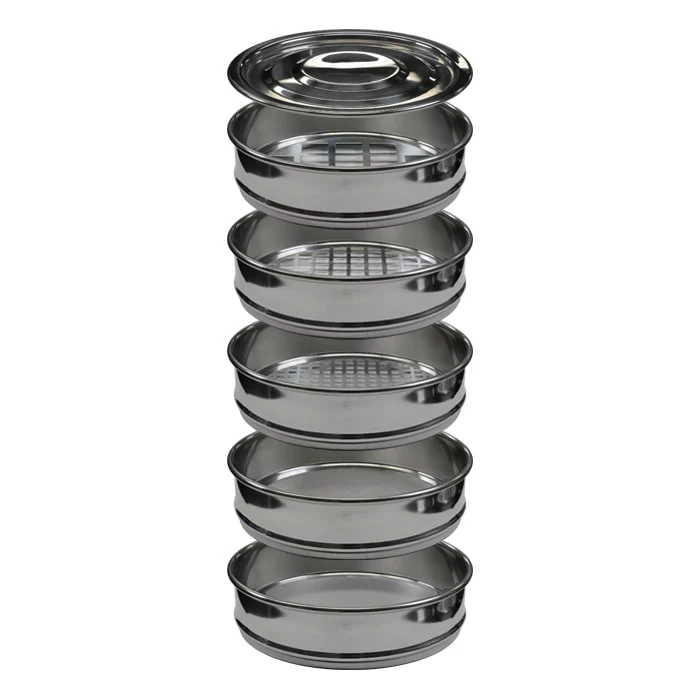
Some professional growers use sieves to ensure they are only using the best parts of the medium, removing large bark chunks from soil or fine "pith" from coco to create a custom blend.
The Hybrid Approach: Why Not Both?
The fact of the matter is that you don't always have to choose one or the other. Many experienced growers use a "hybrid" mix. By mixing 30% to 50% coco coir into a high-quality organic soil, you get the best of both worlds:
- The nutrient buffering and microbial life of the soil.
- The increased aeration and faster drainage of the coco.
This "Soilless-Soil" mix is often a great middle ground for growers who want faster growth than pure soil provides but aren't ready to commit to the daily feeding requirements of pure coco.
Which One Should You Choose?
As we head into the winter indoor season, consider your lifestyle and your grow space.
Choose Soil if:
- You are a beginner.
- You want a more "set it and forget it" approach to watering.
- You are focused on organic cultivation and maximum flavor.
- You want the safety of a pH buffer.
Choose Coco if:
- You want the fastest possible growth and maximum yields.
- You enjoy the technical side of mixing nutrients and measuring runoff.
- You are planning on using an automated irrigation system.
- You want a cleaner, sterile medium with fewer pest risks.
Regardless of your choice, the key to success is consistency. Switching media mid-grow is a recipe for disaster. Pick a path, learn the nuances of that medium, and stick with it through the harvest.
If you’re still unsure which way to go, or if you need help dialing in a specific nutrient line for your medium, feel free to reach out to our team via our contact page. We’ve helped thousands of growers in the Army of Growers find the perfect balance for their specific environment.
Final Thoughts on Media Prep
Before you drop your seeds or clones into your new medium, remember to pre-moisten it. Planting a dry seedling into dry coco or soil can cause "wicking," where the medium sucks the moisture out of the delicate root ball, killing the plant before it even starts.
Prepare your medium, check your pH, and set yourself up for a successful indoor season. Happy growing!

Leave a comment
This site is protected by hCaptcha and the hCaptcha Privacy Policy and Terms of Service apply.