
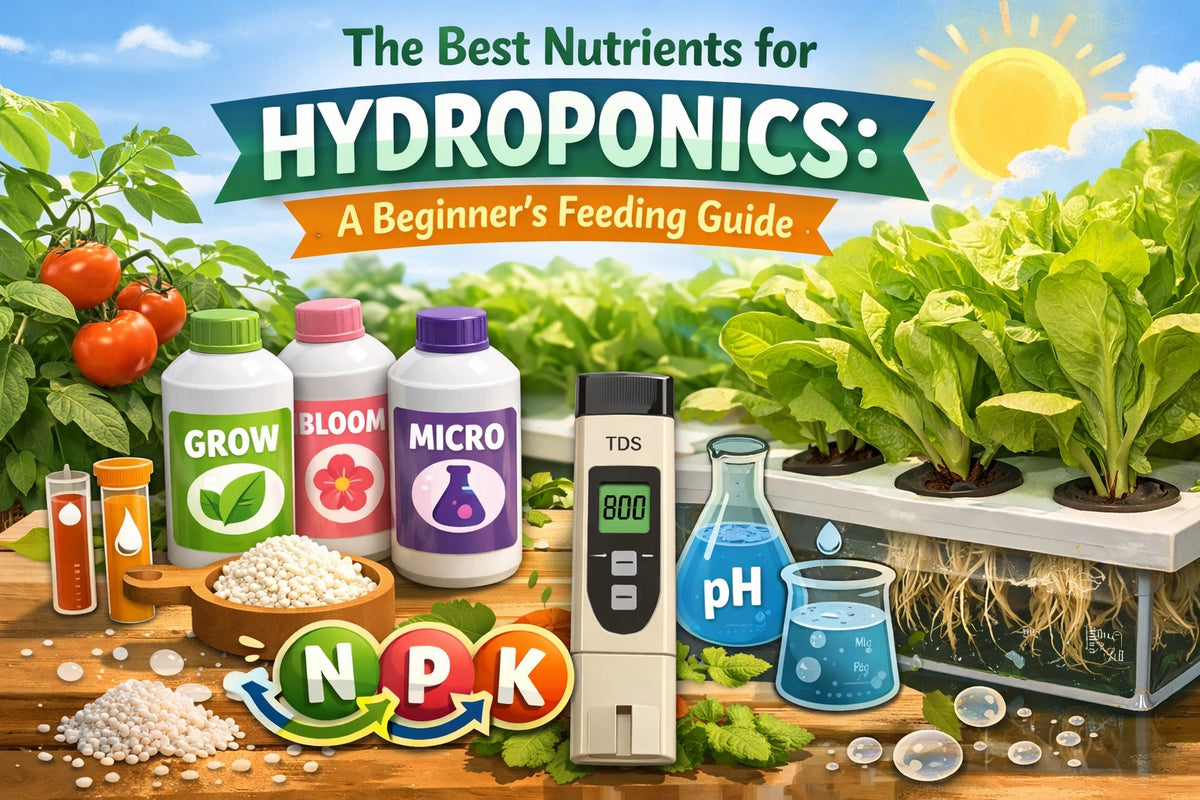
If you are moving from traditional soil gardening to a hydroponic system, you are essentially stepping into a new role. In soil, the earth acts as a buffer, holding onto nutrients and slowly releasing them to the roots. In hydroponics, you are the plant’s personal chef. You decide exactly what they "eat," when they eat it, and how much is served.
This can be intimidating for beginners. You see bottles labeled with N-P-K ratios, talk of "EC levels," and warnings about "PPM." The truth is, once you understand the basic chemistry of how plants drink, it’s actually much easier to control your harvest's quality in water than it is in dirt.
In this guide, we’re going to break down the essential nutrients your plants need, how to measure them, and why your water quality: specifically starting with something like Drops of Balance: is the secret foundation of a successful grow.
The 17 Essential Elements: What Your Plants Crave
Plants don't just "eat" fertilizer; they absorb 17 specific elements to complete their life cycle. Since there is no soil to provide these, your hydroponic nutrient solution must be "complete." These elements are categorized into Macronutrients and Micronutrients.
The Big Three: N-P-K
Every fertilizer bottle has three numbers on the front (e.g., 5-10-5). This is the N-P-K ratio:
- Nitrogen (N): This is the engine for leafy, green growth. It’s essential for chlorophyll production. If your leaves are turning yellow, you’re likely low on N.
- Phosphorus (P): This supports root development and flower/fruit production. You’ll usually see higher "P" numbers in "Bloom" formulas.
- Potassium (K): This regulates the plant's internal "plumbing." It helps move water and nutrients through the cells and strengthens the plant’s overall immune system.
The Secondary Macronutrients
While N-P-K gets all the glory, your plants will fail without:
- Calcium (Ca): Builds strong cell walls (think of it as plant bones). Without it, you get "blossom end rot" or tip burn.
- Magnesium (Mg): The heart of the chlorophyll molecule. Without it, the plant can't process light into energy.
- Sulfur (S): Helps produce proteins and enzymes.
The Micronutrients (Trace Elements)
These are needed in tiny amounts but are vital for enzyme function. They include Iron, Manganese, Zinc, Copper, Boron, Molybdenum, and Chlorine. Most high-quality nutrient packages include these, but many beginners ignore the fact that tap water often contains "bad" versions of these minerals that can lock out the "good" ones.
Why Water Quality is Your Starting Line
Before you dump a single drop of nutrients into your reservoir, you have to look at your water. Most people use tap water. The problem? Tap water is treated with chlorine and chloramines to kill bacteria, and it often contains heavy metals or "hard" minerals that mess with your plant's ability to eat.
If your "base" water is already full of junk, adding nutrients on top of it will lead to "nutrient lockout." This is where the minerals react with each other and become a solid "salt" that the plant cannot absorb.
The Role of Drops of Balance
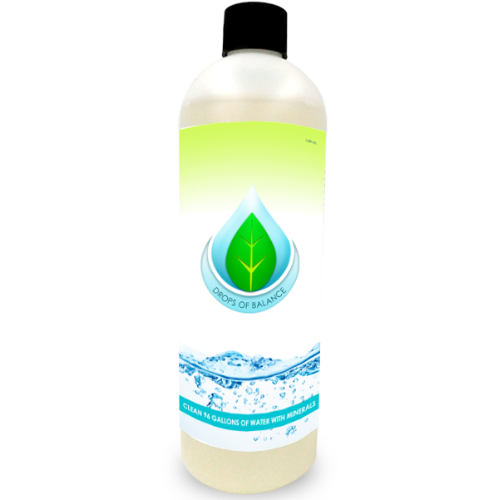
This is where a product like Drops of Balance becomes a game-changer for hydroponics. It’s a concentrated mineral solution that does two things:
- Purification: It interacts with contaminants in the water, causing them to precipitate (settle) out, effectively "cleaning" your water without the need for an expensive Reverse Osmosis (RO) system.
- Mineralization: It adds back a broad spectrum of ionic trace minerals that are often missing from commercial fertilizers.
Starting with clean, mineralized water ensures that when you add your N-P-K, those nutrients actually stay available for the plant to take up.
Understanding the Numbers: EC and PPM
In hydroponics, we don't guess if the "soil" is rich. We measure the water. There are two main ways to measure how "strong" your nutrient soup is: EC (Electrical Conductivity) and PPM (Parts Per Million).
What is EC?
Pure water doesn't conduct electricity well. When you add mineral salts (nutrients), the water becomes conductive. An EC meter measures this conductivity. The higher the EC, the more "salt" or food is in the water.
What is PPM?
PPM is just a calculation based on the EC. It tells you how many parts of minerals there are for every million parts of water.
- Pro Tip: Different meters use different scales (500 scale vs. 700 scale). It’s often safer to talk in EC because it’s a universal measurement.
Target Ranges for Beginners
For most leafy greens and herbs:
- Seedlings: 0.8 – 1.2 EC (400–600 PPM)
- Vegetative Stage: 1.2 – 1.8 EC (600–900 PPM)
- Flowering/Fruiting Stage: 1.8 – 2.4 EC (900–1200 PPM)
Caution: More is not better. If your EC is too high, the plant will actually start to lose water to the reservoir through osmosis, causing the plant to wilt and "burn."

Mixing Your Nutrients: Step-by-Step
Mixing nutrients is like chemistry class, but the stakes are your harvest. If you mix the wrong things together in high concentrations, they will "fall out" of the solution and become useless sludge at the bottom of your tank.
- Fill your reservoir: Start with the cleanest water possible.
- Add your water conditioner: Add Drops of Balance (usually about 1-2ml per gallon) to neutralize contaminants and prep the water. Let it sit for a few minutes.
- Add Silica (Optional): If you use a silica supplement for strength, always add it first and stir well.
- Add Base Nutrients (A then B): Most hydro nutrients come in two parts (Part A and Part B). Never mix A and B together directly in a measuring cup. Add Part A to the water, stir thoroughly, then add Part B and stir again.
- Check pH: This is the most important step. In hydroponics, plants can only eat if the pH is between 5.5 and 6.5. If the pH is 7.0 (neutral), your plants will starve even if the water is full of food. Use a pH pen and "pH Up" or "pH Down" solutions to hit that sweet spot.
- Check EC/PPM: Ensure you haven't overshot your target for the plant's current growth stage.
Common Pitfalls to Avoid
1. Temperature Issues
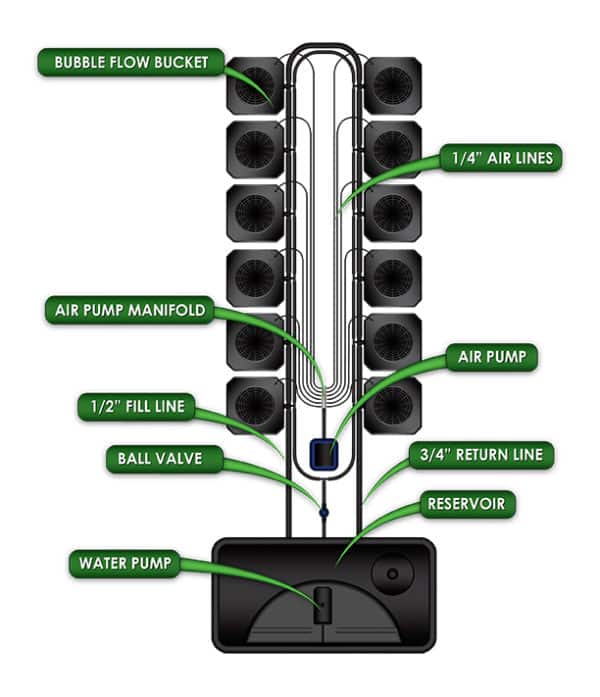
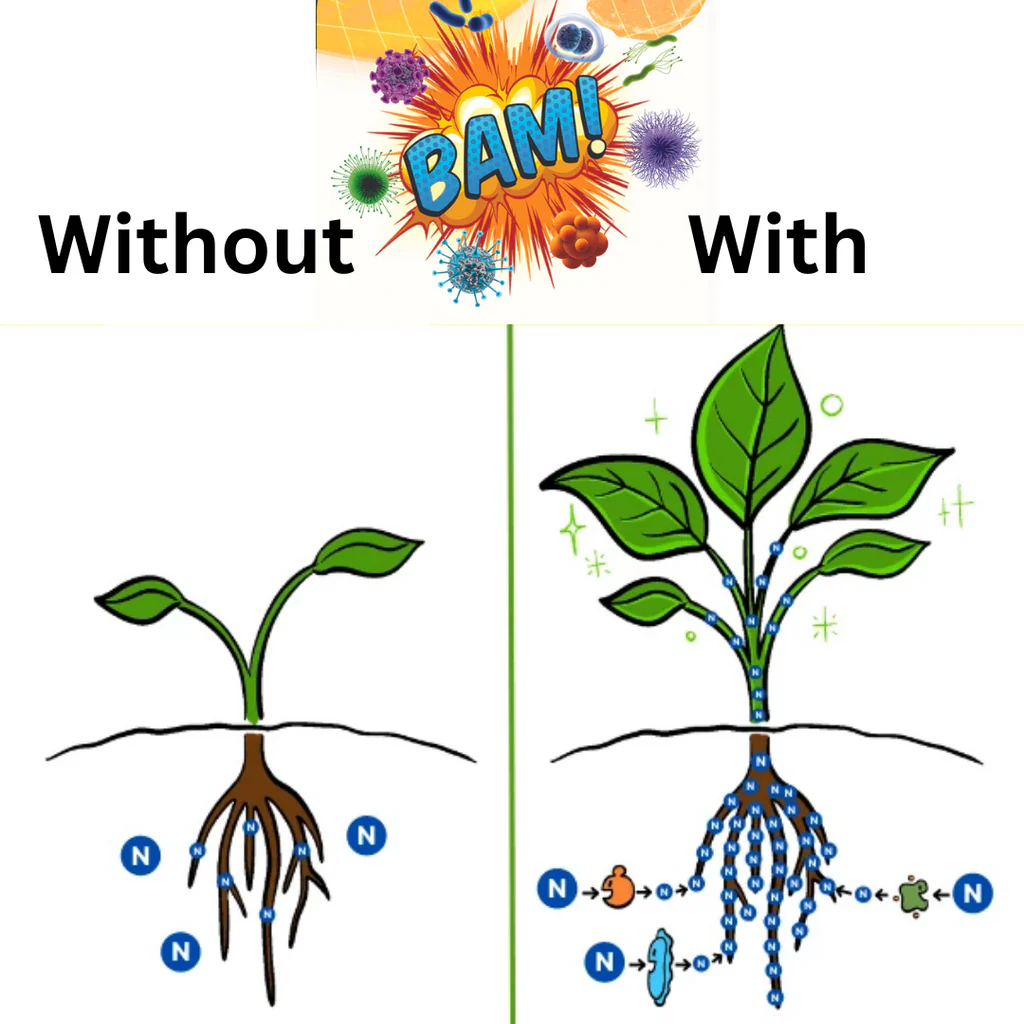
Your reservoir water should ideally be between 65°F and 72°F. If the water gets too warm (above 75°F), it can't hold as much dissolved oxygen. This leads to root rot (Pythium), which can kill a crop in days. If you're struggling with root health, consider a microbial inoculant like BAM to keep the "bad" bacteria at bay.
2. The "More is Better" Fallacy
Beginners often think that if 10ml makes the plant grow, 20ml will make it grow twice as fast. In hydro, this leads to "Nutrient Burn." You’ll see the tips of the leaves turning brown and crispy. It’s always better to underfeed slightly than to overfeed.
3. Ignoring the Roots
In a complete hydroponic system, the roots should be white and fuzzy. If they look brown, slimy, or smell like a swamp, your nutrient solution is likely lacking oxygen or is too warm.
Choosing Your Fertilizer: Liquid vs. Powder
You’ll find nutrients in two main forms.
- Liquid Nutrients: These are the most popular for beginners. They are pre-dissolved, easy to measure, and mix instantly. However, they are more expensive because you are paying for the shipping of water.
- Powdered Nutrients: These are much cheaper and have a longer shelf life. They are great for larger setups but require a bit more effort to ensure they are fully dissolved before adding them to your main reservoir.
Regardless of which you choose, look for "hydroponic specific" formulas. Standard "soil" fertilizers often lack the micronutrients necessary for water-based growing because they assume those minerals are already in the dirt.
Summary: The Recipe for Success
Hydroponics gives you total control, which is both a blessing and a curse. To get the best results:
- Start with a solid indoor gardening setup.
- Prioritize water quality by using a conditioner like Drops of Balance to create a clean slate.
- Invest in a decent EC and pH meter: they are your eyes and ears in the reservoir.
- Keep your nutrient solution cool and oxygenated.
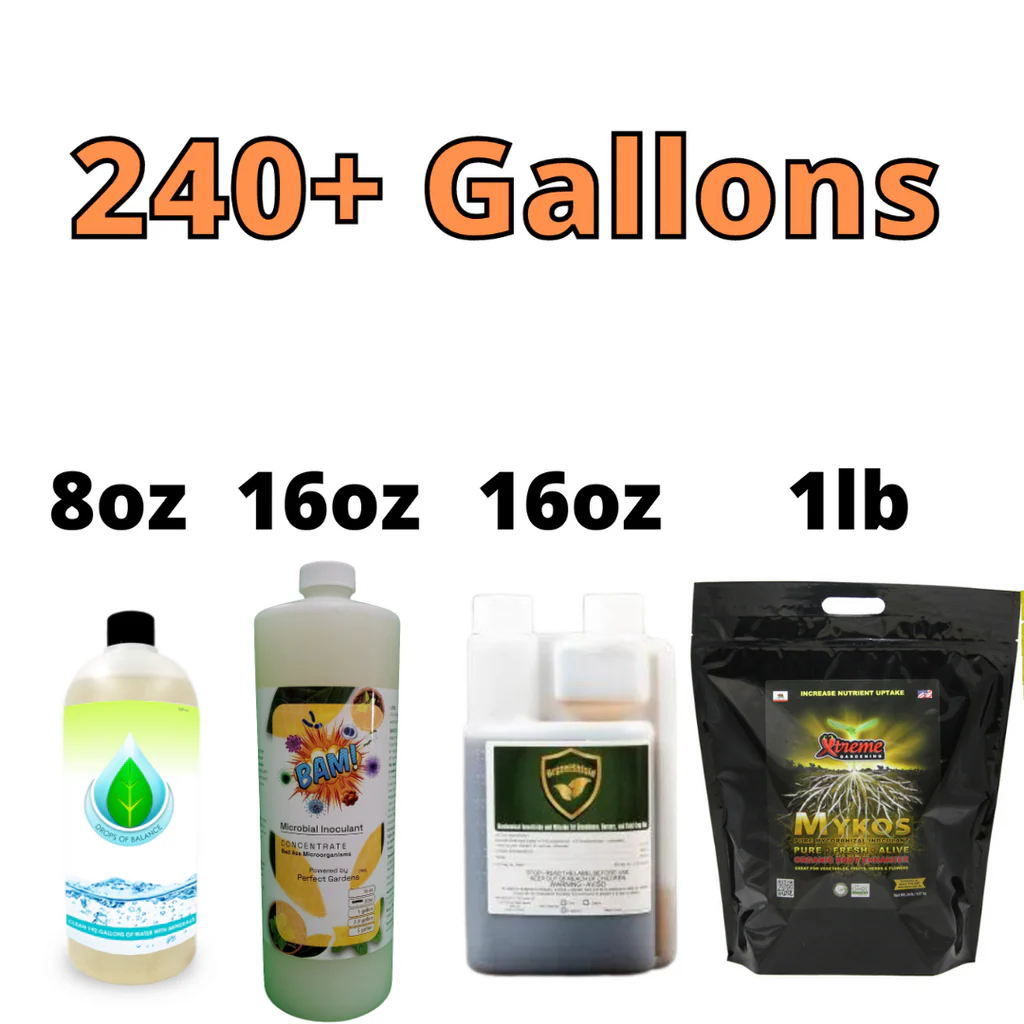
If you are looking for a simplified way to start, we highly recommend checking out our Nutrient and Microbial Inoculant Kits. They take the guesswork out of the equation by providing the minerals, microbes, and purifiers you need in one package.
Growing hydroponically is a journey of learning your plants' language. Once you master the "feeding guide," you’ll be amazed at the growth rates and yields you can achieve right in your own home. Happy growing!

Leave a comment
This site is protected by hCaptcha and the hCaptcha Privacy Policy and Terms of Service apply.