
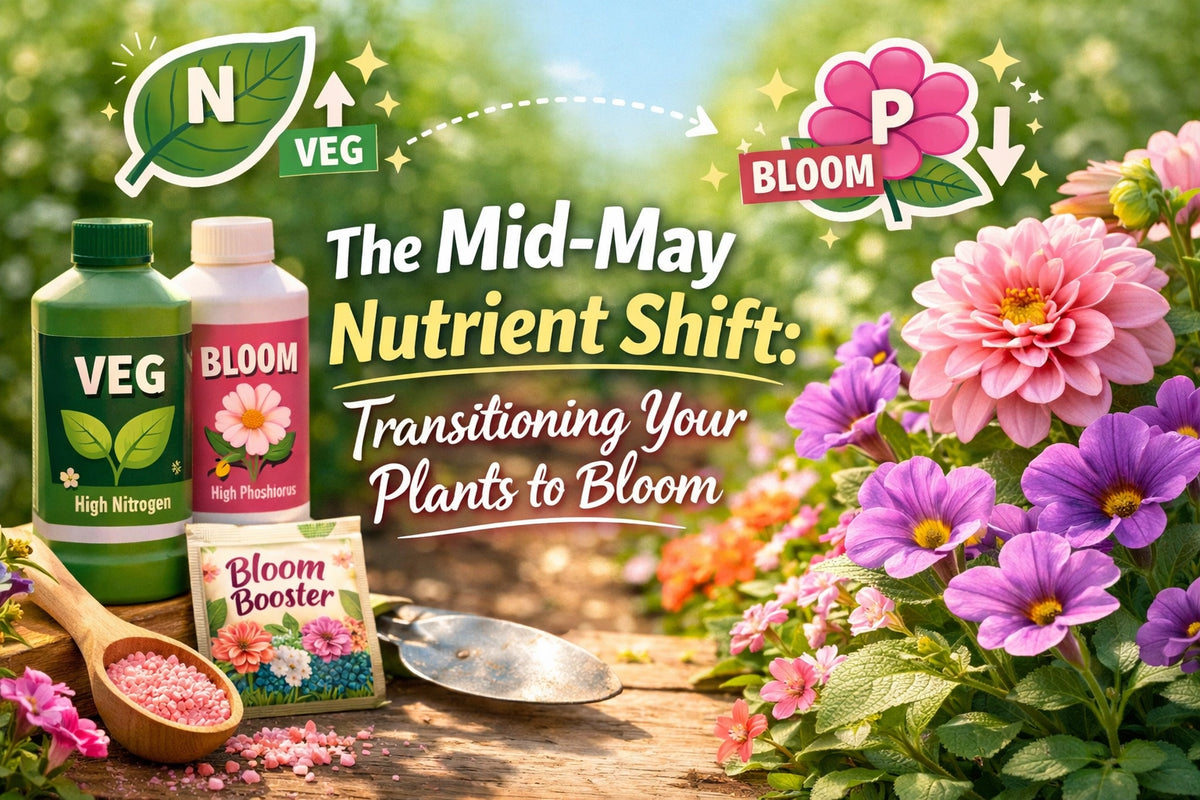
If you’ve been following our May schedule, you know we’ve already hit the ground running with summer survival tips and compost tea recipes. But now we’re hitting a critical window. It’s mid-May, and for many of us, our plants are looking lush, green, and, if we’re being honest, a little bit impatient.
This is the "Golden Hour" of the gardening season. Your plants are reaching peak metabolic activity. They’ve spent the last several weeks building a foundation of stems and leaves, but the mission is about to change. We are moving from the vegetative stage (growing big) to the reproductive stage (growing flowers and fruit).
The mistake a lot of hobbyist growers make is thinking they can just "flip a switch." They wake up one Monday, see a pre-flower, and dump a gallon of bloom booster into the reservoir. The fact of the matter is, your plants don't like surprises. If you want a heavy harvest without the stress of nutrient lock or burnt tips, you need to master the mid-May nutrient shift.
Why the Shift Matters Right Now
In the natural world, plants take cues from the sun. As we head toward the summer solstice, the intensity and duration of light trigger internal hormonal changes. In an indoor environment, you’re the one pulling the levers.
During the vegetative stage, your plants are Nitrogen (N) hungry. Nitrogen is the fuel for chlorophyll and leaf production. But as we move into the bloom phase, the plant’s "appetite" changes. It starts demanding more Phosphorus (P) for hormone synthesis and flower initiation, and more Potassium (K) to regulate water movement and strengthen cell walls.
If you keep hammering them with high Nitrogen during this transition, you’re going to end up with "the stretch." This is where the plant grows tall and lanky with huge gaps between nodes. That’s wasted energy. We want tight node spacing and sturdy branches that can actually support the weight of the upcoming blooms.

The "Slow and Steady" 3-Week Transition Plan
Rather than an abrupt change, we recommend a gradual slide. This allows the plant’s internal chemistry to catch up with the external inputs. Here is the rhythm we’ve found works best for both soil and hydroponic setups.
Week 1: The Introduction (75% Veg / 25% Bloom)
During the first week of the transition, your plant is still technically in "growth mode," but it's starting to show those tiny pre-flowers at the nodes. Keep your base vegetative nutrients high, but introduce a quarter-strength bloom formula. This provides just enough Phosphorus to signal to the plant that it's time to start shifting its energy downward to the reproductive sites.
Week 2: The Hand-Off (50% Veg / 50% Bloom)
This is the "bridge" week. Your plant’s metabolism is at an all-time high. You’ll notice the leaf color might brighten slightly, and the "stretch" is likely in full swing. By providing a 50/50 split, you’re giving the plant enough Nitrogen to finish its structural growth while ramping up the Potassium needed for the heavy lifting ahead.
Week 3: Full Bloom (0% Veg / 100% Bloom)
By week three, the vegetative growth should be slowing down, and you should see clear flower development. At this point, you can move to your full bloom nutrient profile.
The Role of Microbes in the Shift
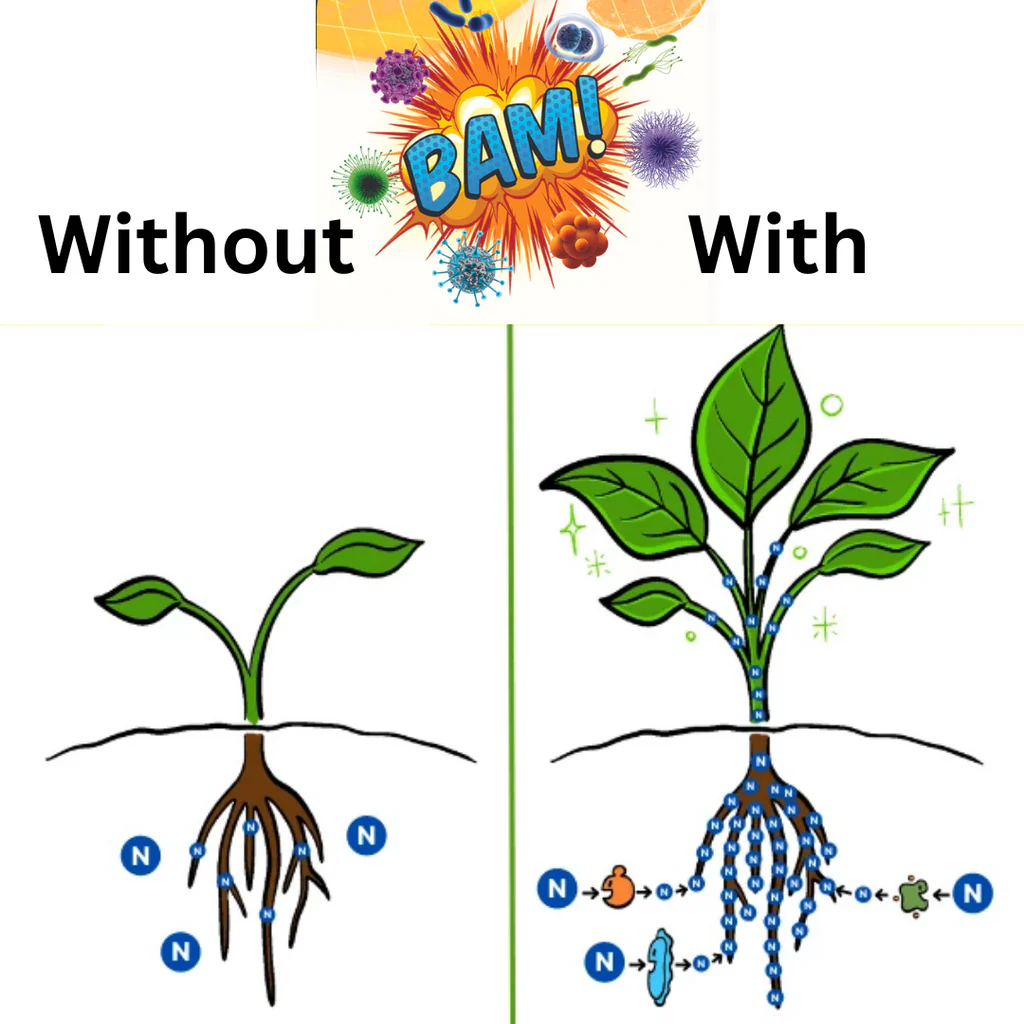
Transitioning nutrients is essentially a chemical change in the root zone. This change can sometimes cause a temporary "stall" in growth if the biology in your soil or coco isn't prepared. This is where microbial inoculants become your best friend.
When you shift from high Nitrogen to high Phosphorus, you’re changing the "food" available to the microorganisms in the medium. By using products like BAM! Microbial Inoculant, you ensure that there is a healthy colony of beneficial bacteria ready to break down those new mineral salts and hand-deliver them to the roots.
Think of microbes like a digestive system for your plants. Without them, you can dump all the expensive nutrients you want into the pot, but the plant might only "eat" half of it. If you want to see the difference a healthy root zone makes, check out some of our customer testimonials to see how growers are using these biology-first methods.

Don't Forget the Minerals and pH
As you increase your Phosphorus and Potassium, your pH levels will naturally want to dance around. This is one of the biggest pitfalls for home gardeners.
If your pH drifts too far out of range, your plant will experience "nutrient lockout." It doesn't matter if the nutrients are in the soil; the plant physically cannot "grab" them.
- For Soil: Aim for a pH between 6.0 and 7.0.
- For Hydro/Coco: Keep it tighter, between 5.5 and 6.5.
A great way to stabilize this is by using a mineral balancer. We often recommend Drops of Balance to help keep the water quality consistent. When your water is pure and mineral-rich, the nutrients you add work much more efficiently, and the pH stays more stable over time.

Balancing the Environment: Heat and Humidity
Since it’s mid-May, the external temperatures are starting to climb. As you shift your nutrients, you also need to keep an eye on your tents and film.
Higher temperatures mean the plant will transpire (sweat) faster. When a plant sweats more, it drinks more water. If your nutrient solution is too strong and the plant is drinking like crazy because of the heat, it might accidentally take in too many nutrients, leading to "nutrient burn."
Pro Tip: If you notice your leaf tips turning brown and crispy during this May heatwave, back off the nutrient strength by 10-20% but keep your watering schedule consistent. If you struggle with keeping up with watering as the weather warms up, a Blumat system can take the guesswork out of it by delivering water only when the soil actually needs it.
The Checklist for a Successful Bloom Transition
To make sure you’re ready for the rest of the month, here is a quick checklist to run through this week:
- Check for Pre-flowers: Are you seeing those tiny white hairs (pistils) or small clusters at the nodes? If yes, start the 3-week transition.
- Calibrate Your Pens: If you haven’t calibrated your pH or EC meter in a while, do it today. Accuracy is everything during the shift.
- Inspect the Roots: If you’re in hydro, make sure those roots are white and fuzzy. If they look brown or slimy, hit them with some BAM! before you start the bloom nutrients.
- Audit Your Inventory: Do you have enough Bloom formula? It’s better to find out now than on a Friday night when the shops are closed.

Wrapping It Up
The mid-May nutrient shift isn't just about changing bottles; it's about listening to your plants. They are entering the most demanding phase of their lives, and they need you to be their "pit crew." By easing into the new feeding schedule and supporting the root zone with beneficial microbes, you're setting the stage for a massive June and July.
If you’re feeling a bit overwhelmed by the technical side of things, don’t sweat it. We’ve got a whole library of grow help videos that walk you through these exact steps visually.
Keep an eye on the blog this Wednesday, where we’ll be talking about mastering reservoir temperatures: a must-read as the summer heat starts to knock on the door! If you have specific questions about your nutrient line or setup, feel free to reach out to our Army of Growers or contact us directly. We’re here to make sure your garden thrives.
Happy growing!


Leave a comment
This site is protected by hCaptcha and the hCaptcha Privacy Policy and Terms of Service apply.