
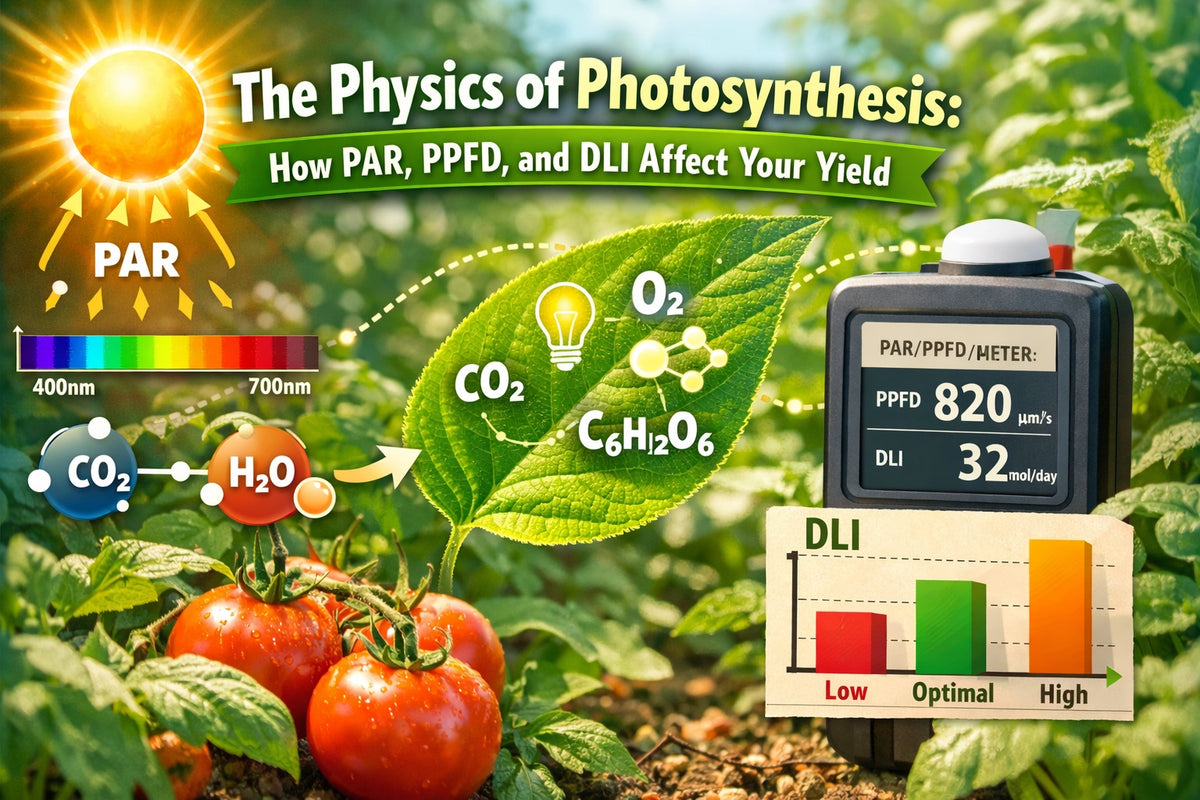
If you’ve been hanging around the indoor growing world for more than five minutes, you’ve probably heard people throwing around acronyms like PAR, PPFD, and DLI. It sounds like a bunch of NASA scientists trying to grow potatoes on Mars, doesn’t it? The fact of the matter is, if you want to move from "just keeping plants alive" to "crushing your personal best yield," you have to understand the physics of light.
Back in the day, we used to measure light in "Watts." We’d say, "I have a 600-watt HPS," and that was the end of the conversation. But watts only tell you how much electricity your light is pulling from the wall: it doesn't tell you how much "food" your plants are actually getting. Today, we’re going to break down the science of light in a way that actually makes sense for your grow room.
What is PAR? (The Quality of Light)
PAR stands for Photosynthetically Active Radiation. It’s not a measurement of quantity; it’s a definition of the type of light. Think of it like this: if you go to an all-you-can-eat buffet, PAR is the section of the buffet that actually contains food you can digest.
Humans see light in a specific spectrum, but plants are pickier. They primarily use light in the 400 to 700 nanometer (nm) range to fuel photosynthesis. This range covers everything from violet and blue to green, yellow, and red.
While plants "see" green light (contrary to the old myth that they reflect it all), they are most efficient at using red and blue light. When you’re looking at high-end LEDs like KIND LED grow lights, you’ll notice they focus heavily on providing a full spectrum that maximizes this PAR range.

PPF vs. PPFD: What’s the Difference?
This is where a lot of growers get tripped up. These two terms sound identical, but they tell you very different things.
1. PPF (Photosynthetic Photon Flux)
PPF measures the total amount of PAR light that a fixture emits every second. It’s measured in micromoles per second (μmol/s). Think of this like the total amount of water coming out of a showerhead. It tells you how powerful the "pump" is, but it doesn't tell you where that water is actually landing.
2. PPFD (Photosynthetic Photon Flux Density)
PPFD is the metric you actually care about. This measures how many of those photons are actually hitting a specific square meter of your plant canopy every second (μmol/m²/s).
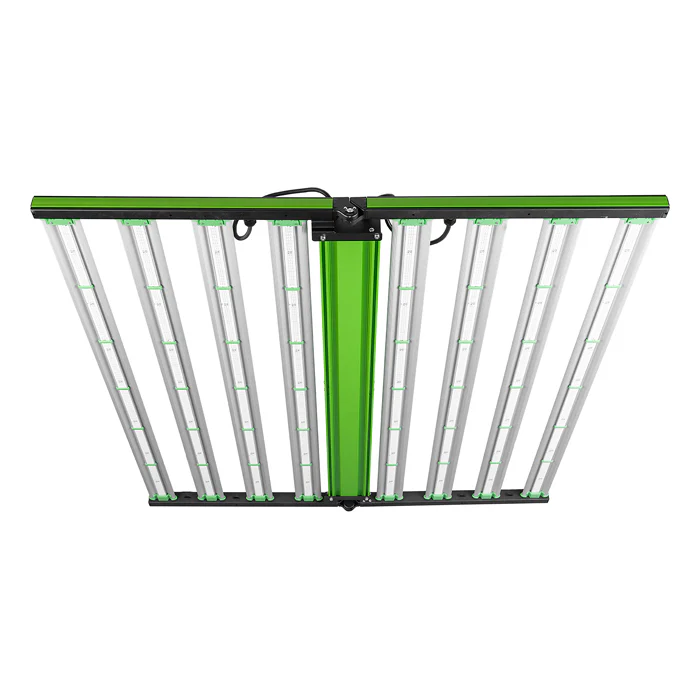
If you have a powerful light like the MEDIC GROW Spectrum-Y, it has a high PPF. But if you hang that light 10 feet above your plants, the PPFD at the canopy will be low because the light spreads out too much. To maximize yield, you need to optimize the PPFD across the entire canopy, not just directly under the center of the light.
The Daily Light Integral (DLI): The "Full Meal" Concept
If PPFD is the intensity of a single "bite" of light, DLI is the "full meal" your plant eats in a 24-hour period. DLI stands for Daily Light Integral, and it's measured in moles per square meter per day (mol/m²/d).
Think of your plant like a bucket. To get the best yield, you need to fill that bucket with photons every day. You can fill it quickly with high-intensity light (high PPFD) over a short period, or you can fill it slowly with lower-intensity light over a longer period.
- For Leafy Greens: They usually need a DLI of 12-17.
- For Flowering Plants: They typically need a DLI of 20-40+.
If you provide a PPFD of 800 for 12 hours, you’re hitting a specific DLI. If you want to increase your yield without buying more lights, sometimes you just need to run your lights longer: assuming your plants are in a vegetative stage and can handle the extra "up" time. However, once you hit the flowering stage and you’re locked into a 12/12 cycle, the only way to increase DLI is to increase the PPFD (the intensity).
How to Measure and Optimize for Better Yields
You can’t manage what you don't measure. If you’re serious about your harvest, you need a way to check your PPFD. You can buy a dedicated PAR meter (which is the gold standard), or you can use smartphone apps like Photone. While the apps aren't 100% perfect, they are a massive step up from guessing.
Mapping Your Canopy
Don't just take one reading in the middle of the tent. Take readings at the corners and the edges. Most lights are much stronger in the center. If your center is at 1000 PPFD but your corners are at 200 PPFD, those corner plants are going to produce "larf" (airy, weak buds) instead of dense colas.
To fix this, you have two options:
- Adjust Light Height: Lowering the light increases intensity but decreases coverage. Raising it does the opposite.
- Use Reflective Surfaces: This is where Panda Film comes in. By lining your grow space with high-quality reflective material, you bounce those "stray" photons back onto the sides of the canopy, significantly increasing the PPFD at the edges.

Choosing the Right LED System
When looking at brands like MEDIC GROW, look for fixtures that offer a "flat" PAR map. The Spectrum-Y Wireless LED is a great example of modern engineering because it uses multiple bars to spread light evenly across a 4x4 or 5x5 area.

KIND LED is another heavy hitter. Their fixtures are designed specifically to maximize the "secondary metabolites" (the stuff that makes your plants smell and taste great) by including specific UV and IR diodes that mimic the sun more accurately than cheap "white" LEDs.
The Relationship Between Light, CO2, and Nutrients
Here is the "Caution" section: You cannot just blast your plants with light and expect them to thrive.
As you increase PPFD and DLI, your plant's metabolism speeds up. It’s like putting a car on a treadmill; if you make the treadmill go faster, the car needs more fuel and better cooling.
- CO2: If you push PPFD above 1000, your plants will likely become "CO2 limited." They have all the light energy they need, but they don't have enough carbon to build the plant tissue. This is when adding supplemental CO2 becomes necessary.
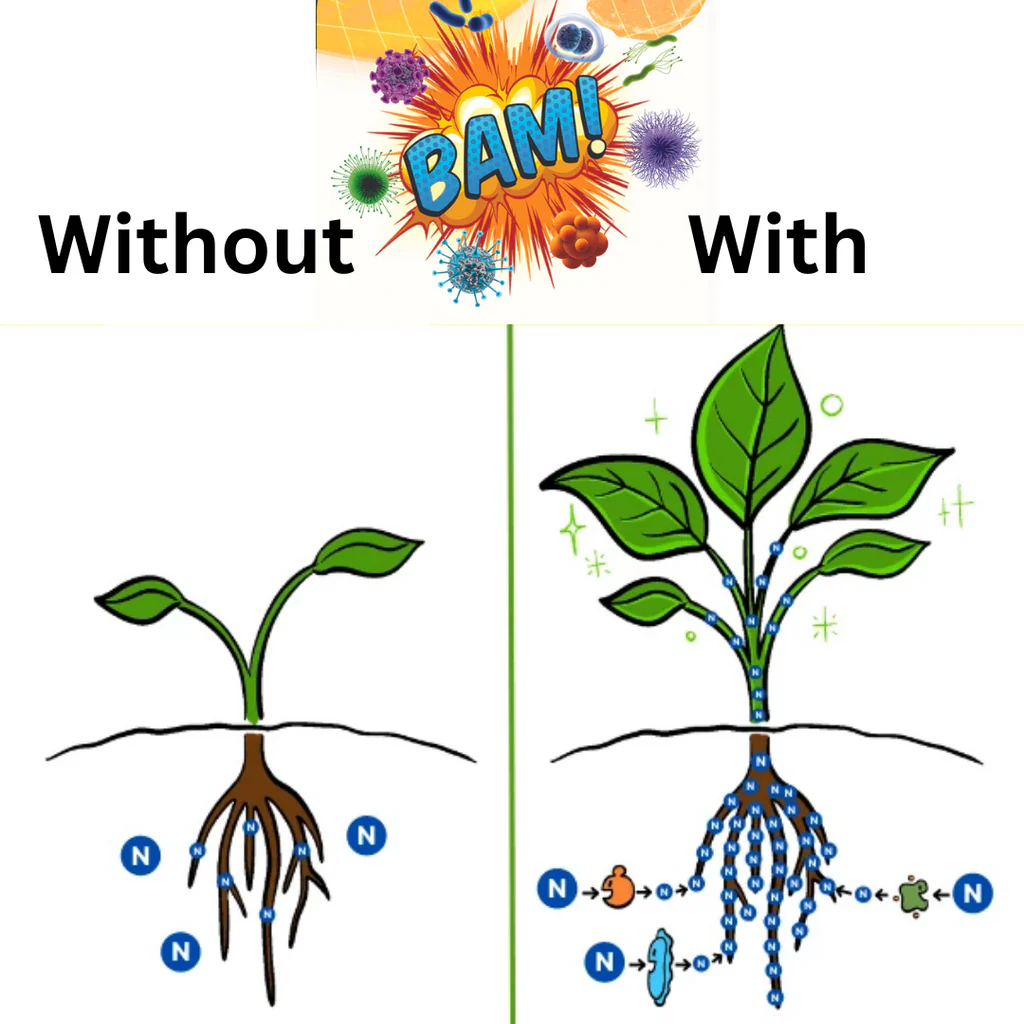
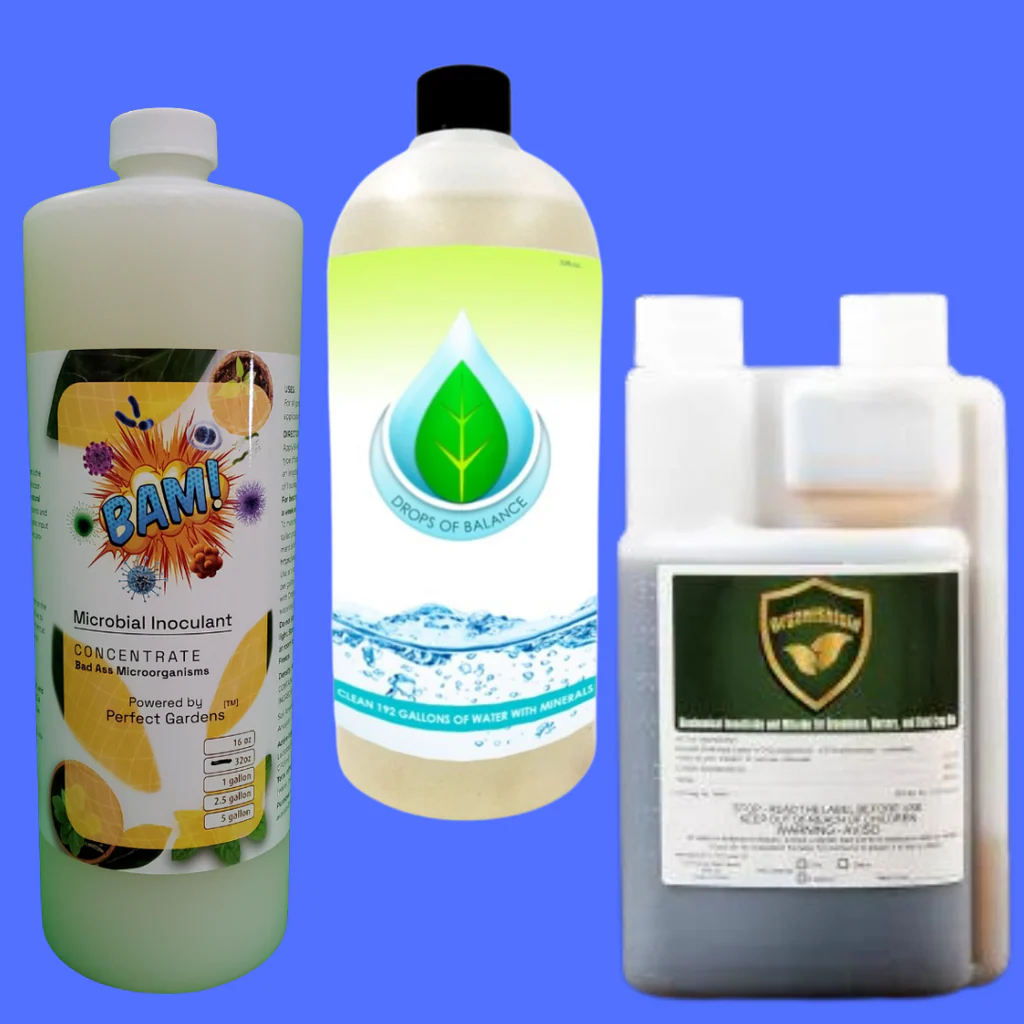
- Nutrients: High light levels mean your plants will drink more and eat more. If your nutrient game isn't on point, you'll see deficiencies fast. We always recommend using a robust microbial system like BAM! Microbial Inoculant and mineral balancers like Drops of Balance to make sure your roots can keep up with the demand.
Common Pitfalls to Avoid
- The "More is Better" Fallacy: There is a point of diminishing returns. If you hit a plant with 1500 PPFD without CO2 supplementation, you’re not helping; you’re causing light stress, bleaching, and nutrient lock-out.
- Ignoring the Heat: Even though LEDs are efficient, they still generate heat. High PPFD often comes with higher leaf surface temperatures. Make sure you have enough airflow in your tents to keep things cool.
- Wrong Spectrum for the Stage: Using a "bloom" heavy light (heavy red) during the seedling stage will cause your plants to stretch and become spindly. Make sure you’re using a light with a tunable spectrum or a solid "full spectrum" balance.
Final Thoughts
The physics of photosynthesis isn't just for textbooks: it's the blueprint for your success. By understanding that PAR defines the quality, PPFD defines the intensity, and DLI defines the total daily dose, you can stop guessing and start growing with precision.
Whether you're upgrading to a KIND LED or just trying to squeeze more out of your current setup with Panda Film, keep your eyes on the numbers. Your plants will thank you with the kind of yield you used to think was only possible for the pros.
If you have questions about which light is right for your specific space, don’t hesitate to contact us or check out our Grow Help Videos for more deep dives into the science of growing.
Happy growing!
: Mark, CEO of Perfect Gardens



Leave a comment
This site is protected by hCaptcha and the hCaptcha Privacy Policy and Terms of Service apply.